Where to Find Public Fishing Easements in Wyoming
It can be incredibly frustrating to drive miles to a prime fishing spot in Wyoming, only to find private property signs blocking your access to the water. Understanding where and how to find public fishing easements is absolutely essential for any angler looking to explore the incredible fisheries this state has to offer. This comprehensive guide will walk you through what easements are, why they're so vital, and exactly how you can pinpoint them to ensure you have legitimate access to Wyoming's best fishing waters.
Unpacking the Concept of Public Fishing Easements in Wyoming
Many anglers, especially those new to the Cowboy State, find themselves scratching their heads when they hear terms like "public access" or "easement." It's not always as simple as seeing a river and knowing you can walk right up to it. In Wyoming, a significant portion of the land surrounding our rivers, lakes, and streams is privately owned, which can create real headaches for those of us just trying to cast a line. Public fishing easements are legal agreements or designations that grant the public the right to access a specific piece of water, even if the surrounding land is private. They are incredibly valuable tools managed by agencies like the Wyoming Game and Fish Department (WGFD) and the Bureau of Land Management (BLM) to ensure we can all enjoy the state's natural resources.
What Exactly Is an Easement?
Think of an easement as a dedicated pathway, a legal right-of-way, across private land, or sometimes even state trust land, solely for the purpose of fishing. These aren't just random "walk here" signs; they are meticulously mapped and legally established points of entry and corridors along the water. It's not about owning the land, but about having the legal permission to cross it or occupy a specific strip of land for fishing. This distinction is key: you don't own the property, and you generally can't picnic, camp, or hunt on the easement unless explicitly stated. The primary purpose is fishing access. For example, a landowner might grant an easement along a popular trout stream like the North Platte River, allowing anglers to walk a 20-foot strip along the bank to reach different fishing holes, even though the ranch house is a quarter-mile upstream.
These easements are critical because Wyoming's legal landscape concerning stream access can be complex. While the waters themselves are often considered public, the land under and around them might not be. This creates a "checkerboard" effect in some areas, where public and private parcels alternate, making continuous access difficult without these designated easements. Without them, countless miles of incredible fishing water would be virtually unreachable for the average angler, leaving only those with private landowner permission or expensive guide services able to enjoy them. It's a system designed to balance private property rights with the public's desire to fish.
Different Types of Public Access in Wyoming
While easements are a big part of the puzzle, they're not the only way to get your boots wet. Wyoming offers a variety of public access types, and it’s important to understand the distinctions. Beyond easements, you’ll find dedicated public lands like those managed by the Bureau of Land Management (BLM), national forests, state parks, and state trust lands. Each comes with its own set of rules and accessibility. BLM lands and National Forests, for instance, often offer broad public access for recreation, including fishing, and you can usually roam more freely, provided you adhere to land agency regulations. State parks also provide public access, often with amenities like boat ramps and designated fishing areas, though they may have entry fees.
State trust lands are a bit unique; they are owned by the state to generate revenue for public schools and institutions. You can generally access these for fishing if they are designated for public access and you possess the proper licenses and stamps. However, some state trust lands may require a specific recreational use stamp or have seasonal restrictions, so it's always wise to check with the Office of State Lands and Investments. Fishing on these various types of public land usually means you have more leeway in terms of where you can fish from, whereas an easement is typically more restrictive, offering only specific entry or a narrow corridor. Knowing the difference means you're less likely to inadvertently trespass or violate regulations, which can quickly ruin a fishing trip.
The Indispensable Role of Easements for Anglers
For anyone who loves to fish in Wyoming, public fishing easements are truly golden. They represent a fundamental commitment to ensuring that the state's natural beauty and incredible fisheries aren't solely the domain of those with private land or deep pockets. Without these designated access points, many of the most famous and productive rivers and lakes in Wyoming would be practically off-limits to the general public, leading to frustration and fewer opportunities for everyone to enjoy this incredible pastime.
Bridging Private and Public Lands
Imagine a beautiful stretch of the Snake River, renowned for its wild trout. While the river itself is a public resource, the banks on both sides might be owned by various private individuals or ranches. If there were no easements, you could only fish from bridges, or if you had a boat, you'd be limited to the river channel without ever being able to step foot on the bank. Public fishing easements solve this problem by creating legal "bridges" across these private parcels. They provide crucial entry points, often marked with clear signage, allowing you to drive, park, and then walk to the water. Some easements even extend along the riverbanks for miles, opening up vast stretches of prime fishing habitat that would otherwise be locked away behind "No Trespassing" signs.
This bridging function is especially vital on some of Wyoming’s legendary waters, like the North Platte River’s Miracle Mile, where productive fishing runs often span both public and private ownership. Easements allow anglers to legally traverse these segments, providing continuity to a fishing experience that would otherwise be choppy and frustrating. It prevents the scenario where you're catching fish left and right, only to hit a private property boundary and be forced to pull your line, pack up, and find a new spot. This makes multi-day trips and exploring larger river systems much more feasible and enjoyable for independent anglers.
Preserving Access to Blue-Ribbon Fisheries
Wyoming is famous for its blue-ribbon trout streams, which are recognized for their exceptional water quality, habitat, and wild trout populations. Many of these treasured waterways, unfortunately, flow through predominantly private land. Public fishing easements are often specifically established in these areas to guarantee that everyone can experience these world-class fishing opportunities. Think of stretches along the Green River or parts of the Wind River where easements ensure that a significant portion of these high-quality fisheries remains available to the public. Without these easements, these prime locations could easily become exclusive havens, reducing opportunities for local residents and visitors alike.
These access points are not just about getting to the water; they're about democratizing the fishing experience. It means that whether you're a seasoned fly fisherman, a family with kids trying spin fishing for the first time, or someone looking to cast a line after work, you have a fair shot at experiencing the best fishing Wyoming has to offer. This commitment to public access through easements underpins much of the state's outdoor recreation economy and culture. It reinforces the idea that Wyoming's natural wonders are for everyone, not just a select few, and makes it easier to understand the distinctions between different types of fishing, such as Fishing From Boats vs Banks: Different Rules.
How to Navigate and Discover Wyoming's Public Fishing Easements
Finding these elusive public fishing easements can feel like a treasure hunt, but with the right tools and a little bit of know-how, you can unlock a wealth of incredible fishing opportunities. The key is to be proactive in your research before you even leave home. Relying solely on a casual drive-by might lead to disappointment, as not all easements are immediately obvious from the road, and some might require a bit of walking to reach the actual water.
Utilizing Online Resources and Maps
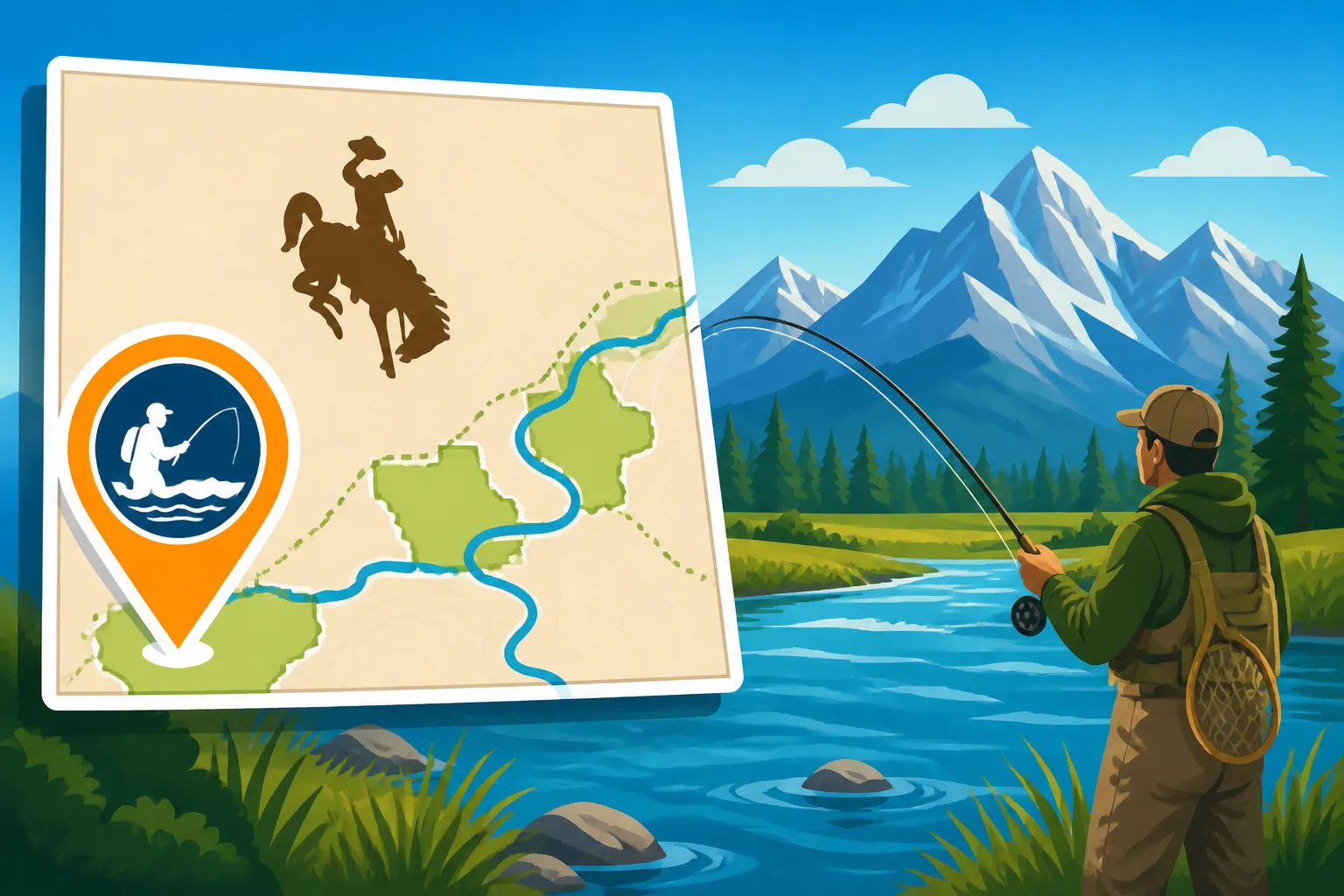
The Wyoming Game and Fish Department (WGFD) website is your absolute best friend when it comes to locating public fishing easements. They offer an interactive online map that is an indispensable resource. This map clearly marks public access areas, including easements, WGFD access points, BLM lands, and National Forest boundaries. You can zoom in on specific rivers or lakes, see the property boundaries, and identify exactly where those crucial public access points are located. Many of these points will even have detailed information about amenities, such as parking, restrooms, or if boat launching is permitted.
Beyond the WGFD map, consider using other mapping tools like the onX Hunt app or Gaia GPS. While these are primarily geared towards hunters, their detailed property ownership layers are incredibly valuable for anglers. They can show you public land boundaries, private land parcels, and often, the legal access corridors that constitute easements. These apps often work offline, which is a huge advantage when you’re out in remote areas with no cell service. Before heading out, always consult the most current version of the "Wyoming Fishing Regulations Every Angler Should Know" booklet, which often has general maps and descriptions of major access areas. If you're looking for an online guide to help you discover new spots, remember that platforms like FishingBooker often list guides who are intimately familiar with these public access points, saving you some legwork.
Here’s a quick overview of essential mapping resources:
| Resource Type | Primary Benefit | Best Use Case | Offline Capability | Cost |
|---|---|---|---|---|
| WGFD Public Access Map | Official, detailed, and up-to-date WGFD access points | Planning trips, identifying specific easements | Limited | Free |
| onX Hunt / Gaia GPS | Layered property ownership, detailed topographic maps | Backcountry exploration, verifying boundaries | Excellent | Subscription |
| USGS Topographic Maps | Elevation, terrain features, historical watercourses | Understanding landscape, planning remote access | Yes | Free/Paid |
| Google Maps/Earth | Satellite imagery, general directions, road networks | Initial reconnaissance, finding approach roads | Limited | Free |
| BLM/National Forest Maps | Official agency land boundaries, recreation sites | Confirming large public land access, general planning | Yes | Free/Paid |
When using these maps, pay close attention to the legends. Public easements are typically marked with specific symbols or colors that distinguish them from general public land or private property. Look for designated parking areas and established trails leading to the water. Some easements might be walk-in only, meaning you'll need to hike a bit, which is important to consider for your gear and physical preparation. For more detailed information, checking "Where to Find Current Wyoming Fishing Regulations" can provide specific links.
On-the-Ground Identification and Signage
Once you're actually out in the field, knowing what to look for can make all the difference. Wyoming Game and Fish Department easements are usually well-marked with distinctive bright yellow or green signs. These signs typically say "Public Fishing Access" or "WGFD Public Access" and will often include specific rules for that particular easement. You might see a larger informational kiosk with a map of the immediate area, highlighting the legal boundaries of the easement, parking rules, and any special regulations for the water you're about to fish. For example, specific signs will indicate access points for areas like the "Miracle Mile Stretch of Wyoming's North Platte River".
It's crucial to respect these signs and boundaries. Just because you see a WGFD sign doesn't mean you can stray onto adjacent private land. Stick to the designated path or corridor. If you're unsure, it's always better to err on the side of caution and retreat rather than risk trespassing. Remember that public access often comes with responsibility. Pack out what you pack in, close gates behind you, and be considerate of private landowners. This thoughtful behavior helps ensure these easements remain open for future generations. While a physical license is usually carried, it's also good to know "How to Use a Phone Screenshot as Your Wyoming Fishing License" in case your physical one is misplaced.
Respecting the Rules and Preserving Access on Wyoming Easements
Gaining access to these incredible fishing opportunities through easements is a privilege, not an absolute right to do whatever you please. Every angler has a responsibility to understand and abide by the specific rules that govern these access points and the waters they lead to. Failing to do so can jeopardize future access for everyone, sour relationships with landowners, and even lead to fines.
Understanding the Specific Easement Rules
Each public fishing easement often comes with its own set of guidelines, which are usually posted on signs at the access point. These rules can vary significantly depending on the location and the nature of the easement. For example, some easements might be walk-in only, prohibiting vehicles beyond a certain point, while others might have designated parking areas right next to the water. There could be restrictions on bait use, such as "Barbless Hook Requirements on the North Platte River" sections or prohibitions on live minnows in certain waters to prevent the spread of aquatic invasive species.
It's also common to find rules regarding what activities are allowed. Most fishing easements are, as their name suggests, specifically for fishing. This means activities like camping, campfires, hunting, or collecting firewood are generally not permitted unless explicitly stated otherwise. Think of it as a temporary passage and use right, not an open invitation to full recreational use. Always look for signage, read the details, and if you're ever in doubt, check the WGFD website or local regulations. When planning your trip, consult resources like "Wyoming Fishing Seasons and Water-Specific Closures" to ensure the area you intend to fish is open and legal. For deeper dives into specific locations, information like "Where to Find Water-Specific Rules for a Wyoming Lake" is invaluable.
Practicing Good Stewardship and Etiquette
The future of public fishing easements in Wyoming heavily relies on the ethical behavior of anglers. When you use an easement, you are a guest, even if it's public access. Always practice "Leave No Trace" principles. This means packing out all trash, including discarded fishing line and bait containers. Don’t litter, and if you see litter, consider picking it up. Respect any private property visible from the easement; don't trespass onto adjacent land, even if it looks like a tempting shortcut or a better casting spot. This includes not harassing livestock or disturbing agricultural operations.
Closing gates behind you is another crucial piece of etiquette, especially in ranching country. Leaving a gate open can allow livestock to wander off, creating significant problems for landowners. If you encounter landowners, be polite and respectful; a simple "hello" and a demonstration of good behavior can go a long way in fostering positive relationships that help maintain these access agreements. Remember, you're representing the entire angling community, and your actions reflect on all of us. Good etiquette ensures that landowners continue to see the value in maintaining these vital access points, and it keeps more of Wyoming open for all. If you're planning a trip and considering a guide to help navigate these access points and ensure ethical fishing, remember that services like FishingBooker connect you with local experts who know the rules and local etiquette inside and out. Looking at options for "Hiring a Fishing Guide in Wyoming" can be a great way to explore these spots responsibly.
The Consequences of Disregarding Easement Rules
Ignoring the posted rules or knowingly trespassing can have serious repercussions. At the very least, you could face verbal warnings from landowners or game wardens. More severe violations can result in significant fines. Fishing without the proper licenses, failing to adhere to specific bait restrictions, or trespassing can lead to citations. In some cases, repeated or egregious violations could even lead to legal action, impoundment of your gear, or revocation of your fishing privileges. Local law enforcement and WGFD game wardens patrol these areas, and they take violations seriously.
Beyond the personal consequences, disregarding rules can have a broader impact. Landowners, frustrated by disrespectful behavior or damage, may decide not to renew their easement agreements when they expire. This means that a beloved fishing spot could be permanently closed off to the public, impacting countless other anglers. It’s a collective responsibility to treat these access points with the utmost care and respect. Before you head out, make sure you understand "Fines and Penalties for Common Fishing Violations" so you're fully aware of the potential risks. Always prioritize being a responsible and informed angler; it benefits everyone in the long run.
Disclaimer
Please remember that fishing regulations and access rules in Wyoming can change. Always consult the most current Wyoming Game and Fish Department regulations and maps before heading out on your fishing adventure. This guide is for informational purposes only and does not constitute legal advice.