How to Troll for Lake Trout in Deep Water
The vast, deep waters of Wyoming's famous lakes hold some incredible secrets, none more sought after by many anglers than the elusive, hard-fighting lake trout. But getting your lure down to where these magnificent fish dwell, often in hundreds of feet of water, can feel like trying to hit a moving target in the dark. This guide will demystify the art of deep-water trolling for lake trout, providing you with the knowledge and techniques to successfully target these giants of the deep.
Understanding Deep Water and Lake Trout Behavior
When you're out on a sprawling Wyoming reservoir like Flaming Gorge or Jackson Lake, the sheer size and depth can be intimidating. Lake trout, or Mackinaw as they're often called, thrive in these cold, oxygen-rich environments. They're not like your typical rainbow or cutthroat that might hang out in shallower areas or near the surface. No, these fish prefer the abyss, and understanding why they're there is the first step to catching them.
Why Lake Trout Go Deep
Lake trout are fundamentally cold-water fish. They have a physiological need for water temperatures typically below 55 degrees Fahrenheit, and often much colder, down to the low 40s. In Wyoming's high-altitude lakes, the surface waters warm up significantly during the summer months. This forces lake trout into the deeper, cooler layers of the water column, often congregating around structures, drop-offs, or thermoclines where their preferred temperatures and forage are found. Think of it like they're seeking refuge in their own refrigerated pantry. Their primary food source, often kokanee salmon or smaller trout, can also influence their depth, as they'll follow these baitfish. If you're wondering, you can learn more about What Lake Trout Eat in Wyoming Reservoirs.
Reading the Water Column with Electronics
Modern fish finders and sonar units are your eyes into the deep. Without them, you're essentially fishing blind. A good unit will show you not only the bottom contour, but also baitfish schools, individual fish arches (hopefully big ones!), and even the thermocline. The thermocline is a layer where water temperature changes rapidly with depth, and it's often a key zone for lake trout, especially if baitfish are concentrated there. Learning to interpret these signals is crucial for consistent success. You'll want to pay attention to sudden depth changes, underwater points, submerged islands, and deep rock piles. These are all prime ambush spots for lake trout. For example, knowing How Deep Lake Trout Live in Flaming Gorge can give you a starting point for setting your gear.
Essential Gear for Deep Water Trolling
Trolling for lake trout in deep water isn't about light tackle and finesse. It requires specialized, robust equipment designed to get your lures to extreme depths and withstand the powerful runs of a large Mackinaw. Investing in the right gear upfront will save you a lot of frustration and increase your catch rate.
Rods and Reels for Heavy Duty Trolling
You're going to need a sturdy setup. For rods, look for something with a medium-heavy to heavy action, typically 7 to 9 feet long. Fiberglass or a composite blend is often preferred for its parabolic bend, which acts like a shock absorber when a big laker hits, preventing hooks from tearing out. A good downrigger rod will have a soft tip to indicate strikes but enough backbone to handle the fight.
For reels, a level-wind baitcasting reel in a 30-size or 40-size is ideal. You'll want a high-quality reel with a smooth, reliable drag system and plenty of line capacity. Look for models from brands like Penn, Daiwa, or Shimano. While you might find some good deals on starter combos on Amazon, investing in separate, higher-quality components often pays off in the long run for this kind of demanding fishing.
Line Choices: Mono, Braid, and Lead Core
The type of line you choose will depend on your trolling method.
- Monofilament: A good all-around choice for downriggers due to its stretch, which helps absorb shocks. Use 20-30 lb test for main lines. However, its stretch means less direct feel, which can be a drawback in very deep water.
- Braided Line: Offers superior strength-to-diameter ratio and virtually no stretch, providing excellent sensitivity. This is often favored when running planer boards or deeper dives without downriggers, but it transmits every bounce and wiggle directly, which can be an issue for some setups. If you're running braid, a fluorocarbon leader of 20-30 lb test, about 15-25 feet long, is essential for stealth and abrasion resistance.
- Lead Core Line: This is a specialized line with a lead filament woven into the core, designed to sink. It's color-coded, usually in 10-yard sections, and each "color" typically gets your lure down about 5 feet at a trolling speed of 2-3 mph. So, letting out 10 colors (100 yards) could get your lure around 50 feet deep, plus whatever your lure contributes. This is a great option for reaching intermediate depths without downriggers and is surprisingly effective. You can often find a good selection of lead core line from various reputable brands on Amazon.
Downriggers: Your Deep-Water Delivery System
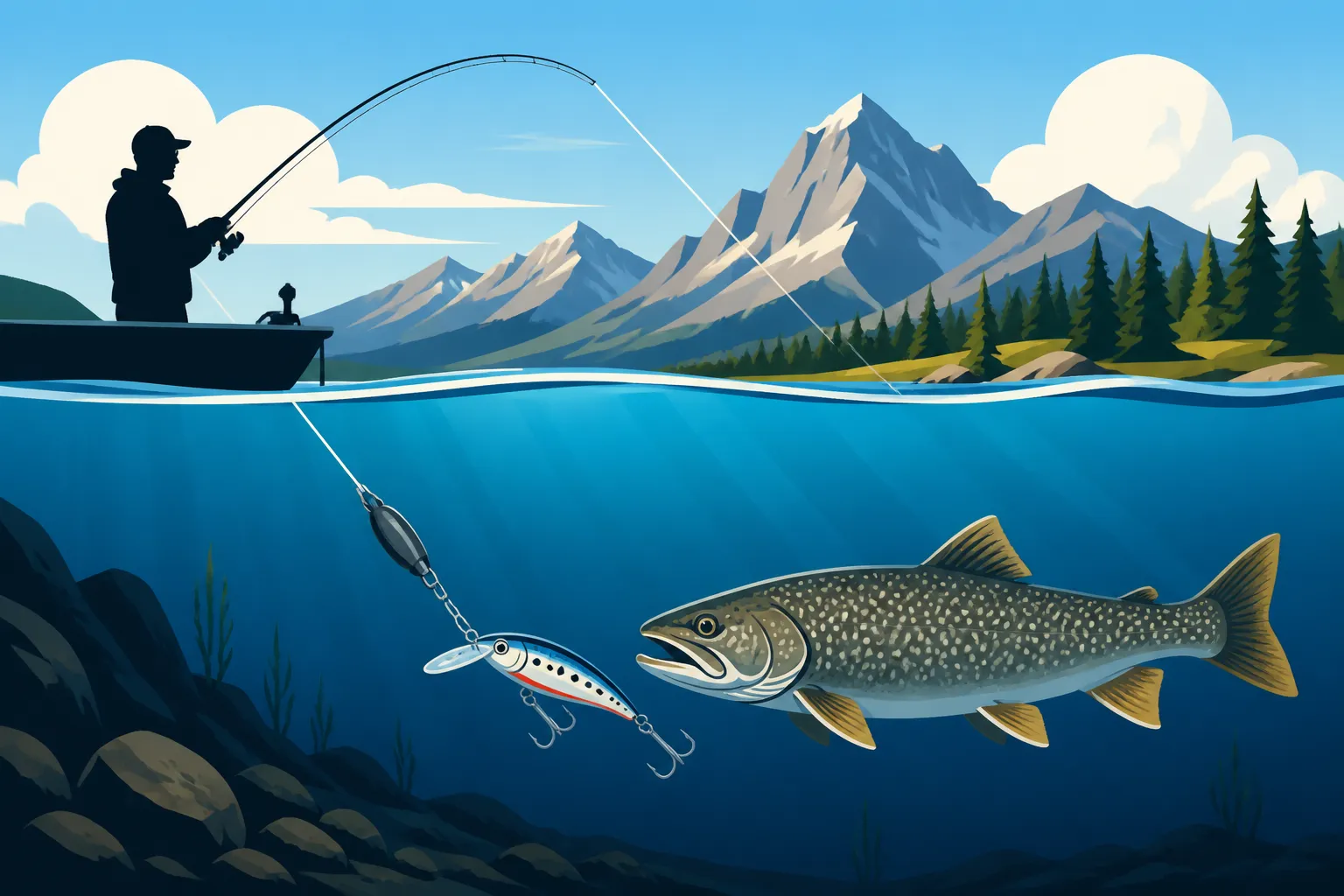
Downriggers are the absolute workhorses of deep-water trolling. These devices use a heavy cannonball weight (8-15 lbs) to carry your fishing line and lure down to a precise depth. Your line is attached to the cannonball via a release clip. When a fish strikes, the line pops free from the clip, allowing you to fight the fish directly without the weight.
- Electric vs. Manual: Electric downriggers are a luxury but a huge convenience, especially when constantly adjusting depths or retrieving heavy weights. Manual models are more affordable and perfectly functional but require more effort.
- Mounting and Placement: Most boats will have two downriggers, mounted on either side of the transom. This allows for spreading your lines and covering more water.
- Release Clips: These are critical. They need to hold your line securely enough that the lure's action doesn't trip them, but release easily when a fish hits. There are various styles, from stacker releases (allowing you to run multiple lines off one downrigger) to tension-adjustable clips.
Flashers, Dodges, and Lures
Deep-water lake trout often respond well to attractors. These are large, metallic devices like flashers or dodgers that wobble and reflect light, creating a visual disturbance and vibration that mimics baitfish.
- Flashers: Tend to have a more erratic, spinning motion. They're often paired with tube jigs or spoons.
- Dodgers: Have a more consistent, side-to-side wobble. They're excellent for spoons or flies, creating an enticing dance for your trailing lure.
Behind your attractor, you'll typically run a trailing lure.
- Spoons: Large, heavy spoons like the Luhr-Jensen Kwikfish or Doctor Spoon are classics. Colors like silver, chartreuse, blue/silver, or even glow-in-the-dark patterns can be highly effective.
- Tube Jigs: White, pearl, or glow-in-the-dark tube jigs, often tipped with a piece of sucker meat or herring, are deadly for Mackinaw. Learning Trolling Tube Jigs for Lake Trout at Flaming Gorge can provide specific tips for this technique.
- Plugs/Stickbaits: Deep-diving crankbaits or plugs can also be effective, especially those with a strong wobbling action. Brands like Rapala or Bomber make effective deep divers.
Mastering the Techniques: How to Get Your Lure Down Deep
Getting your lure into the lake trout's strike zone requires a combination of precision and patience. It's not just about dropping a weight; it's about presenting your bait effectively.
Setting Up with Downriggers
This is the most precise way to control your depth.
- Attach Lure and Leader: Tie your chosen lure to a fluorocarbon leader (typically 15-25 lb test, 3-6 feet long).
- Attach Main Line to Release Clip: Let out enough line (often 50-150 feet) so that your lure is trailing a good distance behind the boat, away from the prop wash. Clip your main line into the downrigger release.
- Lower Cannonball: Engage the downrigger and slowly lower the cannonball to your desired depth. Watch your fish finder closely for structure, bait, and fish.
- Set Rod: Place your rod in a sturdy rod holder. The rod tip should have a nice bend or "load" from the tension of the line pulling the lure. When a fish strikes, the rod tip will snap upright as the line releases from the clip – this is called a "free-fall" strike, and it's exhilarating!
- Stagger Depths: If you're running multiple lines, stagger their depths to cover more of the water column. For example, one at 100 feet, another at 120 feet, and so on. This increases your chances of finding the fish.
Using Lead Core Line for Controlled Depth
Lead core offers another excellent way to reach those deeper zones without the need for downriggers. It's less precise for exact depth, but often more forgiving and can be fantastic for covering varying depths.
- Connect Lead Core to Monofilament Backing: Most anglers spool their reel with some monofilament backing, then connect the lead core line, and finally a fluorocarbon leader (20-30 feet is common) to the end of the lead core.
- Determine Colors to Deploy: Based on the depth you want to target, calculate how many colors of lead core to let out. Remember, each color typically gets you about 5 feet down at typical trolling speeds.
- Control Speed: Trolling speed is critical with lead core. Slower speeds (1.5-2 mph) will allow the line to sink deeper, while faster speeds (2.5-3 mph) will lift it slightly. You'll need to experiment.
- Fish Finder is Key: Watch your fish finder to see where the bait and fish are concentrated, and then adjust the amount of lead core you're letting out to match that depth.
Trolling Speed and Patterns
Lake trout are often opportunistic feeders, but they can be finicky.
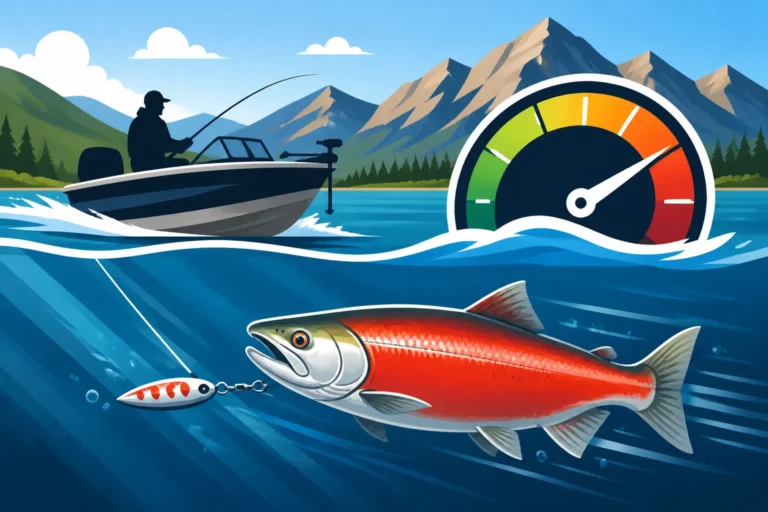
- Speed: A common trolling speed for lake trout is between 1.8 and 2.5 miles per hour. However, it's crucial to experiment. Sometimes slowing down to 1.5 mph can trigger a bite, while other times a slightly faster pace of 3 mph is the ticket, especially if you're trying to provoke a reaction strike.
- S-Turns: Don't troll in a perfectly straight line! Making gradual S-turns with your boat will cause your lures to speed up on the outside of the turn and slow down on the inside. This change in action can often trigger strikes from following fish.
- Direction: Pay attention to what direction you're trolling when you get a strike. Is it with the wind, against it, or perpendicular? Sometimes a particular direction, or presentation based on that direction, makes all the difference.
Navigating Wyoming's Deep Lakes: Where and When to Troll
Wyoming offers some phenomenal deep-water lake trout opportunities. Knowing where to go and when to go can significantly impact your success.
Top Wyoming Lake Trout Destinations
When it comes to big Mackinaw, a few places immediately come to mind:
- Flaming Gorge Reservoir: This massive reservoir, straddling the Wyoming-Utah border, is legendary for its trophy lake trout. Depths can exceed 400 feet, and the fish often hold along the old river channel, steep canyon walls, and submerged points. Areas like Buckboard Crossing and the pipeline are popular starting points. A detailed Wyoming's Flaming Gorge Reservoir Fishing Guide can help you narrow down your search.
- Jackson Lake: Located within Grand Teton National Park, Jackson Lake is another prime spot for lake trout, especially since the recent regulations changed to allow fishing further into the fall. Depths here can also be significant. Look for fish around the mouths of bays, major drop-offs, and humps. If you're planning a trip there, check out our Wyoming's Jackson Lake Fishing Guide for more insights.
- Boysen Reservoir: While often celebrated for its walleye, Boysen also holds good numbers of lake trout, particularly in its deeper sections. It's a fantastic multi-species fishery.
- Pathfinder Reservoir: Another central Wyoming gem, Pathfinder can produce some impressive lake trout, especially in its deeper basins.
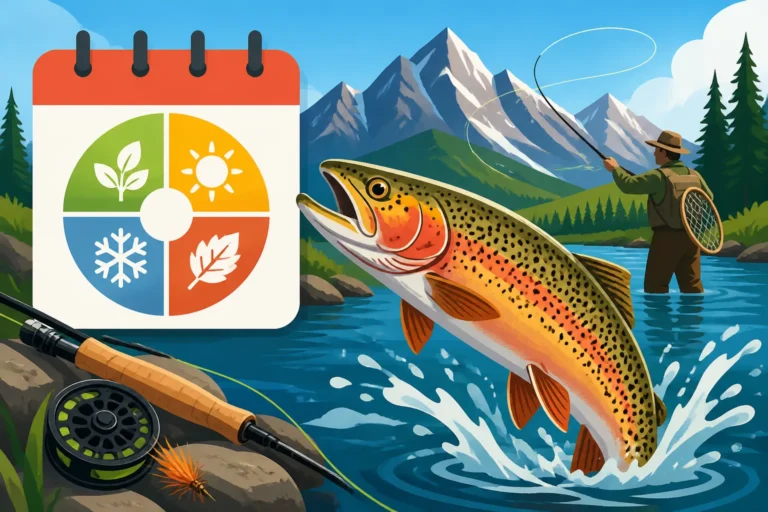
Seasonal Considerations for Deep Trolling
While lake trout generally prefer cold water year-round, their depth and behavior can shift with the seasons.
- Spring (Ice-out to early June): After ice-out, lake trout might be found shallower than other times of the year, particularly during turnover when oxygen levels are more uniform. They're often hungry and willing to chase. This is a great time to target them with lead core or shallower downrigger presentations before they retreat to the true deep.
- Summer (June to September): This is prime deep-water trolling season. The surface waters are warm, and the lake trout are pushed into their cold-water refuges. This is when your downriggers will see the most action, consistently getting your lures to depths of 80-200 feet or even more. Focus on thermal breaks and schools of baitfish.
- Fall (October to Ice-up): As water temperatures begin to cool, lake trout may start to move a bit shallower, especially during their spawning period in late fall. They can be very aggressive then. Some of the biggest fish of the year are caught during this time. For specific information on when to target them, check out Best Month for Lake Trout at Flaming Gorge.
Here’s a quick overview of how depths can change:
| Season | Typical Depth Range (Feet) | Key Considerations |
|---|---|---|
| Early Spring | 40-80 | Post-spawn feeding, water turnover, can be shallower |
| Late Spring | 60-120 | Transitioning deeper as surface warms |
| Summer | 80-200+ | Deepest, focused on thermocline and cold water refuge |
| Fall | 60-150 | Pre-spawn aggression, may move shallower during spawning |
| Winter | 50-100 (Ice Fishing) | Can be shallower under ice, concentrated near structure |
Advanced Tips for Consistent Success
Getting the basic gear and techniques down is a great start, but honing your skills will lead to more consistent catches and bigger fish.
Fine-Tuning Your Presentation
- Lure Action: Pay close attention to how your lure is performing. You want a natural, enticing action. Sometimes, a subtle change in trolling speed or leader length can make all the difference.
- Scent: Don't underestimate the power of scent. Tipping your tube jigs or spoons with a small piece of sucker meat, herring, or even a commercially available scent attractant can drastically improve your bite rate. Lake trout have an incredible sense of smell.
- Color Choices: While silver, white, and chartreuse are staples, be prepared to experiment. On cloudy days, brighter or glow-in-the-dark lures might be better. On bright days, more natural patterns. Consider the local forage – what color are the baitfish they're eating?
Dealing with Wind and Waves
Wyoming lakes can get incredibly windy, turning smooth waters into choppy seas in a matter of minutes.
- Drift Sock/Sea Anchor: If the wind is pushing your boat too fast, a drift sock or sea anchor deployed off the bow can help slow you down and maintain a consistent trolling speed.
- Trim Tabs: If your boat has them, trim tabs can help stabilize your ride and keep your prop bite consistent in rougher water.
- Adjust Course: Sometimes, it's best to troll into or directly with the wind if it's too rough to troll perpendicular, even if it means adjusting your usual pattern. Safety first!
The Importance of Hook Sharpening and Leader Maintenance
These details might seem minor, but they are crucial when dealing with powerful fish in deep water.
- Sharp Hooks: Always, always check your hooks for sharpness. A dull hook can mean the difference between a solid hookset and a missed fish. Carry a hook sharpener and use it often.
- Leader Checks: After every fish, or every few hours of trolling, inspect your fluorocarbon leaders for nicks, abrasions, or kinks. Lake trout have sharp teeth and powerful jaws, and a compromised leader is a recipe for a lost fish. Re-tie if there's any doubt. Replacing leaders regularly is cheap insurance.
Catching lake trout in Wyoming's deep waters is a rewarding experience. It combines precision, technology, and a deep understanding of these incredible fish. Armed with the right gear and a solid grasp of these techniques, you'll be well on your way to hooking into some truly memorable Mackinaw.
Disclaimer
The information provided in this guide is for general informational purposes only and is not intended as legal advice. Fishing regulations in Wyoming can change frequently. Always consult the most current Wyoming Game and Fish Department regulations booklet before heading out on the water. Following all state and local regulations is the responsibility of the angler.