Nymphing Techniques for Wyoming Tailwaters
Oh, the venerable art of nymphing in Wyoming's tailwaters! If you've spent any time on rivers like the North Platte or the Green, you know how incredibly productive, yet equally frustrating, it can be. These cold, clear, nutrient-rich waters hold some truly magnificent trout, but getting your fly down to them, presenting it naturally, and feeling that subtle take can feel like deciphering an ancient code. This guide is all about demystifying those powerful, often intimidating, tailwater fisheries and equipping you with the nymphing techniques you need to fool even the wariest of Wyoming's trout.
Understanding the Unique World of Wyoming Tailwaters
Wyoming's tailwaters are a special breed of river. Unlike freestone streams that ebb and flow with snowmelt and rain, tailwaters are fed by the consistent, cold water released from the bottom of large reservoirs. This constant flow, coupled with stable water temperatures and a rich aquatic insect life, creates a perfect environment for trout to thrive and grow to impressive sizes. But these stable conditions also lead to some unique challenges for anglers.
The Dynamics of Dam-Controlled Rivers
The very nature of a tailwater, being downstream from a dam, fundamentally changes its ecosystem and, therefore, how we approach fishing it. Water levels can fluctuate daily with power generation schedules, and water clarity is often pristine, especially during periods when upstream reservoirs aren't turning over. This consistent, cold water means aquatic insects, like midges, mayflies, and caddis, hatch year-round, offering a steady food supply. Fish in these systems become incredibly dialed into these specific food sources, and they develop a keen sense of what looks natural and what doesn't. You'll often find yourself facing trout that have seen every fly pattern and every drift imaginable, making your presentation paramount. This environment also explains why fish tend to congregate in certain areas where food delivery is optimal, meaning precise casting and drift control are critical.
Why Nymphing Reigns Supreme in Tailwaters
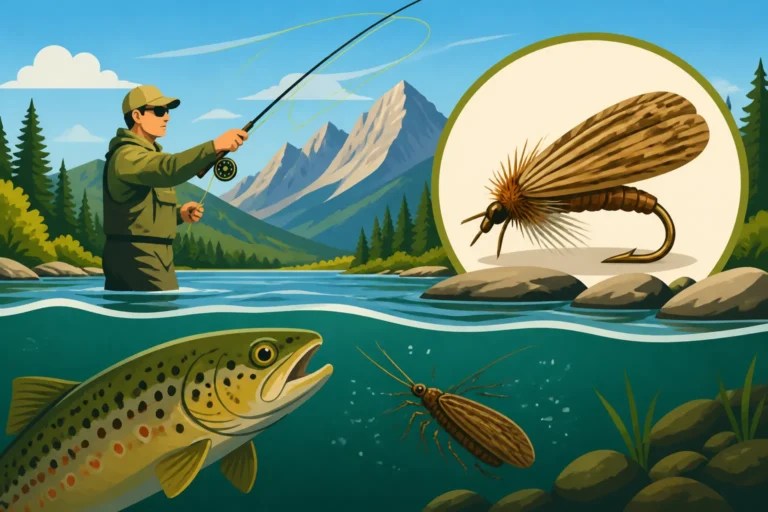
Let's be honest, everyone loves to catch a fish on a dry fly, watching that explosive rise. But in Wyoming's tailwaters, the vast majority of a trout's diet—often 80-90%—consists of subsurface insects. These fish are constantly feeding on nymphs, larvae, and pupae drifting along the bottom or suspended in the water column. The cold, consistent flows and often deep, clear water mean that presenting a fly on the surface is only effective during specific, often short-lived, hatches. For consistent success, especially when targeting larger trout, you simply have to get your flies down to where the fish are feeding. Nymphing allows you to imitate these abundant subsurface food sources effectively, making it the undeniable king of techniques on these productive rivers. It’s about understanding what's available to the fish and then delivering it right to their dinner table.
Essential Gear for Productive Nymphing
When you're chasing trout in Wyoming's demanding tailwaters, having the right gear isn't just a luxury; it's a necessity. These aren't your typical small creeks, and your setup needs to be able to handle larger fish, longer casts, and heavier rigs. Skimping on the right tools can quickly lead to frustration, lost fish, and a less enjoyable day on the water.
Rod and Reel Selection for Tailwater Nymphing
For serious nymphing on Wyoming's larger tailwaters like the North Platte or the Green River, a 9 to 10-foot fly rod in a 4, 5, or even 6-weight is your best friend. The extra length is crucial for several reasons: it helps you mend your line effectively, control your drift over longer distances, and keep as much fly line off the water as possible to reduce drag. A longer rod also acts as a better shock absorber, protecting your lighter tippet when a big brown trout decides to make a run for it. For your reel, a mid-arbor or large-arbor reel with a smooth drag system is ideal. You'll want something that can quickly take up slack line when a fish runs toward you and that can handle the powerful surges of a large, healthy tailwater trout. Don't underestimate the importance of a good drag; it can be the difference between landing a trophy and telling a heartbreaking story about "the one that got away." Many quality options can be found easily on Amazon, often with helpful reviews.
Lines, Leaders, and Tippet Considerations
This is where the rubber meets the road for successful nymphing. A weight-forward floating fly line is standard. The taper of the line can influence your casting, but ultimately, a good floating line is essential for keeping your indicator and leader riding high on the water.
When it comes to leaders, you have a few options, each with its own advantages:
- Tapered Nymphing Leaders: These leaders are specifically designed with a longer, more gradual taper to help turn over heavier nymph rigs. They typically range from 9 to 12 feet, and some dedicated nymphing leaders can be even longer.
- French Nymphing Leaders: These specialized leaders are often extremely long (up to 20 feet or more) and designed for direct contact nymphing without an indicator. They typically feature a colored sighter section for detecting subtle takes. While excellent for specific applications, they have a steeper learning curve.
- Custom Leaders: Many experienced nymphers build their own leaders using sections of monofilament and fluorocarbon. This allows for precise customization of taper and length.
Regardless of the leader style, you'll be attaching tippet to the end. Fluorocarbon tippet is almost universally preferred for nymphing due to its low visibility underwater and its faster sink rate compared to monofilament. You'll typically be fishing with 4x, 5x, or even 6x fluorocarbon tippet, depending on water clarity, fish size, and the size of your flies. It's always wise to carry a variety of tippet sizes to adapt to changing conditions. Remember, the stronger your tippet, the better your chances of landing that fish, but too heavy, and you'll spook them in clear water.
Strike Indicators and Weight Management
Strike indicators are your eyes underwater. Without them, detecting the often incredibly subtle take of a nymphing trout would be nearly impossible. There's a huge variety out there, each with its own benefits:
- Pinch-On Indicators: These small, cylindrical or spherical indicators attach to your leader by pinching them on. They are highly adjustable and easy to move up and down your leader to adjust depth. Examples include Thingamabobbers or Air-Lock Indicators.
- Yarn Indicators: Made from treated yarn, these are incredibly sensitive and land softly on the water, making them ideal for spooky fish. They require a separate rubber band or O-ring to attach to your leader.
- Foam Indicators: Often brightly colored, these are durable and float well, even with heavier rigs. They come in various shapes and sizes.
The key to indicator placement is setting it at a depth roughly 1.5 to 2 times the actual water depth you're fishing. This ensures your nymphs are drifting near the bottom where the fish are feeding.
Weight management is equally crucial. To get your nymphs down quickly to the fish's feeding lane, you'll almost always need additional weight.
- Split Shot: Small lead or non-toxic split shot is the most common form of added weight. You pinch it directly onto your leader or tippet, typically 6-12 inches above your first nymph. Carry an assortment of sizes, from tiny BB shot to heavier styles, and be prepared to adjust throughout the day.
- Weighted Flies: Many nymphs come pre-weighted with bead heads (brass or tungsten) or lead wraps. These can reduce the need for external split shot, making for a cleaner rig.
- Sinking Sighter Material: For specialized European or contact nymphing, sinking sighter material can replace an indicator and provide subtle weight, allowing for direct feel of the fly.
A good selection of indicators and split shot is easy to keep organized in a small box, and Amazon offers many pre-packaged assortments to get you started. Remember, the goal is to get your fly to the fish's level without hindering a natural drift.
Key Nymphing Rigs and How to Set Them Up
The beauty of nymphing lies in its versatility. There's no single "best" rig, as conditions, water depth, and target species all play a role in what will be most effective. Understanding the common setups will allow you to adapt on the fly (pun intended!) and increase your chances of success. It's about having the right tool for the job.
The Standard Indicator Nymph Rig
This is arguably the most common and versatile nymphing setup, especially when you're first learning or when fishing larger, deeper sections of river like The Miracle Mile Stretch of Wyoming's North Platte River. It's designed to suspend your flies at a specific depth and clearly signal takes.
Here's how to build it:
- Start with your leader: Begin with a 9-12 foot tapered leader.
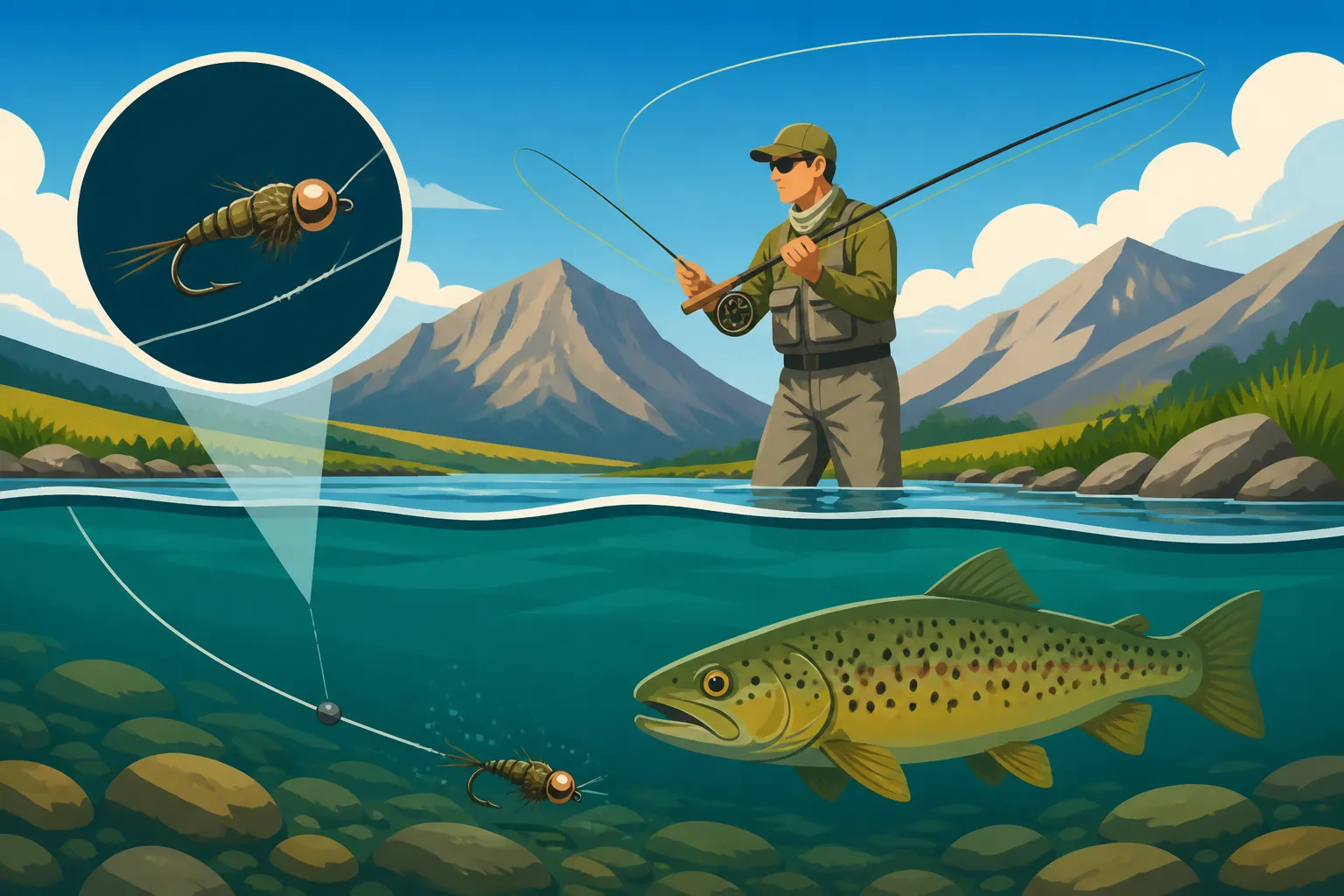
- Attach your first fly (lead fly): Tie on your heaviest nymph (often a bead-head stonefly, a San Juan Worm, or a heavier Caddis Larva) directly to the end of your leader using a strong knot like a improved clinch or Davy knot. This fly acts as your primary weight.
- Add your second fly (dropper): From the bend of the hook of your lead fly, tie a piece of tippet (usually 12-18 inches long) using a non-slip mono loop or an Orvis knot. To the end of this tippet, tie your second, lighter nymph. This could be a smaller mayfly imitation, a midge, or an emerger. This two-fly setup allows you to present two different food sources at once and explore different depths.
- Place your split shot (if needed): If your flies aren't getting down fast enough, add small split shot above your lead fly, typically 6-12 inches up the tippet. Start with one or two small pieces and add more if necessary. The goal is just enough weight to get down, but not so much that it frequently snags.
- Position your indicator: Attach your strike indicator to your leader. The distance from the indicator to your last fly should be approximately 1.5 to 2 times the depth of the water you are fishing. This ensures your flies are drifting near the bottom, where most trout feed. For instance, if you're fishing a 4-foot deep riffle, set your indicator 6-8 feet above your last fly.
The beauty of this rig is its simplicity and effectiveness. It works well for covering a lot of water and for those moments when you're not entirely sure about the exact depth or where the fish are holding.
European Nymphing and Contact Nymphing
While the indicator rig is a workhorse, there's a growing appreciation for European Nymphing (also known as Euro Nymphing or French Nymphing) techniques, especially for technical tailwaters with complex currents and spooky fish. This method aims for direct contact with your flies, eliminating the need for a bulky indicator and relying on a sensitive sighter material for strike detection. It's particularly effective when fishing pocket water, seams, and runs where precise depth and drift are critical.
Here's a simplified breakdown:
- Specialized Leader: Forget your standard tapered leader. Euro nymphing leaders are typically very long (15-25 feet), often hand-tied with varying diameters of monofilament and fluorocarbon. The key is the "sighter" section – a brightly colored, often bi-color, section of monofilament that acts as your strike detector. It has very little taper, allowing for maximum sensitivity.
- Weighted Flies are Key: Unlike indicator nymphing, where split shot is common, Euro nymphing relies almost exclusively on heavily weighted flies, usually with tungsten beads. Your flies themselves provide the necessary weight to get down quickly.
- The "Anchor Fly": The heaviest fly in your rig (your "anchor") is tied to the very end of your tippet. This fly helps pull the entire rig down.
- Dropper Flies: One or two lighter nymphs are then tied above the anchor fly, usually spaced 18-24 inches apart, off small tag ends or directly to the leader. This creates a multi-fly system that explores different depths.
- No Indicator (mostly): The sighter section of your leader is held just above the water's surface, and any pause, twitch, or movement in the sighter indicates a strike. The direct connection to your flies allows you to "feel" subtle bumps and takes that an indicator might miss.
This technique is fantastic for its stealth and sensitivity, allowing for incredibly precise drifts and immediate strike detection. It requires a lot of practice and a good understanding of How to Read Water When Trout Fishing, but once mastered, it can be incredibly effective on difficult fish. Many experienced anglers fishing places like Gray Reef on Wyoming's North Platte River swear by it.
Specialized Rigs for Specific Conditions
Beyond the standard and Euro nymphing rigs, there are a few specialized setups that can be invaluable in specific Wyoming tailwater conditions:
- The "Suspension" or "Dry-Dropper" Rig: This rig uses a buoyant dry fly as your "indicator" and suspends one or two nymphs beneath it. It's excellent for shallower water, choppy conditions where a traditional indicator might get lost, or when fish are occasionally looking up for dries but still primarily feeding subsurface. The dry fly also offers a chance at a bonus fish! You tie your dry fly to the end of your leader, then attach a piece of tippet (12-36 inches) from the bend of the dry fly's hook to your nymph.
- The "Pinch-On Weight" Rig: Sometimes, you need to get really deep, really fast, or you're fishing larger, faster runs. This rig simplifies weight adjustment. You might use a single fly, or even two, and then attach substantial split shot (or even a specialized "slinky" weight) on your tippet well above your flies. The key here is using enough weight to bottom bounce, but not so much that you're constantly snagging. This is often used in situations where fish are hugging the bottom in strong currents, and you need to get into their feeding lane quickly. Remember to always adjust your weight and indicator depth to match the water you're fishing, whether it's the slower, deeper sections or faster riffles. You can buy pre-made rigs and a variety of split shot sizes on Amazon to help you quickly set up for different scenarios.
Mastering the Drift: Presentation is Everything
You can have the most expensive gear and the most perfectly tied flies, but if your drift isn't natural, you're just casting practice. In the clear, consistent flows of Wyoming's tailwaters, trout have ample time to inspect your offering. A natural, drag-free drift is paramount; it convinces the fish that your fly is a helpless, tasty morsel, not a piece of line attached to a hungry angler.
Achieving a Drag-Free Presentation
This is the holy grail of nymphing. A drag-free drift means your fly is moving at the exact same speed as the surrounding current, just like a natural insect would. Any unnatural tug or acceleration (drag) on your fly will instantly spook wary tailwater trout. Here's how to fight it:
- Mending: This is your primary weapon against drag. As your line floats downstream, the various currents in the river will pull on different sections of your fly line and leader, creating drag. To counter this, you "mend" your line by lifting a section of it off the water and repositioning it upstream, effectively putting a belly of line in the direction of the faster current or taking it out of a slower current. This allows your fly to continue drifting naturally downstream without being pulled. A longer rod, like a 10-foot 5-weight, significantly aids in mending. Mastering the "reach cast" – a cast that puts an immediate mend into your line as it lands – is also invaluable.
- Leader Length: A longer leader (9-12 feet, sometimes even longer for Euro Nymphing) helps separate your fly from the main fly line, which is more susceptible to surface currents. The longer the leader, the more buffer you have against drag.
- Casting Angle: Instead of casting directly upstream, try casting slightly upstream and across the current. This angle gives you more time to establish a drag-free drift before your fly passes your position and allows you to lead the fly downstream.
- Observation: Pay close attention to your indicator. If it's speeding up, slowing down, or moving erratically compared to the surrounding current, you have drag. Practice observing natural debris or bubbles to gauge the true speed of the current.
Achieving a truly drag-free drift is a continuous process of casting, mending, and adjusting. It takes practice, but it's the single most important skill for consistent nymphing success.
Reading the Indicator and Detecting Strikes
Your strike indicator is your most important tool for detecting takes, especially in indicator nymphing. It's not just a bobber; it's a finely tuned sensor.
- Sudden Stop or Hesitation: The most obvious sign is when your indicator suddenly stops or pauses mid-drift. This almost always means a fish has taken your fly or you've snagged the bottom. In fast water, sometimes even a slight hesitation is enough.
- Acceleration: If your indicator speeds up unnaturally, it might mean a fish has taken your fly and is moving with the current, creating slack or pulling the indicator faster.
- Lateral Movement: Any unnatural sideways movement or twitch of the indicator that isn't consistent with the current flow is a definite sign.
- Subtle Dips: Sometimes, especially with very light takes, the indicator might just dip slightly, even a quarter of an inch, before returning to its position. Don't ignore these subtle movements!
When you see any of these signs, set the hook! It's better to set on a snag than to miss a fish. The hook set should be quick and firm, but not overly powerful, a gentle sweep of the rod tip upstream or to the side. With Euro nymphing, the sighter material will dip, stop, or twitch. Since you have direct contact, you'll also feel subtle bumps or pressure changes. This requires heightened awareness and quick reflexes. Detecting strikes, especially subtle ones, is a skill that only comes with time on the water, but consistent observation of your indicator and aggressive hook sets will greatly improve your catch rate.
Hook Setting and Fighting Fish in Strong Currents
Once you detect a strike, a swift and decisive hook set is crucial. Too soft, and the hook won't penetrate; too hard, and you might break your tippet, especially with lighter fluorocarbon.
- The Sweep: Instead of a sharp, vertical jerk, aim for a smooth, arcing sweep of your rod tip upstream and to the side. This allows the rod to absorb the shock and helps bury the hook securely.
- Strip Set vs. Rod Set: While dry fly fishing often calls for a "strip set" (pulling line by hand before raising the rod), nymphing typically favors a direct "rod set" due to the constant mending and varying distances. However, in certain Euro nymphing scenarios, a strip set can be effective.
- Fighting the Fish: Wyoming's tailwater trout, particularly brown trout and rainbow trout, can be incredibly strong. Keep constant pressure on the fish, letting your reel's drag do its job. Avoid "horsing" the fish, as this will often lead to broken tippets or pulled hooks. If the fish runs downstream, follow it if possible, applying side pressure to turn its head. Use your rod's flexibility to absorb powerful surges. Remember that a lot of these waters require Catch-and-Release Rules on Wyoming Waters, so fighting them efficiently but gently is important for their survival. When dealing with larger trout, a good net is essential for a quick and safe landing, especially when practicing Catch and Release Best Practices for Trout.
Reading the Water: Where Trout Hold in Tailwaters
Knowing how to nymph is one thing; knowing where to nymph is another entirely. Trout in tailwaters are highly efficient feeders, constantly positioning themselves in places where food is abundant and energy expenditure is minimal. Learning to "read the water" is about understanding these prime locations.
Riffles, Runs, and Pools
Each of these distinct water features offers different feeding opportunities and challenges:
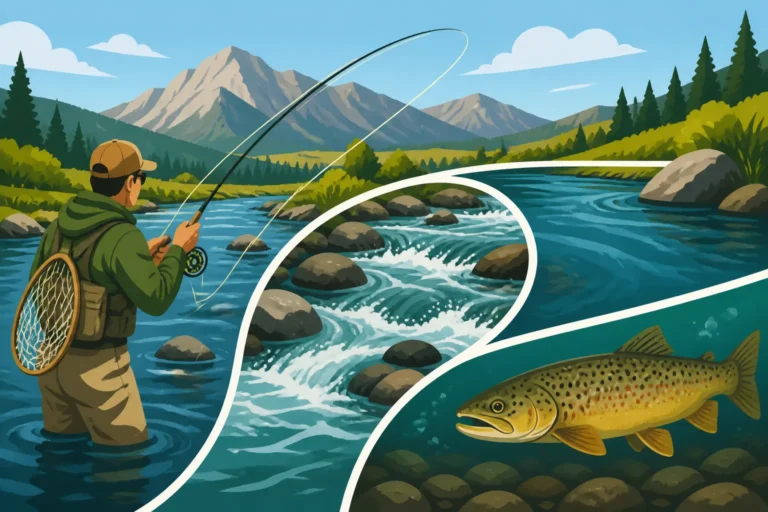
- Riffles: These are shallower, faster-moving sections of river where the water tumbles over rocks, creating oxygenation and dislodging insects from the bottom. Trout often hold in the slower pockets behind larger rocks or in the seams along the edges of the main current, waiting for food to wash into their mouths. When nymphing riffles, focus on getting your flies down quickly into these seams and pockets. The current will naturally help create a drag-free drift if you manage your line well. This is a classic area to find actively feeding fish, especially in the mornings and evenings.
- Runs: Runs are typically deeper, smoother, and more consistent sections of water, often found downstream from riffles or pools. They offer excellent holding water for larger trout who don't want to expend too much energy fighting currents. Look for subtle current seams, depth changes, and submerged structure. The key to nymphing runs is to achieve a long, drag-free drift that covers the entire feeding lane. This is where your longer rod and effective mending really shine. The consistent flow often means a consistent food delivery, making them prime targets.
- Pools: Pools are the deepest, slowest sections of the river. While they hold plenty of fish, especially large ones, they can be challenging to nymph due to the slow current and often extreme clarity. Trout in pools tend to be very spooky. Focus on the heads of pools (where the faster water enters), the tails of pools (where the water speeds up before exiting), and any areas with submerged structure like logs or deep drop-offs. When nymphing pools, use lighter tippet, smaller flies, and focus on an incredibly subtle, drag-free presentation. Consider How to Fish a Deep Pool for Big Trout to target those behemoths.
Each of these water types requires a slight adjustment in your approach, from fly selection to leader length and indicator placement. Observing the current and visualizing how your flies are drifting beneath the surface is key.
Seams, Edges, and Structure
Trout are structure-oriented creatures, constantly seeking shelter from strong currents, predators, and bright sunlight. Understanding these micro-habitats is crucial for precise nymphing.
- Current Seams: These are the invisible lines where two different current speeds meet. Think of a fast current running alongside a slower current, or a main current brushing against a submerged rock. Food often concentrates along these seams, and trout will position themselves in the slower water just inside the seam, darting into the faster current to grab a passing meal. These are absolute gold mines for nymphing.
- Undercut Banks: Where the river current has eroded the bank, creating an overhang, is a classic trout hideout. These areas offer shade, protection from predators, and a natural ambush point for insects washing downstream. Nymphing along undercut banks can be incredibly productive, but also risky for snagging your flies. A good, accurate cast that lands your flies right against the bank, allowing them to tumble under, is often the ticket. Learning How to Fish an Undercut Bank effectively is a skill every tailwater angler should develop.
- Submerged Structure: Large rocks, fallen logs, root wads, and even subtle changes in bottom contour all provide cover and current breaks for trout. Fish will hold in front of, behind, or alongside these structures, waiting for food. Careful casting to get your flies into these tight spots, often with a slightly heavier nymph to ensure it gets down quickly, can pay off with larger fish.
- Edges: The very edges of the river, especially those with bankside vegetation or shallow riffles, are often overlooked. Smaller trout and even larger ones, particularly during low light or when hatches are occurring, will cruise these edges looking for food. Don't neglect these often-accessible areas, especially if you're trying to avoid the crowds.
Mastering Where Trout Hide in Fast-Moving Water is about combining your understanding of these features with your ability to present a fly. These are the prime locations where trout conserve energy while maximizing their feeding opportunities.
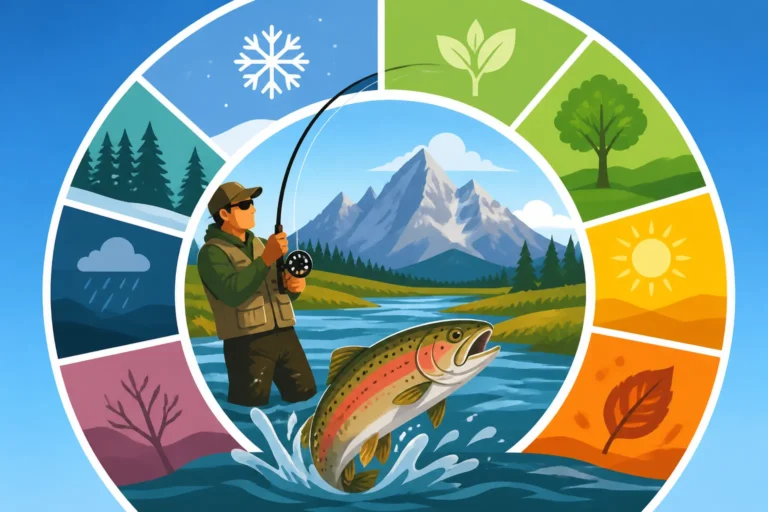
Seasonal Nymphing Strategies for Wyoming Tailwaters
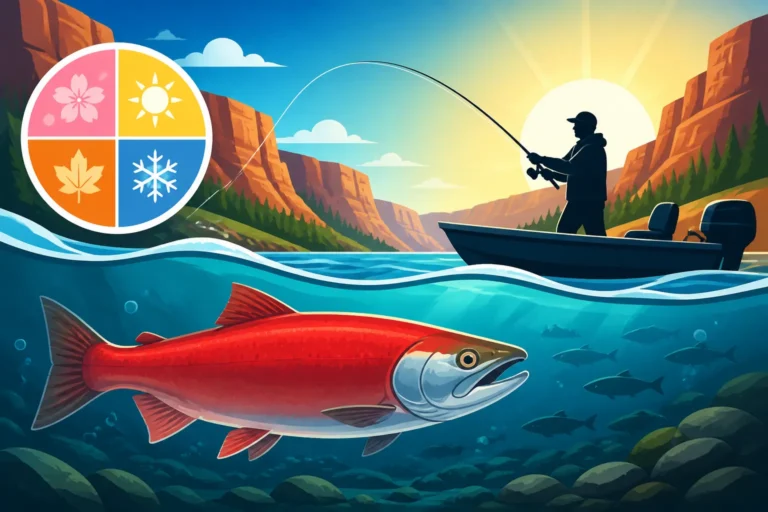
Wyoming's tailwaters offer year-round fishing, but the effectiveness of certain nymphing techniques and fly patterns can shift dramatically with the seasons. Understanding these seasonal nuances will help you adapt your approach and keep you catching fish, whether it's the dead of winter or the heat of summer.
Winter Nymphing: Slow and Deep
Winter nymphing on Wyoming tailwaters like the Bighorn River or the North Platte can be incredibly productive, offering some of the best opportunities for large, healthy trout, often with fewer crowds. However, trout metabolism slows down dramatically in cold water, making them less willing to move far for a meal.
- Focus on the Deepest, Slowest Water: Trout will congregate in the deepest, slowest pools and runs, often near the bottom, conserving energy. Target these areas exclusively. Look for the "frog water" – sections where the current barely moves.
- Small Flies, Slow Drift: Midges are the dominant food source in winter. Size 18-24 midge larvae and pupae patterns (like black, red, or cream zebra midges, bloodworms, and tiny mercury midges) are absolute necessities. Small baetis (blue-winged olive) nymphs are also important. Your drift needs to be painstakingly slow and deep, staying in the strike zone for as long as possible.
- Fine-Tuned Weight and Indicator: Use just enough weight to tick the bottom occasionally without snagging. Your indicator should be set deeply, perhaps 1.5 to 2 times the actual depth of the water, ensuring your tiny flies are presented right on their nose.
- Subtle Takes: Winter takes are often incredibly subtle – a slight pause, a twitch of the indicator, or even just a feeling of "heaviness." Set the hook on anything suspicious.
- Warmth is Key: Dress in layers, wear good waders, and bring hand warmers. Your comfort directly impacts your ability to focus and detect those subtle takes. Winter is prime time to learn Why Tailwaters Fish Well in Winter and refine your Best Winter Fishing Technique Below Flaming Gorge Dam.
Spring and Fall: Major Hatches and Transitions
Spring and fall are transition seasons that can offer some of the most exciting and varied nymphing opportunities, often characterized by significant insect hatches and active fish.
- Spring Runoff and Pre-Runoff: Before peak runoff (typically late May/early June), spring can be fantastic. As water temperatures slowly rise, larger nymphs like stoneflies and caddis become active. Baetis hatches become more consistent. During runoff itself, nymphing can be challenging due to high, turbid water, but often the fish will move to the slower edges. Focusing on larger, dark-colored nymphs that create a strong silhouette can be effective then. Early spring also presents opportunities to chase Brown Trout Fishing in Wyoming as they become more active after winter.
- Fall Spawning Runs: Fall is arguably the best time for trophy brown trout. As water temperatures drop and days shorten, brown trout begin their spawning migration upstream. They become aggressive, and larger nymphs like stoneflies, large caddis larvae, and even egg patterns (imitating trout eggs) can be incredibly effective. Don't forget streamer patterns as well, often fished alongside a nymph. This is also when Kokanee Salmon Fishing in Wyoming can be excellent on some tailwaters as they also begin their spawning ritual, and trout will key into their eggs.
- Changing Food Sources: Throughout spring and fall, keep an eye on the water for emerging insects. Baetis, caddis, and even larger mayflies like Green Drakes can make appearances. Adjust your nymph patterns to "match the hatch" that is about to occur. For example, if you see caddis pupae floating in the surface film, a caddis pupa imitation fished slightly higher in the water column might be the ticket. Consider Best Wyoming Fly Patterns for Cutthroat Trout or similar resources for seasonal patterns.
Summer Nymphing: Terrestrials and Cooler Water
Summer on Wyoming's tailwaters can be excellent, but it requires strategy, especially during the heat of the day. Warm water generally means fish are more active, but they also seek refuge.
- Early Morning and Late Evening: During the peak heat of summer, trout often feed most actively during the cooler parts of the day. Get on the water at dawn or stay until dusk.
- Terrestrials: As summer progresses, grasshoppers, ants, and beetles often fall into the water. While primarily dry fly opportunities, a large hopper pattern as an indicator with a nymph dropper (like a small attractor nymph or midge) can be incredibly effective.
- Caddis and Mayfly Hatches: Summer sees prolific caddis hatches (like spotted sedges) and various mayflies. Nymphing with imitations of these larvae and pupae can be very productive.
- Oxygenated Water: During the hottest parts of the day, trout will seek out cooler, more oxygenated water. Look for the heads of riffles, current seams, and areas with faster flows where oxygen levels are higher. Deeper pools and runs might still hold fish, but they could be lethargic.
- Trophy Hunting: While many anglers target Rainbow Trout Fishing in Wyoming in the summer, it's also a good time to target Cutthroat Trout Fishing in Wyoming in the more remote or higher elevation tailwaters, often finding them willing to take a variety of nymph patterns. Understanding How Water Temperature Changes Wyoming Trout Behavior is key to finding active fish in summer.
Troubleshooting Common Nymphing Challenges
Even the most seasoned nymph anglers face challenges. The clear water, inconsistent flows, and sometimes finicky fish in Wyoming's tailwaters can test your patience. Knowing how to diagnose and address common issues will save you a lot of frustration and help you stay in the game.
Not Getting Down to the Fish
This is arguably the most common nymphing problem, and it's frustrating because if your flies aren't in the fish's feeding lane, you simply won't catch them.
- Not Enough Weight: The first and most likely culprit. Are you using enough split shot or heavily weighted flies? Start by adding one or two more small pieces of split shot (or switching to a tungsten bead nymph) and observe your indicator. Is it tracking along the bottom, occasionally ticking rocks? If not, add more. The goal is to feel the bottom every few drifts.
- Indicator Set Too Shallow: If your indicator is too close to your flies, they won't have enough leader length to sink to the desired depth. Remember the 1.5 to 2 times depth rule. If you're fishing 6 feet of water, your indicator should be 9-12 feet above your last fly.
- Thin Water: Are you actually fishing deep enough water? Sometimes anglers spend too much time in shallow areas where fish aren't holding. Focus on the deeper runs, pools, and current seams.
- Leader Drag: If your fly line or leader is being pulled by surface currents (drag), it will prevent your flies from sinking naturally. Review your mending techniques and casting angles to ensure a drag-free drift. Even the slightest drag can lift your nymphs out of the strike zone.
- Wrong Fly Choice: Some flies are naturally more buoyant than others. If you're using unweighted flies without sufficient external weight, they might not sink well. Consider flies with heavier beads (e.g., tungsten instead of brass).
Always evaluate these factors systematically. Start with increasing weight, then adjust indicator depth, and finally, refine your drift.
Missing Strikes or Fish Coming Off
You've got a strike, you set the hook, but nothing's there or the fish comes off halfway through the fight. This is a common issue that can often be resolved with slight adjustments.
- Slow Hook Set: Are you waiting too long? Tailwater trout can spit a fly incredibly quickly. React immediately to any unusual movement of your indicator. A split-second delay can be the difference.
- Weak Hook Set: Are you setting the hook with enough authority? A gentle sweep is good, but it still needs to be firm enough to drive the hook point home, especially with thicker-mouthed fish like large brown trout.
- Dull Hooks: This is an often-overlooked problem. Always check your hook points, especially after snagging the bottom. A quick sharpen with a small hook file can make a huge difference in penetration. Even brand-new flies can sometimes have dull points.
- Wrong Hook Size: If your flies are too small for the fish you're targeting, the hook might not get a good bite. Conversely, if the hook is too large for the fish's mouth, they might not take it properly.
- Slack Line During Fight: Once you've hooked a fish, keeping constant pressure is vital. Any slack in the line can allow the hook to dislodge. Keep your rod tip high (but not directly overhead) and use the reel and side pressure to control the fight. Also, make sure your drag is set properly – not too tight, not too loose. For more on this, check out How to Set the Hook on a Trout Without Losing It.
Practice quick, decisive hook sets and maintain consistent pressure throughout the fight.
Fly Choice and Adaptability
Sometimes, you're doing everything right, but the fish just aren't interested. This often points to fly choice.
- Matching the Hatch (Subsurface): Just because you don't see fish rising doesn't mean there isn't a "hatch" occurring subsurface. Turn over rocks in the stream to see what nymphs, larvae, and pupae are present. Pay attention to their size, shape, and color. Use resources like Matching the Hatch on Wyoming Rivers to guide your selections.
- Size Matters: Trout can be incredibly selective about size. If your typical size 16 mayfly isn't working, try a size 18 or even a 20. Conversely, if you're not getting hits, sometimes a larger, more visible fly (like a larger stonefly) can spark interest.
- Color Variations: Even subtle color changes can make a difference. If fish are keying in on olive baetis, a slightly darker or lighter olive might be preferred. Carry a good selection of the same pattern in different sizes and colors.
- Attractor Patterns: Don't be afraid to use attractor nymphs, especially as your lead fly. Patterns like a Prince Nymph, Squirmy Wormy, or a colorful hot spot nymph don't imitate a specific insect but rather trigger an aggressive strike from a trout. Often, an attractor with a small, naturalistic dropper is a deadly combination.
- Experimentation: If one pattern isn't working, switch it up! Try a different type of insect, a different size, or a different color. Don't be afraid to experiment throughout the day, especially if conditions change. A good selection of flies, easily organized, can make on-the-water adjustments quick and seamless. You can find a huge variety of fly patterns on Amazon, which is a convenient way to stock your fly box.
Disclaimer
Please be aware that fishing regulations in Wyoming can change. Always consult the most current Wyoming Game and Fish Department regulations booklet before heading out on the water. This article is for informational purposes only and does not supersede official regulations.