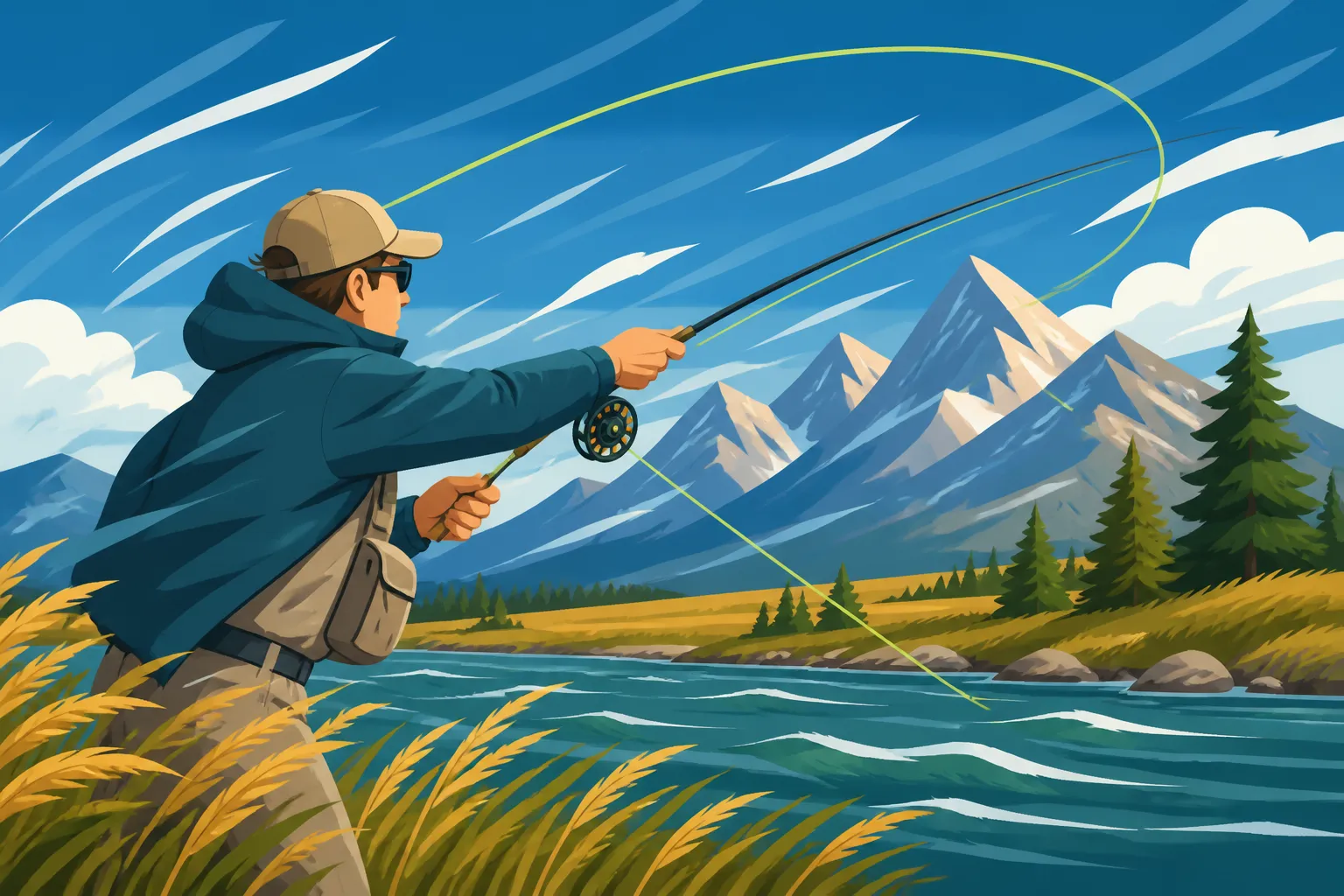
How to Cast in Windy Conditions
Oh, the wind! If you've spent any time casting a line in Wyoming, you know that what starts as a calm, beautiful morning can quickly turn into a full-blown battle against relentless gusts. There's nothing more frustrating than trying to hit a sweet spot on the water only to have your perfectly timed cast unravel into a tangled mess or blow twenty feet off target. This guide is here to commiserate with those struggles and equip you with practical, real-world strategies to conquer even the gustiest Wyoming fishing days, helping you maintain your sanity and, more importantly, catch some fish.
The Frustration of Wind: How it Messes Up Your Cast
Let's be honest, wind is probably every angler's least favorite fishing companion, especially when you're trying to achieve any semblance of accuracy or distance. In a state like Wyoming, where open plains meet towering mountains and canyons, wind can swirl and change direction in an instant, turning a serene outing into a wrestling match with your rod and line.
Understanding Wind Resistance and Line Management
Think about it: your fly line, leader, tippet, and even your fly or lure present a surface area for the wind to grab hold of. The moment you begin your cast, the wind tries to take over, dictating where your line goes and often, tragically, where it ends up. For fly anglers, a strong crosswind can collapse your carefully crafted loop, turning it into a snarled heap of monofilament that drops dead in the water, or worse, tangles around your rod tip. Spin casters aren't immune either; light lures can become uncontrollable projectiles, and even heavier baits can be pushed far off course, landing in trees, brush, or simply miles from where you intended.
The biggest headaches usually involve line management. Wind can whip loose line around, causing dreaded wind knots (those tiny, frustrating knots that appear out of nowhere, often right where you need strength the most). It can also make mending your line a nightmare, constantly pulling it off course or creating unwanted slack. It's not just about getting the cast out there; it's about controlling it, and that's where the wind truly tests our patience. Wyoming's vast, exposed waters, like parts of Flaming Gorge Reservoir or high-alpine lakes, are notorious for their unpredictable gusts, making these challenges a frequent reality.
The Mental Game of Windy Conditions
Beyond the physical challenges, fishing in the wind can be a significant mental hurdle. It's easy to get discouraged when your efforts consistently fail, and every cast feels like a clumsy attempt. You might find yourself gripping the rod tighter, rushing your movements, or simply giving up on specific techniques you know would work on a calm day. This frustration can quickly diminish the enjoyment of being out on the water, turning what should be a relaxing experience into a stressful one.
But here's the thing: every angler, from the seasoned veteran to the beginner, struggles with wind. It's not a sign of your lack of skill; it's just a stubborn element of nature that requires a different approach. The key is to acknowledge the difficulty, let go of the frustration, and focus on adapting. Remind yourself that a successful cast in windy conditions feels incredibly satisfying, and with the right strategies, you can still have a productive and enjoyable day. Many of the techniques discussed in this guide, such as those you'd learn in a comprehensive lesson on Fly Fishing Techniques for Wyoming Trout Streams, will become second nature with practice.
Fundamental Adjustments for Casting in the Wind
When the wind picks up, the worst thing you can do is try to cast exactly as you would on a perfectly still day. You'll just end up fighting the wind, and the wind always wins. Instead, think of it as a dance: you need to adjust your steps to match your partner's unpredictable moves. These fundamental adjustments are universal, whether you're fly fishing or spin fishing.
Lowering Your Casting Arc
One of the most effective ways to reduce the wind's influence on your line is to keep your cast low. The higher your line goes into the air, the more surface area it exposes to the wind, giving those gusts more time and leverage to wreak havoc. By lowering your casting arc, you keep the line closer to the water or ground, significantly minimizing the time it spends vulnerable to the wind's push and pull.
For fly anglers, this often means transitioning from an overhead cast to a sidearm cast or even a roll cast. A sidearm cast keeps your line traveling horizontally, often just a few feet above the water. It’s like slicing through the air rather than floating over it. Roll casts, in particular, are fantastic for headwinds or when you have obstructions behind you, as they generate line speed primarily in front of you. When learning Spin Fishing Techniques for Beginners, practicing a low, controlled sidearm cast is an excellent skill for any conditions, but especially for wind. You're effectively punching your lure or fly under the wind's main force.
Increasing Line Speed and Power
To cut through the wind, your line needs authority. A limp, weak cast will simply buckle under pressure. This means generating more line speed and delivering a more powerful, assertive cast. For both fly and spin fishing, this comes down to how you load and unload your rod.
For fly fishing, focus on a shorter, more abrupt casting stroke with a crisp, positive stop at the end of both your backcast and your forward cast. This "stop" is crucial because it snaps the rod tip forward, transferring energy efficiently into the line and forming a tight, aerodynamic loop that can punch through the air. You're not trying to muscle the cast with brute force; rather, you're using the rod's flexibility to catapult the line. For spin fishing, a powerful, snappy retrieve and release, using your core and wrist more than just your arm, will impart more momentum to your lure, helping it cut through the air rather than get tossed around. You want your lure to be a dart, not a feather.
Timing Your Cast with Gusts
This is where observation and patience truly pay off. Wyoming's winds often come in unpredictable gusts. Instead of constantly fighting a losing battle, take a moment to observe the wind patterns around you. Watch the trees, the ripples on the water, or any nearby flags. Is the wind constant, or does it ebb and flow?
Often, there will be lulls between stronger gusts. This is your window of opportunity. Wait for a moment when the wind seems to soften, even for a second, and then execute your powerful, low cast. Trying to cast into the teeth of a strong gust is usually a recipe for disaster. It takes discipline to wait, especially when you see fish rising or you're eager to get your line out, but timing your cast with the natural rhythm of the wind can drastically improve your accuracy and efficiency. This awareness is a critical part of How to Read Water When Trout Fishing in challenging conditions.
Mastering Specific Wind Directions
The direction of the wind relative to your position makes a huge difference in how you approach your cast. What works for a headwind will almost certainly fail in a crosswind, and vice versa. Being able to adapt to these different scenarios is a hallmark of a proficient angler in Wyoming.
Casting into a Headwind
A direct headwind is arguably the most challenging. It actively pushes against your line and lure, robbing your cast of distance and often collapsing your loops. The key here is an aggressive, low, and powerful cast.
For fly anglers, this means really driving that forward cast. Keep your casting arc extremely low, almost parallel to the water. Your goal is to throw a tight, narrow loop that has minimal surface area for the wind to grab. Some anglers even suggest "powering through" the forward cast with a little extra oomph, but remember to maintain that crisp stop. You might also find that roll casts or even spey casts (if you're on a river with room) can be more effective for getting your fly out without fighting the wind as much on the backcast. Consider shortening your leader and using heavier flies to help penetrate the wind.
Spin fishermen will want to use heavier lures or baits that have more mass to cut through the air. Streamlined designs, like spoons or jigs, tend to fare better than bulky, high-resistance lures. Again, a low, powerful sidearm or overhead cast that emphasizes speed and a strong release will help propel your offering forward before the wind can push it back. This is where choosing Best Lures for Wyoming Rainbow Trout that are a bit heavier can make a real difference.
Casting with a Tailwind
Ah, the tailwind! This can be your best friend or your worst enemy. If managed correctly, a tailwind can add incredible distance to your cast. If mishandled, it can create a mess of tangles, particularly for fly anglers.
For fly fishing, a tailwind can assist your forward cast, making it feel effortless. However, the danger lies in "tailing loops" or "wind knots" forming if your loop opens up too much, or if your backcast is too aggressive and the line crashes into itself behind you. Focus on a smooth, controlled casting stroke. Let the wind do some of the work, but don't let it take over entirely. A slightly open loop on the backcast can help prevent the line from piling up and tangling. On the forward cast, don't over-power it; just guide the line out, letting the wind carry it.
Spin fishermen will find a tailwind to be a huge advantage for distance. You can often use lighter lures and still achieve impressive casts. The main thing to watch out for is your line piling up on the water or shore if you over-cast. Keep an eye on your lure's trajectory and be ready to feather your spool or stop your cast early to prevent slack and potential tangles. This extra distance can be key when targeting fish that might be holding further out, especially on large, open waters like Wyoming's Boysen Reservoir.
Dealing with Crosswinds
Crosswinds are tricky because they push your line sideways, making accurate presentations incredibly difficult. The trick here is to use your body and rod position to create a "shield" from the wind.
For fly anglers facing a crosswind, the goal is to cast under the wind or to use an angled cast that protects your loop. If the wind is coming from your left, for example, cast with a sidearm motion from left to right. This keeps your casting arm and body between the wind and your fly line, shielding the loop from collapsing. The line travels on the downwind side of your body. If the wind is from your right, you'll need to cast from right to left, again keeping your body as a barrier. This often feels awkward at first, but it's a game-changer. You might also want to orient yourself so the wind is blowing towards your non-casting shoulder, if possible, allowing you to cast "into" the wind while still maintaining a somewhat comfortable angle.
Spin fishermen should also use a sidearm cast when dealing with crosswinds, aiming to cast slightly upwind of your target and letting the wind drift your lure into position. Much like fly fishing, try to keep your rod on the upwind side of your body during the cast to protect the line. Pay close attention to your retrieve, as the crosswind will continually try to bow your line, making it harder to detect subtle bites. This is a situation where having a good sense of where your line is in the water is critical, something emphasized in How Wind Affects Fishing on Wyoming Reservoirs.
Gear and Setup Tweaks for Windy Wyoming Days
Sometimes, no matter how much you adjust your casting technique, the wind is just too strong for your current setup. This is when a few smart gear choices and adjustments can make a significant difference, turning a frustrating day into a manageable one.
Choosing the Right Rod and Line
Your rod and line are your primary tools, and some are simply better suited for windy conditions than others.
For fly anglers, a heavier weight rod (think 6-weight to 8-weight, perhaps even higher for really big water or aggressive fish) will have more backbone to generate the power needed to punch through the wind. A fast-action rod will load and unload quickly, which is crucial for those crisp, powerful stops. Pair this with a weight-forward fly line that has an aggressive front taper, specifically designed to cut through the wind and turn over larger flies. Brands like Scientific Anglers or Rio offer lines explicitly marketed for "wind" or "distance," which can be a worthy investment.
For spin fishermen, a slightly stiffer, medium-heavy action rod will give you the leverage and power to cast heavier lures effectively against the wind. When choosing a line, consider braided line for its thin diameter and lack of stretch, which helps with casting distance and sensitivity in wind. However, braid can also be more prone to wind knots if not managed carefully. Alternatively, a good fluorocarbon line offers less stretch than monofilament and sinks, which can help keep it out of the wind's grasp once it's in the water. Remember, your rod and line are a system; they need to work together to be effective. When considering your Best Rod and Reel Combo for a Beginner, keep potential windy conditions in mind for versatility.
Leader and Tippet Adjustments
The connection between your main line and your fly or lure also plays a critical role in windy conditions.
For fly anglers, a shorter and slightly heavier leader and tippet setup will greatly reduce wind resistance. Instead of a long, delicate 9-foot leader tapering down to a fine 5X tippet, you might opt for a 7.5-foot leader that ends in 3X or even 2X. This shorter, thicker setup creates less surface area for the wind to grab and helps to turn over your fly more aggressively, ensuring it reaches its target. This is especially true when fishing Wyoming's High-Alpine Lakes, where winds can be intense and a longer leader can just get shredded or tangled.
For spin fishermen, your leader choice depends on what you're targeting. If using a fluorocarbon main line, you might not need a separate leader. If using braid, a fluorocarbon leader is still a good idea for abrasion resistance and stealth. Ensure your knots are strong and secure; windy conditions can put extra stress on your tackle.
Essential Accessories for Wind
Beyond your rod and line, a few key accessories can make a windy day much more tolerable and productive:
- Polarized Sunglasses: These are absolutely non-negotiable in Wyoming, but even more so on windy days. They protect your eyes from glare off the water, helping you spot fish and structure, but critically, they also shield your eyes from flying debris, errant lines, or a wayward hook that the wind might decide to send your way. There are many affordable options available on Amazon.
- Wind-Resistant Clothing: Layers are always key in Wyoming, but prioritize wind-blocking outer shells. A good fishing jacket that cuts the wind will keep you warm and comfortable, allowing you to focus on your fishing rather than shivering. Think about durable, yet lightweight, options. This is a great point to remember when preparing for an outing and considering What to Wear Ice Fishing in Wyoming, as those conditions often include biting winds.
- Stripping Basket (for fly fishing): If you're wading in a lake or on a very windy river, a stripping basket can be a lifesaver. It keeps your stripped fly line contained and prevents the wind from blowing it around your legs or across the water, where it can tangle or get caught on snags.
- Gloves: Even if it's not freezing, a little extra grip and protection from the elements can be beneficial. Wind can dry out hands and make them stiff, impacting your dexterity.
- A Secure License Holder: While not directly related to casting, wind can snatch a loose fishing license right out of your hand or pocket. Keep your Carrying Your Wyoming Fishing License in the Field secure, perhaps in a zippered pocket or a waterproof wallet, so you don't lose it to a sudden gust.
By making these strategic adjustments to your technique and gear, you won't eliminate the wind, but you'll certainly be better equipped to deal with its challenges. It's all about playing smart, not just playing hard.
Wind Casting Strategies by Direction
| Wind Direction | Primary Casting Strategy (Fly Fishing) | Primary Casting Strategy (Spin Fishing) | Key Gear Tip | Common Problem |
|---|---|---|---|---|
| Headwind | Ultra-low, powerful forward cast; roll casts for short distances; aggressive rod stop. | Low, powerful overhead or sidearm cast; drive lure through air; fast retrieve. | Heavier weight-forward fly line; streamlined, heavier lures. | Poor distance, line collapse, tangles. |
| Tailwind | Controlled, smooth casts; allow wind to carry line; avoid over-powering forward cast. | Light to medium lures; use wind for max distance; feather spool to prevent over-casting. | Open loop backcast for fly; fluorocarbon leader for spin. | Tailing loops (fly), wind knots, line piling up. |
| Crosswind (Left to Right) | Sidearm cast from left shoulder; body acts as windbreak; protect loop on downwind side. | Sidearm cast from upwind (left) side; aim slightly upwind of target; keep rod low. | Shorter, heavier leader/tippet for fly; sensitive braid/fluoro for spin. | Line blown off target, unwanted bow in line. |
| Crosswind (Right to Left) | Sidearm cast from right shoulder; body acts as windbreak; protect loop on downwind side. | Sidearm cast from upwind (right) side; aim slightly upwind of target; keep rod low. | Shorter, heavier leader/tippet for fly; sensitive braid/fluoro for spin. | Line blown off target, unwanted bow in line. |
Disclaimer
The information provided in this article is for general guidance and informational purposes only. Fishing regulations, conditions, and best practices can change rapidly. Always consult the most current Wyoming Game and Fish Department regulations before heading out, and prioritize your safety in all weather conditions.