Auger and Shelter Basics for Wyoming Ice Fishing
There’s nothing quite like the crisp, exhilarating bite of a Wyoming winter day, especially when you’re out on the ice, waiting for that tell-tale tug on your line. But let's be real: ice fishing in Wyoming can turn from an adventure into an ordeal faster than you can say "frostbite" if you're not properly equipped. Dealing with howling winds, sub-zero temperatures, and ice that feels like concrete requires more than just a warm coat – it demands the right tools, and at the core of that toolkit are your ice auger and fishing shelter. This guide is here to walk you through the nitty-gritty of choosing and using these essential pieces of gear, making sure your time on the frozen lakes and reservoirs is safe, comfortable, and productive.
Understanding Wyoming's Ice Fishing Conditions
Wyoming is famous for its stunning landscapes, but when winter rolls around, those vistas often come with extreme weather. The ice fishing season here, which typically runs from around November through March, can be a brutal test of both angler and equipment. If you’ve ever tried to set up a flimsy shelter in a 40 mph crosswind or cranked on a manual auger through 2 feet of solid ice, you know exactly what I’m talking about.
The Impact of Harsh Winters on Gear Choices
Our winters are no joke. Temperatures can plummet well below zero, especially in higher elevations or during cold snaps. Pair that with persistent, often relentless winds, and you’ve got conditions that can challenge even the most seasoned ice angler. This isn't just about discomfort; it directly affects your gear. Cheap plastic components on a shelter can become brittle and snap, zippers can freeze solid, and non-insulated fabric will simply allow the frigid air to cut right through you.
When it comes to augers, extreme cold can make starting gas engines a nightmare. You might find yourself pulling the cord until your arm aches, only for the engine to sputter and die. Propane lines can freeze up, and even modern lithium-ion batteries in electric augers lose efficiency faster in intense cold. This reality means your gear needs to be robust, reliable, and designed to withstand the kind of punishment only a Wyoming winter can deliver. Durability isn’t a luxury here; it’s a necessity for ensuring your equipment functions when you need it most and doesn't leave you stranded or frustrated on the ice.
Safety Considerations with Ice Thickness and Weather
Beyond comfort, safety is paramount. You simply cannot head out onto a Wyoming lake without knowing How Thick Ice Needs to Be to Fish Safely for your chosen activity. While an ice auger's primary job is to cut holes for fishing, it also serves a crucial safety function, allowing you to check ice thickness as you move across the water. Never assume the ice is uniform; drilling test holes frequently is a non-negotiable step to avoid unexpectedly thin spots.
The weather in Wyoming can be notoriously fickle, shifting from calm and sunny to whiteout blizzard conditions in a matter of hours. A well-constructed, properly anchored ice shelter isn't just about staying warm; it's a critical piece of emergency equipment. It provides a refuge from sudden storms, driving snow, or severe winds, potentially preventing hypothermia or frostbite. Furthermore, if you’re using a portable heater inside your shelter (which, let’s be honest, most of us are), proper ventilation is absolutely non-negotiable to prevent dangerous carbon monoxide buildup, a silent and deadly threat many anglers unfortunately overlook.
Choosing the Right Ice Auger for Wyoming Waters
When it comes to punching holes in Wyoming's thick winter ice, your auger is your best friend. But with so many options out there, how do you pick the right one? It really boils down to balancing power, portability, and your specific fishing style.
Manual vs. Power Augers: A Comparative Look
For those just getting started or who prefer simplicity, a manual auger might seem appealing. These hand-cranked tools are lightweight, require no fuel or batteries, and are the most budget-friendly option. They're excellent for quickly drilling a few holes when the ice isn't too thick, say, under 10-12 inches. They also make a fantastic backup for power augers, just in case something goes wrong. However, if you plan on targeting deeper ice, drilling many holes, or if you're dealing with the formidable, multi-foot-thick ice often found on Wyoming's larger reservoirs later in the season, a manual auger will quickly exhaust you. You'll spend more time recuperating than fishing, and trust me, your shoulders will feel it the next day.
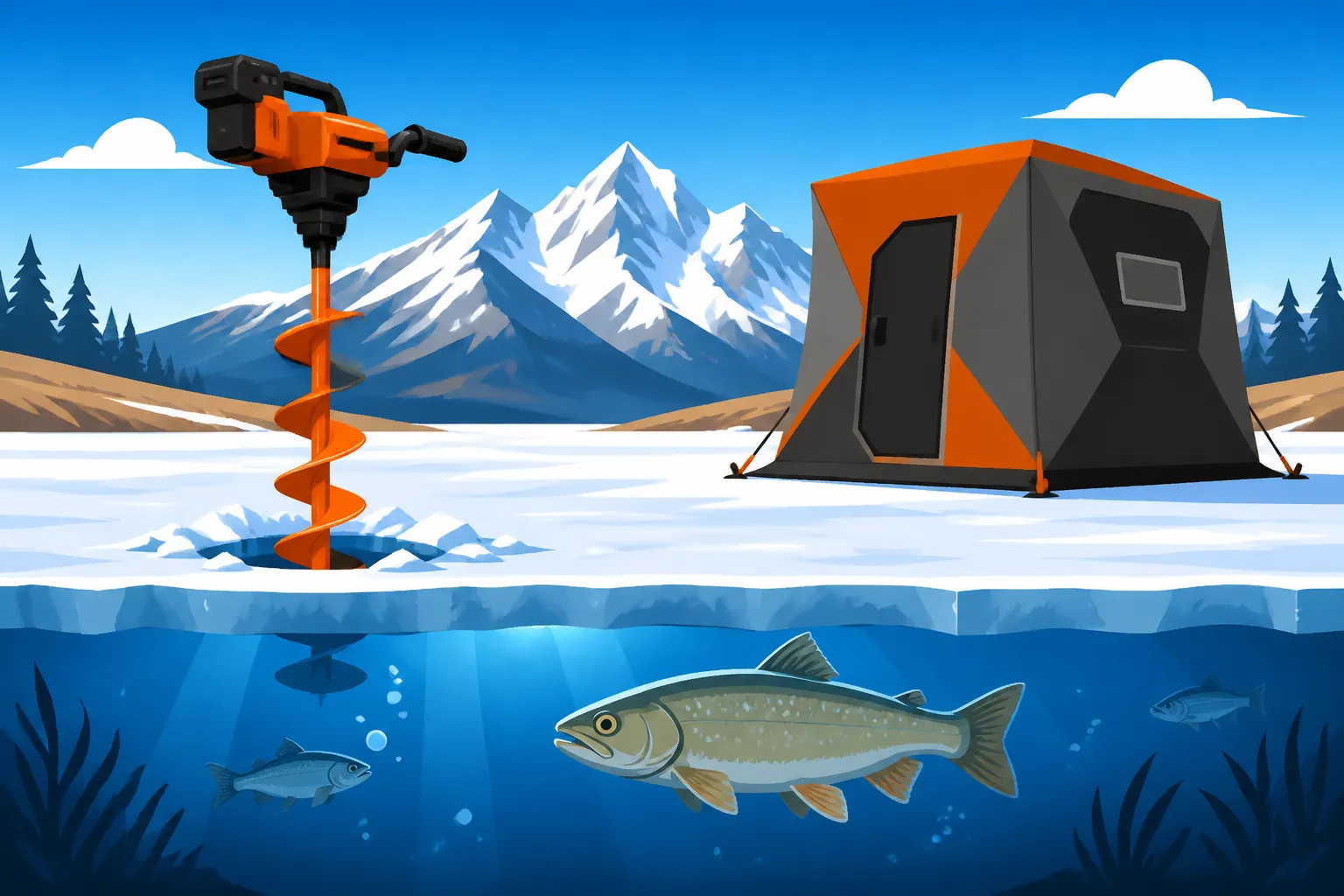
This brings us to power augers, which are generally considered essential for serious Wyoming ice anglers. These machines, whether gas, propane, or electric, make quick work of even the thickest ice, allowing you to drill multiple holes with minimal effort. This is crucial when you're trying to find active fish or quickly moving from one spot to another. The trade-off is higher cost, more weight, and the need for fuel, batteries, or maintenance. But for the sheer convenience and ability to handle tough conditions, a power auger is often a worthwhile investment, especially if you plan on extended trips or fishing expansive areas like Fishing Spots Near Casper or Flaming Gorge.
Specific Auger Types and Their Features
Within the realm of power augers, you have a few distinct choices, each with its own set of advantages and quirks that become amplified in a Wyoming winter:
- Gas Augers: These are the traditional workhorses, known for their raw power and ability to punch through virtually any ice thickness. Brands like Strikemaster and Eskimo have long been staples. They often start reliably even in extreme cold, given proper maintenance and fresh fuel. The downsides? They're noisy, produce exhaust fumes (which is a major consideration if you’re drilling inside a shelter), and require mixing oil with gas for two-stroke models, or regular oil changes for four-stroke engines. They also tend to be the heaviest option.
- Propane Augers: Offering a cleaner burn than gas, propane augers (like those from Strikemaster or Jiffy) are a great middle-ground. They produce fewer fumes, which is a big plus for use around shelters, and they’re generally less finicky to start in the cold. The challenge, however, can be the propane itself. In extremely cold temperatures, the regulators on propane tanks can sometimes freeze up, causing the auger to lose power or stop working until warmed. Many anglers will keep their spare propane tanks in their insulated sleds or even inside their shelter to keep them from getting too cold.
- Electric Augers: The newest generation of power augers, like those from Ion or Clam, run on powerful lithium-ion batteries. They are incredibly quiet, produce no fumes, and start instantly with the push of a button. This quiet operation is fantastic for stealthy fishing and allows for conversation with your buddies without shouting over an engine. The main concern for Wyoming’s extreme cold is battery life. While modern batteries are remarkably efficient, freezing temperatures significantly reduce their capacity and run time. It's often advisable to keep spare batteries warm in your jacket or an insulated bag, especially if you plan on drilling a lot of holes or embarking on a full day of fishing. Still, their ease of use and environmental benefits make them increasingly popular, especially for anglers who value silence and convenience.
Beyond power source, consider auger diameter. Common sizes range from 6 to 10 inches. Smaller holes (6-7 inches) are easier to drill and are fine for panfish or average trout. If you're chasing bigger quarry like trophy lake trout at Flaming Gorge or large walleye, an 8 or 10-inch auger is often necessary to get those big fish through the hole. Blade types, like chipper or shaver, also impact performance, with shaver blades generally cutting faster and smoother through clear ice, while chipper blades handle dirty or re-frozen ice better.
Auger Maintenance and Safe Operation
No matter what type of auger you choose, proper maintenance is crucial, especially when dealing with Wyoming's cold. For gas augers, always use fresh, stabilized fuel, and ensure the correct oil-to-gas ratio for two-stroke engines. Check spark plugs and air filters regularly. Propane augers benefit from clean fuel lines and regulators. For electric augers, proper battery charging and storage in a warm, dry place will extend their life and performance. If you're like me, you'll be checking your battery levels on the Amazon app just before a trip, ordering any replacements or accessories you might need ahead of time.
Beyond engine care, keep your auger blades sharp. Dull blades make any auger work harder and less efficiently. Carrying a spare set of blades or knowing where to get them sharpened is a smart move. When operating, always use the blade guard when not actively drilling. Wear appropriate gloves to protect your hands, and ensure a stable footing on the ice before you start drilling. Never drill too close to another angler or a shelter, and clear the area of any loose gear that could get tangled. Remember, these are powerful tools, and respecting them is key to a safe and enjoyable outing.
Selecting the Ideal Ice Fishing Shelter
An ice fishing shelter in Wyoming isn't a luxury; it's a lifeline. It provides essential protection from the elements, allowing you to fish longer and more comfortably. But just like augers, not all shelters are created equal, especially when battling Wyoming's notorious winds and cold.
Pop-Up vs. Flip-Over Shelters: Pros and Cons
The two main types of portable ice shelters you’ll encounter are pop-ups and flip-overs, and each has its fan base depending on fishing style.
Pop-Up Shelters, like those from Clam or Eskimo, are essentially specialized tents designed for ice. Their main advantages are their incredible interior space for their footprint, relatively light weight for their size, and often more affordable price points. They typically fold down into a backpack-style carrying bag, making them easy to transport over longer distances or by foot to Fishing Wyoming's High-Alpine Lakes if the ice is accessible. They're great for groups or families wanting ample room to spread out. However, they can be a real struggle to set up in high winds. Anyone who's wrestled with a pop-up shelter acting like a giant kite in a Wyoming gale knows the frustration; poles can bend, fabric can tear, and you might find yourself chasing it across the ice. Proper anchoring becomes absolutely critical, and it's often a two-person job in gusty conditions.
Flip-Over Shelters, offered by brands like Otter and Frabill, are built around a sturdy sled base. This design makes them incredibly fast to deploy – literally just flipping them over – and surprisingly wind-resistant. The sled doubles as storage for all your gear, meaning everything is loaded, secure, and ready to go before you even leave the truck. For mobile anglers who like to move and drill new holes frequently, or solo anglers who want a quick setup, the flip-over is a dream. The solid base also makes for a very warm and sturdy fishing experience. The main drawbacks are their heavier weight and bulkier transport profile compared to pop-ups, and generally less interior space for the same rated capacity. They are also typically more expensive due to their robust construction and integrated features. Deciding between the two often comes down to how much you prioritize mobility and ease of setup versus interior space and cost.
Key Features to Look For in a Wyoming Shelter
Given Wyoming's challenging climate, certain features in an ice fishing shelter move from "nice-to-have" to "absolutely essential."
First and foremost is insulation. Non-insulated shelters are little more than windbreaks and will do almost nothing to retain heat when the mercury drops. Look for shelters made with insulated fabric, often advertised with a high denier count (e.g., 600D or 900D) and a thermal layer. This insulation significantly reduces heat loss, making your portable heater much more effective and cutting down on propane consumption. You'll thank yourself when you're toasty warm inside while the wind howls outside.
Next, consider the fabric denier of the shelter. This number (e.g., 300D, 600D, 900D) refers to the thickness and durability of the fabric threads. Higher denier means tougher fabric, which translates to better wind resistance, tear resistance, and overall longevity. A cheap, low-denier shelter might save you money upfront, but it won’t stand up to a few seasons of Wyoming's brutal wind, snow, and UV exposure.
Ventilation is another critical feature, particularly if you plan to use a propane or catalytic heater. Many shelters include strategically placed vents to allow fresh air in and carbon monoxide to escape. Never block these vents, even if it feels a little colder. A small crack in a zipper or door also works to help air circulate and prevent dangerous buildup inside.
Finally, pay close attention to the anchoring system. Wyoming wind is legendary, and a shelter not properly anchored will become airborne. Good shelters come with robust ice anchors, often screw-in designs, and sturdy tie-down straps. Some even have reinforced corners or specific attachment points. Always use all available anchor points, and consider aftermarket anchors for added security. Trust me, the sheer panic of seeing your shelter rolling away with all your gear inside is a memory no angler wants to make!
Setting Up and Securing Your Shelter in Windy Conditions
Setting up an ice fishing shelter in Wyoming winds can be a real test of patience, but with the right technique, it's manageable. For pop-up shelters, the trick is to work with the wind, not against it. Start by extending the poles on the downwind side first, securing those corners with anchors as quickly as possible. Then, extend the upwind poles and anchor those. This strategy prevents the shelter from catching too much air and becoming unmanageable. Always deploy and anchor your shelter before you start drilling holes, or you might find yourself chasing a runaway fabric beast. It’s also wise to spread out all your gear inside immediately after anchoring to add weight and further secure it. You can find many useful tips for battling the elements if you look up Ice Fishing in Wyoming: A Complete Guide.
Flip-over shelters are generally much easier. Since they are built on a sled, they have a lower profile and are naturally more stable. When setting up a flip-over, try to position the narrow end of the sled facing directly into the strongest wind. This minimizes the surface area exposed to the wind once the shelter is flipped up. Once flipped, secure the provided anchors immediately. Many flip-overs have integrated skirting that helps seal out drafts and prevent the wind from getting underneath, which is crucial for warmth and stability. The heavier weight of a flip-over means it's less likely to be carried off, but proper anchoring is still essential to prevent it from shifting or being damaged by violent gusts. Consider purchasing extra ice anchors or even using a portable drill with an adapter to quickly screw in anchors for maximum security. I usually grab my gear, including anchors, off Amazon before the season even starts to make sure I'm ready.
Essential Accessories for Auger and Shelter Use
Having the right auger and shelter is a fantastic start, but a few key accessories will really round out your Wyoming ice fishing setup, making it safer, more comfortable, and ultimately more enjoyable. These aren't just extras; some are absolutely critical for safety and warmth.
Heaters and Ventilation Safety
Let's face it: sitting on a bucket in sub-zero temperatures isn't everyone's idea of a good time. That's where a portable heater comes in. Most ice anglers opt for propane heaters, with popular brands like Mr. Heater offering a range of sizes, from small "Buddy" heaters to larger units. Catalytic heaters are another excellent option, known for their flameless heat and efficiency, but they still consume oxygen and produce carbon monoxide.
Regardless of the type, ventilation is non-negotiable when using a heater inside your shelter. Carbon monoxide (CO) is an odorless, colorless, and tasteless gas that can be deadly. Even if your shelter has vents, consider purchasing a portable carbon monoxide detector. This small device is a literal life-saver and should be a standard part of your Ice Fishing Gear Checklist for Wyoming Lakes. Keep a window cracked, or leave a door zipper slightly open, and never, ever run your heater while sleeping. Remember, no fish is worth risking your life over. Propane tanks themselves can also be affected by extreme cold, sometimes losing pressure or freezing regulators. Keeping them insulated or slightly warmed (never directly heated!) can help.
Transporting Your Gear Across Wyoming's Icy Terrain
Wyoming's frozen lakes can be vast, and dragging your heavy auger, shelter, and buckets of gear across miles of ice is no fun. A good sled (or pulk) is indispensable. Brands like Otter, Shappell, and Clam make durable plastic sleds that are designed to be pulled by hand or hitched to an ATV/snowmobile. Look for sleds with molded-in runners for better tracking and heavy-duty tow ropes.
If you're covering significant distances, especially on large reservoirs like Boysen or Flaming Gorge, an ATV or snowmobile with a proper hitch and cargo capacity will save you immense time and energy. Always use strong straps or bungee cords to secure your auger and shelter to your sled or vehicle. Losing gear to a bump or gust of wind is a quick way to ruin a trip. It also helps to distribute weight evenly in the sled to prevent tipping, especially when navigating uneven ice or snow drifts. Many anglers will purchase their sleds on Amazon to get a good deal, but always ensure they are robust enough for Wyoming's rugged conditions.
Other Must-Have Tools and Gadgets
Beyond the big-ticket items, a few smaller tools and gadgets can greatly enhance your ice fishing experience:
- Ice Scoop/Skimmer: Essential for clearing slush and ice chips from your hole, especially on windy days when holes refreeze quickly.
- Rod Holders: Securely hold your rod while you warm your hands or tend to other tasks inside the shelter. Many shelters have built-in rod holders or accessory mounts.
- Lights: Whether it's a headlamp for early morning/late evening trips or a battery-powered lantern for inside the shelter, good lighting is crucial. It’s hard to tie knots or rebait hooks in the dark.
- Portable Power Banks: With electric augers, heated clothing, and smartphones, portable power banks are a godsend. Keep one charged and ready to go for quick recharges.
- Appropriate Gloves: You'll need gloves that keep your hands warm but also allow enough dexterity for tying knots, baiting hooks, and handling fish. Often, this means wearing larger, warmer gloves for general warmth and thinner, more agile gloves for tasks requiring fine motor skills.
- Ice Cleats/Creepers: These strap-on traction devices for your boots are a non-negotiable safety item, preventing slips and falls on slick ice.
- First-Aid Kit: Accidents happen. A basic first-aid kit for cuts, scrapes, and minor injuries is always a good idea, as are items for treating frostnip or minor hypothermia.
By carefully selecting and maintaining your auger, shelter, and these essential accessories, you'll be well-prepared to tackle the challenges and embrace the unique joys of ice fishing in Wyoming. Remember, preparedness is the key to safety and success on the ice, letting you focus on the fish rather than fighting the elements.
Disclaimer
Please note that fishing regulations, ice conditions, and safety guidelines can change. Always consult the official Wyoming Game and Fish Department website for the most current regulations and advisories before heading out on the ice. This guide is for informational purposes only and does not replace professional advice or official regulations.