Best Size Walleye to Keep at Boysen Reservoir
Many anglers hitting Boysen Reservoir for walleye quickly find themselves scratching their heads, wondering not just how to catch them, but also what size they're actually allowed to keep. It's a common frustration when you've finally landed a beautiful walleye, only to pull out the regulations booklet and realize you're staring at a complicated set of size restrictions or slot limits. This guide is here to walk you through the nuances of walleye size limits at Boysen Reservoir, helping you understand the rules, why they're in place, and how to confidently decide which walleye can make it to your dinner plate.
Understanding Wyoming's Walleye Management at Boysen Reservoir
Boysen Reservoir is a jewel in central Wyoming, not just for its stunning scenery, but for its robust walleye fishery. However, managing a popular species like walleye requires careful planning, and that often means implementing specific rules about the size of fish you can legally harvest. These aren't just arbitrary numbers; they're based on scientific data designed to keep the fishery healthy and thriving for years to come.
Why Size and Slot Limits Exist for Walleye
Imagine a world where everyone could keep every fish they caught, no matter the size. While that might sound like a dream to some, it would quickly lead to an empty reservoir. Size and slot limits are crucial tools in fisheries management. For walleye, specifically, these regulations often serve a few key purposes:
- Protecting Spawning Stock: Often, there's a minimum size limit to ensure that walleye have at least one chance to spawn and contribute to the next generation before they're harvested. Larger, older fish are vital for a healthy reproductive cycle. If anglers only kept the biggest fish, the gene pool for large, healthy walleye could diminish over time.
- Managing Population Density: Sometimes, particularly at Boysen, you'll encounter a slot limit. This means you might be encouraged to keep fish under a certain size, or between a certain size range, but prohibited from keeping fish above a particular size. This might sound counterintuitive if you're used to "bigger is better," but it's often implemented to reduce the number of smaller, more numerous walleye, allowing the remaining fish to grow larger faster due to less competition for food. It's a way to "thin the herd" of smaller fish, while protecting the valuable, larger breeding stock.
- Balancing Angler Opportunity: The Wyoming Game and Fish Department (WGFD) wants anglers to have a good experience and bring home some fish. Regulations are designed to strike a balance between allowing harvest and ensuring future fishing opportunities. Without these limits, a few years of heavy fishing pressure could decimate the walleye population, taking years, if not decades, to recover. This careful management is why Walleye Fishing in Wyoming remains such a popular pursuit.
General Wyoming Walleye Regulations and Boysen's Specifics
Wyoming has general statewide fishing regulations, but it's absolutely critical to understand that many popular waters, like Boysen Reservoir, have site-specific rules that override the general ones. This is where the confusion often begins. You might read the statewide daily limit and think you're good to go, but then find out that Boysen has a completely different set of numbers, perhaps even a complex slot limit.
For walleye, Wyoming's general regulations often include a daily creel limit and a possession limit. However, Boysen Reservoir's rules are typically much more detailed and dynamic. They're designed specifically for Boysen's unique ecosystem, its carrying capacity, and the current state of its walleye population. This is why you simply cannot assume the general rules apply. Always, and I mean always, check the current regulations for Boysen Reservoir before you head out. These specific rules are what make it one of the Best Wyoming Reservoirs for Walleye.
Deciphering Boysen Reservoir's Walleye Size Regulations
Let's be honest, trying to keep up with fishing regulations can feel like a part-time job. Rules can change from year to year, or even in-season if the fishery experiences unexpected shifts. This can be incredibly frustrating, especially for out-of-state visitors or even local anglers who don't spend every day on the water.
The Frustration of Changing Regulations and How to Stay Updated
It's a common lament among anglers: "Last year I could keep X, now it's Y!" Or, "This reservoir has a slot limit, but the one down the road doesn't!" This isn't just you; it's a real challenge. The Wyoming Game and Fish Department constantly monitors fish populations, spawning success, and angler harvest. When they see a trend that could negatively impact the future of the fishery, they adjust the regulations. This is a good thing for the long-term health of the fish, but it does place the onus on us, the anglers, to stay informed.
So, how do you stay on top of it?
- The Official Booklet: Your Wyoming fishing license comes with a regulations booklet, and you can pick up additional copies at any license vendor or WGFD office. Make sure it's the current year's booklet.
- WGFD Website: The Wyoming Game and Fish Department website is the most up-to-date source. They'll have PDF versions of the regulations and often specific news releases about changes to popular waters like Boysen. Looking up Where to Find Current Wyoming Fishing Regulations online is highly recommended.
- Fishing Apps/Guides: Many anglers rely on fishing apps that integrate regulations, but always cross-reference with the official WGFD sources. If you're looking for a physical guide to help you identify species and understand techniques, you can often find comprehensive books on sites like Amazon.
- Local Bait Shops: The folks who run bait shops around Boysen Reservoir are usually a fantastic resource. They're often avid anglers themselves and stay very current on local rules and conditions. They can tell you a lot about Boysen Reservoir's Best Walleye Water and what's biting.
It's important to specifically check the "Specific Water Regulations" section for Boysen Reservoir. This will be separate from the general statewide rules and will detail any special size, creel, or possession limits for walleye. You might even find information on Wyoming's 2026 Fishing Regulation Changes Explained for the upcoming year there.
Common Walleye Size and Slot Limit Scenarios at Boysen
While specific numbers change, the types of regulations you'll encounter at Boysen for walleye tend to follow a few patterns. Let's break down what a slot limit typically means, as this is often where the real head-scratching occurs.
What is a Slot Limit?
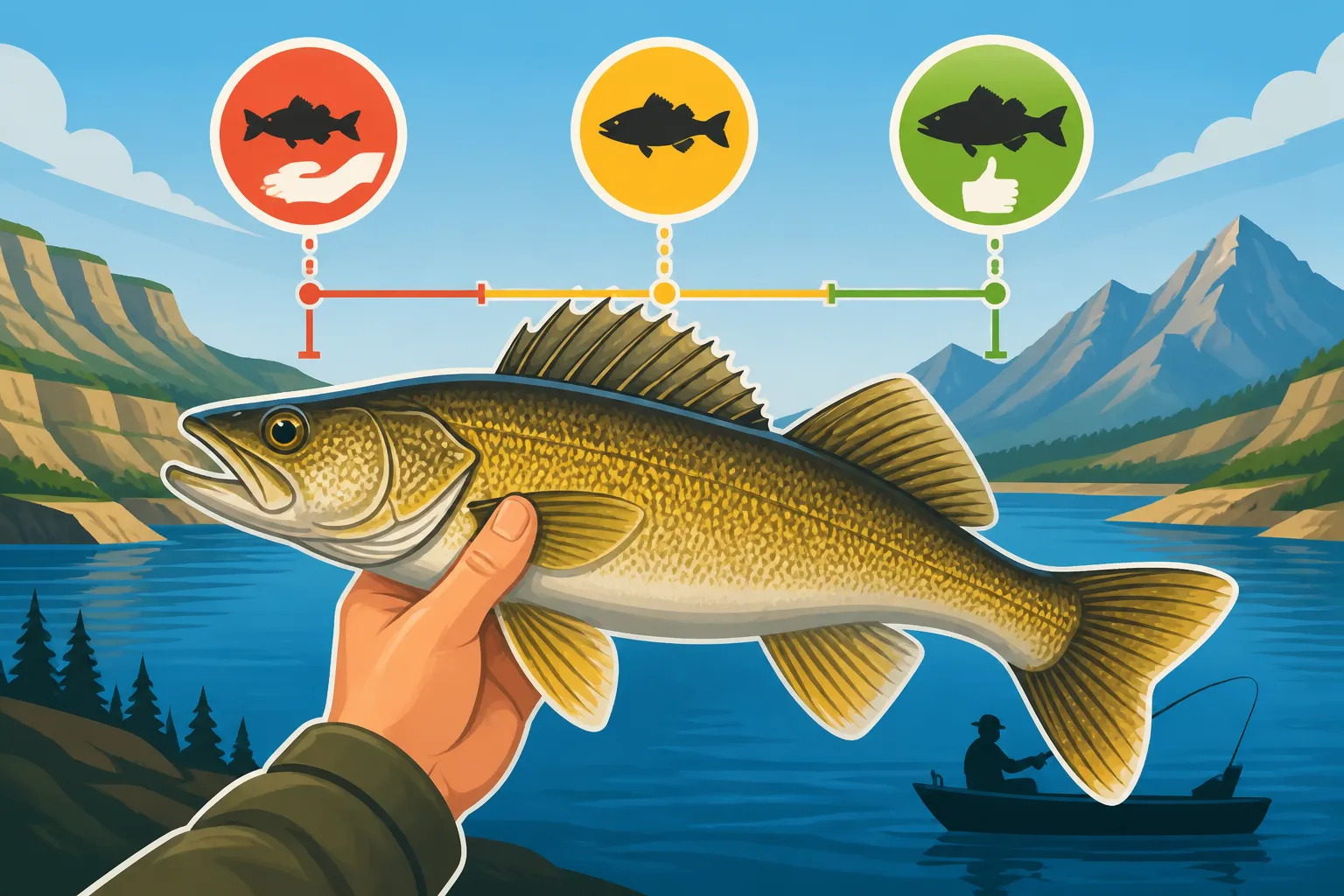
A slot limit designates a size range of fish that must be immediately released (the "slot"), while allowing harvest of fish outside that range (either smaller than the slot or larger than the slot, or both, depending on the specific rule).
Here are some hypothetical examples of what you might see at Boysen Reservoir:
-
Example 1: "All walleye between 15 and 20 inches must be released. Daily limit 6, only one over 20 inches."
- This rule means if you catch a walleye that measures 16, 17, 18, or 19 inches, it goes straight back in the water.
- You can keep walleye under 15 inches.
- You can keep walleye over 20 inches, but only one of them per day.
- Your total daily limit is 6 fish. So, you might keep five 14-inch walleye and one 21-inch walleye.
-
Example 2: "No walleye between 18 and 24 inches may be kept. Daily limit 4."
- Any walleye you catch in that 18-to-24-inch range must be released.
- You can keep fish under 18 inches.
- You can also keep fish over 24 inches.
- This type of slot often aims to protect the prime breeding stock (the 18-24 inch fish) while allowing harvest of smaller, more abundant fish and a limited number of trophy-sized fish.
-
Example 3: "All walleye under 12 inches must be released. Daily limit 3."
- This is a simple minimum size limit. You can only keep walleye that are 12 inches or longer.
- This protects the very young fish, giving them a chance to grow and mature.
The exact numbers and combinations change, which is why having the most current regulations in hand is non-negotiable. These limits are directly tied to what the WGFD observes in What Size Boysen Reservoir Walleye Are Averaging in their population surveys.
Practical Tips for Deciding Which Walleye to Keep at Boysen
Once you understand the regulations, the next step is applying them efficiently while you're actually out on the water. This means having the right tools and a strategy.
Equipment to Help You Measure and Handle Fish Properly
Accuracy is key when it comes to size limits. Guessing can lead to unintentional violations, and Fines and Penalties for Common Fishing Violations are no fun.
- A Reliable Measuring Device:
- Bump Board: This is the gold standard for accurate fish measurement. It's a flat board with a raised end (the "bumper") against which you press the fish's nose. The length is then read at the tip of the tail. They are often durable and float. You can find a good selection of bump boards on Amazon.
- Retractable Tape Measure: A simple, waterproof tape measure works, but be careful to ensure the fish is straight and not compressed. Always measure from the tip of the nose to the tip of the tail, with the tail pinched to get the maximum length.
- Proper Fish Handling Tools: When you're dealing with slot limits, you'll be releasing a lot of fish. Ensuring their survival is part of responsible angling.
- Rubberized Net: A net with rubber-coated mesh is much gentler on a fish's slime coat and fins than traditional nylon nets. It helps prevent damage when landing and handling.
- Forceps or Pliers: For quick, efficient hook removal, especially from toothy walleye.
- Fish Grippers: These tools help you hold a walleye securely by the jaw without putting your fingers near those sharp teeth. It minimizes direct contact with the fish's body, which is good for its slime coat. You can pick up a quality pair on Amazon.
Remember, even if you intend to keep a fish, you still need to handle it with care to minimize stress, especially if it's near a size limit and you need to verify.
Maximizing Your Keeper Potential Within the Rules
So, you're on the water at Boysen, the walleye are biting, and you've got your measuring board ready. How do you approach the keeper decision?
- Know the Rule Cold: Before you even cast, review Boysen's specific walleye regulations for that day. Don't rely on memory from last year.
- Measure Every Fish: Even if a fish looks obviously too small or too large, measure it. Eyeballing can be deceptive.
- Quick Release for "Slot" Fish: If a walleye falls into the protected slot, remove the hook quickly and release it gently. Don't keep it out of the water longer than necessary. Avoid unnecessary handling or putting it on a stringer, even temporarily, if it's a slot fish.
- Targeting "Keeper" Sizes: Sometimes, knowing the slot can influence your presentation. For example, if you're allowed to keep smaller fish but not those in a certain middle range, you might adjust your lure size or fishing depth, though this isn't always practical or effective. Often, simply knowing that Jigging for Walleye at Boysen Reservoir is a common technique helps.
- Personal Preference vs. Regulations: Within the legal framework, you might have your own preference. Some anglers prefer to keep smaller, pan-sized walleye for eating, finding them better table fare, while others might release everything until they catch a true trophy that's outside the protected slot. Your choice should always respect the legal limits.
Here’s a simplified table to illustrate the decision-making process for a hypothetical slot limit at Boysen:
| Walleye Length (Inches) | Regulation (Example) | Action to Take | Rationale |
|---|---|---|---|
| Under 12 | Minimum Size: 12 inches | Release immediately | Protects juvenile fish, allows them to grow. |
| 12-17.9 | Keep all under 18 inches | Keep (up to daily limit) | Contributes to population control of smaller fish. |
| 18-23.9 | Slot Limit: 18-24 inches must be released | Release immediately | Protects prime spawning and growing fish. |
| 24 and Over | One fish over 24 inches allowed | Keep (one per day) | Allows for harvest of limited trophy fish. |
Always consult the current Wyoming Game and Fish Department regulations for exact and up-to-date rules for Boysen Reservoir.
The Role of Conservation and Responsible Angling at Boysen
Understanding walleye size limits at Boysen Reservoir isn't just about avoiding a ticket; it's about being a responsible steward of the natural resources we all cherish. Our actions as individual anglers directly impact the long-term health and vitality of this incredible fishery.
Why Following Regulations Benefits the Fishery
Every regulation, from size limits to Wyoming's Annual, Daily and Five-Day License Options, is put in place with the health of the fish and the fishery in mind. When anglers adhere to these rules, they contribute to:
- Sustainable Populations: By releasing fish in protected slots, we're ensuring that the crucial breeding stock remains in the water to reproduce. This leads to more walleye hatching, growing, and eventually becoming available for harvest or future sport. Without this protection, populations can crash, and recovery is a long, arduous, and sometimes impossible process.
- Better Fishing for Everyone: When the WGFD successfully manages a fishery using these tools, it means there are more fish for everyone to catch, and potentially larger fish too. If we allow too many small walleye to be kept, those left behind grow slower because of competition. Conversely, if we deplete the larger breeders, future generations will be sparse. Following the rules helps maintain a healthy balance, increasing the likelihood of catching the next big walleye at Boysen. Understanding How Fast Walleye Grow in Wyoming Reservoirs is a key part of this science.
- Healthy Ecosystems: Fish populations are part of a larger ecosystem. Healthy walleye numbers can impact forage fish populations, aquatic insect life, and even the health of other game fish species in the reservoir. Responsible angling helps maintain this delicate balance.
Reporting Violations and Being a Good Steward
Part of being a responsible angler is also being a good observer and protector of the resource. Unfortunately, not everyone follows the rules. If you witness a violation of fishing regulations at Boysen Reservoir or any other Wyoming water, you have a role to play in protecting the fishery.
- How to Report: The Wyoming Game and Fish Department has a "Stop Poaching" hotline and an online reporting system. You can anonymously report suspicious activity. Try to gather as much information as possible: location, date/time, description of individuals, vehicle information, and the nature of the violation. Never confront someone directly; your safety is paramount.
- Lead by Example: The best way to encourage compliance is to be a role model yourself. Practice ethical catch-and-release, properly dispose of your trash, and always know and follow the current regulations. Talk to fellow anglers, share information, and help educate others in a friendly, non-confrontational way. This collective effort ensures that destinations like Boysen Reservoir continue to provide incredible angling experiences for generations of fishing enthusiasts. Before your trip, be sure to review the full Wyoming Fishing Regulations Every Angler Should Know for all species and all waters.
Disclaimer
This article is for general informational purposes only and does not constitute professional advice. Laws, prices and regulations vary by location and change over time. Consult a qualified professional for guidance on your specific situation.