Can You Fish From a Boat Without a License in Wyoming?
It's a common misconception, especially when you're out enjoying Wyoming's incredible lakes and rivers from the comfort of your boat: do you really need a fishing license if you're just drifting along, or if you're the one driving the boat and not actively holding a rod? Many anglers find themselves confused by this, wondering if the rules for fishing from a vessel are different from those on shore. This guide aims to clear up that confusion, explaining Wyoming's clear-cut regulations regarding fishing licenses, no matter if you're on a boat or casting from the bank.
The Straight Truth: Fishing From a Boat Requires a License
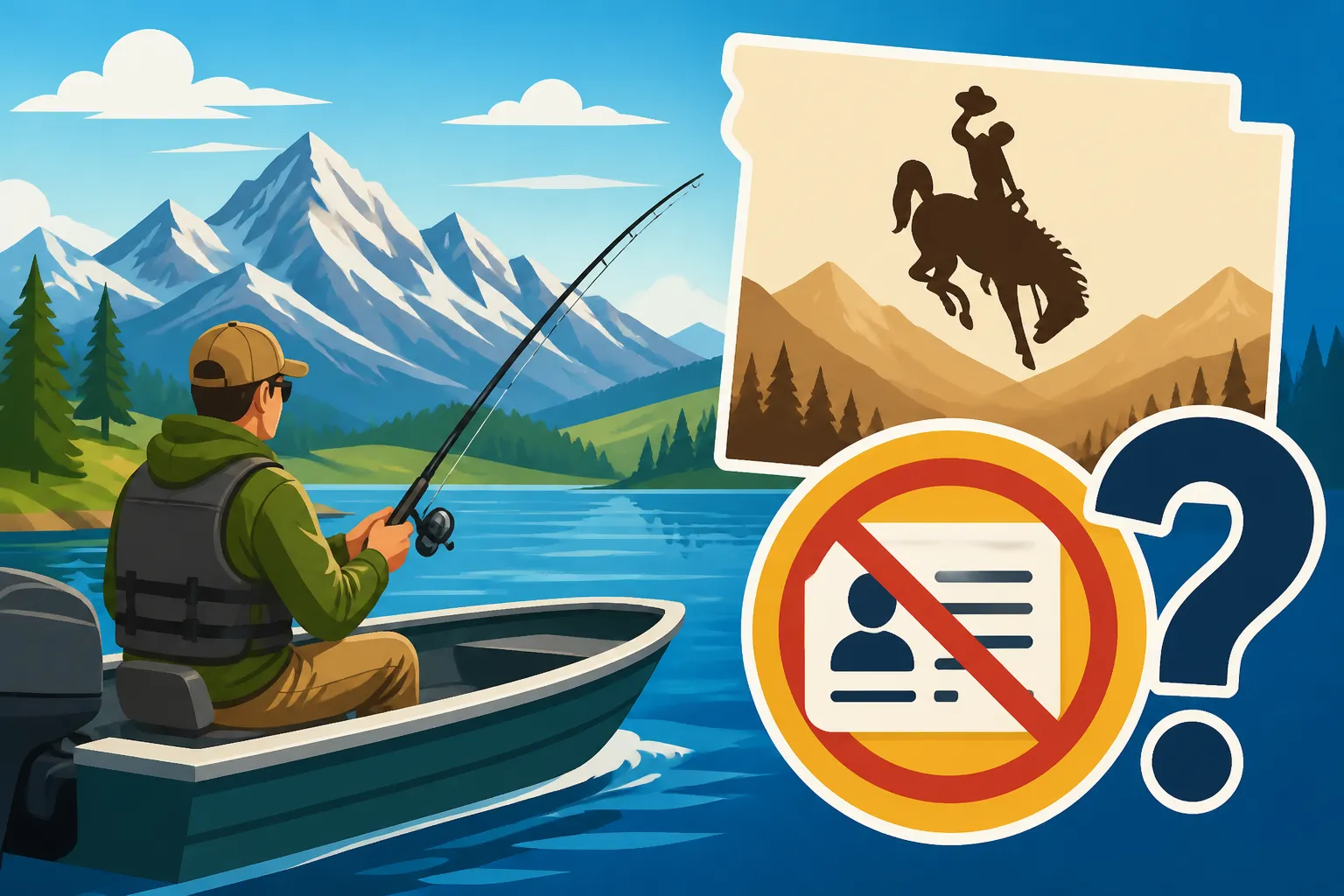
Let's get right to it: in Wyoming, if you are actively engaged in fishing, or even just assisting someone who is, you absolutely need a valid fishing license, regardless of whether your feet are firmly planted on the shore or you're enjoying the tranquility of the water from a boat. The Wyoming Game and Fish Department (WGFD) regulations are pretty clear on this point – the act of fishing itself is what triggers the license requirement, not the specific platform you're fishing from.
This isn't just about dropping a line in the water; it encompasses any attempt to take fish. So, if you're holding a rod, tending a setline, or even just helping net a fish for someone else who's actively reeling it in, you're considered to be participating in the act of fishing. It's easy to assume that if you're just ferrying friends around on a boat, you're off the hook, but if you decide to cast a line yourself, even for a moment, that license needs to be in your possession. This rule is designed to ensure that everyone benefiting from Wyoming's robust fisheries contributes to their conservation and management.
Understanding What "Fishing" Entails on a Boat
Sometimes, the lines can feel a little blurry when you're out on the water. You might be operating the boat, driving your buddies to their favorite fishing hole, or perhaps just relaxing while others cast. So, what exactly qualifies as "fishing" when you're on a boat, triggering that all-important license requirement?
The WGFD defines fishing as any activity that involves attempting to take fish. This is a broad definition. It includes casting a line, retrieving a lure, setting a trotline, jigging, or even using a net to catch game fish. If you're physically manipulating a rod, reel, or any other fishing apparatus, you're fishing. It doesn't matter if you've caught anything yet or if you're just "testing the waters." Even if you're primarily the boat operator, but you decide to pick up a rod for a few casts, you're now legally required to have a license. This also extends to activities like ice fishing from a permanent or temporary structure on the ice; the structure is irrelevant to the license requirement.
Why No Distinction for Boats vs. Shore?
The reason Wyoming doesn't differentiate between fishing from a boat versus fishing from the shore is quite simple and foundational to wildlife management: a fish is a fish, and the impact of harvesting it or even stressing it during catch-and-release is the same, regardless of where the angler is positioned. Fishing licenses are the primary funding mechanism for the WGFD, supporting fish stocking programs, habitat restoration, scientific research, enforcement, and public access.
If there were different rules for boat anglers, it would create an unnecessary loophole and complicate enforcement efforts for game wardens. Imagine the chaos if someone could claim they were merely "boating" right up until a fish bit, then suddenly they were "fishing." Uniformity in regulations makes it fair for everyone and ensures that the financial burden of conservation is shared equally among all participants who benefit from the state's natural resources. It also removes any incentive to game the system by skirting license requirements under the guise of being a boat passenger.
Who Needs a Fishing License in Wyoming, Period
Now that we've established that the "boat vs. shore" distinction doesn't exist for licensing, let's dive into the specifics of who actually needs a license to fish in Wyoming. The rules are generally based on age and residency, with a few important exceptions. Getting this right is crucial to avoid any unwelcome surprises from a game warden while you're trying to enjoy your day on the water.
It's a bit like buying a movie ticket: everyone needs one to get in, but there might be different prices for seniors or children, and some special free showings. Similarly, almost everyone fishing needs a license, but the type and cost might vary.
Age Requirements and Exemptions
Wyoming has specific age requirements that determine if a fishing license is necessary. For many, this is the most common exemption they might encounter.
- Under 14 Years Old: Good news for families! Children under the age of 14 do not need a Wyoming fishing license. This is a fantastic way to introduce youngsters to the joys of angling without the added bureaucratic step or cost. It encourages family participation and helps foster a love for the outdoors from a young age. Just remember that while they don't need a license, they are still subject to all other fishing regulations, such as bag limits and species restrictions. You can learn more about specific rules for young anglers in our guide on Do Kids Need a Fishing License in Wyoming?.
- 14 Years and Older: If you are 14 years old or older, you must possess a valid Wyoming fishing license to fish, whether you're a resident or a nonresident. This is the standard rule that applies to the vast majority of anglers. There are no special "senior citizen" discounts for residents in Wyoming, for instance, unlike some other states where anglers over 65 might fish for free or at a reduced rate. Everyone from 14 years up is expected to carry the appropriate license.
- Mentally or Physically Disabled Residents: Wyoming does offer lifetime fishing licenses to resident disabled veterans and qualifying resident persons with permanent physical or mental disabilities. These are specific cases that require an application and verification through the WGFD, so it's not a blanket exemption.
Residency Status and License Options
Your residency status plays a significant role in the cost and type of fishing license you can purchase. Wyoming residents generally enjoy much lower prices and broader options compared to nonresidents, reflecting their ongoing contribution to the state through taxes and local commerce.
- Wyoming Residents: If you qualify as a Wyoming resident (which generally means living in the state for at least one full year and having a Wyoming driver's license), you have access to annual licenses, daily licenses, and even a lifetime option for specific qualifying individuals. The annual resident license, combined with the required conservation stamp, offers the best value for frequent anglers. Check out the details in our article, Total Cost of a Wyoming Resident Annual License and Stamp.
- Nonresidents: For those visiting our beautiful state, you'll need a nonresident fishing license. Wyoming offers several options to suit different trip lengths:
- Annual Nonresident License: Perfect if you plan multiple trips throughout the year or an extended stay.
- Daily Nonresident License: A great choice for a quick day trip.
- Five-Consecutive-Day Nonresident License: This is a very popular option for visitors, allowing five full days of fishing action. This often represents a better value than buying multiple daily licenses if you plan to fish for several days in a row. You can find more information about these options in Wyoming's Annual, Daily and Five-Day License Options.
- All nonresidents, regardless of the license duration, will also need a Wyoming Conservation Stamp, just like residents, unless explicitly exempted (which is rare for fishing).
It’s crucial to understand what counts as a Wyoming resident for licensing purposes. It's not just about owning property; there are specific criteria that must be met to avoid issues. Always ensure you purchase the correct license type for your residency status.
The Wyoming Conservation Stamp
Beyond your basic fishing license, almost every angler aged 14 and over, resident or nonresident, needs to purchase a Wyoming Conservation Stamp. This stamp is a mandatory addition to most fishing and hunting licenses and is a vital component of funding wildlife management efforts across the state.
- Purpose: The Conservation Stamp generates significant revenue that directly supports habitat improvement, wildlife research, public access programs, and law enforcement efforts by the WGFD. It's truly an investment in the future of Wyoming's natural resources.
- When It's Required: Generally, if you need a fishing license, you'll also need a Conservation Stamp. There are very limited exceptions, such as those fishing during Wyoming's annual Free Fishing Day, or certain short-term licenses for specific events. But for the vast majority of regular fishing activities, plan on needing both. Our article Who Needs Wyoming's Conservation Stamp goes into full detail on this requirement.
- Cost: The cost of the Conservation Stamp is separate from your fishing license fee. When buying your license online or from a vendor, it will typically be offered as an add-on or a required component of your purchase. You can also find detailed cost information in Wyoming Conservation Stamp Cost.
Common Misunderstandings and Real-World Scenarios
It's easy to get caught up in the excitement of a fishing trip and overlook the finer points of regulations. Many situations on the water can lead to confusion about license requirements, particularly when boats are involved. Let's walk through some common scenarios that often trip people up.
These aren't hypothetical situations; they're the kind of things game wardens encounter regularly, and they’re the exact moments where an angler might inadvertently break the rules. Understanding these nuances can save you a lot of hassle and potential fines.
"I'm Just Driving the Boat, Not Fishing!"
This is perhaps the most common query when it comes to boats and licenses. You're the captain, expertly navigating Flaming Gorge Reservoir or steering through the channels of Boysen Reservoir. Your friends or family are casting away, enjoying the day. Do you, as the driver, need a license?
The answer is: No, not if you are only driving the boat and not participating in the act of fishing yourself. If your sole role is to operate the vessel, move it from spot to spot, or simply provide transportation, you are not required to have a fishing license. Your primary purpose is navigation and safety, not the taking of fish. However, this distinction is critical: the moment you pick up a rod, even for a quick cast or to help net a fish that someone else hooked, you transition from "boat operator" to "angler," and at that point, a license becomes mandatory. This is why many experienced boat owners who frequently ferry fishing parties around will often just buy an annual license anyway, just in case they get the urge to join in the fun. It’s always better to be prepared.
Helping a Child or Beginner Angler
Another frequent scenario involves helping a child or a beginner angler. Let's say you're taking your grandchild, who is under 14 and therefore doesn't need a license, out on a small lake near Lander. You bait their hook, cast for them, and maybe even help them reel in a fish. Are you fishing?
Generally, if you are assisting a licensed angler (or an unlicensed one under 14) without holding your own rod or line in active pursuit of fish, it's typically fine. However, the interpretation can become tricky. If you are casting your own rod, even to demonstrate, or if you are actively reeling in a fish from your own line, then yes, you need a license. If you're simply helping bait a hook, untangle a line, or even net a fish that the child has hooked, you're usually considered to be assisting, not actively fishing yourself. The key is intent and direct participation. When in doubt, it's always safer for any adult involved in handling a fishing rod or fish to have a license. This avoids any ambiguity that a game warden might have, especially in busy areas.
Holding a Rod vs. Actively Fishing
Sometimes, folks on a boat might have a rod in a holder, or even just be holding a rod while relaxing, not actively casting or retrieving. Is this considered "fishing"?
This can be a grey area, but the WGFD's definition of "attempting to take fish" means that simply having a rod out, baited and in the water, even if you're not actively holding it, could be interpreted as fishing. Most game wardens would consider a rod with a line in the water to be an active fishing effort. If you have multiple rods in the water (e.g., trolling), you would need to comply with multi-pole fishing regulations and possess the appropriate stamp or authorization for that as well. The best practice is: if a line is in the water with the intent of catching fish, the person responsible for that line should have a license. This applies whether the rod is in your hand, in a rod holder on the boat, or even just propped up on the gunwale.
Consequences of Fishing Without a License
Ignoring Wyoming's fishing license requirements can lead to some pretty significant headaches, ranging from fines to potential loss of fishing privileges. It's just not worth the risk, especially when licenses are so easily accessible. A few extra dollars spent upfront can save you hundreds, if not thousands, down the line.
Remember, game wardens are highly trained professionals who know the regulations inside and out. They patrol popular fishing spots, from the scenic Snake River to the vast expanse of Glendo Reservoir, and they are there to enforce the rules that protect Wyoming's wildlife.
Fines and Penalties
If you're caught fishing without a valid license in Wyoming, you're likely facing a misdemeanor charge. The fines can vary depending on the specifics of the violation, but they are often substantial. You could be looking at hundreds of dollars in fines, plus court costs. And it's not just about the monetary penalty; a violation also becomes part of your record.
- Initial Fine: Expect a base fine that reflects the seriousness of the offense. This is usually more than the cost of an annual license.
- Restitution: In some cases, particularly if you've harvested fish illegally, you might also be required to pay restitution for the value of the wildlife taken.
- Loss of Privileges: Beyond monetary fines, a conviction for fishing without a license can lead to the suspension or revocation of your fishing privileges in Wyoming, and potentially in other states through interstate compacts. This means you could be banned from fishing for a set period.
It's a stark contrast to the small fee for a license. For example, a nonresident annual license and stamp combined might be around $100-$150, whereas a fine for fishing without one could easily exceed $400-$500 or more, not including court fees. It’s a classic case of an ounce of prevention being worth a pound of cure. For more details on this, see Fines and Penalties for Common Fishing Violations.
Other Potential Legal Issues
Fishing without a license can also lead to other complications beyond just the direct fines. Game wardens have the authority to confiscate your fishing gear, including rods, reels, and sometimes even your boat, if it was used in the commission of a serious offense. While this is more common in egregious cases like commercial poaching, it's a possibility for any violation.
Furthermore, if you are also in violation of other regulations—such as exceeding bag limits, fishing in closed waters, or using illegal bait—the penalties will stack up, making the situation much worse. It's not just about the license; it's about adhering to the entire set of regulations that govern responsible angling. Wardens are also on the lookout for invasive species violations, so ensuring your boat is clean and inspected is another key aspect of compliance.
How and Where to Get Your Wyoming Fishing License
Thankfully, getting a Wyoming fishing license is incredibly easy and convenient, meaning there's truly no excuse to be without one. The Wyoming Game and Fish Department has streamlined the process, making it accessible whether you're planning ahead or making a last-minute decision to hit the water.
Having your license readily available, perhaps in a waterproof pouch on your fishing vest or digitally on your phone, is just as important as having it purchased. You wouldn't want to get a ticket because you couldn't produce proof, even if you bought it!
Purchasing Online
The easiest and most recommended way to purchase your Wyoming fishing license (and conservation stamp) is online through the WGFD website. Their system is user-friendly and allows you to buy various license types from the comfort of your home, or even from your phone at the trailhead.
- 24/7 Access: You can buy your license any time of day, any day of the week. This is perfect for those spontaneous fishing trips.
- Print at Home or Digital: Once purchased, you'll receive a printable PDF of your license. You can print it out and keep it with you, or you can save it to your smartphone and present the digital copy if requested by a game warden. The WGFD explicitly allows digital licenses, so no need to panic if you don't have a printer handy. Remember, it's vital to ensure your phone is charged, as a dead battery isn't an excuse. For more on carrying your license, check out Carrying Your Wyoming Fishing License in the Field.
- Convenience: Avoid lines at vendors, and ensure you have all the necessary information readily available to fill out the application accurately. This method is especially popular for nonresidents planning their trip from afar. You can even browse for relevant gear on sites like Amazon while you're planning, then hop over to the WGFD site to get your license.
You can visit the official WGFD website to buy your license. The site is secure and will guide you through the process step-by-step.
Authorized License Vendors
If you prefer a face-to-face transaction or need some last-minute gear, you can purchase your Wyoming fishing license from a wide network of authorized license selling agents across the state. These include:
- Sporting Goods Stores: Shops like Bass Pro Shops or smaller local tackle stores often sell licenses.
- General Stores & Gas Stations: Many convenience stores and gas stations in smaller towns, especially those near popular fishing destinations, are authorized to sell licenses. This is often the go-to option when you're already on your way to the water and realize you forgot your license or need a daily pass.
- WGFD Regional Offices: You can also purchase licenses directly from any Wyoming Game and Fish Department regional office during business hours.
When purchasing from a vendor, be prepared to provide personal identification, such as a driver's license, and proof of residency if you're buying a resident license. They'll print out your official license for you on the spot. Some anglers even buy specialized waterproof license holders on Amazon to protect their paper license when out on the water. For more information, including specific locations, see Where to Buy a Wyoming Fishing License Online.
Planning Ahead for Specific Waters
While a standard Wyoming fishing license covers most waters, it's always wise to remember that certain unique fishing areas have their own additional requirements.
- Yellowstone National Park: Fishing within Yellowstone National Park requires a separate Yellowstone-specific fishing permit, which you can purchase within the park or online through the National Park Service website. A Wyoming state license is NOT valid within Yellowstone. Learn more in Do You Need a Wyoming License to Fish in Yellowstone National Park?.
- Wind River Reservation: Fishing on the Wind River Indian Reservation also requires a separate tribal fishing permit. Your Wyoming state license is not valid on these tribal lands. Be sure to research and obtain the correct permit before fishing these unique and productive waters. Our guide Do You Need a License to Fish on the Wind River Reservation? provides more details.
Always do your homework for any specific body of water you plan to fish, especially if it's within a national park or on tribal lands, to ensure you have all the necessary permits and adhere to local regulations.
| Fishing Scenario | License Required? | Conservation Stamp? | Notes |
|---|---|---|---|
| Resident, 14+ yrs, fishing from boat | YES | YES | Most common scenario. |
| Nonresident, 14+ yrs, fishing from boat | YES | YES | Must purchase nonresident license type. |
| Child, under 14 yrs, fishing from boat | NO | NO | Adult assisting may need license if actively fishing. |
| Adult driving boat, not fishing | NO | NO | If you pick up a rod, even for one cast, you need one. |
| Resident, 14+ yrs, fishing from shore | YES | YES | Same requirements as boat fishing. |
| During Wyoming Free Fishing Day | NO | NO | Check specific dates and rules; usually annual. |
| Fishing in Yellowstone National Park | NO (WY License) | NO (WY Stamp) | Requires separate Yellowstone-specific permit. |
| Fishing on Wind River Reservation | NO (WY License) | NO (WY Stamp) | Requires separate tribal permit. |
Final Thoughts on Responsible Angling
Fishing in Wyoming, whether from a boat or the bank, is an incredible experience. The state boasts some of the most pristine waters and abundant fish populations in the country. Part of keeping these resources healthy and accessible for everyone depends on each angler understanding and adhering to the regulations.
The rules surrounding fishing licenses, including the lack of distinction between boat and shore fishing, are not arbitrary. They are carefully crafted by the Wyoming Game and Fish Department to manage fish populations sustainably, fund critical conservation efforts, and ensure fair access for all. It's our collective responsibility as anglers to know these rules and follow them. This includes having your license and conservation stamp readily available, understanding bag limits, and knowing any water-specific regulations.
By being informed and prepared, you not only avoid potential legal trouble but also contribute directly to the health and vitality of Wyoming's cherished fisheries. So, grab your gear, make sure your license is current, and enjoy all the incredible angling adventures the Cowboy State has to offer!
Disclaimer
The information provided in this guide is for general informational purposes only and is subject to change. While we strive to offer accurate and up-to-date content, fishing regulations, license requirements, and fees can be updated by the Wyoming Game and Fish Department at any time. Always consult the official Wyoming Game and Fish Department website or their current regulations booklet for the most precise and legally binding information before you head out on your fishing trip.