How Bag and Possession Limits Work in Wyoming
Alright, let's be real – trying to figure out Wyoming's fishing regulations can feel like cracking a secret code. You're out there, just trying to enjoy a peaceful day on the water, but the constant worry about whether you're complying with bag and possession limits can really dim the shine. Nobody wants to accidentally break a rule and face a hefty fine or, worse, jeopardize the incredible fisheries we all cherish. This guide is here to untangle all that complexity, making sense of Wyoming's bag and possession limits so you can fish with confidence and peace of mind.
Understanding the Fundamental Difference Between Bag and Possession Limits
The first hurdle for many anglers, especially those new to Wyoming or just visiting, is distinguishing between "bag limits" and "possession limits." It's not just semantics; these are two distinct concepts that are critical to understand to avoid accidentally running afoul of the law. I've seen countless folks scratch their heads over this, so let's clear it up once and for all.
The Essential Distinction: Daily vs. Total
Think of it this way: your daily bag limit is what you can harvest and keep in a single calendar day. It resets at midnight. So, if the daily bag limit for trout is four, you can catch and keep four trout between 12:00 AM and 11:59 PM. Simple enough, right?
Now, the possession limit is a bit trickier. This refers to the total number of fish you can have on hand at any given time, regardless of when or where they were caught, as long as they were legally harvested. This includes fish in your cooler, in your freezer at home or at your campsite, or even fish you've already processed and packaged. The possession limit is often higher than the daily bag limit, allowing you to accumulate fish over several days of successful fishing, particularly if you're on an extended trip. For instance, if the daily bag limit is four trout, the possession limit might be eight or twelve. This means if you caught four fish today and four yesterday, you could possess eight fish in total, even if you only kept four today. It’s crucial to know that your Possession Limits vs Daily Limits in Wyoming are not interchangeable.
Why Both Limits Exist and Why They're Important
You might wonder why we need both. Couldn't one suffice? The answer lies in effective fisheries management and conservation. Daily bag limits help distribute harvest pressure over time, preventing a few anglers from taking an excessive number of fish in one go. They also ensure that there are always fish available for others and to maintain healthy breeding populations. Imagine if there were no daily limits – some popular spots could be completely stripped of fish in a day or two.
Possession limits, on the other hand, are designed to prevent the long-term accumulation of fish beyond reasonable personal consumption, and to curb commercial poaching. It discourages people from stockpiling huge amounts of fish that might eventually go to waste or be illegally sold. These limits are carefully set by the Wyoming Game and Fish Department (WGFD) based on population assessments, spawning success, habitat conditions, and angler pressure. They're not arbitrary numbers; they are scientific tools to ensure our incredible fishing opportunities in Wyoming remain sustainable for generations to come. This careful balancing act is essential, which is why it’s so important to be familiar with Wyoming Fishing Regulations Every Angler Should Know.
Daily Bag Limits: What You Can Keep in a Single Day
Alright, let's dive into the specifics of what you can actually put in your cooler on any given day. While there are statewide general rules, Wyoming is also famous for its incredibly diverse waters, and many of them have their own special nuances. It’s a bit like a choose-your-own-adventure book, but with fish.
General Statewide Trout Limits
For most of Wyoming's waters, the general statewide daily bag limit for trout is six (6). This usually includes species like Rainbow, Brown, Brook, and Cutthroat trout. However, and this is a big however, many individual waters will have specific regulations that supersede this general rule. You absolutely cannot assume the statewide limit applies everywhere.
For instance, you might be fishing a small stream where the daily limit is only two trout, or even a section of a blue-ribbon river that is strictly catch-and-release. The rule of thumb is: always, always consult the most current Wyoming Fishing Regulations Booklet, available online or at license vendors. Don't rely on last year's memory or what your buddy told you. Regulations change, and staying informed is part of being a responsible angler.
Understanding the "One Over 16 Inches" Rule
This is a regulation that trips up many anglers, particularly on trout streams, and it's essential for protecting larger, mature fish that are vital for spawning. On many specific trout waters in Wyoming, you'll encounter a regulation stating something like: "Daily bag limit for trout is (X), of which only one (1) may be over 16 inches."
Let's break this down with an example. If the daily bag limit is four (4) trout, and the "one over 16 inches" rule applies, you could keep four trout total, but only one of those four can be longer than 16 inches. So, you could keep one 17-inch trout and three 14-inch trout. You could also keep four 14-inch trout. But you absolutely cannot keep two 17-inch trout, even if your total count is still within the daily limit. This specific rule, often referred to as The One-Over-16-Inch Rule on Wyoming Trout Streams, is designed to allow anglers to keep some fish for the pan while still safeguarding the larger broodstock that contribute to future generations. These larger fish are often the most prolific breeders, so protecting them helps ensure the long-term health of the fishery.
Warmwater Species Daily Limits
Wyoming isn't just about trout! We have some fantastic warmwater fisheries too, especially in the eastern and central parts of the state. Species like Walleye, Smallmouth Bass, Largemouth Bass, Perch, Crappie, Catfish, and Pike all have their own daily bag limits, which often differ significantly from trout limits.
For example, Walleye limits might be five (5) per day in some reservoirs, while Yellow Perch limits could be as generous as 25. Smallmouth Bass often have a limit of ten (10). Again, these numbers are highly water-specific. For instance, at Boysen Reservoir, known for its excellent Walleye fishing, the limits could be different from Keyhole Reservoir. Always check the regulations for the specific body of water you intend to fish. These limits are put in place to manage these populations effectively, especially in waters where they might be introduced or in areas where they are heavily targeted. You can dive deeper into specific species limits by checking Understanding Wyoming's Daily Bag Limits by Species.
Possession Limits: What You Can Have on Hand
While daily bag limits control how many fish you can harvest in a 24-hour period, possession limits dictate the total quantity of legally caught fish you're allowed to have in your cooler, at your camp, or in your freezer at any given time. This is where things can get a little complex, especially for multi-day trips or for nonresidents.
Standard Possession Rules
Generally, the statewide possession limit for trout and salmon in Wyoming is twice the daily bag limit. So, if the daily bag limit for trout is six, your possession limit would be twelve. For warmwater species, it can vary. For example, if Walleye has a daily limit of five, the possession limit might be ten. These limits are critical for managing the overall harvest and preventing over-exploitation, especially in our more popular fishing destinations.
This means you can fish for a couple of days, keeping your daily limit each day, and accumulate up to your possession limit. However, once you reach that possession limit, you legally cannot keep any more fish until you either consume some of your existing catch, or give some away (legally, of course, with proper documentation which we'll cover in a bit). Many visitors, especially those on extended fishing vacations, find the possession limit crucial. It allows them to enjoy multiple days of fishing and take a good amount of fish home without needing to process and ship their catch every single day.
How Long You Can Possess Fish
As long as the fish were legally harvested and are within your personal possession limit, you can hold onto them. This applies whether they are fresh in your cooler, frozen solid in your chest freezer back home, or even smoked and packaged. The key is that the total count must not exceed the possession limit set by the state of Wyoming for the species in question. This is especially relevant for people who travel from out of state. You can fish for a week, stay within your daily limits, and then take your accumulated possession limit home with you. This is why nonresidents often find Wyoming's Wyoming's Combined Possession Limit Explained, which accounts for multiple species, very useful.
However, once you leave Wyoming, other states' laws might apply to how many fish you can import or possess within their borders. It's always a good idea to check the regulations of any state you plan to travel through or reside in if you're transporting a large quantity of fish. You can find more specific details on Transporting Your Catch Across State Lines Legally.
Field Dressing and Identification Requirements
Here's a crucial detail that many overlook, and it can lead to problems: When you field dress your fish, especially if you're on a multi-day trip or are only keeping fillets, you must ensure that enough of the fish remains identifiable so that a game warden can determine the species, length (if there are length limits), and number of fish.
Wyoming regulations typically require that if you're filleting fish, you must leave the head, tail, or a patch of skin on the fillet for identification purposes until you've reached your final destination. This is important for enforcement officers to verify that you are within the legal limits. Imagine a game warden checking your cooler and finding a bag of unidentifiable white fillets. How would they know if you've kept too many trout, or perhaps the wrong species, or fish that were too small or too large? For this reason, leaving a "patch of skin" on a fillet, or keeping the whole fish until you're back at camp or home, is always the safest bet. It's a small inconvenience that prevents a big headache later on. An easy way to transport fish securely and ensure compliance is by using quality vacuum sealers and coolers, which you can often find on Amazon.
Species-Specific Limits and Exceptions
Wyoming is a state rich in diverse fish populations, and as such, the general rules often give way to specific regulations tailored to certain species and their unique management needs. It's not a one-size-fits-all situation, and understanding these nuances is key to responsible angling.
Cutthroat Trout: Special Considerations
Wyoming is the heart of the Yellowstone Cutthroat Trout, the state fish, and other native cutthroat subspecies. Because these fish are so important ecologically and culturally, they often have more stringent regulations to protect their populations. While the general trout limit might be six, on many waters, particularly those with strong native cutthroat populations or ongoing restoration efforts, the daily limit for cutthroat can be much lower – sometimes one or two, or even zero (catch-and-release only).
For example, certain streams in the Snake River drainage might have specific limits on Snake River Fine-Spotted Cutthroat. Or, waters within Grand Teton National Park, which are managed for native cutthroat, could have special rules. The goal is often to protect the genetic purity and abundance of these native fish. It’s a testament to Wyoming's commitment to conservation, and anglers have a vital role in respecting these specific rules. Always check the regulations map or text for the specific water you are targeting to avoid any issues, especially when it comes to cutthroat.
Lake Trout: Management and Incentives
Lake Trout (also known as Mackinaw) in Wyoming present a fascinating regulatory paradox. In some waters, they are highly sought-after trophy fish with low daily limits. In others, they are considered an invasive species, particularly in Yellowstone Lake, and anglers are encouraged, and sometimes even required, to harvest as many as possible.
Take Yellowstone Lake, for instance, which is largely within Yellowstone National Park but impacts Wyoming's ecosystem. Lake trout were illegally introduced there, and they prey heavily on the native Yellowstone Cutthroat Trout. To protect the cutthroat, there are no possession or size limits on Lake Trout in Yellowstone Lake. Anglers are encouraged to keep every Lake Trout they catch. You'll often see specific projects and even incentives by the National Park Service and the WGFD to remove Lake Trout. This is a stark contrast to a place like Flaming Gorge Reservoir, where Lake Trout are native and managed as a trophy species, often with strict limits on the number and size of fish you can keep. Understanding these opposing management goals is crucial before you cast a line for Lake Trout.
Other Game Fish: Walleye, Bass, Panfish
Beyond trout and Lake Trout, Wyoming's reservoirs and warmer waters host a variety of other game fish, each with its own management strategy reflected in its limits.
- Walleye: These popular game fish are managed carefully, often with daily limits of 3-5 fish. Some waters might have slot limits, meaning you can only keep fish within a certain size range (e.g., no fish between 18 and 24 inches), or a limit on how many fish over a certain size you can keep. These regulations aim to protect spawning stock and trophy potential.
- Bass (Smallmouth and Largemouth): Bass limits are typically more liberal than trout, often allowing 5-10 fish per day. However, in waters where bass populations are still developing or managed for trophy size, limits might be lower or include size restrictions.
- Panfish (Perch, Crappie): These prolific species usually have very generous limits, sometimes as high as 25-50 fish per day, or even no limit in some cases. They reproduce quickly and can be excellent table fare, making them a great option for family fishing trips where success and quantity are often desired.
- Pike, Catfish, Burbot: Other species like Northern Pike, Channel Catfish, and Burbot (Ling) also have specific regulations that vary by water body. For instance, in some waters, Northern Pike might have no limit due to their invasive nature and predatory impact on other species.
The sheer variety means that checking the local regulations for the specific body of water you're visiting is non-negotiable. Don't rely on general knowledge; the devil is truly in the details when it comes to Wyoming's diverse fisheries.
Special Regulations: Water-Specific Rules
This is arguably the most critical section for any angler hoping to stay compliant in Wyoming. While statewide regulations provide a baseline, many of Wyoming's most famous and productive fishing spots have highly specific, localized rules that override the general ones. Missing these can easily lead to violations, even with the best intentions.
North Platte River's Unique Rules
The North Platte River, particularly its "Miracle Mile" and "Gray Reef" sections near Casper, is world-renowned for its trophy trout fishing. With such popularity comes the need for very specific management to sustain the fishery. You simply cannot approach these waters with a "general trout limit" mindset.
For example, these sections often feature reduced daily bag limits, perhaps one or two trout, and strict size restrictions, like "only one trout over 20 inches" or a slot limit that protects fish within a certain size range. Furthermore, many parts of the North Platte, especially the high-use sections, mandate barbless hooks and artificial flies or lures only. Live bait is strictly prohibited in these areas to reduce fish mortality from deep hooking and protect the native aquatic insect populations. It’s absolutely vital to know if Barbless Hook Requirements on the North Platte River, or other unique tackle restrictions, apply to the stretch you are fishing. These special rules are in place because the river sustains immense angling pressure, and without them, the incredible fishery wouldn't last.
Jackson Lake and Snake River Changes
The waters around Jackson Hole, including Jackson Lake and the Snake River, are another area where regulations can be highly dynamic and specific. Over the years, there have been significant changes, and staying updated is paramount.
For instance, New Snake River Trout Limits Near Jackson Lake Dam, might mean anglers can keep more Snake River Fine-Spotted Cutthroat trout in certain sections to aid in their management, while other stretches might remain catch-and-release for the same species. Jackson Lake itself has seen changes, with the season recently extended through October to allow for more fishing opportunity, particularly for Lake Trout. These changes are often in response to scientific data regarding fish populations, invasive species management, or public feedback. It’s a complex balancing act to protect native species like the cutthroat while also managing introduced species. What was true last year might not be true this year, so always check the most recent WGFD regulations.
High Mountain Lakes and Wilderness Areas
Wyoming's vast wilderness areas and countless high-altitude lakes offer some of the most remote and rewarding fishing experiences. However, these pristine environments also come with their own set of unique regulations, often designed to protect fragile ecosystems or specific species like Golden Trout or native cutthroat.
Many high mountain lakes, especially those that are hike-in only, might have very restrictive limits, often one or two fish, or even catch-and-release only. Some are managed for specific species and may only allow a certain type of lure or fly. Furthermore, accessing some of these areas might require special permits or adherence to wilderness rules that go beyond fishing regulations, such as Leave No Trace principles. Even the fishing season might be shorter due to ice-out dates. It’s not uncommon for lakes that are stocked via helicopter to have unique rules as well. Before you embark on a multi-day backcountry trip, make sure you've meticulously reviewed the regulations for every lake you plan to cast a line in. You can't rely on cell service to check these things when you're miles into the Wind River Range. Carrying a printed copy of the relevant pages from the Where to Find Current Wyoming Fishing Regulations, perhaps even tucked into a waterproof bag you got from Amazon, is a smart move.
Transporting Your Catch Legally
You've had an incredible day (or week!) on the water, you've kept within your daily bag and possession limits, and now you've got a cooler full of delicious Wyoming fish. But the journey home isn't just about keeping them cold; it's about ensuring you transport them legally, both within Wyoming and if you're crossing state lines. This is another area where easy mistakes can turn a great trip sour.
Transporting Within Wyoming
When you're moving your fish from the lake shore back to your camp, or from your camp to home, there are a few key rules to keep in mind regarding identification. As mentioned earlier, if you've field dressed your fish, particularly if you've filleted them, you usually need to leave a piece of skin, the head, or the tail attached to each fillet or the body cavity until you reach your final destination. "Final destination" usually means your home, a processing plant, or a commercial storage facility. It does not mean your cooler in the back of your truck while you're still out fishing or traveling to another fishing spot.
The purpose of this is straightforward: it allows a game warden to readily identify the species and, if applicable, measure the length of the fish. This ensures you're complying with species-specific limits, length limits, and that all fish were legally harvested. Imagine the difficulty for enforcement if all they found were generic white fillets; there'd be no way to verify legality. An easy way to stay organized and compliant is to individually wrap and label your fish with the date and location of catch. This also helps with freshness and taste!
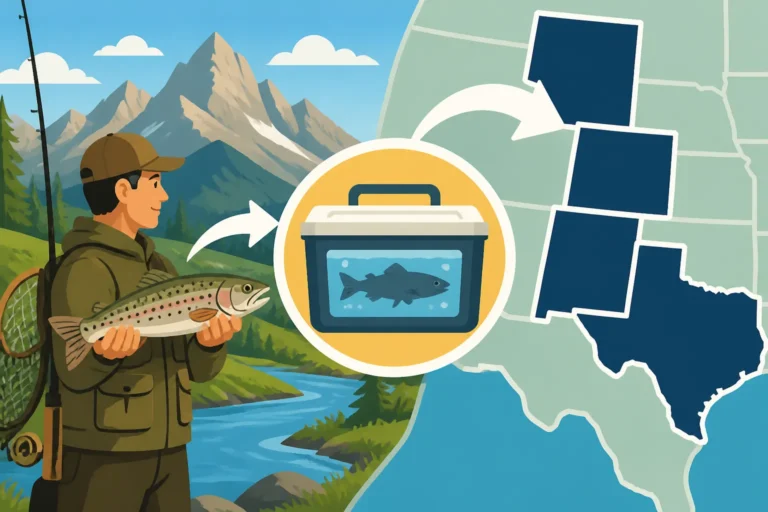
Crossing State Lines with Your Catch
If you're a nonresident angler and plan to take your catch home with you, you need to be aware of regulations concerning interstate transport. While Wyoming allows you to possess your legal limit, the state you're traveling to or through might have different laws regarding the importation of fish.
Generally, most states will honor a legally harvested catch from another state, provided you can prove it was lawfully taken (e.g., you have a valid Wyoming license and your fish are within Wyoming's possession limits). However, some states might have restrictions on certain species, or require specific permits if you're transporting a large quantity. For instance, if you're bringing fish into a state that has specific concerns about invasive species, they might require inspection or have unique packaging rules. It's always best practice to check the wildlife agency regulations of your home state, and any states you'll drive through, before you embark on your journey home. A quick search on their respective game and fish websites can save a lot of grief. Make sure your fish are kept cold and packaged well – a quality cooler from brands like Yeti or Igloo, or even one of the many options available on Amazon, is essential.
Proper Packaging and Labeling
Beyond legal requirements, proper packaging and labeling are just good practice for preserving your catch and making your life easier.
- Individual Wrapping: For whole fish or fillets, individual wrapping in plastic wrap, freezer paper, or vacuum seal bags helps prevent freezer burn and keeps different species separate.
- Labeling: Crucially, label each package with:
- Species: "Rainbow Trout," "Walleye," etc.
- Date Caught: Essential for tracking freshness.
- Location Caught: Helpful for personal records and useful if any questions arise.
- Number of Fish/Fillets: Ensures you can easily prove you're within possession limits.
This meticulous labeling, while seemingly a chore after a long day of fishing, pays dividends. It prevents you from mixing up different catches, helps you rotate your freezer stock, and provides clear, easy-to-read proof for any game warden who might inquire about your harvest. Not to mention, it makes meal planning much simpler when you know exactly what you're pulling out of the freezer.
Common Mistakes and How to Avoid Them
Even the most experienced anglers can occasionally make honest mistakes when it comes to regulations. The key is to be aware of the most common pitfalls so you can proactively avoid them and enjoy your time on Wyoming's waters without unnecessary stress.
Misunderstanding the "Calendar Day"
One of the most frequent mistakes I see, particularly with daily bag limits, is a misunderstanding of what constitutes a "calendar day." A calendar day runs from midnight (12:00 AM) to midnight (11:59 PM). It does not mean a 24-hour period from the time you started fishing.
Here's a common scenario: An angler starts fishing at 6 PM on Tuesday and catches their daily limit of four trout by 9 PM. They think they can then start fishing for another limit at 6 PM on Wednesday because a 24-hour period has passed. This is incorrect. They cannot start harvesting a new daily limit until 12:00 AM on Wednesday morning. If they were to keep more fish between 9 PM Tuesday and 12 AM Wednesday, they would be over their daily limit for Tuesday. It’s a subtle but critical distinction. Always remember that your daily limit resets with the sun, so to speak, at midnight.
Not Checking Water-Specific Regulations
This is the biggest culprit for violations, hands down. Anglers will often assume the general statewide limits apply to the water they are fishing, only to find out later that the particular stream or lake has significantly different, and often more restrictive, rules.
Wyoming's regulations are highly localized because each fishery has its own unique biological and social pressures. A popular river like the North Platte will have different rules than a remote high mountain lake, or a warmwater reservoir. Failing to check the specific section of the river or the name of the lake you are fishing is a recipe for trouble. The Wyoming Game and Fish Department provides incredibly detailed regulations, often broken down by specific sections of rivers or individual lake names. It's not enough to know you're on "the Snake River"; you need to know if you're above or below Jackson Lake Dam, for example. Always consult the official WGFD website or the printed regulation booklet for the specific water body you intend to fish. Reading the Wyoming Fishing Regulations Booklet, cover to cover for your target area, is a must-do before your trip.
Assuming Rules are Universal
Similar to the point above, assuming that fishing rules you've learned in another state, or even another region of Wyoming, will apply universally is a dangerous game. Every state, and often every region within a state, manages its fisheries differently.
For example, tackle restrictions, bait allowances, and even methods of fishing can vary dramatically. You might be accustomed to using live minnows as bait in your home state, but many of Wyoming's trout waters restrict bait to artificial flies and lures only, or even require single, barbless hooks. Similarly, the legal definition of what constitutes a "rod" or "line" might differ. Don't let past experiences create blind spots. Approach each new body of water, and especially each new state, with a fresh review of its specific rules. This also applies to internal links such as Wyoming's 2026 Fishing Regulation Changes Explained, as regulations are dynamic and subject to updates. A quick 15-minute review of the regulations booklet before your trip can save you hundreds, if not thousands, in fines and legal fees, and protect our precious resources.
Why These Limits Matter: Conservation and Enforcement
It's easy to view fishing regulations as a bureaucratic hassle, just another set of rules designed to make life difficult. But in Wyoming, these limits are much more than that. They are the backbone of a robust conservation strategy, ensuring that the incredible fishing opportunities we enjoy today will still be here for future generations. Understanding why these limits exist can help foster a deeper respect for them and encourage compliance.
Protecting Wyoming's Fisheries for Generations
Every bag and possession limit, every size restriction, and every season closure is put in place for a scientific reason. They are tools developed by fisheries biologists at the Wyoming Game and Fish Department to manage fish populations sustainably.
Consider the "one over 16 inches" rule for trout: that's not just to prevent you from taking all the big fish. Those large fish are often the most productive spawners, contributing disproportionately to the next generation. Protecting them ensures a healthy breeding stock. Similarly, reduced limits on native species like cutthroat trout help preserve genetic integrity and recover declining populations. Without these limits, even with today's advanced fishing gear and techniques, it wouldn't take long to deplete our most popular and productive waters. We owe it to future anglers, and to the ecosystems themselves, to adhere to these rules. The WGFD is constantly monitoring fish health and population numbers to make informed decisions on these limits, sometimes even announcing How Wyoming Game and Fish Announces Emergency Closures.
Penalties for Violations
Ignoring bag and possession limits isn't just a minor infraction; it can carry significant legal consequences. The penalties for fishing violations in Wyoming can range from substantial fines to confiscation of gear, loss of fishing privileges, and even jail time for severe or repeat offenses.
For example, being caught with fish over the legal limit can result in fines that are several times the value of the fish, plus court costs. Repeated violations can lead to suspension of your fishing license for a year or more. The Wyoming Game and Fish Department takes these violations seriously because they directly impact the state's natural resources. Enforcement officers patrol popular fishing areas, and they are trained to spot non-compliance. No one wants to end their dream fishing trip in Wyoming with a court summons. Understanding Fines and Penalties for Common Fishing Violations, can be a sobering but necessary reminder of the importance of compliance.
The Role of Wyoming Game and Fish
The Wyoming Game and Fish Department (WGFD) is the primary agency responsible for setting and enforcing these regulations. Their biologists, wardens, and other staff work tirelessly to conduct research, monitor populations, manage habitats, and ensure compliance. They are not just law enforcement; they are dedicated conservationists whose mission is to sustain Wyoming's wildlife and fisheries for public enjoyment.
They rely on scientific data from fish surveys, creel checks (where they ask anglers about their catch), and habitat assessments to make informed decisions about bag and possession limits. When regulations change, it's usually because new data indicates a need for adjustment to protect a species or enhance a fishery. As anglers, we are partners in conservation, and our compliance with these regulations is crucial to the WGFD's success in managing these precious resources. If you have questions about regulations, the WGFD website and local offices are always the best resources.
Quick Reference Table: Common Wyoming Fish Limits
To help summarize some of the most common statewide limits (remembering that water-specific rules always take precedence!), here’s a handy table. Always consult the official WGFD regulations for the most accurate and up-to-date information for your specific fishing location.
| Species Group | General Statewide Daily Bag Limit | General Statewide Possession Limit | Common Exceptions / Notes |
|---|---|---|---|
| Trout (Rainbow, Brown, Brook, Cutthroat) | 6 fish | 12 fish | Many waters have reduced limits (1-4 fish), size restrictions (e.g., one over 16 inches), or artificial lure/fly only rules. Native cutthroat often have more restrictive limits. |
| Lake Trout (Mackinaw) | 3 fish | 6 fish | Yellowstone Lake: No limit, encourage harvest. Flaming Gorge: Specific size and boat limits often apply. |
| Walleye | 5 fish | 10 fish | Some reservoirs have slot limits or specific length requirements. |
| Bass (Smallmouth, Largemouth) | 10 fish | 20 fish | Limits can be lower in developing fisheries. |
| Perch, Crappie, Bluegill | 25 fish | 50 fish | Very generous limits, sometimes no limit in certain waters. |
| Channel Catfish | 6 fish | 12 fish | |
| Northern Pike | 6 fish | 12 fish | No limit in some waters due to invasive nature. |
Disclaimer: This table provides general information. Always refer to the official Wyoming Game and Fish Department Fishing Regulations for the current, specific regulations for the water you intend to fish. Regulations are subject to change.