Where Golden Trout Live in Wyoming’s High Country
You've heard the whispers, the legends of a fish so vibrantly colored it looks like a jewel pulled from the earth's core, thriving in some of the most inaccessible, breathtaking landscapes Wyoming has to offer. This isn't just any trout; we're talking about the elusive Golden Trout, and the quest to find them is often shrouded in mystery, leading many anglers to wonder where these magnificent creatures truly make their home in the vastness of the Cowboy State. This guide is dedicated to pulling back the curtain, revealing the specific high-country havens where you might just stumble upon these living treasures, and how to prepare for the adventure of a lifetime.
The Allure of Golden Trout and Wyoming's High Country
There's something uniquely captivating about the Golden Trout, a species that embodies the wild, untamed spirit of Wyoming's towering mountains. They aren't just fish; they're symbols of wilderness, a reward for those willing to venture far beyond the beaten path. For many, the idea of pursuing Golden Trout Fishing in Wyoming is less about the catch and more about the journey into truly pristine, untouched nature.
What Makes Golden Trout So Special?
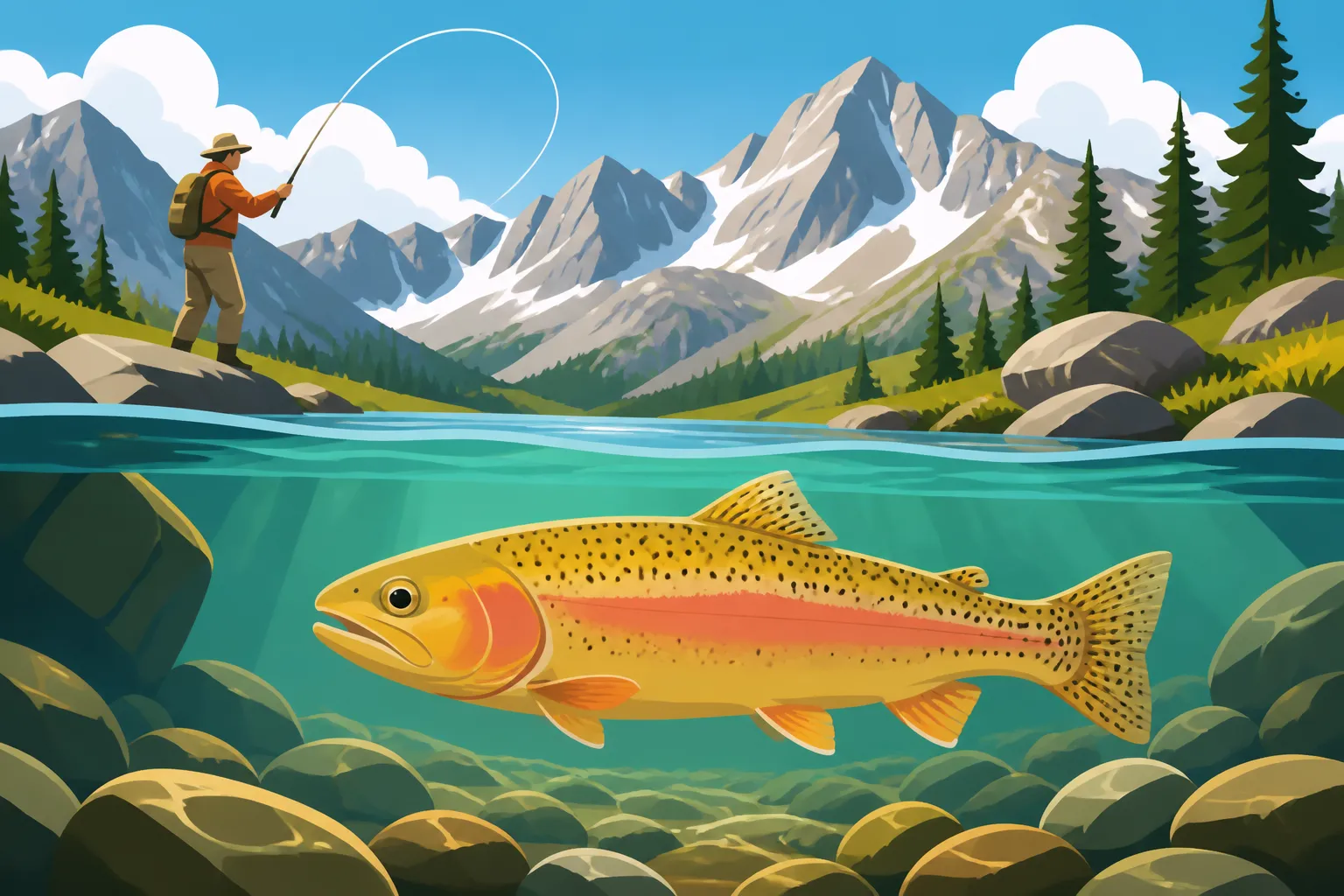
Let's be honest, you won't confuse a Golden Trout with a run-of-the-mill hatchery rainbow. Their scales shimmer with hues of gold, crimson, and olive, often adorned with distinctive parr marks that hint at their ancestral lineage. They're often referred to as "the most beautiful trout in the world," and once you see one flash in the clear, cold water of an alpine lake, you'll understand why. Beyond their stunning appearance, Golden Trout are notoriously hardy and agile, a testament to their survival in harsh, high-altitude environments. Hooking into one, especially on light tackle, provides a spirited fight that perfectly matches the pristine beauty of their surroundings. Their elusive nature only adds to their mystique, making every encounter feel like a truly special achievement. They're not found in every creek or pond; their very presence signifies a healthy, untouched ecosystem.
The Challenge and Reward of High-Elevation Fishing
Reaching the domains of the Golden Trout is never a casual stroll. These fish thrive in lakes and streams nestled above 9,000 or even 10,000 feet, often requiring multi-day backpacking trips deep into designated wilderness areas. You're talking about serious mileage, significant elevation gain, and unpredictable mountain weather. The air is thinner, the trails are steeper, and the commitment is real. But oh, the reward! Imagine casting your line onto a glassy, turquoise lake, ringed by jagged peaks still dusted with snow in mid-summer, with no sound but the whisper of the wind and the occasional splash of a rising trout. This isn't just fishing; it's an immersive wilderness experience that cleanses the soul. The physical exertion and careful planning required to get there only amplify the satisfaction of finally seeing that flash of gold against the vibrant blue water. It's a journey into solitude and natural grandeur that few other angling pursuits can match.
Prime Habitats: Where to Find Golden Trout in Wyoming
Wyoming's high country is a mosaic of rugged mountain ranges, each harboring hidden gems, but some stand out as true bastions for Golden Trout. These aren't secrets kept under lock and key, but rather locations that demand effort and respect from those who wish to visit. Understanding the geography and preferred conditions of these fish is key to increasing your chances.
The Wind River Range: A Golden Trout Stronghold
Without a doubt, the Wind River Range is the crown jewel for Golden Trout in Wyoming, perhaps even in the Lower 48. This massive, glaciated wilderness area boasts over 1,300 named lakes, countless unnamed tarns, and hundreds of miles of pristine streams, many of which are completely devoid of any human disturbance. The sheer scale and ruggedness of the "Winds" mean that exploring them could take a lifetime. Within the boundaries of the Bridger-Teton and Shoshone National Forests, you'll find numerous High-Elevation Lakes in the Wind River Mountains that have been historically stocked with Golden Trout, and many now hold self-sustaining populations. Lakes like those in the Cirque of the Towers, the Titcomb Basin, and around Gannett Peak are legendary, but it's often the less-traveled, unnamed tarns higher up that hold some of the most vibrant fish. The crystal-clear, oxygen-rich waters fed by snowmelt provide the ideal habitat: cold, pure, and remote.
Other Notable Mountain Ranges and Alpine Lakes
While the Wind Rivers might steal the spotlight, other Wyoming mountain ranges also offer opportunities for adventurous anglers. The Absaroka Range, straddling the border with Yellowstone National Park, features vast wilderness areas with high-alpine lakes. Similarly, the Gros Ventre Range, located southeast of Jackson Hole, holds numerous pristine lakes at elevations well above the tree line. Even pockets of the Bighorn Mountains in north-central Wyoming or the Wyoming Range to the west have scattered populations in their highest reaches. These areas, while perhaps less dense in Golden Trout than the Winds, still offer incredible solitude and stunning scenery, often rewarding those willing to hike a little further and explore beyond the popular trails. The key across all these ranges is seeking out those remote, cirque lakes that are difficult to access and therefore retain their wild character. For a broader look at exploring these unique fisheries, check out our guide on How to Fish Wyoming's High-Alpine Lakes.
Understanding Their Preferred Environment
Golden Trout are not just any fish; they are highly specialized creatures perfectly adapted to their extreme environment. They thrive in cold, clear, highly oxygenated water, typically found in high-altitude lakes and streams that are fed by snowmelt. These waters often have sparse aquatic vegetation and generally lower productivity compared to lower-elevation fisheries. What they lack in forage, they make up for in resilience. They feed on aquatic insects, small terrestrial insects blown into the water, and zooplankton. The lakes they inhabit are usually shallow to moderately deep, with rocky or gravel bottoms, and often feature dramatic, steep drop-offs from the shore. You'll rarely find them in murky, warm, or heavily vegetated waters. If a lake is easily accessible by vehicle, or at a lower elevation with warmer summer temperatures, it's highly unlikely to hold Golden Trout. Their habitat truly defines them as a fish of the pristine, high wilderness.
Accessing Golden Trout Waters: Planning Your High-Country Adventure
Embarking on a Golden Trout quest is not a casual day trip; it's a meticulously planned expedition. These are backcountry adventures, requiring physical fitness, solid navigational skills, and the right gear. Forget about driving right up to the lake; these fish demand a multi-mile hike, often with significant elevation gain.
Essential Gear for Backcountry Fishing
When you're packing for a trip into Wyoming's high country, every ounce counts. Your gear needs to be lightweight, durable, and reliable. Think minimalist but prepared. For fishing, a lightweight, packable fly rod (perhaps a 3 or 4-weight in four or six pieces) or an ultralight spinning rod is ideal. You'll want a selection of small dry flies (like mosquitos, midges, ants, and small caddis patterns), emergers, and nymphs. A small collection of ultralight spinners or spoons can also be effective. Don't forget extra leader, tippet, and nippers. Beyond fishing, your backpack needs to be thoughtfully loaded. This includes a sturdy tent or shelter, a warm sleeping bag, a lightweight cooking system, plenty of dehydrated food (you can find great options on Amazon), a water filter or purification tablets, and a first-aid kit. Layered clothing is crucial due to rapidly changing mountain weather – think synthetics and wool, no cotton! A good pair of broken-in hiking boots is non-negotiable. For a detailed rundown, consider reading up on What Gear to Pack for a Backcountry Fishing Trip.
| Item Type | Essential Gear for Golden Trout Trip | Why It's Crucial |
|---|---|---|
| Fishing | Lightweight, packable rod & reel (fly or spin) | Easy to carry on long hikes; suitable for delicate presentations. |
| Small dry flies, nymphs, emergers | Golden Trout often feed on small insects; matching the hatch is key. | |
| Ultralight spinners/spoons (optional) | Effective alternative for spin fishing, especially when fish aren't rising. | |
| Extra leader, tippet, nippers | Essential for repairs and changing presentations; often overlooked. | |
| Navigation | Topographic maps (paper and digital) | GPS devices (e.g., Garmin inReach) |
| Shelter | Ultralight tent/tarp | Provides protection from wind, rain, and cold at high elevations. |
| Warm sleeping bag | Nights are cold even in summer; essential for comfort and safety. | |
| Food & Water | Dehydrated meals | Lightweight and efficient for multi-day trips. |
| Water filter/purification tablets | Drinking directly from streams is risky; crucial for hydration in remote areas. | |
| Clothing | Layered, synthetic/wool clothing | Adapts to rapid weather changes; dries quickly; insulates even when wet. |
| Rain gear (jacket & pants) | Mountain storms can appear quickly and bring cold rain/hail. | |
| Safety | First-aid kit | Injuries can happen far from help; comprehensive kit is vital. |
| Headlamp/flashlight | Navigating in the dark or in case of early morning/late evening hikes. | |
| Bear spray (and knowledge of how to use it) | You are in prime grizzly and black bear country; non-negotiable. | |
| Footwear | Broken-in hiking boots | Support and comfort are paramount on rugged, uneven terrain. |
| Camp shoes (lightweight) | Gives feet a break after long days of hiking. |
Navigating Permits and Regulations
Before you even think about lacing up your boots, you need to ensure you're legally prepared. First and foremost, you'll need a Wyoming Fishing License Guide for Nonresidents (or residents, of course!) and a Wyoming Conservation Stamp. Many Golden Trout habitats fall within designated wilderness areas, which often require a wilderness permit. These permits are usually free but are crucial for tracking visitor numbers and ensuring conservation. Always check with the specific National Forest (e.g., Bridger-Teton or Shoshone National Forest) where you plan to enter for their current requirements. It's also vital to familiarize yourself with Wyoming Fishing Regulations Every Angler Should Know, as specific high-country lakes might have unique regulations regarding tackle, bait, or even catch-and-release rules to protect these delicate populations. For instance, some areas might have restrictions on certain bait types or require barbless hooks. Ignorance of the rules won't exempt you from a fine, and wardens do patrol these remote areas. Many outfitters sell required permits, and you can often find information pamphlets or even purchase certain maps from resources like Amazon.
Timing Your Trip for Success
The window for accessing Wyoming's high-country Golden Trout lakes is surprisingly narrow. Most of these lakes are locked under ice until late June or even early July. The best time to visit typically spans from mid-July through early to mid-September. Before July, trails can still be snow-choked, and stream crossings dangerously high and fast from runoff. After mid-September, the weather becomes highly unpredictable, with early snowstorms and plummeting temperatures becoming common. You'll want to aim for When Wyoming's Alpine Lakes Usually Thaw to plan your trip. Early season (July) often means fewer people and eager fish, but potentially more challenging trail conditions. Late season (August-early September) offers more stable weather and fewer bugs, but fish might be a bit more educated. Always keep an eye on the long-range weather forecast for your specific area, as conditions can change drastically and quickly in the mountains.
Fishing Techniques for Wyoming's Golden Trout
Catching a Golden Trout in its natural element is a deeply satisfying experience, but it often requires a delicate touch and an understanding of their unique feeding habits in cold, clear, high-altitude waters. These fish are generally not huge, but they are strong for their size and incredibly wary.
Fly Fishing for Golden Trout
Fly fishing is arguably the most rewarding way to pursue Golden Trout. Their high-country diet primarily consists of small aquatic and terrestrial insects, making fly patterns mimicking these food sources incredibly effective. Think small dry flies: tiny black ants, beetles, mosquitos, midges, and small caddis patterns in sizes 16-22 are often the ticket. A delicate presentation is key, as the clear, still waters of alpine lakes mean spooky fish. Look for rising fish, especially in the mornings and evenings, and cast gently to them. If surface activity is slow, don't be afraid to switch to small nymphs or emerger patterns fished slowly under a strike indicator or with a dry-dropper rig. Popular nymph patterns include small pheasant tails, hare's ears, and midge larvae. Remember, these fish often aren't looking for a huge meal, but rather small, easy-to-catch morsels. A good place to start for patterns is often similar to the Best Fly Patterns for Cutthroat Trout, simply scaled down in size.
Spin Fishing Options in the Backcountry
For those who prefer spin fishing, or if conditions aren't conducive to fly fishing (like strong winds or a lack of hatches), ultralight spinning gear can also be very effective for Golden Trout. The key is small, subtle lures that don't overwhelm these often-small but aggressive fish. Inline spinners with single, barbless hooks in sizes 0 or 1, often in gold, silver, or black, work well. Small spoons, no larger than a half-inch to an inch, can also entice a strike. The action should be slow and deliberate; these fish aren't chasing down large, flashy baits. Remember to cast carefully and retrieve slowly. Many backpackers opt for a lightweight, telescopic spinning rod that packs down small, making it easier to carry on long hikes. While bait is generally less common for Golden Trout and often restricted in wilderness areas, always consult local regulations. However, small natural baits like worms, if permitted, can also be effective in certain situations.
Catch and Release for These Delicate Fish
Given the remote nature of their habitat, the often-short growing seasons, and the relatively small populations of Golden Trout, practicing responsible catch and release is paramount to ensure these fisheries thrive for future generations. These fish are slow-growing and highly susceptible to overfishing. When you do land one of these beauties, handle it with the utmost care. Minimize its time out of the water, use wet hands to support its body, and avoid squeezing it. If you're using flies or lures, crimping down the barbs on your hooks will make hook removal much easier and less traumatic for the fish. A quick photo, if desired, should be taken quickly, with the fish still partially submerged if possible, before gently releasing it back into the water. Watching a Golden Trout swim away strongly is perhaps the greatest reward of all. For more detailed instructions on how to ensure the fish's survival, be sure to review Catch and Release Best Practices for Trout. This commitment to conservation is what helps preserve the magic of Best Backpacking Fishing Lakes in the Wind Rivers and beyond.
Disclaimer
This article is for general informational purposes only and does not constitute professional advice. Laws, prices and regulations vary by location and change over time. Consult a qualified professional for guidance on your specific situation.