Best Lures for Smallmouth Bass in Wyoming Reservoirs
If you've ever tried to target smallmouth bass in Wyoming's expansive, clear reservoirs, you know it can be a real head-scratcher. These feisty fish aren't always easy to pin down, and what works one day might be a total bust the next. The sheer size of our waters and the varied conditions mean you can spend a lot of time throwing the wrong lure. This guide is all about cutting through that confusion, helping you understand how smallmouth behave in our unique Wyoming environments, and giving you the lowdown on the best lures to consistently put more of these hard-fighting bronze beauties in your boat or from the bank.
Understanding Smallmouth Bass Behavior in Wyoming Reservoirs
Before we even talk about specific lures, it's crucial to understand the "why" behind their effectiveness. Smallmouth bass in Wyoming's reservoirs, like the famous Flaming Gorge, aren't just swimming aimlessly; they're governed by instinct, temperature, and food availability. Knowing their typical patterns will give you a huge advantage, allowing you to choose the right tool for the job rather than just guessing.
Seasonal Movements and Habitat
Smallmouth bass are incredibly sensitive to water temperature. In the spring, as ice recedes and water warms, they'll start moving shallower, often seeking out rocky points, submerged humps, and coves that absorb sunlight. This is pre-spawn, and they're looking to fuel up. Think of those classic lake maps you see, and look for abrupt changes in depth near shore. They'll also follow structure like old river channels or rock ledges into these areas.
During the hot summer months, especially in our clear Wyoming waters, smallmouth tend to move deeper to escape intense sunlight and find cooler, more oxygenated water. They'll relate to deep rock piles, submerged timber, cliff faces, and transition areas where rock meets sand or mud. This is when your electronics really shine for locating structure. As fall approaches, they'll start another feeding frenzy, often moving back to shallower rocky areas before retreating to their deepest winter haunts. Understanding these general movements is the first step in Choosing the Right Technique for Wyoming Lakes vs Rivers.
Forage Preferences and Feeding Patterns
What's on the menu for a Wyoming smallmouth? Primarily, they're opportunists that love to feed on crayfish, minnows, small perch, and even insects when available. The type of forage present in a particular reservoir can heavily influence their preferred lure. For instance, if a lake has a booming crayfish population, a soft plastic creature bait or jig that mimics a crawdad will be a killer. If baitfish are abundant, a jerkbait or crankbait that imitates a fleeing minnow will be hard to beat.
Their feeding patterns also vary. Sometimes they're aggressive, chasing down fast-moving baits, especially in warmer water or during low-light conditions. Other times, they can be incredibly finicky, requiring a slow, subtle presentation, particularly if a cold front has just moved through or if the water is very clear and calm. Knowing when they're likely to be aggressive versus lethargic will dictate your lure choice and presentation. You can learn more about how different environmental factors play into fish behavior in How Water Temperature Changes Wyoming Trout Behavior for trout, but the principles often apply to bass too.
Top Lure Categories for Wyoming Smallmouth Bass
Now, let's dive into the fun part: the lures! While there are countless options out there, I've narrowed it down to the categories that consistently produce results for smallmouth bass in Wyoming's unique reservoir settings. We'll explore why each type works and in what situations they truly shine.
Soft Plastics: Versatility is Key
Soft plastics are, hands down, one of the most versatile and effective categories for smallmouth. Their ability to mimic a variety of forage and be presented in countless ways makes them indispensable.
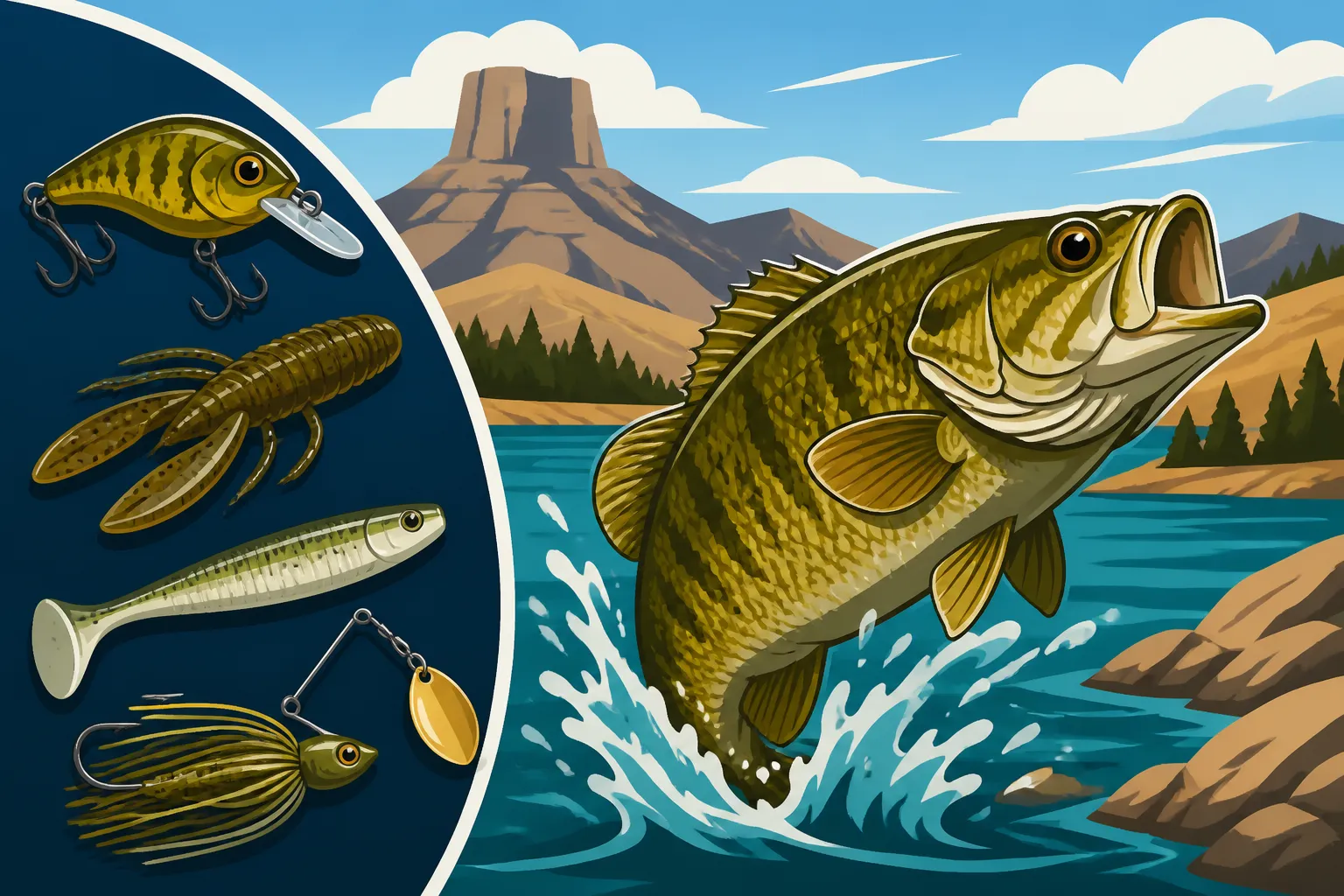
- Tube Jigs: If there's one lure I'd recommend starting with for smallmouth, it's a tube jig. Rigged on an internal jig head, a tube mimics a crayfish perfectly as it scoots along the bottom or falls through the water column. The tentacles flare, creating an incredibly lifelike action. Smallmouth absolutely devour these, especially in rocky areas. I've had incredible days dragging green pumpkin or watermelon seed tubes over boulder fields in Flaming Gorge. You can bounce them, drag them, or even let them sit, and that subtle movement often triggers a strike from even the most cautious bass.
- Grubs: Single-tail or double-tail grubs rigged on a small jig head are fantastic for covering water, especially when smallmouth are chasing baitfish. The tail flutters on the retrieve, creating vibration and flash. They're excellent for casting and retrieving over submerged points or along drop-offs. White, chartreuse, or pearl colors are often great choices, especially in clear water where they imitate shad or other minnows. You can find a huge variety of these on Amazon.
- Creature Baits & Craws: When smallmouth are really focused on crayfish, these baits are your secret weapon. Designed with appendages that flap and undulate, they look incredibly natural when dragged or hopped along the bottom. Rig them on a Texas rig for fishing heavy cover, or use a jig head for more open rock. Colors like green pumpkin, brown, or black and blue are standard choices. They can be particularly effective during the pre-spawn and post-spawn periods when crayfish are a primary food source.
Crankbaits: Covering Water and Triggering Bites
Crankbaits are hard-bodied lures designed to dive to specific depths, making them perfect for covering large areas quickly and finding active fish. They offer a different kind of aggression that can trigger reaction strikes.
- Shallow-Diving Crankbaits: For fishing rocky flats, points, or the tops of submerged humps in 2-8 feet of water, shallow-diving crankbaits are fantastic. They deflect off rocks, creating an erratic action that often provokes a strike. Look for natural baitfish patterns or crawfish colors. These are excellent in spring and fall when bass are shallower.
- Medium and Deep-Diving Crankbaits: When smallmouth move deeper in summer, you'll need crankbaits that can reach them. Medium divers might hit 8-15 feet, while deep divers can get down to 20 feet or more. These are great for trolling or long casts over deep structure. The key is to match the crankbait's diving depth to where the fish are holding. Again, natural colors are generally best in Wyoming's clear reservoirs, but sometimes a bright firetiger or chartreuse can trigger a bite if the fish are active. You might even find success with some of the advice for Trolling Techniques for Wyoming Reservoirs.
- Jerkbaits: While technically a type of crankbait, jerkbaits deserve their own mention. These long, slender baits are designed to be "jerking" and paused, creating an irresistible wounded baitfish action. They suspend at a certain depth when paused, allowing finicky smallmouth to commit. Jerkbaits are especially deadly in clear, cold water, often out-fishing other lures when conditions are tough. Silver, chrome, or natural perch patterns are excellent choices.
Topwater Baits: Excitement on the Surface
There's nothing quite like a smallmouth exploding on a topwater lure. While not always the most consistent producer, when conditions are right, topwater action is unparalleled.
- Poppers: Poppers create a "chugging" or "spitting" sound and disturbance on the surface, mimicking a struggling baitfish or an insect. Work them with short jerks and pauses. They're great around submerged timber, docks, or rocky banks, especially in low-light conditions like dawn or dusk, or on cloudy days.
- Walk-the-Dog Baits (Stickbaits): These lures, like a Heddon Zara Spook, are designed to be retrieved with a specific rod twitching motion that makes them "walk" side-to-side across the surface. This erratic, gliding action is incredibly enticing to aggressive smallmouth. They cover water quickly and can call fish up from surprising depths. These are also excellent choices for fishing around submerged cover.
- Prop Baits: Featuring small propellers on the front and/or back, prop baits create a commotion and spray water, imitating a frantic baitfish. They can be incredibly effective when smallmouth are actively feeding on the surface or when you need to draw them out of dense cover.
Spinnerbaits and Jigs: All-Around Workhorses
These two categories offer versatility and can be fished effectively in a wide range of conditions, making them staples in any smallmouth angler's tackle box.
- Spinnerbaits: With their flashing blades and vibrating skirts, spinnerbaits are fantastic for covering water and fishing through sparse cover. The flash and vibration mimic a wounded baitfish or a school of minnows. They're especially good on windy days, in stained water, or when fish are aggressive. Chartreuse and white are classic colors, but sometimes natural baitfish patterns can be effective too. For fishing open water, a tandem Colorado blade setup might work, while single willow leaf blades are better for getting through weeds.
- **Jigs (Skirted Jigs): Unlike the tube jigs mentioned earlier, these are traditional leadhead jigs with silicone or hair skirts, often tipped with a soft plastic trailer like a craw or grub. They're incredibly effective for pitching into heavy cover, fishing deep rock piles, or slow-dragging along the bottom. The skirt breathes and pulsates, giving a lifelike appearance. Black and blue, green pumpkin, and brown are perennial favorites. Jigs are a fantastic choice for targeting larger smallmouth who often prefer a slower, more substantial meal. Mastering your jig presentation is a fantastic way to upgrade your catches, much like honing your Nymphing Techniques for Wyoming Tailwaters for trout.
Matching Your Lure to the Conditions
Choosing the "best" lure isn't a one-size-fits-all answer. It's about making smart choices based on the specific conditions you face on the water. Wyoming's reservoirs can present a huge variety of challenges, and tailoring your approach is key.
Water Clarity and Temperature
Wyoming is known for its stunningly clear waters, which can be both a blessing and a curse. In very clear conditions, fish rely heavily on sight, meaning natural colors and subtle presentations often excel. Think translucent green pumpkins, browns, and natural baitfish patterns. Fluorocarbon line is also a must for its low visibility. If the water has a slight stain, however, or if it's overcast, you can often get away with bolder colors like chartreuse or brighter blues that create more contrast.
Water temperature dictates smallmouth metabolism. In colder water (early spring, late fall), fish are more lethargic, so slow-moving baits like jigs, tubes, or suspending jerkbaits presented with long pauses are often best. As the water warms, smallmouth become more active and aggressive. This is when faster retrieves with crankbaits, spinnerbaits, and topwater lures can really shine. If the water gets really hot in the summer, they might hold deep and require deep-diving cranks or vertical jigging presentations. Always keep an eye on water temps; they're as important as air temps! Many of the principles discussed in How Water Temperature Changes Wyoming Trout Behavior are applicable here, just with different temperature ranges.
Structure and Cover Specifics
Smallmouth bass are structure-oriented fish, meaning they'll relate to anything that offers cover, ambush points, or changes in depth.
- Rock Piles and Ledges: These are smallmouth magnets. Tube jigs, creature baits, and skirted jigs worked slowly over and around these features are often incredibly productive. You want your lure to bounce, crawl, and fall, mimicking a crawfish. Crankbaits that "bang" off the rocks can also trigger violent strikes.
- Submerged Timber and Brush: If your reservoir has standing timber or fallen trees, these are prime ambush spots. Texas-rigged soft plastics (worms, craws) are excellent here because they are weedless and won't snag. Jigs with brush guards are also effective. You'll need to be precise with your casts and ready to pull fish out of cover quickly.
- Points and Humps: These are natural highways for smallmouth, especially those that extend out into deeper water. Cast crankbaits to cover the top and sides, or drag tubes and jigs along the contours. If the point has a steep drop-off, a jerkbait or a vertical presentation can be deadly.
- Open Water Bait Balls: Sometimes, especially in summer, smallmouth will suspend and chase schools of baitfish in open water. This is when deep-diving crankbaits, jerkbaits, or even vertical jigging spoons can be effective. Your fish finder is your best friend here, helping you locate the bait and the bass.
Time of Day and Weather
Just like us, smallmouth bass change their behavior with the sun and the weather.
- Low Light (Dawn/Dusk, Cloudy Days): These are prime times for aggressive feeding. Topwater lures are particularly effective as bass feel more secure hunting near the surface. Spinnerbaits and shallow-running crankbaits can also draw fish from cover.
- Bright Sun, Clear Skies: When the sun is high and bright, smallmouth often retreat to deeper, shadier areas or hold tight to cover. Slow, subtle presentations with soft plastics or jigs are usually your best bet. Fishing deeper crankbaits or even dropshot rigs can also entice strikes. The clarity of Wyoming's air and water means the sun penetrates deep, so fish will seek refuge.
- Windy Conditions: Don't shy away from wind! A choppy surface breaks up the light, making fish feel more comfortable and less wary. The wind also positions baitfish, and smallmouth will often feed aggressively on the windy side of points and structure. This is an excellent time for spinnerbaits, crankbaits, and even noisy topwaters that cut through the chop. Learning How Wind Affects Fishing on Wyoming Reservoirs can be a game-changer.
- Cold Fronts: A sudden drop in temperature can really shut down the bite. Fish become lethargic and often move deep. When this happens, slow down your presentation dramatically. Small jigs, dropshot rigs, and suspending jerkbaits with very long pauses are often the only way to get a bite. Sometimes, following a cold front, a brief period of warmer, calm weather can spark a bite again, as detailed in Fishing Wyoming Lakes After a Cold Front.
| Lure Type | Best Conditions | Preferred Habitat | Action/Technique |
|---|---|---|---|
| Tube Jigs | Clear water, colder temps, post-front | Rocky points, ledges, humps | Drag, hop, twitch, dead-stick along bottom |
| Grubs | Clear to slightly stained, active fish | Open water, rocky flats | Steady retrieve, lift-drop, slow roll |
| Crankbaits | All conditions (depth-specific), covering water | Points, humps, deep rock | Steady retrieve, deflect off structure, troll |
| Jerkbaits | Clear water, cold water, finicky fish | Open water, drop-offs, points | Jerk-jerk-pause, rip-pause |
| Poppers | Low light, calm surface, active fish | Near cover, docks, shorelines | Pop-pause, chug |
| Spinnerbaits | Wind, stained water, active fish, sparse cover | Flats, points, weed edges | Steady retrieve, slow roll, bump cover |
| Skirted Jigs | Heavy cover, deep rock, larger fish | Timber, brush, deep ledges | Pitching, flipping, slow drag, hop |
Essential Tips for Success with Smallmouth Lures
Having the right lure is only half the battle. How you present it, and the gear you use to do so, will make a massive difference in your success rate for catching those hard-fighting Wyoming smallmouth.
Rod, Reel, and Line Considerations
You wouldn't use a sledgehammer to drive a finish nail, right? The same goes for fishing gear. Matching your rod, reel, and line to your chosen lure and fishing style is crucial.
- Rods: For most smallmouth applications, a medium to medium-heavy spinning or casting rod, typically 6'6" to 7'6" in length, is ideal.
- Spinning rods are excellent for lighter lures like tube jigs, dropshots, and smaller jerkbaits, offering better casting distance and sensitivity with lighter lines. A fast action tip will help with detecting subtle bites and setting the hook quickly.
- Casting rods are better suited for heavier lures like large crankbaits, spinnerbaits, and skirted jigs, providing more power for accurate casts and fighting bigger fish, especially around cover. A moderate-fast action can be good for crankbaits, allowing the rod to load up and absorb the fish's surges.
- Reels: A quality spinning reel in the 2500-3000 size range, or a baitcasting reel with a gear ratio between 6.4:1 and 7.3:1, will cover most smallmouth needs. The faster gear ratios are great for quickly retrieving slack or bringing fish out of cover.
- Line: This is often overlooked but is incredibly important in clear Wyoming waters.
- Fluorocarbon is a smallmouth angler's best friend. It's nearly invisible underwater, extremely sensitive, and has good abrasion resistance for fishing around rocks. Use 6-12 pound test for most applications. You can find quality fluorocarbon line on Amazon.
- Braided line is great for casting distance and sensitivity, especially when fishing heavier cover or deep water. However, its visibility can spook fish in clear water, so it's best to tie a fluorocarbon leader (6-10 feet) to the end of your braid.
- Monofilament has some stretch, which can be beneficial for crankbait fishing as it acts as a shock absorber, preventing hooks from tearing out. It's also more forgiving for beginners, but its visibility and lower sensitivity make it less ideal for finesse techniques in clear water.
Presentation Matters
Even the "best" lure won't work if you present it poorly. Smallmouth bass are intelligent and often wary, especially in waters with fishing pressure.
- Work the Angles: Don't just cast straight out from the bank. Experiment with casting parallel to shorelines, at different angles to points, or across submerged humps. Often, approaching the structure from a different angle can trigger bites from fish that ignored your previous casts.
- Vary Your Retrieve: This is crucial. If you're not getting bites, change it up!
- For soft plastics, try hopping, dragging, or dead-sticking (letting it sit motionless).
- For crankbaits, vary your speed, incorporate pauses, or try to "burn and kill" the retrieve.
- For jerkbaits, experiment with different jerk-and-pause cadences – sometimes a short pause, sometimes a long one.
- Stealth: Smallmouth have excellent eyesight and can be easily spooked. Keep your shadows off the water, minimize noise in the boat, and make accurate, quiet casts, especially when fishing shallow or near surface-oriented fish. Wearing subdued clothing can even help, as bright colors can be visible to fish looking up. This is particularly important on those calm, sunny days when the water is like glass.
Experimentation is Your Best Friend
Don't be afraid to try new things! What worked yesterday might not work today. The weather changes, the fish move, their mood shifts. Being willing to adapt is the hallmark of a successful angler.
- Change Lures: If one lure isn't producing, don't bang your head against the wall. Switch to a different type, size, or color. If a crankbait isn't working, try a tube. If a tube isn't getting bit, try a dropshot. The faster you find what they want, the more fish you'll catch.
- Change Locations: If a spot that usually holds fish is dead, don't spend all day there. Move to a new area that offers different depths, structure, or current. Perhaps they've moved deeper, or are relating to a different type of cover like the advice in How to Read a Wyoming Stream for Holding Water.
- Pay Attention to Details: Did you get a bite on a specific color? At a certain depth? After a particular type of pause? Log these details in your mental notebook (or an actual one!). Over time, you'll develop a better understanding of patterns specific to the reservoirs you fish. Remember, fishing is a puzzle, and every cast gives you a piece of the answer. Embracing this mindset will make your time on the water more rewarding, whether you're targeting smallmouth or pursuing Best Fishing Spots for a Wyoming Road Trip.
Ultimately, smallmouth bass fishing in Wyoming's reservoirs is a thrilling challenge. By understanding their behavior, equipping yourself with a versatile selection of proven lures from places like Amazon, and constantly adapting your presentation to the conditions, you'll be well on your way to enjoying some incredible days battling these fantastic fish.
Disclaimer
This article is for general informational purposes only and does not constitute professional advice. Laws, prices and regulations vary by location and change over time. Consult a qualified professional for guidance on your specific situation.