Are Guided Trips Wheelchair Accessible in Wyoming?
It's incredibly frustrating when you're itching to get out on the water, dreams of casting a line in Wyoming's pristine rivers and lakes dancing in your head, only to hit a wall when trying to figure out if a guided fishing trip can actually accommodate your needs, especially if you rely on a wheelchair. Many folks assume the wilderness is inherently off-limits, but the truth is, while it presents unique challenges, accessibility in guided fishing is becoming more of a conversation, and with careful planning, it can absolutely be a reality. This guide will delve into the nuances of finding and enjoying wheelchair-accessible guided fishing experiences across Wyoming, helping you navigate the waters to your next great adventure.
The Reality of Accessibility on Wyoming's Waters
When we talk about "accessibility" in the context of a guided fishing trip in a place like Wyoming, it's not always as straightforward as a ramp leading into a building. The natural environment itself, with its rugged terrain, fluctuating water levels, and diverse fishing methods, presents a unique set of considerations. It’s about more than just getting to the boat; it's about the entire experience from start to finish.
Understanding "Accessible" in the Outdoors
For many, true accessibility means being able to participate fully and comfortably, not just being able to get through a doorway. In the wild expanses of Wyoming, this can involve everything from the parking situation at the access point to the type of boat used, the stability of the footing (or lack thereof), and the guide's experience and willingness to adapt. A gravel parking lot might be manageable, but a steep, rocky path to the river's edge might be impossible without significant assistance. Similarly, a boat designed for wide-open casting might not have the space for a wheelchair, or the transfer from shore to boat could be a major hurdle. It's a holistic view of the journey, acknowledging every step from arrival to the actual act of fishing.
Think about the process: loading gear, navigating to the fishing spot, transferring into a boat (if applicable), maneuvering within the fishing area, and even using facilities. Each of these steps needs to be considered. Some guides might be fantastic anglers but lack the specific training or equipment to handle accessibility needs beyond basic physical assistance. This isn't a fault, but simply a reality that requires open communication and careful selection on your part. It highlights why asking very specific questions upfront is so incredibly important, as "accessible" can mean different things to different people and different providers.
Challenges of Wyoming's Terrain for Accessibility
Wyoming's beauty often comes hand-in-hand with its wild, untamed nature. Our rivers, like the North Platte River Fishing Guide, can have steep banks, rocky bottom structures, and swift currents. High-alpine lakes, while breathtaking, often require hiking over uneven trails to reach, making traditional guided "wade trips" incredibly difficult or impossible for someone in a wheelchair. Even larger reservoirs can have tricky shorelines or boat ramps that aren't quite up to ADA standards, despite appearing functional for able-bodied individuals.
The very essence of a Wyoming fishing adventure often involves navigating natural obstacles. Picture a guide trying to position a client's wheelchair on a gravel bar next to a freestone stream, or attempting to transfer someone from a vehicle into a low-slung drift boat on an uneven bank. These are not insurmountable problems for every guide, but they highlight the need for specialized knowledge, equipment, and a sincere commitment from the outfitter. It's less about the fishing itself and more about the logistics of getting to and from the prime spots, which are often nestled in rugged, picturesque settings.
Types of Guided Trips and Their Accessibility
The kind of guided trip you choose will greatly impact its potential accessibility.
- Drift Boat Trips: These are incredibly popular for river fishing, especially on famous trout waters like the Snake River or the North Platte. However, they are typically narrow and require a stable transfer from the bank. Once in, space is limited. Some drift boats can be modified or are designed with a wider beam, but this is not standard. A specialized casting brace might be available, but the initial transfer remains key.
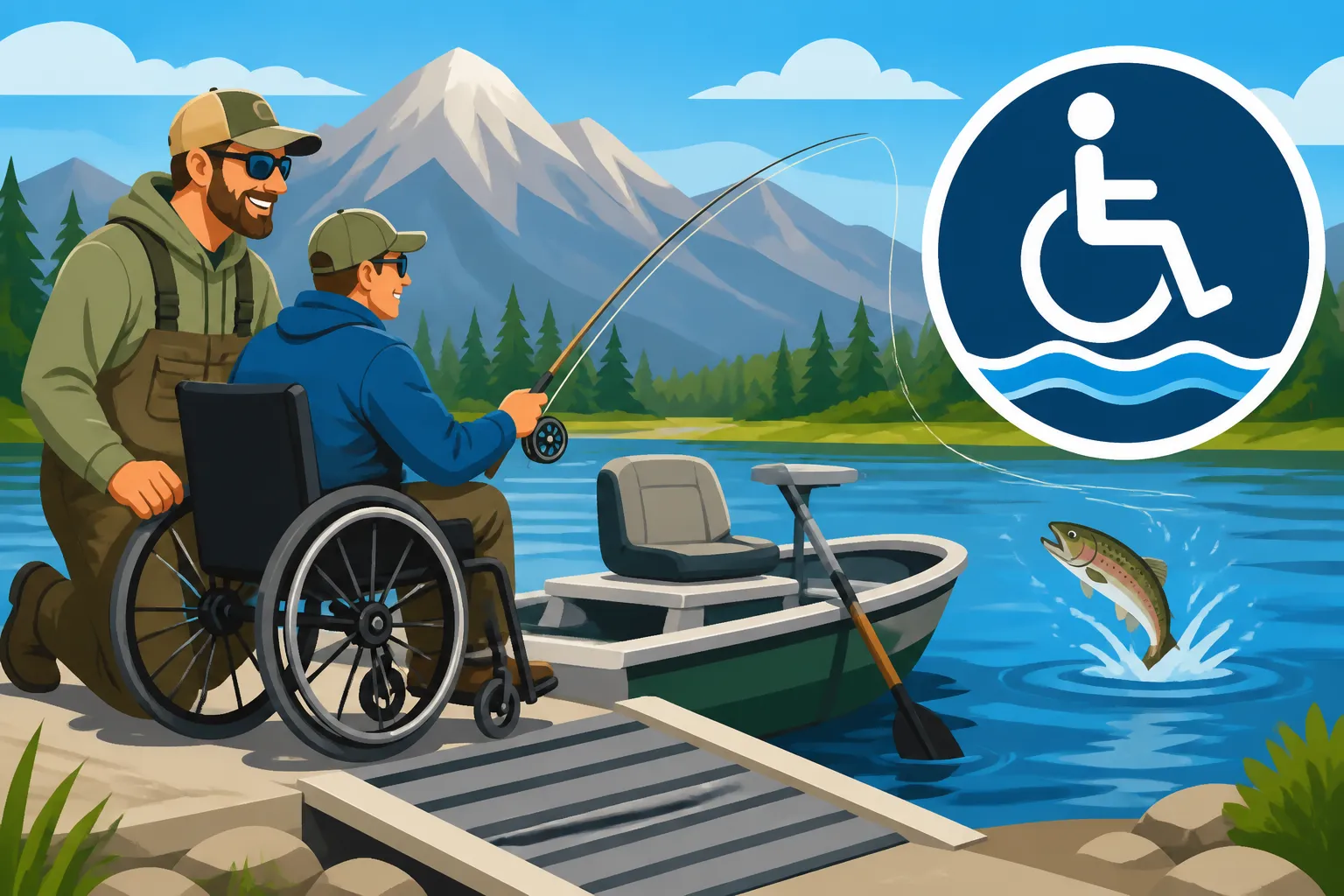
- Power Boat Trips: For larger lakes and reservoirs like Wyoming's Flaming Gorge Reservoir Fishing Guide or Wyoming's Jackson Lake Fishing Guide, power boats are common. These often offer more deck space and can be equipped with wider doors or even lifts. Docks at marinas can provide a more stable transfer point than a river bank. This category generally offers the most potential for a truly accessible experience, provided the boat itself is suited.
- Wade Trips: As mentioned, these involve walking in the river and casting. For someone in a wheelchair, these are generally not feasible unless specific, very calm, and level wading sections are found that are directly accessible from the bank, which is rare for a guided experience.
- Bank/Shore Fishing: While not always considered a traditional "guided trip," some guides might offer assistance for fishing from accessible piers or stabilized banks. This could be an excellent option, especially if targeting specific species or locations, and it’s worth asking if a guide would tailor an outing around Fishing Spots With Wheelchair-Accessible Piers in Wyoming.
Table: Accessibility Considerations for Different Guided Fishing Trip Types
| Trip Type | Typical Terrain | Accessibility Potential (General) | Key Considerations for Wheelchair Users |
|---|---|---|---|
| Drift Boat (Rivers) | Uneven, rocky banks | Low to Moderate | Transfer from uneven bank to narrow boat is main challenge. Limited space within the boat. Some specialized boats exist but are rare. |
| Power Boat (Lakes/Reservoirs) | Marinas, docks, sometimes uneven shorelines | Moderate to High | Easier transfers from stable docks. More deck space for maneuvering. Some boats can be equipped with wider access or lifts. Wind and waves on large bodies of water can affect stability. |
| Wade Trip (Rivers) | Rocky, slippery riverbeds, uneven banks | Very Low | Requires mobility in water and on slippery, uneven terrain. Essentially not feasible for direct wheelchair use. |
| Bank/Shore Fishing | Paved paths, stable piers, compacted dirt | Moderate to High | Depends heavily on the specific access point. Paved paths to piers are ideal. Guide can assist with setup and casting. Less "guided" on the water, more "assisted" at the water's edge. |
| Ice Fishing | Frozen lake surface | Moderate | Requires stable transfer to and from a sled or shelter. Ice conditions can vary. Portable shelters offer protection. Guide can set up holes and assist with lines. Often more feasible than river trips due to stable, flat surface. |
Finding Guides and Outfitters Specializing in Accessibility
The good news is that the outdoor recreation industry is slowly but surely becoming more inclusive. While specific "wheelchair accessible" guided fishing trips might not be explicitly advertised everywhere, many guides and outfitters are genuinely willing to accommodate, especially if approached with clear communication. The key is to find those who not only say "yes, we can try" but also demonstrate a thoughtful understanding of what that truly entails.
Asking the Right Questions Before You Book
This is perhaps the most crucial step. Don't be shy; your comfort and safety depend on getting detailed answers. When you're looking into Hiring a Fishing Guide in Wyoming or trying to figure out How to Choose a Wyoming Fishing Guide, you need to go beyond the typical questions about fish species and tackle. Here are some essential questions to ask:
- "What is the access like at your typical launch points?" Ask about parking, distance to the water, and the ground surface (pavement, gravel, dirt, rocks, steepness).
- "What kind of boat do you use, and what are its dimensions, especially entry points?" Inquire about door widths, deck space, and if there are any steps or high gunwales (the upper edge of the side of a boat) to contend with.
- "Do you have experience assisting clients who use wheelchairs or have mobility limitations?" Look for specific examples, not just a generic "yes." A guide who has thought about this before is a huge asset.
- "Are you, or can you bring, a companion to assist with transfers or other physical needs?" Some guides may offer this, or you may need to bring your own assistant. Clarify this upfront.
- "Do you have any adaptive equipment, such as casting aids, specialized chairs, or stabilization devices for the boat?" This is less common but worth asking.
- "Can we do a dry run or see photos/videos of the boat and access points if I'm unsure?" Visuals can be incredibly helpful in assessing feasibility.
Be prepared to describe your specific needs in detail, including the type of wheelchair (manual, power, dimensions), your ability to transfer, and any specific physical limitations. The more information you provide, the better a guide can assess if they can truly offer a safe and enjoyable experience.
Searching for Inclusive Outfitters
While not every guide service will highlight "wheelchair accessible" in their main marketing, many are happy to work with you. Online platforms are a great starting point. Websites like FishingBooker, for instance, allow you to browse guides and boats, and critically, they often provide direct messaging features. This lets you initiate that vital conversation about specific accessibility needs before booking. You can filter by location and then reach out to multiple captains to ask those detailed questions about their specific vessel and access points.
Don't be afraid to search for guides who specifically mention "adaptive fishing" or "inclusive fishing." While less common in Wyoming, these phrases indicate a proactive approach to accessibility. You might also find local non-profits or organizations that specialize in connecting individuals with disabilities to outdoor recreation opportunities. They often have lists of guides who have demonstrated a commitment to accessibility. Sometimes, a guide might not have a dedicated "accessible" boat, but they might be willing to modify their approach, perhaps focusing on a particular section of river or a lake where bank access is easier, rather than a traditional float trip. For example, a guide specializing in Beginner-Friendly Wyoming Fishing Guides might be more patient and willing to adapt.
Adaptive Fishing Equipment and Techniques
The world of adaptive sports is growing, and fishing is no exception. While most guided trips won't come with highly specialized adaptive gear, knowing what's available can help you plan or ask if a guide is open to using your equipment. This could include:
- Casting Aids: Devices that help with casting if arm strength or mobility is an issue.
- Rod Holders: Securely hold the rod, allowing for hands-free fishing or making it easier to manage the rod.
- Modified Seating: Portable, stable chairs or cushions that can provide better posture and support in a boat or on the bank.
- Joystick Controls: For those with limited hand dexterity, some specialized power reels can be operated with a joystick.
A good guide might not have these, but they should be open to learning how to integrate them if you bring your own. The willingness of a guide to understand and adapt to different fishing techniques that might be necessary due to physical limitations is a sign of a truly inclusive outfitter. It's about finding a guide who sees your abilities, not just your challenges.
Specific Waters and Locations with Potential for Accessibility
While much of Wyoming's wilderness is rugged, there are certain types of waters and locations that inherently offer greater potential for wheelchair accessibility, especially when combined with the right guide and equipment. The trick is knowing where to look and what questions to ask.
Reservoirs and Larger Lakes
These large bodies of water often provide the best opportunities for accessible boat fishing. Marinas on reservoirs like Flaming Gorge, Boysen, Glendo, or Seminoe typically have more developed infrastructure, including paved parking lots, wider boat ramps, and stable docks. This makes transferring into a power boat significantly easier than trying to navigate a rocky river bank for a drift boat. Power boats themselves tend to offer more open deck space, which is crucial for maneuvering a wheelchair or for providing stable seating.
Guides operating on these larger lakes often use boats equipped with trolling motors, depth finders, and plenty of space for gear. When booking through a service like FishingBooker, you can often see pictures of the boats, giving you a visual idea of the layout and potential for accessibility. Always verify the specific marina's accessibility features and if the guide's boat is suitable. Some guides might specialize in Trolling Techniques for Wyoming Reservoirs which can be a more static and less physically demanding form of fishing once on the water.
Accessible Bank Fishing and Piers
For those who prefer to stay on solid ground, or if boat transfers are too challenging, accessible bank fishing locations and fishing piers can be a fantastic option. While these might not involve a traditional "guided boat trip," a guide can still provide invaluable assistance with setup, casting, baiting, and fish handling. Wyoming Game and Fish Department has made efforts to install universally accessible fishing piers at various locations across the state, such as in some state parks or community ponds.
These locations offer stable, level surfaces, often with railing that provides safety and a place to rest. A guide can help you find these spots and then work with you on specific fishing techniques tailored to bank fishing. While you might not be exploring remote river stretches, you can still have a incredibly rewarding experience catching a variety of species. Remember to ask guides if they are willing to offer a "shore-based" guided experience, explicitly mentioning places like the accessible piers you've researched. This can open up more possibilities than sticking to traditional boat trips.
The Importance of Communication with Your Guide
I cannot stress this enough: transparent and thorough communication with your potential guide is the single most important factor in a successful accessible fishing trip. Don't assume anything, and don't let a guide assume anything either. Every individual's needs are unique, and every guide's capabilities and equipment will differ. Before you commit to anything, have a detailed conversation about every aspect of the trip.
Think about the entire sequence of events: from where you'll meet, to how you'll get to the water's edge, how you'll get into the boat (if applicable), how you'll be positioned for fishing, and what facilities might be available. Ask about contingency plans for weather or unforeseen challenges. A good guide will appreciate your honesty and diligence; it allows them to properly prepare and ensure they can genuinely provide the experience you're seeking. If a guide seems hesitant or vague in their answers, it might be a sign to look elsewhere. You want someone enthusiastic and confident in their ability to meet your needs.
Planning Your Accessible Wyoming Fishing Adventure
Embarking on any fishing trip requires planning, but for an accessible trip, meticulous preparation becomes paramount. It's about empowering yourself with information and making sure every detail is considered, transforming potential obstacles into manageable steps.
Researching Ahead of Time
Before you even pick up the phone to call a guide, do your homework. Start by looking at potential fishing areas. For instance, are you dreaming of the mighty Wyoming's North Platte River Fishing Guide or the serene Wyoming's Boysen Reservoir Fishing Guide? Then, investigate specific access points for those locations. Online mapping tools with satellite views can sometimes offer insights into parking areas and terrain near boat ramps or fishing piers. Look for information from the Wyoming Game and Fish Department (WGFD) regarding accessible fishing sites, as they often list locations with paved paths, boardwalks, or accessible restrooms.
Beyond location, research guides. When using a platform like FishingBooker, read reviews, and pay attention to any comments that might hint at a guide's flexibility or experience with diverse client needs. Also, think about the time of year. Wyoming Fishing Seasons Month by Month can significantly impact access. Spring runoff might make river banks muddy and unstable, while summer might mean lower water levels that make boat ramps more difficult. Knowing these factors can help you narrow down your choices and have more informed conversations with potential guides.
What to Expect and How to Prepare
It's important to set realistic expectations. While accessibility is improving, a truly barrier-free experience in the heart of Wyoming's wilderness might still be a challenge. Be prepared for potential compromises, perhaps favoring a lake trip over a swift river, or a shorter outing rather than a full-day adventure, at least for your first accessible guided trip.
Consider bringing an assistant or companion, especially if transfers are involved. Even the most accommodating guide may not be able to provide the level of physical assistance a professional caregiver or strong companion can offer. Pack smartly: bring any adaptive equipment you own, comfortable clothing suitable for Wyoming's often unpredictable weather, and any personal aids you might need. Don't forget your Wyoming Fishing License Guide for Nonresidents or resident equivalent, and ensure you understand How Bag and Possession Limits Work in Wyoming for the species you hope to target. The more self-sufficient you can be in terms of personal care and minor mobility, the smoother the trip will likely be.
Partnering with Your Guide for Success
Think of your guide as your partner in this adventure. Once you've found an outfitter who is confident and willing to accommodate, work with them collaboratively. Share your concerns, ask for their suggestions, and be open to their recommendations for locations or techniques that might work best given your situation. They are the local experts, and their knowledge of the water and access points is invaluable.
A successful accessible trip is often a testament to this partnership. The guide brings their expertise in fishing and navigation, and you bring your knowledge of your own needs and capabilities. Together, you can troubleshoot potential issues and ensure the focus remains on the joy of fishing. Remember, a good guide wants you to have an amazing experience, and by working together, you can make that happen, creating lasting memories on Wyoming's beautiful waters.
Disclaimer
This article is for general informational purposes only and does not constitute professional advice. Laws, prices and regulations vary by location and change over time. Consult a qualified professional for guidance on your specific situation.