How to Fish Deep Structure for Lake Trout
Trying to unlock the secrets of deep structure fishing for lake trout in Wyoming can feel like trying to solve a complex puzzle. These majestic fish are often elusive, dwelling in the frigid, dark depths of our vast reservoirs, making them a challenge for even seasoned anglers. This guide is dedicated to demystifying the art and science of pursuing Mackinaw in their deepwater haunts, providing you with the knowledge and techniques to turn frustration into triumph.
Understanding Lake Trout Behavior and Habitat
Lake trout, or Mackinaw as they're often called, are a fascinating species, perfectly adapted to the cold, deep environments of Wyoming's largest reservoirs. Unlike their stream-dwelling cousins, lake trout spend much of their lives in the darker, cooler parts of the water column, particularly as surface temperatures rise. Cracking their code requires a solid understanding of their preferred habitats, their movements throughout the year, and what drives their feeding patterns.
Where Lake Trout Hold in Deep Water
When you're out on a sprawling reservoir like Flaming Gorge or Jackson Lake, it's easy to feel overwhelmed by the sheer size of the water. But lake trout aren't just swimming aimlessly in the abyss; they gravitate towards specific underwater features that offer them both protection and access to food. Think of it like a city – there are main roads, but also quiet neighborhoods and bustling commercial districts. For lake trout, these are often defined by changes in depth and structure.
They love steep drop-offs, submerged humps, underwater points that extend far into the lake, and even old river channels. These areas create current breaks and ambush points where baitfish gather. A deep, rocky bottom is almost always a good sign, as it provides cover and often hosts invertebrate life that attracts smaller fish, which, in turn, attract the lakers. The deeper rock piles and shelves often hold fish that are relating to structure, using it for cover or as a staging area. If you can locate an underwater island or a significant depth change, you're already one step closer to finding them.
Seasonal Movements and Depth Preferences
Lake trout are highly sensitive to water temperature, which largely dictates their seasonal movements and preferred depths. In the spring, shortly after ice-out, they might be found relatively shallow, sometimes even in 10-20 feet of water, chasing schools of baitfish that are also moving into warmer zones. This is a fantastic time for shore anglers or those without extensive deep-water gear. However, as the Wyoming sun intensifies and surface temperatures climb into the 50s and 60s, lake trout retreat.
During the summer months, the thermocline becomes your best friend. This is a distinct layer in the water column where the temperature changes rapidly. Lake trout will typically suspend or hold just below the thermocline, in the cooler, oxygenated water they prefer. This can mean depths of 50 to 150 feet, or even deeper in some reservoirs, like those found when fishing Wyoming's Flaming Gorge Reservoir Fishing Guide. Their depth will also depend on the clarity of the water; in very clear lakes, they might go even deeper to avoid light. Understanding How Water Temperature Changes Wyoming Trout Behavior is crucial here, as it directly influences their location and feeding activity.
As fall approaches and water temperatures cool down, lake trout once again become more active and can move shallower, particularly as they prepare for spawning. This is often when the biggest fish are caught, as they are actively feeding and less lethargic. Winter, under the ice, sees them in similar deep, structured areas, often suspending or cruising the bottom, still relating to the same features they do in open water, just under a thick blanket of ice.
Forage and Feeding Habits
Lake trout are apex predators in their ecosystems, and their diet primarily consists of smaller fish. In Wyoming, this can mean a variety of species depending on the specific reservoir. Kokanee salmon are a huge draw in places like Flaming Gorge and Pathfinder Reservoir, providing a rich, high-fat food source. Cisco, whitefish, chub, and even smaller trout species make up a significant portion of their diet.
Their feeding habits are often tied to the movements of these baitfish. If you can locate schools of baitfish on your sonar, you're likely to find lake trout nearby. They are opportunistic feeders, often ambushing prey from cover or cruising along drop-offs to intercept passing schools. Because they consume larger prey, their feeding windows can sometimes be shorter but more intense. Matching the size and profile of the predominant baitfish is key to choosing effective lures. Understanding What Lake Trout Eat in Wyoming Reservoirs will directly inform your lure selection and presentation, increasing your chances of success.
Essential Gear for Deepwater Lake Trout
Successfully tackling deepwater lake trout is as much about having the right tools as it is about skill. When you're dealing with depths that can exceed 100 feet, standard bass or trout setups just won't cut it. You need specialized equipment designed to handle heavy lures, strong currents, and the powerful runs of these deepwater giants. Investing in quality gear pays dividends, ensuring you can detect subtle bites and bring those big fish to the net.
Rods, Reels, and Line Selection
For deepwater lake trout, your rod needs to have a stout backbone with a sensitive tip. A medium-heavy to heavy power rod, typically 7 to 8.5 feet long, is ideal. This length provides leverage for fighting powerful fish and helps manage heavier lines and lures. Look for rods with a fast to moderate-fast action, which allows for quick hook sets in deep water where line stretch can be an issue. Brands like Ugly Stik or St. Croix offer durable options that stand up to the rigors of deep-sea (or deep-lake!) fishing.
Matching that rod with a robust reel is crucial. A conventional baitcasting reel or a high-capacity spinning reel in the 4000-6000 size range is a good choice. These reels need to have excellent drag systems that can handle long, strong runs, and a high retrieve rate to bring up line quickly from the depths. Many anglers prefer reels with a line counter feature, which is incredibly helpful for accurately dropping lures to specific depths, especially when you're trying to replicate a successful presentation. You can often find great deals on these specialized reels through online retailers like Amazon.
Line selection is paramount. Braided line is almost a necessity for deepwater fishing due to its minimal stretch and high strength-to-diameter ratio. This allows for superior sensitivity, helping you feel subtle bites even at extreme depths. A 30-50 lb test braided mainline is a good starting point. However, braid is visible in clear water, so always use a fluorocarbon leader of 15-25 lb test, typically 10-20 feet long. Fluorocarbon is nearly invisible underwater and offers excellent abrasion resistance against rocks and the lake trout's sharp teeth.
Downriggers and Sonar/Fish Finders
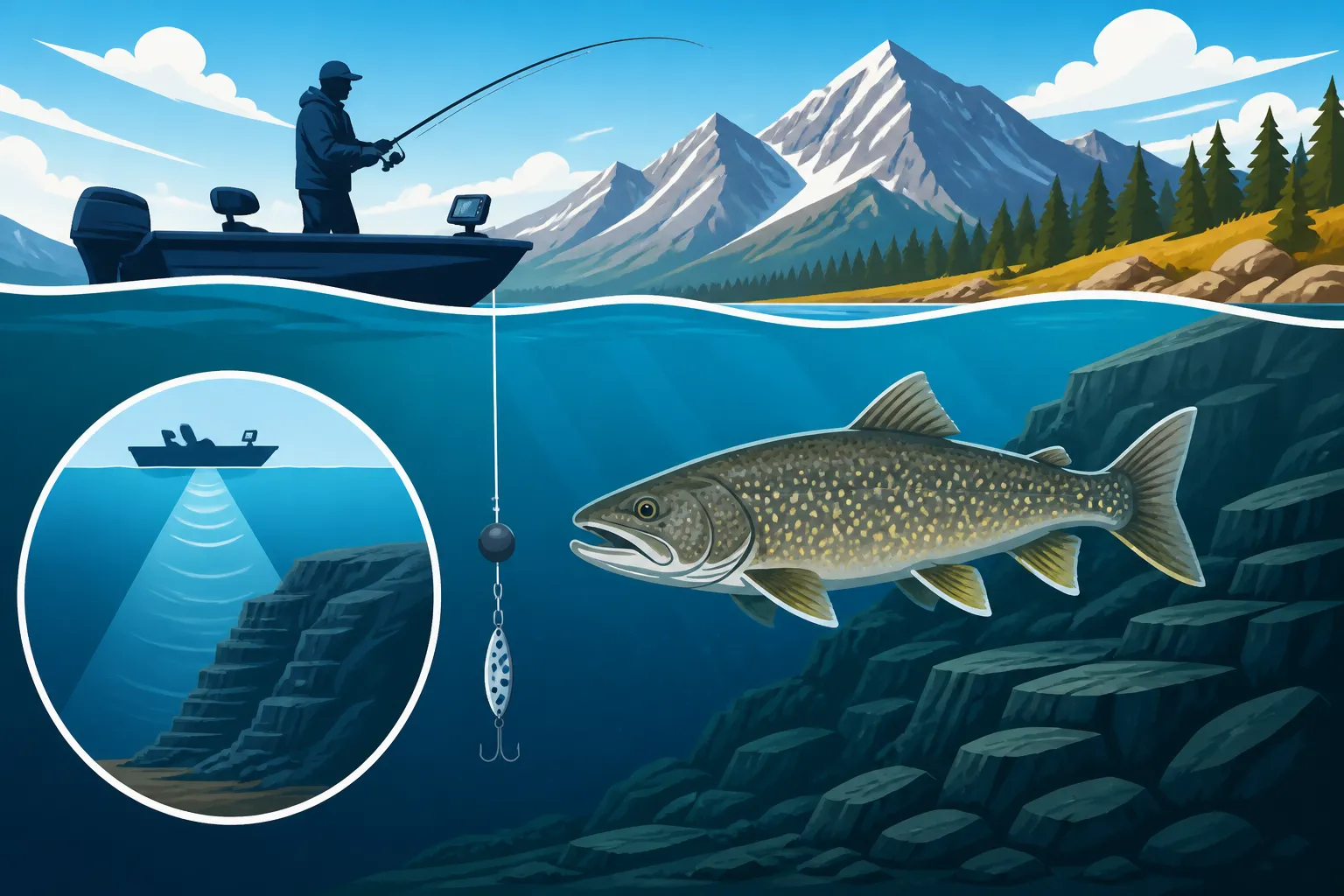
These two pieces of equipment are arguably the most critical for consistent deepwater lake trout success. Downriggers allow you to precisely control the depth of your lure, getting it right into the strike zone where you've marked fish or bait. They consist of a heavy ball (cannonball) that is lowered to a set depth, with your fishing line clipped to a release clip attached to the downrigger cable. When a fish strikes, the line releases from the clip, allowing you to fight the fish directly without the weight of the cannonball. For detailed guidance on setting up and using this gear, check out our guide on Downrigger Basics for Wyoming Reservoir Trout.
A high-quality sonar or fish finder is your eyes into the underwater world. Modern units from brands like Humminbird or Lowrance offer crystal-clear displays, showing bottom structure, depth contours, baitfish schools, and even individual fish. Side imaging and down imaging technologies take this a step further, providing photorealistic views of the bottom and structure off to the sides of your boat. Learning to read your sonar is an ongoing process, but being able to identify those subtle humps, drop-offs, and baitfish clouds is the difference between a frustrating day and a successful one. It takes practice, but the rewards are well worth the effort.
Terminal Tackle and Lure Choices
When it comes to lures for deepwater lake trout, you're looking for offerings that imitate their primary forage: baitfish. Spoons, especially those in metallic or baitfish patterns, are extremely effective. Popular choices include the Gibbs-Delta Highliner, Luhr Jensen Kwikfish, or various Flutter Spoons, often in sizes ranging from 3 to 6 inches. These are excellent for trolling, mimicking wounded baitfish.
Tube jigs are another deadly option, especially for vertical jigging or slow trolling. White, pearl, chartreuse, or even glow-in-the-dark tubes, often in 4 to 8-inch lengths, are irresistible to lake trout. Tip them with a piece of sucker meat or a Berkley Gulp! Alive! minnow for added scent and attraction. Hard-bodied stickbaits and crankbaits that dive deep can also be effective, particularly those with a strong wobbling action. The Rapala Down Deep Husky Jerk or Storm ThunderStick can reach respectable depths when trolled. Don't forget swivels to prevent line twist and strong, sharp treble hooks. Having a variety of colors and sizes on hand is smart, as fish preferences can change throughout the day.
| Lure Type | Best Application | Typical Depth Range | Key Characteristics |
|---|---|---|---|
| Spoons | Trolling, Vertical Jigging | 30-150+ feet | Mimics wounded baitfish, metallic/bright colors |
| Tube Jigs | Vertical Jigging, Drifting | 40-200+ feet | Soft plastic, can be scented, often tipped with bait |
| Deep Diving Crankbaits | Trolling | 20-50 feet (without assistance) | Aggressive wobble, good for shallower deep water |
| Bucktail Jigs | Vertical Jigging | 50-150+ feet | Imitates baitfish, often tipped, good for fast retrieve |
| Swimbaits | Trolling, Casting (heavy) | 30-100+ feet | Realistic baitfish profile, versatile |
Mastering Trolling Techniques for Deep Structure
Trolling is often the most effective method for covering large expanses of water and finding actively feeding lake trout in deep reservoirs. It allows you to present your lures at precise depths for extended periods, enticing strikes from fish that might not respond to stationary presentations. However, simply dragging a lure behind your boat isn't enough; precision, speed, and careful depth control are crucial.
Precision Trolling with Downriggers
Downriggers truly shine when lake trout are holding at specific depths, which is often the case around deep structure. The goal is to set your lure just above or at the depth where you're marking fish or baitfish on your sonar. For instance, if you're seeing schools of kokanee at 80 feet, you'd want to run your downrigger ball at 78-82 feet, with your lure trailing back 50-150 feet behind the ball. The longer the lead, the more natural the presentation, but too long, and it can be hard to detect subtle bites.
Speed is another critical factor. Most lake trout prefer a trolling speed between 1.5 and 3.0 mph, but this can vary daily and depends on the lure you're using. Experiment with different speeds until you find what triggers bites. Watch your rod tips for action—a subtle vibration usually indicates the lure is working correctly. If the rod tip is too erratic or isn't vibrating, your lure might be fouled or running incorrectly. Remember to also pay attention to boat turns; the outside lure speeds up, and the inside lure slows down, often triggering strikes. Precision in your trolling is a key element of effective Trolling Techniques for Wyoming Reservoirs.
Controlled Depth Fishing with Lead Core and Dipsy Divers
While downriggers offer unparalleled depth control, lead core line and Dipsy Divers provide alternative ways to get your lures deep without the full downrigger setup. Lead core line is braided line with a lead core, which causes it to sink. It's marked in different colors, usually every 10 yards, with each color segment sinking approximately 5 feet at a trolling speed of 2 mph, depending on lure size and line diameter. So, if you want to fish at 50 feet, you might spool out 10 colors of lead core. It requires a dedicated rod and reel with plenty of line capacity due to its thickness.
Dipsy Divers (or similar disc-shaped planers) are another excellent tool. These devices clip onto your mainline and dive to a set depth (which can be adjusted by rotating the diver's fin) as you troll. When a fish hits, the diver trips, reducing its dive angle and making the fight direct with the fish. They also come in different sizes and can be set to run out to the side of the boat, helping you cover a wider spread. Combining Dipsy Divers with a lead core setup can create a multi-level presentation, allowing you to target various depths simultaneously. While perhaps not as precise as a downrigger, these methods are highly effective and often more accessible for many anglers.
Reading Sonar and Interpreting Structure
Your sonar isn't just for showing you fish; it's a map to the underwater world. Learning to interpret the images on your screen is paramount for deep-structure fishing. Look for sharp contour changes, which indicate drop-offs, ledges, or submerged points. Humps rising from the bottom are prime lake trout ambush points. Submerged timber or brush piles, if present, can also hold fish.
When you identify these structures, mark them on your GPS. Then, make repeated passes over and around them, watching for baitfish and predator fish. Sometimes, lake trout will be right on the bottom; other times, they'll be suspended just above a key structure feature. Pay attention to how high off the bottom fish are holding, as this will dictate your lure depth. A good rule of thumb is to start fishing just above where you mark fish, as they will often rise to hit a lure. Don't be afraid to experiment with different approaches to each piece of structure you identify, as the fish's activity level can vary. This skill is akin to How to Read Water When Trout Fishing, just applied to a vastly different environment.
Effective Vertical Jigging and Still Fishing Strategies
While trolling is often the go-to for covering ground and locating lake trout, vertical jigging and still fishing become invaluable once you've pinpointed specific deep structures or schools of fish. These techniques allow for a more targeted approach, presenting your lure directly in the strike zone and often eliciting aggressive reactions from otherwise finicky fish.
Targeting Specific Structure with Jigging
When your sonar lights up with fish congregated around a hump, a deep rock pile, or a significant drop-off, it's time to switch to vertical jigging. This technique involves positioning your boat directly over the structure (using your GPS and trolling motor with spot-lock is a game-changer here) and dropping a heavy jig or spoon straight down. The lure should be heavy enough to reach the desired depth quickly and maintain a vertical presentation in the presence of current.
Tube jigs, bucktail jigs, and heavy spoons are excellent choices for jigging. The key is the retrieve: lift your rod tip sharply, then let the lure fall on a semi-slack line. Many strikes occur on the fall, so pay close attention to any twitch or sudden slack in your line. Experiment with different jigging cadences – sometimes a slow, deliberate lift and fall works best, other times an aggressive snap-jigging motion is needed. Tipping your jig with a piece of cut bait, like sucker or herring, often adds an irresistible scent and flavor, making a big difference, especially for Lake Trout (Mackinaw) Fishing in Wyoming in colder waters.
Deadsticking and Live Bait Presentations
Sometimes, the most effective approach for deepwater lake trout isn't about constant motion but subtle, patient presentation. This is where deadsticking and live bait excel. "Deadsticking" typically involves letting a bait or lure sit motionless or with very minimal movement, often in a rod holder, while you might be actively jigging another rod. The subtle movements caused by boat drift or underwater currents can be enough to entice a strike from a cautious lake trout.
When permitted by Wyoming regulations, live bait is incredibly effective. A large minnow, sucker, or chub presented on a weighted hook with a simple three-way swivel rig or a drop-shot setup can be deadly. Drop the live bait down to the depth where fish are holding and let it swim naturally. The distress signals from the baitfish are often too much for a hungry lake trout to resist. Ensure your live bait is active and healthy for the best results. This method is particularly useful when fish are lethargic or spooky, offering a natural meal that's hard to pass up.
Ice Fishing Considerations for Deep Structure
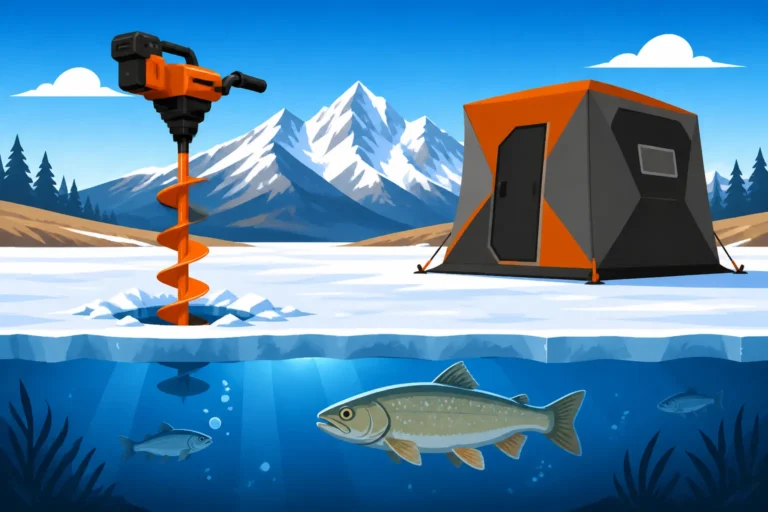
The principles of deep structure fishing for lake trout don't disappear when the ice forms; they simply adapt to a different medium. Ice Fishing in Wyoming: A Complete Guide will tell you that lake trout remain in their deepwater haunts during winter, often congregating around the same humps, drop-offs, and points they use in open water. Your sonar (an ice-specific flasher or an open-water unit with an ice transducer) becomes even more critical, allowing you to see your lure in relation to fish in real-time.
When ice fishing for deep structure lake trout, you'll still use heavy tube jigs, spoons, and often large minnow baits. Jigging techniques are similar to open water, but you'll be fishing through a hole. The key is to be mobile and willing to drill multiple holes to locate active fish and productive structure. Pay attention to changes in bottom composition and depth, using your electronics to guide your hole placement. Sometimes, fish will suspend high off the bottom, so don't just focus on the lowest depths; scan the entire water column.
Locating and Interpreting Deepwater Structure
Finding the fish is half the battle, and when it comes to deep-dwelling lake trout, that often means finding the structure first. You can spend hours drifting over barren flats, or you can spend those same hours precisely targeting areas where fish are most likely to congregate. Locating and interpreting underwater terrain is a skill that takes practice, but it's one that will drastically improve your success rate.
Using Topographic Maps and GPS
Before you even launch your boat, your best friend for deep structure fishing is a detailed topographic map of the reservoir. Many fishing apps and marine GPS units come pre-loaded with highly accurate contour maps of major lakes like Flaming Gorge, Boysen Reservoir, or Jackson Lake. These maps reveal underwater islands, steep drop-offs, points that extend into the main lake, and old river channels – all prime lake trout habitat.
Spend time studying these maps. Look for areas where contours pinch together (indicating a steep drop-off) or where they form distinct patterns like humps or saddles. Identify features that protrude into deeper water, such as a submerged point off a shoreline bank. Mark these potential hot spots as waypoints on your GPS. When you get on the water, you can then navigate directly to these waypoints and begin your search with sonar, confirming what the map suggested. This pre-fishing reconnaissance saves immense amounts of time and fuel.
Identifying Underwater Points, Humps, and Ledges
Once you're on the water and navigating towards your marked waypoints, your sonar becomes your real-time mapping tool. Your goal is to translate the lines and colors on your screen into a mental image of the underwater landscape.
- Underwater Points: These are extensions of land that continue underwater. On sonar, they'll show as a ridge or finger extending from shallower water into deeper water. Lake trout will often cruise these points, using them as travel corridors or ambush points.
- Humps: Also known as submerged islands or reefs, humps are elevated areas of the lake bed completely surrounded by deeper water. They appear as a distinct rise on your sonar screen. These are classic lake trout magnets, especially if they have rocky tops or ledges. They attract baitfish, and the lake trout follow.
- Ledges: These are sharp, almost vertical drops in the bottom contour. They show up as dramatic changes in depth on your sonar. Lake trout often patrol along these ledges, moving up to shallower water to feed and retreating to the deeper side for cover.
Practice making passes over these features from different angles. Look for the "sweet spots" – the edges, breaks, or specific depths where fish are holding. The more you use your sonar in conjunction with maps and fishing experience, the better you'll become at recognizing these crucial structural elements. Many top anglers who chase Best Wyoming Reservoirs for Trophy Fish spend more time studying maps than casting.
Locating Deep Channels and Drop-offs
Beyond isolated points and humps, deep channels and significant drop-offs are also high-percentage areas for lake trout.
- Deep Channels: In many large reservoirs, especially those formed by damming a river, the old river channel remains as a deeper trough winding through the lake. These channels can be important travel routes and holding areas for lake trout, particularly during seasonal transitions or when baitfish are moving through them. On your sonar, a channel will appear as a distinct deeper cut in an otherwise flatter bottom.
- Dramatic Drop-offs: These are often found along the original shorelines of the pre-dammed lake or where geological features create steep underwater cliffs. They represent a rapid descent from shallower to very deep water. Lake trout often relate to the edges of these drop-offs, using them as vertical highways to move between feeding areas and deeper refuge.
When working channels and drop-offs, focus your efforts on any irregularities you find – a bend in the channel, a small hump on its edge, or an area where baitfish are congregating. These minor variations in the larger structure can be the key to triggering bites. Remember, lake trout are often waiting for prey to come to them, and these structural features provide the perfect setup for ambush.
Disclaimer
Fishing regulations in Wyoming can change. Always consult the most current Wyoming Game and Fish Department regulations before heading out on the water. This guide is for informational purposes only and does not replace official state regulations.