Best Month for Lake Trout at Flaming Gorge
Trying to figure out the absolute sweet spot for catching lake trout at Flaming Gorge can feel like chasing a ghost. This massive, deep reservoir holds some truly legendary fish, but knowing when and where to find them is the key to a successful trip, and let's be honest, nobody wants to spend a whole day on the water without a single tug. This guide is going to walk you through the nuances of lake trout behavior at Flaming Gorge, helping you pinpoint the prime time for landing those magnificent Mackinaw.
Understanding Lake Trout Seasons at Flaming Gorge
Flaming Gorge Reservoir, straddling the Wyoming and Utah border, is a true gem for anglers, especially those after the impressive lake trout, often called Mackinaw. These fish are cold-water specialists, and their behavior changes dramatically with the seasons and water temperature. It's not just about showing up with a pole; it's about understanding their yearly cycle if you want to be consistently successful. From the icy grip of winter to the scorching summer heat, each season presents unique challenges and opportunities for targeting these deep-dwelling predators.
Winter Ice Fishing Opportunities
When the bitter cold descends upon Flaming Gorge and the ice thickens to a safe depth, a whole new world of fishing opens up. Typically from late December through March, depending on ice conditions, you can find a dedicated contingent of anglers braving the elements. During the early ice period, lake trout often linger in shallower waters, sometimes only 20-40 feet deep, feeding actively before settling into their deeper winter patterns. They're still recovering from the fall spawn and are looking for easy meals. As winter progresses, especially in January and February, they might move a bit deeper, often suspending over structure or near drop-offs.
Ice fishing for lake trout isn't for the faint of heart; it requires specialized gear and a good understanding of ice safety. Heavy jigging spoons, tubes, and even live bait like ciscos or suckers (where legal and available) are common presentations. You'll often see anglers using portable shelters and fish finders to locate these elusive fish. The beauty of winter fishing is that you can often reach spots that are difficult to access by boat in open water, but the elements can be unforgiving. For an in-depth look at this chilly pursuit, check out our guide on Ice Fishing in Wyoming: A Complete Guide.
Spring Thaw and Post-Spawn Activity
As winter loosens its grip and the ice begins to break up, usually around April and into May, lake trout start to shift their patterns once again. This "ice-out" period can be incredibly productive. The warming surface water and increased light penetration can trigger feeding activity. Lake trout, having expended significant energy during the fall spawn and endured a lean winter, are often on the prowl for food.
You might find them in shallower bays and points, particularly on the north end of the reservoir where the ice melts first, or near river inlets where new food sources are washing in. Trolling stickbaits or spoons at varied depths, or casting from shore in accessible areas, can be effective. However, the exact timing of ice-out is highly variable year to year, and the weather can be very unpredictable, swinging from mild to blizzard conditions in a single day. This makes spring fishing a bit of a gamble, but the rewards can be substantial if you hit it right.
Summer Deep-Water Strategies
Ah, summer. The season of warm sun, boating, and deep-water lake trout. From June through September, as the surface waters of Flaming Gorge warm up considerably, lake trout retreat to the cooler, oxygen-rich depths. This is when the term "Mackinaw" truly becomes synonymous with "deep." You'll typically find these fish holding in 80 to 200 feet of water, often much deeper, congregating around submerged islands, ledges, and pronounced drop-offs.
Trolling becomes the predominant method during these months, requiring specialized gear like downriggers, lead core line, or heavy weights to get your lures to the fish. Large spoons, squid imitations, and flasher/dodger setups paired with a bait like a Gulp! or Berkley PowerBait scented plastic are popular. Fishing in the summer demands good electronics to mark fish and structure, and a methodical approach to cover vast amounts of water. It's rewarding when you hook into a monster from the depths, but it definitely takes patience and persistence. If you're looking for gear, you can often find great deals on downriggers and deep-diving lures on Amazon. Knowing the Best Trolling Speed for Kokanee Salmon can also give you some clues, as kokanee are a primary food source for big lake trout.
Fall Pre-Spawn and Spawning Frenzy
Without a doubt, if you're asking about the best month for lake trout at Flaming Gorge, the answer that consistently rises to the top for sheer numbers and the chance at a true trophy is October. Sometimes even stretching into early November, this is the time when these massive fish, driven by their ancient urge to reproduce, move from the depths into surprisingly shallow waters to spawn. This pre-spawn and spawning period transforms the fishing experience entirely.
Lake trout become incredibly aggressive, staging on rocky points, reefs, and shelves in as little as 10 to 40 feet of water. They're focused on defending their spawning grounds and will strike at intruders, making them much more accessible to anglers using a wider variety of techniques, including casting and vertical jigging, not just deep trolling. The weather can be crisp, and the scenery stunning, but it's the intense fishing action that truly makes October the prime time. We'll dive deeper into this in the next section.
Why October Reigns Supreme for Flaming Gorge Lake Trout
If you're looking to maximize your chances for truly exceptional lake trout fishing at Flaming Gorge, mark your calendar for October. This isn't just a good month; it's often the month that seasoned anglers eagerly anticipate all year. The reasons for its supremacy are rooted in the biological imperative of the lake trout – their annual spawning ritual.
The Spawning Migration and Aggression
As the water temperatures begin to drop steadily in the fall, typically reaching the low to mid-50s Fahrenheit, lake trout in Flaming Gorge initiate their pre-spawn migration. They move from their deep summer haunts towards specific rocky areas where they will deposit their eggs. These aren't just random rocky points; they are typically areas with clean, fist-sized to softball-sized rock rubble where eggs can settle and be protected. Famous spots on Flaming Gorge for this activity include areas around Buckboard Crossing, the Pipeline, and numerous other submerged reefs and shorelines with the right rocky composition. You can often find detailed mapping that highlights these kinds of structures.
During this time, the lake trout become incredibly active and aggressive. They aren't necessarily feeding heavily in the traditional sense, but they are territorial. Anything that infringes upon their spawning beds or looks like a competitor or a threat can trigger a violent strike. This aggression makes them far more vulnerable to a variety of fishing techniques than at other times of the year. Instead of having to meticulously troll baits at precise depths in hundreds of feet of water, you can often find them in much shallower, more accessible zones. Knowing Where to Find Mackinaw (Lake Trout) in Wyoming can really help narrow down your search.
Accessible Depths and Diverse Techniques
One of the biggest advantages of October fishing is the depth at which lake trout can be found. While they might spend summer in depths exceeding 100 feet, during the spawn, you can encounter them in as little as 10 to 50 feet of water. This opens up opportunities for anglers who might not have sophisticated deep-trolling gear. You can still troll, but you can also actively cast large spoons, swimbaits, or tube jigs to rocky points and shelves. Vertical jigging directly over marked fish on your sonar becomes a highly effective strategy.
Imagine pulling up to a promising rocky reef, marking fish on your sonar at 30 feet, and then dropping a heavy tube jig right into their zone. The strike can be explosive! This close-quarters action is what makes October so exhilarating. You're not just hoping for a bite; you're often actively hunting fish you can see on your screen. The sheer diversity of techniques that become viable during this period adds to the excitement and increases your chances of success.
Increased Chance for Trophy Fish
Flaming Gorge is renowned for its trophy lake trout, and October significantly increases your odds of encountering one of these giants. The largest fish, which are often the most cautious and difficult to catch during other seasons, also participate in the spawning ritual. They are driven by the same instincts as smaller fish, becoming less wary and more aggressive. It's not uncommon for anglers to land fish pushing into the 20, 30, or even 40-pound range during this timeframe.
While trophy fish can be caught year-round, the combination of their heightened aggression and presence in shallower, more easily targeted areas makes October the standout month. You might have seen photos of those massive, dark-colored lake trout with scarred faces; many of those come from the fall spawn. If you've always dreamed of battling a true Wyoming monster, then planning your trip for October is your best bet. Curious about just how big they get? Our article on How Big Wyoming Lake Trout Get might surprise you!
Essential Gear and Techniques for October Lake Trout Success
Alright, you're convinced October is the month. Now, let's talk about how to be prepared. Successful lake trout fishing at Flaming Gorge, especially during the fall spawn, requires the right gear and a solid understanding of a few key techniques. Don't worry, it's not overly complicated, but a little preparation goes a long way.
Rods, Reels, and Line Selection
For lake trout, you'll want gear that can handle powerful fish and heavy lures. A medium-heavy to heavy action spinning or baitcasting rod, typically 6'6" to 7'6" in length, is ideal. This rod will give you the backbone to fight a big Mackinaw and the sensitivity to detect subtle bites. Pair it with a sturdy reel, size 4000-6000 for spinning reels or a comparable baitcasting reel, capable of holding plenty of line.
When it comes to line, braided line is a game-changer. A 30-50 lb test braided mainline offers superior sensitivity, minimal stretch, and excellent casting distance. To this, you'll want to add a fluorocarbon leader, typically 15-30 lb test, about 4-6 feet long. Fluorocarbon is nearly invisible underwater, which can be crucial in the clear waters of Flaming Gorge, and it offers abrasion resistance against sharp rocks. You can find quality braided lines and fluorocarbon leaders easily on Amazon, often at better prices than local shops.
Lure Selection: Tubes, Swimbaits, and Spoons
During the October spawn, lake trout are highly receptive to presentations that mimic their prey or trigger their aggressive instincts.
- Tube Jigs: These are often considered a top-tier bait for spawning lake trout. Large tubes, 4-6 inches in length, in white, pearl, chartreuse, or even darker natural patterns like green pumpkin, are extremely effective. Rig them on heavy jig heads, typically 3/4 to 1.5 ounces, depending on depth and current. The erratic darting action of a tube jig is irresistible to aggressive lake trout.
- Paddle Tail Swimbaits: Soft plastic swimbaits with a paddle tail, 4-7 inches long, rigged on a heavy jig head, are another fantastic option. Colors similar to tubes work well, but natural perch or rainbow trout patterns can also be deadly, especially since rainbow trout are a common food source. Cast them out, let them sink, and retrieve them with a jigging motion.
- Spoons: Heavy casting spoons, such as the Kastmaster or Crippled Herring, in chrome, gold, or flashy colors, can also be highly effective, particularly when jigged vertically. The flash and flutter mimic injured baitfish, which can provoke a strike from a territorial lake trout.
Electronics and Boat Control
If you're fishing from a boat, your fish finder (sonar) is your best friend. It's essential for identifying depth, locating structure (rocky reefs, ledges), and most importantly, marking individual fish or schools of lake trout. A good GPS/sonar combo will allow you to mark productive spots and return to them easily. Side imaging or down imaging can also provide a clearer picture of the underwater terrain and fish holding around structure.
Effective boat control is also paramount. Whether you're using a bow-mount trolling motor or your main engine, the ability to slowly drift, hold over a spot, or make precise passes over structure will greatly enhance your success. This is especially true for vertical jigging, where maintaining your lure directly beneath your transducer and over the fish is key. Knowing the subtle nuances of How Water Temperature Changes Wyoming Trout Behavior will further refine your strategy based on your electronics readings.
The Art of Vertical Jigging and Casting
For October lake trout, vertical jigging is often the most productive technique. Once you've marked fish on your sonar, position your boat directly over them. Drop your tube jig or swimbait down to the depth where the fish are holding, and then employ a lift-and-drop retrieve. Experiment with the height and speed of your lifts; sometimes a subtle twitch is all it takes, other times a more aggressive rip is needed. Watch your sonar constantly; you'll often see fish reacting to your lure.
Casting is also highly effective when lake trout are holding closer to shore or on prominent points. Cast your heavy tube or swimbait towards the structure, let it sink to the desired depth, and retrieve it with a series of short jerks and pauses. The goal is to imitate a wounded baitfish or an intruder on their spawning bed. Sometimes, just letting the lure flutter down the rock face is enough to draw a strike.
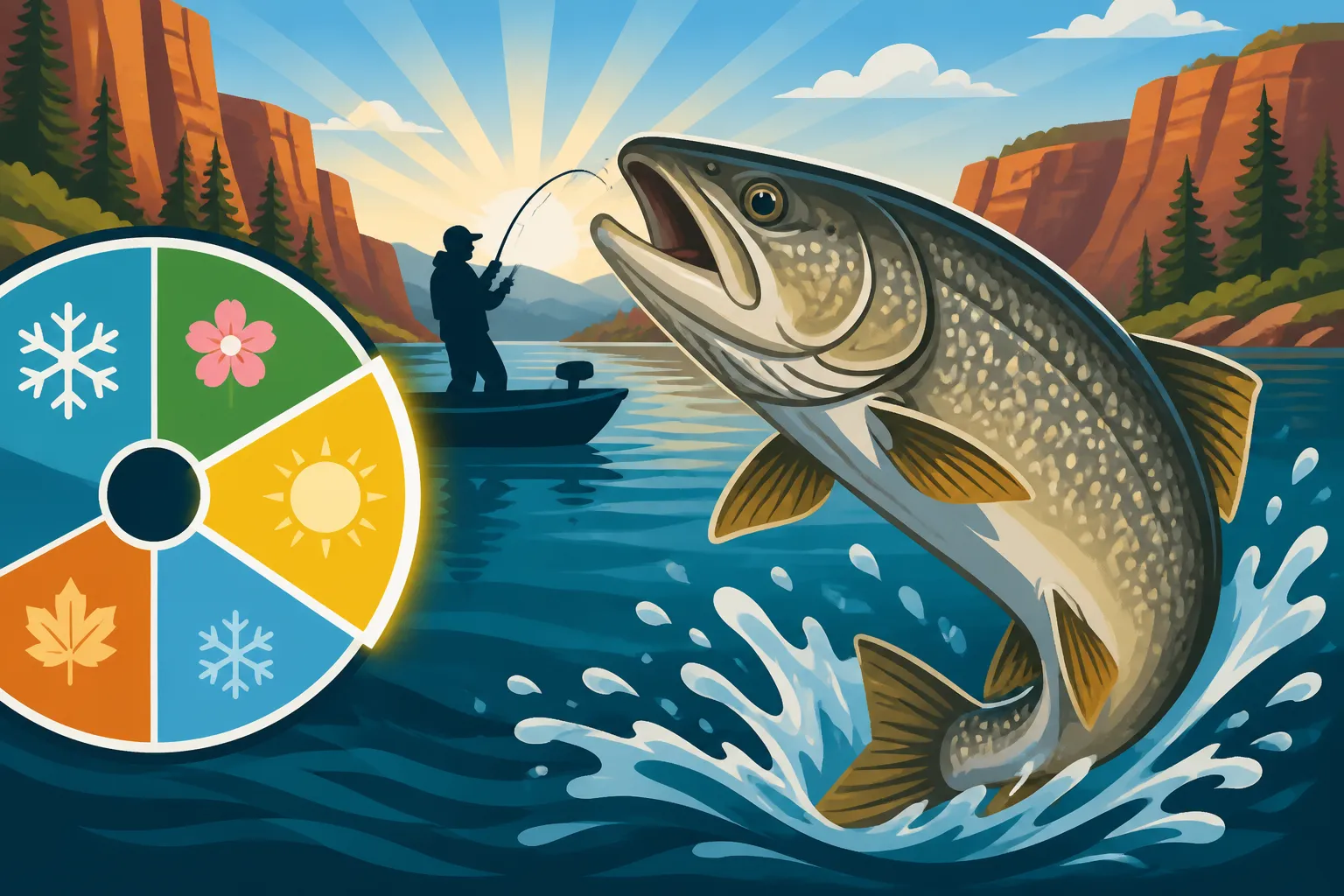
| Month/Season | Lake Trout Behavior | Preferred Depths (Approx.) | Primary Techniques | Trophy Potential |
|---|---|---|---|---|
| October | Pre-spawn/Spawning, highly aggressive, territorial | 10-50 ft (often shallower than other times) | Vertical Jigging, Casting large tubes/swim-baits/spoons, Shallow Trolling | High |
| Jan-Mar | Post-spawn, winter deep/active shallow early ice | 20-100+ ft (variable with ice cover) | Ice Jigging, Tip-ups | Moderate to High |
| April-May | Ice-out/Post-spawn, active feeders | 30-80 ft | Trolling spoons/stickbaits | Moderate |
| June-Sept | Summer deep, suspended over structure | 80-200+ ft | Deep Trolling with downriggers/lead core | Moderate to High |
Additional Considerations for Fall Fishing
- Weather: While October offers fantastic fishing, the weather in Wyoming can be unpredictable. Be prepared for anything from warm, sunny days to cold, windy conditions with snow. Layers of clothing are essential. You might even want to pick up some good waterproof fishing gloves and a hat from Amazon.
- Boating Safety: The water is cold in October. Always wear a life jacket and let someone know your float plan. Watch for sudden weather changes.
- Regulations: Always double-check the latest Wyoming Fishing Regulations Every Angler Should Know for Flaming Gorge. Bag and possession limits can change, and it's your responsibility to know them.
- Catch and Release: While keeping some lake trout for the table is fine, many anglers practice catch and release, especially for the larger, older fish. Learn proper handling techniques to ensure released fish survive.
By focusing your efforts on October and employing these techniques and gear, you significantly increase your chances of experiencing some of the best lake trout fishing Flaming Gorge has to offer.
Other Productive Periods for Lake Trout at Flaming Gorge
While October holds the crown for being the absolute best month for lake trout at Flaming Gorge, it's certainly not the only time you can find success. The reservoir offers opportunities throughout the year, each with its own charm and challenges. Understanding these alternative windows can help you plan a trip if October just isn't feasible for you, or if you simply want to experience the fishery in different conditions.
Early Spring: Post Ice-Out Opportunities
As mentioned, the early spring, typically from late April through May, after the ice has completely cleared from the main body of the reservoir, can be quite productive. This period often coincides with slightly warmer surface temperatures and increased baitfish activity. Lake trout, having survived the winter, are often looking to replenish their energy stores. They might be found in shallower depths than their summer haunts, perhaps 30 to 80 feet, particularly near points and coves that warm up first or receive freshwater influx.
Trolling with medium-diving crankbaits or spoons can be very effective during this time. The fish are often more spread out than during the spawn, so covering water is key. While you might not encounter the same concentrated numbers or territorial aggression as in October, the fish you do catch are often healthy and strong. The lack of heavy fishing pressure compared to the peak fall season can also be a bonus for anglers seeking a more solitary experience. Keep an eye on local fishing reports for "ice-out" conditions, as this can vary significantly year to year. You'll definitely want to keep a close eye on Wyoming Fishing Seasons and Water-Specific Closures for accurate timing.
Winter Ice Fishing: A Different Kind of Thrill
For those who don't mind bundling up, the dead of winter offers a unique and often rewarding lake trout experience through the ice. When safe ice forms, usually by late December or early January and lasting into March, anglers descend upon the Gorge. As discussed earlier, early ice can be particularly good, with lake trout still active in relatively shallower depths (20-60 feet) as they recover from the spawn. As the season progresses, they'll often suspend over deeper water or hold tight to prominent structure.
Ice fishing demands different tackle and techniques. Heavy jigging rods, stout reels, and braided line are crucial for pulling big fish through a hole in the ice. Electronics, like flasher units or advanced ice fishing sonar, are almost essential for locating fish and presenting your lure effectively. Baited tip-ups can also be very productive, especially if you're targeting areas where lake trout are known to cruise. The key to ice fishing is mobility and patience. You might need to drill many holes and move frequently to find active fish. It's a completely different challenge, but one that can yield spectacular results, including impressive trophies. Remember to always prioritize safety when venturing onto the ice.
Summer's Deep-Water Game
While not "the best" for ease of access or concentrated numbers in shallow water, summer fishing (June-September) at Flaming Gorge for lake trout is incredibly popular and can produce truly massive fish. It's a game of depth, technology, and endurance. Lake trout spend their summer months in the cooler, oxygenated waters far below the surface, often 100-200 feet deep or more.
Successful summer fishing almost exclusively involves deep-water trolling. This means employing downriggers, diving planes, or a significant amount of lead core line to get your lures to the fish's depth. Large spoons, tube jigs, or baitfish imitations trolled slowly are the standard. This requires careful attention to boat speed, lure depth, and monitoring your fish finder for suspended fish or bait schools. While it can be more challenging and requires more specialized gear, the reward of hooking into a powerful lake trout from the depths, feeling that unmistakable head shake all the way up through hundreds of feet of line, is an experience in itself. Many anglers pursue lake trout vigorously during summer, enjoying the warm weather on the vast expanse of the reservoir. For specifics on how to target them in this environment, our guide on Trolling Techniques for Wyoming Reservoirs can provide excellent insights.
Ultimately, while October provides an unparalleled opportunity due to the biological drive of the spawning fish, Flaming Gorge is a year-round fishery for lake trout. Each season offers its unique advantages and requires different approaches, but for that combination of accessibility, aggression, and trophy potential, October remains the undisputed champion.
Disclaimer
Fishing conditions and regulations in Wyoming can change. Always consult the latest Wyoming Game and Fish Department regulations before heading out. Safety on the water is paramount, especially in a large reservoir like Flaming Gorge. Be aware of weather conditions, practice proper boating safety, and inform others of your plans.