Where to Find Mackinaw (Lake Trout) in Wyoming
Many anglers dream of battling a powerful Mackinaw, or Lake Trout, but actually finding these elusive deep-water giants in Wyoming can feel like a daunting treasure hunt. They don't just hang out in every local pond; these fish prefer specific, cold, deep habitats that require a bit of insider knowledge and preparation to unlock. This guide will take you through the prime locations and the essential strategies to help you connect with Wyoming's impressive Lake Trout.
The Giants' Domain: Wyoming's Top Mackinaw Hotspots
When it comes to pursuing Mackinaw in Wyoming, you're looking at a select few bodies of water that truly stand out. These aren't your typical roadside trout streams; these are expansive, often deep, and sometimes challenging environments where these powerful fish thrive. Knowing these prime locations is the first crucial step in planning a successful Lake Trout expedition.
Flaming Gorge Reservoir: A Trophy Lake Trout Mecca
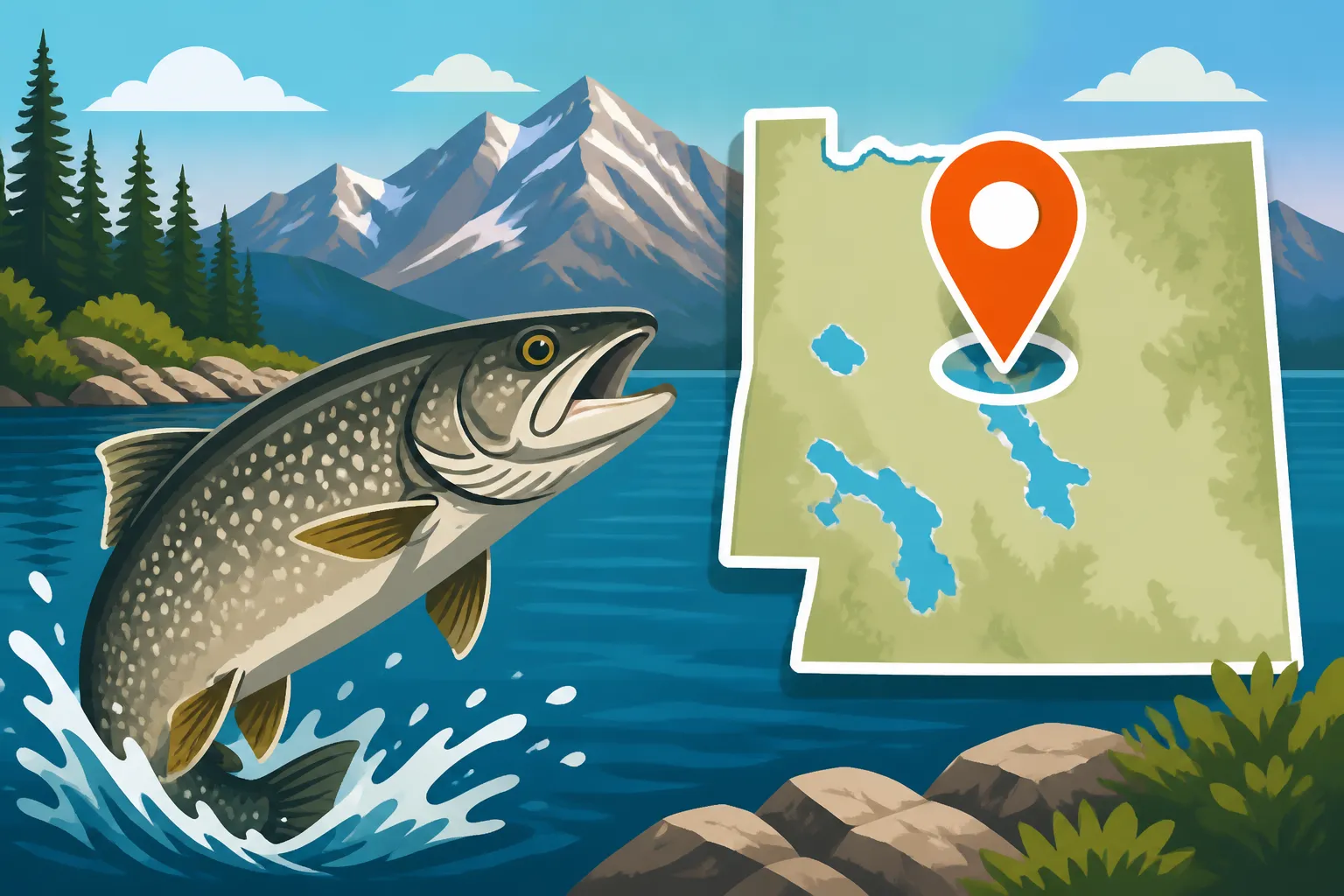
Flaming Gorge Reservoir, straddling the Wyoming-Utah border, is arguably the most famous Mackinaw fishery in the state, if not the entire intermountain West. This colossal reservoir is known for producing not only high numbers of Lake Trout but also true giants. Many anglers specifically target Flaming Gorge hoping to land a personal best or even a state record. The sheer size and depth of the reservoir provide the ideal conditions for Mackinaw to grow to impressive sizes, with ample forage like kokanee salmon and ciscos to sustain them.
Fishing Flaming Gorge for Lake Trout often means embracing the open water. You'll find anglers out on the main channel, especially in areas with significant underwater structure or near historical riverbeds that now lie hundreds of feet beneath the surface. It’s a place where patience and the right electronics can really pay off, helping you locate schools of baitfish and the predators that follow them. The season can also play a huge role here, with different techniques becoming more effective as water temperatures change. You can learn more about this incredible fishery in our Wyoming's Flaming Gorge Reservoir Fishing Guide.
Jackson Lake: The Grand Teton's Deepwater Gem
Nestled at the base of the majestic Teton Range, Jackson Lake in Grand Teton National Park offers a completely different, yet equally rewarding, Mackinaw experience. While perhaps not as renowned for sheer trophy size as Flaming Gorge, Jackson Lake holds a very healthy population of Lake Trout, and they are notoriously strong fighters in these cold, clear waters. The lake itself is quite deep, plunging over 400 feet in some areas, providing ample cold-water refuge for Mackinaw year-round. The stunning scenery alone makes a fishing trip here unforgettable.
Accessing Jackson Lake typically means launching a boat from one of the park's designated ramps, as much of the shoreline is protected or less accessible for bank fishing. Anglers often focus on the deeper sections, particularly where drop-offs and underwater islands provide structure. The clear water here can make Mackinaw a bit spooky, so stealth and presentation often take precedence. While Grand Teton National Park has specific regulations, the opportunity to catch a beautiful Lake Trout with the Tetons as your backdrop is an experience every angler should have. For more details on this iconic fishery, check out our Wyoming's Jackson Lake Fishing Guide.
High-Altitude Lakes: Hidden Mountain Mackinaw
Beyond the two main giants, Wyoming also holds a secret: certain high-altitude lakes in its mountain ranges harbor populations of Mackinaw. These are not for the faint of heart; reaching these lakes often involves significant hiking, sometimes into designated wilderness areas. Lakes in the Wind River Range, like Fremont Lake near Pinedale, are known for their deep, cold waters that sustain good numbers of Lake Trout. These fish might not reach the colossal sizes of their Flaming Gorge cousins, but they offer an incredible backcountry fishing adventure.
Fishing these high-alpine lakes often requires a different approach, as boat access can be limited or non-existent for larger vessels. Kayaks, float tubes, or even sturdy shore fishing techniques might be your best bet. The Mackinaw in these remote lakes are typically wild and can be incredibly aggressive when found. The reward isn't just the fish, but the entire experience of solitude, breathtaking views, and the challenge of a truly wild fishery. Remember that specific regulations often apply to wilderness areas, so always check with the local forest service or park office before you head out.
Unlocking the Depths: Understanding Lake Trout Habitat Preferences
To successfully target Mackinaw, you need to think like a Mackinaw. These aren't shallow-water cruisers or river dwellers. Their entire existence revolves around cold, oxygen-rich, deep environments. Understanding their preferred habitats is crucial for narrowing down your search in Wyoming's vast waters.
The Role of Cold Water and Oxygen Levels
Mackinaw are what we call a "coldwater species," and they are quite particular about it. Their ideal water temperature range is generally between 40-55 degrees Fahrenheit. This means that in summer, as surface waters warm up, Lake Trout will retreat to the deepest parts of reservoirs and lakes where the water remains consistently cold. This is why having good sonar or fishfinder is almost non-negotiable when targeting them. You're not just looking for fish; you're looking for the right temperature zone where the fish will be.
Oxygen levels also play a significant role. While deep, cold water is essential, it also needs sufficient dissolved oxygen. Some deep pockets in lakes can become anoxic (lacking oxygen) during certain times of the year, making them unsuitable for fish. This is where knowing the lake's topography and understanding thermal stratification becomes vital. Fishfinders available on Amazon often provide temperature and depth readings, which are invaluable for identifying these optimal zones.
Importance of Deep Structures and Submerged Features
Lake Trout aren't just suspended randomly in open water, though they certainly can be. They heavily rely on submerged structures for ambush points, shelter, and proximity to their food source. Think about features like underwater humps, steep drop-offs, submerged creek channels, rock piles, and old riverbeds. These structures often hold baitfish, which in turn attract the predatory Mackinaw.
When scouting a new lake for Mackinaw, studying bathymetric (depth) maps is incredibly helpful. Look for contours that indicate significant depth changes, areas where a flat bottom suddenly drops into a trench, or isolated peaks that rise from the depths. These "structure points" act like highways and feeding grounds for Lake Trout. A good map, combined with your sonar, will allow you to systematically explore these features. Many seasoned anglers will motor over these areas, watching their electronics for signs of fish and bait, before deploying their lines.
Forage Base: Why Baitfish Dictate Mackinaw Location
Ultimately, Lake Trout go where the food is. In Wyoming's prime Mackinaw waters, this often means larger baitfish species. In Flaming Gorge, for instance, kokanee salmon and ciscos are a primary food source. In other lakes, it might be other types of trout, whitefish, or even crayfish. The presence and distribution of these forage species directly influence where the Mackinaw will be found.
Understanding the forage base means knowing the habits of those baitfish. Do kokanee suspend in open water? Do whitefish hug the bottom? As baitfish move throughout the year due to temperature or spawning cycles, the Mackinaw will follow. This is why seasonal patterns are so important, as outlined in our What Lake Trout Eat in Wyoming Reservoirs article. If you can locate the schools of baitfish, you're usually very close to locating the Mackinaw themselves.
Reading the Fish: Seasonal Behavior and Movement Patterns
Lake Trout, like most fish, don't stay in one place all year. Their behavior and locations shift dramatically with the seasons, driven primarily by water temperature and spawning instincts. Knowing these patterns can give you a significant edge, allowing you to adapt your strategy for different times of the year.
Spring: Post-Spawn Recovery and Shifting Depths
As the ice comes off Wyoming's deep lakes in early spring, Lake Trout begin to emerge from their deep winter patterns. They've often just finished their spawn in late fall or early winter (though some populations may spawn in spring), so they're looking to recover and feed aggressively. During this time, you might find them in slightly shallower depths than later in the summer, as the entire water column is still relatively cold and oxygenated. They might be found shallower in the morning and evening, moving deeper during the brighter parts of the day.
This can be a great time for both trolling and vertical jigging. The fish are often scattered but actively feeding. As the spring progresses and surface waters start to warm, you'll see a gradual migration towards deeper, colder zones. This transitional period requires anglers to be adaptable, constantly checking their sonar and adjusting depths until they hit the active fish.
Summer: The Deepwater Retreat
Summer is when Mackinaw truly become "deepwater dwellers" in most of Wyoming's lakes. With surface temperatures soaring, these cold-loving fish retreat to the cool, dark depths, often 50 to 150 feet or even deeper, depending on the lake's thermocline. Finding them in summer requires specialized gear like downriggers for trolling or heavy jigs for vertical presentations. This is also when knowing the specific underwater structures becomes paramount, as Mackinaw will often congregate around these features in the deep.
Trolling with large spoons, minnow imitations, or tube jigs at precise depths is a very popular and effective summer technique. For those without trolling gear, vertical jigging over known deep structures can also be highly productive, albeit more physically demanding. Regardless of method, a reliable fishfinder is your best friend during the summer months, helping you identify baitfish schools and isolated Mackinaw holding tight to the bottom structure. Learn more about specific tactics in Trolling Techniques for Wyoming Reservoirs and Downrigger Basics for Wyoming Reservoir Trout.
Fall: Pre-Spawn Aggression and Spawning Rituals
As the crisp autumn air returns to Wyoming and lake temperatures begin to drop, Mackinaw enter a crucial phase: their pre-spawn and spawning period. This is often heralded as one of the best times to target large Lake Trout, as they become incredibly aggressive and move into shallower water to prepare for spawning. Unlike rainbow or cutthroat trout that typically spawn in spring, most Mackinaw populations in Wyoming spawn in the fall, usually in October or November, depending on water temperatures. They will move onto rocky shoals, reefs, and points to lay their eggs.
During the pre-spawn, they are actively feeding to build up energy. Trolling shallower depths over known spawning areas, or jigging aggressively, can be highly effective. Once they are actively spawning, they might become less interested in feeding, but their presence in shallower, more accessible water makes them a target for anglers respecting spawning grounds. Always check specific regulations for any temporary closures or special restrictions around spawning periods. Understanding these movements is key to catching a trophy.
Winter: Ice Fishing Opportunities
When Wyoming's lakes freeze over, the Mackinaw fishing doesn't stop; it just moves beneath the ice. Ice fishing for Lake Trout can be incredibly rewarding, especially on large bodies of water like Flaming Gorge or some of the high-country lakes. In winter, Mackinaw will still relate to deep structures, but they might be found at a variety of depths, sometimes suspending in the middle of the water column, sometimes hugging the bottom.
Ice anglers use heavy jigging rods with large spoons, tube jigs, or soft plastics tipped with cut bait. Portable fishfinders (flashes or LCD units) are indispensable for locating fish and presenting your lure at the correct depth. Drilling multiple holes and moving until you find active fish is a common strategy. Safety is paramount when ice fishing, so always check ice thickness and conditions. Dive deeper into this exciting season with our Ice Fishing in Wyoming: A Complete Guide.
Arming for the Fight: Essential Gear and Techniques
Landing a powerful Mackinaw is a thrilling experience, but it's not often accomplished with a lightweight trout rod. These fish grow big and fight hard, especially from deep water. Having the right gear and understanding the most effective techniques are paramount for success.
Rods, Reels, and Lines for Deepwater Battles
When targeting Mackinaw, you'll want gear that can handle the heavy lifting. For trolling, a medium-heavy to heavy action rod, usually 7 to 9 feet long, paired with a robust baitcasting reel capable of holding a lot of line is ideal. These reels need strong drag systems to handle powerful runs. For vertical jigging, a shorter, stout rod (around 6-7 feet) with a fast tip for sensitivity but plenty of backbone is preferred.
Line selection is also critical. Many anglers opt for braided superlines as their main line due to their incredible strength-to-diameter ratio and zero stretch. This no-stretch property is vital for detecting subtle bites in deep water and for setting the hook effectively. A fluorocarbon leader, typically 15-30 lb test, is often tied to the braid for stealth and abrasion resistance. Remember, these fish can be line-shy in clear waters. You can find a wide array of reliable braided lines and fluorocarbon leaders on Amazon to suit your needs.
| Gear Type | Recommended Characteristics | Why It Matters |
|---|---|---|
| Rod (Trolling) | Medium-Heavy to Heavy, 7-9 ft, moderate-fast action | Handles heavy weights, absorbs shock, casts long, manages powerful fish runs. |
| Rod (Jigging) | Heavy, 6-7 ft, fast action tip, strong backbone | Detects light bites, quick hook sets, powerful enough to winch fish from depth. |
| Reel | Baitcasting (trolling) or Heavy Spinning (jigging), High Line Capacity, Strong Drag | Holds ample line for deep drops, withstands brute force of large Mackinaw. |
| Main Line | Braided Superline (30-60 lb test) | Zero stretch for sensitivity and hook sets, high strength, thin diameter. |
| Leader | Fluorocarbon (15-30 lb test) | Virtually invisible underwater, abrasion resistant, good knot strength. |
| Sonar/Fishfinder | High-resolution, DownScan/SideScan capable | Locates fish, bait, and structure; shows depth and temperature. Indispensable. |
| Downriggers | Electric or Manual, sufficient cable length | Precisely controls lure depth for trolling in deep water. |
Popular Lures and Baits
Lake Trout are opportunistic predators, and their diet can vary, but generally, they prefer larger prey. For trolling, large spoons (like Northern King, Doctor, or Pro King spoons), crankbaits that mimic baitfish, and minnow-shaped stickbaits are very popular. Tube jigs in white, pearl, or chartreuse, often tipped with a piece of cut bait (like sucker meat or a chunk of frozen herring), are deadly for vertical jigging. Live or dead bait, if legal in your chosen water, can also be highly effective.
The key is often to "match the hatch," meaning using lures that resemble the predominant baitfish in that particular lake. If kokanee are the primary forage, using kokanee-colored or shaped lures will increase your chances. Experimentation with color and size is often necessary to find what the Mackinaw are keying in on that day. Don't be afraid to try some of the newer soft plastic swimbaits, which offer a very realistic presentation.
The Art of Trolling and Deep Jigging
Trolling is probably the most common and effective technique for covering water and finding Mackinaw in large reservoirs. This involves pulling lures behind a boat at a specific speed (often quite slow for Lake Trout, around 1.5 to 2.5 mph) at a precise depth. Downriggers are essential for this, allowing you to present lures consistently at depths that can range from 50 to 200+ feet. Multiple rods can be run at different depths and distances from the boat to cover more of the water column. You can find reliable downriggers on Amazon as well.
Vertical jigging, particularly over known structures or schools of fish identified by your sonar, is another potent method. This involves dropping a heavy jig directly down to the fish's depth and working it with sharp lifts and drops, mimicking a wounded baitfish. It's a more active approach that can be incredibly effective when Mackinaw are concentrated in a specific area. Both techniques require patience and a keen eye on your electronics to understand how the fish are reacting to your presentation.
Respecting the Resource: Regulations and Responsible Angling
Fishing for Mackinaw in Wyoming, like any other species, comes with specific regulations designed to protect the fishery and ensure its health for future generations. Being a responsible angler means not only knowing these rules but also practicing ethical catch-and-release and conservation.
Understanding Wyoming's Fishing Regulations for Lake Trout
The Wyoming Game and Fish Department (WGFD) sets specific rules for Mackinaw, and these can vary significantly from one body of water to another. For instance, some lakes might have a general statewide limit, while others, particularly those with concerns about Mackinaw overpopulation or their impact on native species (like Yellowstone Cutthroat Trout in Yellowstone Lake), might have much more liberal limits, or even require that all caught Lake Trout be kept. Our guide Wyoming Fishing Regulations Every Angler Should Know provides a great overview, but always double-check the current WGFD regulations booklet for the specific water you intend to fish.
Key regulations to look out for include:
- Daily Bag and Possession Limits: How many fish you can keep in a single day, and how many you can have in your possession. These can vary wildly for Lake Trout.
- Size Restrictions: Minimum or maximum size limits might apply in certain waters. For example, some waters might have a slot limit, allowing harvest only within a certain size range, or preventing harvest of larger trophy fish.
- Bait Restrictions: Some waters may prohibit the use of live bait, or specific types of bait, to prevent the introduction of invasive species.
- Special Management Areas: Certain areas, especially within national parks like Grand Teton or Yellowstone (though Yellowstone Lake itself is primarily a federal fishery with its own rules, see Why Lake Trout Are Considered a Problem in Yellowstone Lake), will have unique regulations that supersede statewide rules.
Catch-and-Release Best Practices for Deep-Water Fish
Lake Trout are often caught from significant depths, which poses unique challenges for catch and release. When fish are brought up quickly from deep water, they can suffer from barotrauma—a condition caused by the rapid expansion of gases in their swim bladder. This can lead to inflated swim bladders, bulging eyes, and an inability to swim back down.
To minimize harm:
- Use appropriate tackle: Heavy enough to bring fish up efficiently without unduly prolonging the fight.
- Minimize air exposure: Get the fish back in the water as quickly as possible.
- Consider "fizzing" or "venting": This involves using a hollow needle to carefully deflate the swim bladder. However, this is a skill that requires practice and should only be attempted by experienced anglers who know how to do it safely and effectively. Improper fizzing can do more harm than good.
- Use a descending device: These devices re-submerge fish to depth, allowing their swim bladder to recompress naturally. They are an excellent tool for deep-water catch and release.
- Know when to keep: If a fish is severely barotraumatized and unlikely to survive, it may be more ethical to keep it, provided it's within legal limits.
The Importance of Preventing Invasive Species
Wyoming takes invasive species very seriously, and for good reason. Species like zebra and quagga mussels can devastate aquatic ecosystems and fisheries. As an angler, you have a crucial role to play in preventing their spread.
- Clean, Drain, Dry: This mantra is key. Always clean your boat, trailer, and fishing gear (including waders and nets) of any mud, weeds, or debris. Drain all water from your boat, livewell, and bilge. Dry everything thoroughly before launching into a different body of water.
- Boat Inspections: Wyoming often requires mandatory boat inspections when entering the state or launching at certain waters. Be prepared to stop and have your vessel checked. This is a critical line of defense against aquatic invasive species.
- Proper Bait Disposal: Never dump unused bait into the water. Dispose of it in a trash receptacle far from the water's edge.
By understanding where Mackinaw thrive, how they behave, what gear works best, and how to fish responsibly, you'll be well on your way to a successful and ethical Lake Trout angling adventure in the Equality State.
Disclaimer
This article is for general informational purposes only and does not constitute professional advice. Laws, prices and regulations vary by location and change over time. Consult a qualified professional for guidance on your specific situation.