Best Season for Kokanee Salmon at Flaming Gorge
Ah, the pursuit of Kokanee Salmon at Flaming Gorge! If you've ever spent hours on the water, meticulously trolling, only to come back empty-handed while hearing tales of others landing limits, you know the frustration. It's easy to feel like you're missing some secret handshake with these notoriously elusive, yet incredibly rewarding, landlocked salmon. This guide is here to cut through the guesswork, diving deep into the seasonal secrets of where and when to find Kokanee in Flaming Gorge, so you can increase your chances of a successful and memorable trip.
Understanding Kokanee Salmon's Seasonal Patterns at Flaming Gorge
Fishing for Kokanee Salmon isn't just about dropping a line; it's about understanding their rhythm, their annual dance with the seasons and the water conditions. These beautiful fish, landlocked sockeye salmon, have a distinct life cycle that dictates their behavior and, most importantly, their location in the vast waters of Flaming Gorge Reservoir.
The Life Cycle and What Drives Their Movement
Kokanee are born in tributaries or are stocked directly into the main body of water, spending their entire lives in freshwater. Unlike their ocean-going cousins, they don't migrate to the sea. Instead, they live out their days in the deep, cold, nutrient-rich waters of Flaming Gorge, feeding primarily on zooplankton. This diet is what gives them their vibrant red flesh.
Their movements are heavily influenced by a few key factors: water temperature, light penetration, and their innate drive to spawn. As the seasons change, so does the thermal stratification of the reservoir, creating distinct layers of warm and cold water. Kokanee are cold-water fish, preferring temperatures generally between 45 and 55 degrees Fahrenheit. This means they're constantly on the move, chasing that ideal thermal band. In spring, as surface waters warm, they'll be found shallower. By mid-summer, they'll dive deep to escape the heat, only to begin their final journey towards the spawning grounds in late summer and fall. This spawning migration is a spectacle, turning the fish a brilliant crimson as they prepare to reproduce and, tragically, complete their life cycle. Knowing these patterns is your first step to unlocking consistent success.
Why Flaming Gorge is Prime Kokanee Habitat
Flaming Gorge Reservoir is an absolute gem for Kokanee Salmon, and there's a good reason why it's consistently one of the top destinations for them in the Rocky Mountain region. The reservoir's sheer size and depth are perfectly suited for these fish. Stretching over 91 miles long and reaching depths of more than 400 feet in some areas, it provides the vast expanses of cold, oxygenated water that Kokanee thrive in, especially during the warmer months.
Crucially, Flaming Gorge boasts an abundant supply of zooplankton, the microscopic organisms that form the cornerstone of the Kokanee diet. This rich food source allows them to grow to impressive sizes, often reaching lengths of 18-20 inches, with some exceeding that. The deep canyons and varying underwater structures also offer numerous hiding places and travel corridors for the schooling fish. However, this very vastness can be a double-edged sword; finding those schools in such an enormous body of water requires patience, the right techniques, and a keen understanding of their seasonal hangouts. They were initially introduced to the reservoir and have since established a robust, self-sustaining population, making it a reliable fishery year after year.
Pinpointing the Best Seasons for Kokanee Salmon
While you can technically catch Kokanee year-round if you know what you're doing and are equipped for ice fishing, there are definitely prime windows when your chances of success skyrocket. These windows align directly with their feeding habits and spawning migrations.
Late Spring and Early Summer: The Prime Trolling Window
If you ask seasoned Kokanee anglers, many will tell you that late spring through early summer (typically May to mid-July) is often the absolute sweet spot for targeting these fish at Flaming Gorge. Why? Because this is when the water temperatures are gradually rising, drawing the Kokanee out of their deeper winter haunts and into more accessible depths where they actively feed.
During this period, the fish are typically found in the main channel and larger bays, often suspended at depths ranging from 20 to 60 feet. They're actively schooling and feeding on plankton blooms, which makes them very susceptible to trolling techniques. You'll often find them concentrated in specific areas where food is abundant or where they're transitioning between deeper and shallower water. This is the time when your sonar will light up with dense schools, and the excitement of multiple hook-ups can be a real possibility. Outfitting your boat with the right gear, like a good set of downriggers for precise depth control, is crucial. You can find excellent deals on reliable downriggers and a variety of specialized Kokanee lures on sites like Amazon, ensuring you’re ready for the season. This period generally offers the most consistent action before the scorching heat of mid-summer sends them plunging to extreme depths. It’s a lot like trying to hit the Best Time of Year to Fish the North Platte River for trout; timing for Kokanee is everything!
Mid-Summer: Deep Water Challenges and Opportunities
As the Wyoming summer really kicks in and surface water temperatures soar, usually from late July through August, Kokanee Salmon in Flaming Gorge undergo a significant shift. To stay in their preferred cold-water range (the 45-55°F zone), they descend much deeper into the water column. We're talking depths of 60, 80, even over 100 feet or more.
This presents a considerable challenge for anglers. Without good electronics and proper deep-water trolling gear, locating these fish can feel like searching for a needle in a haystack. The thermocline, the layer in the water where the temperature changes rapidly, often dictates their preferred depth during this time. While challenging, it's certainly not impossible to catch them. In fact, some of the largest Kokanee are caught during this period by anglers who have mastered the art of deep-water presentation. Specialized gear, like heavy-duty downriggers, longer rods, and line counter reels, becomes essential. It’s also interesting to note how other species, like Lake Trout, also dive deep during summer; understanding How Deep Lake Trout Live in Flaming Gorge can provide insights into the overall thermal dynamics of the reservoir. While the bites might be fewer, the fish you do bring in can be absolute trophies.
Late Summer and Early Fall: The Spawning Run Spectacle
The period from late August through October brings a dramatic change in Kokanee behavior: the spawning run. As their biological clock ticks, Kokanee begin their final, vibrant journey towards the tributaries or shallow rocky areas where they will spawn. This is a truly unique time to witness and fish for them, but it comes with important considerations.
During the pre-spawn staging, Kokanee will gather in large schools near the mouths of major tributaries, most notably the Green River arm of Flaming Gorge. They start to undergo a stunning transformation, with males developing a hooked jaw (kype) and both sexes turning a brilliant crimson red or deep orange, a stark contrast to their usual silvery blue. This vivid coloration is both beautiful and a clear indicator of their intent. While they become highly concentrated and visually striking, their feeding drive significantly diminishes as they focus solely on reproduction.
Anglers targeting them during this time often employ snagging techniques (where legal and specifically regulated) or continue to troll, hoping for an aggressive territorial strike rather than a feeding bite. It's crucial to be aware of and respect the local regulations, as bag and possession limits for Kokanee may change, or specific areas might have closures to protect spawning fish. Always consult the current Wyoming Fishing Regulations Every Angler Should Know or Where to Find Current Wyoming Fishing Regulations to ensure you're compliant. Some anglers choose to avoid targeting these spawning fish out of conservation ethics, preferring to let them complete their life cycle.
Essential Techniques and Gear for Flaming Gorge Kokanee
Successfully targeting Kokanee at Flaming Gorge requires a bit more finesse and specialized gear than your average trout outing. These fish have small, soft mouths, are often light biters, and they tend to school tightly, which means when you find one, you've often found many.
Mastering the Art of Trolling
Trolling is, without a doubt, the most effective method for consistently catching Kokanee Salmon in Flaming Gorge. It allows you to cover vast amounts of water, present your lure at precise depths, and imitate the movement of their natural prey. The key to successful Kokanee trolling lies in a few critical elements:
- Speed: Kokanee generally prefer slow trolling speeds, typically between 1.0 and 1.8 miles per hour. Experiment with slight variations, as fish preference can change throughout the day. Getting the speed just right is crucial, and it's a technique that also applies when you're Trolling Tube Jigs for Lake Trout at Flaming Gorge.
- Depth Control: This is paramount. Downriggers are virtually indispensable, allowing you to run your lures at exact depths where you're marking fish on your sonar. Planer boards can be useful for spreading lines out to the sides, covering a wider swath, especially when fish are shallower or scattered.
- Dodgers and Flashers: These are not optional; they are essential Kokanee attractors. Dodgers like the "Sling Blade" or various "Kokanee Killer" flashers create an erratic action and flash that mimics a wounded baitfish, drawing Kokanee in. Your lure is then typically tied on a short leader (6-18 inches) behind the dodger.
- Lures: Small, bright, and often scented lures are the ticket. Wedding Rings, small hoochies (squid imitations), mini-spoons, and even tiny spinners are all popular choices. Colors like pink, orange, chartreuse, and sometimes purple tend to be highly effective. You can find an incredible variety of dodgers, flashers, and specialized Kokanee lures, often in multi-packs, on Amazon, making it easy to stock up.
- Bait: Tipping your lure with a kernel or two of Shoepeg corn, often soaked in an attractant like Pro-Cure or Smelly Jelly, is a game-changer. The corn adds scent, flavor, and a bit of visual appeal that Kokanee find irresistible.
Reading the Water and Electronics for Success
In a reservoir as vast as Flaming Gorge, having reliable electronics isn't a luxury; it's a necessity. A good fish finder (sonar unit) will be your best friend. Look for units that offer clear, high-definition displays and CHIRP sonar technology, which provides better target separation.
Your sonar will help you:
- Locate Schools: Look for tell-tale arches or dense clouds of baitfish (which Kokanee often feed near) and the distinctive "Christmas tree" shape of Kokanee schools.
- Identify Depth: Pinpoint the exact depth at which fish are holding. This allows you to adjust your downriggers and present your lures precisely where the fish are active.
- Understand Structure: While Kokanee are often suspended, they can relate to underwater points, humps, and channel edges. Your GPS will allow you to mark productive areas, troll specific contours, and return to successful spots on subsequent trips. Keep an eye on the water temperature readings from your unit as well, as this can guide you to their preferred thermal layers.
Specific Baits and Lures That Get Bites
Kokanee are particular eaters, and having the right offerings can make all the difference. Here’s a breakdown of what generally works best:
- Hoochies (Mini-Squids): These soft plastic squid imitations are incredibly popular. They come in a multitude of colors, with pink, orange, and chartreuse being consistent producers. They offer a lifelike action when trolled behind a dodger.
- Wedding Ring Spinners: A classic Kokanee lure, these feature a small blade that spins, often with beads and a small skirt. Tipping them with corn is almost mandatory.
- Small Spoons: Brands like Dick Nite, Rocky Mountain Tackle, or Vance's Tackle produce tiny spoons specifically designed for Kokanee. Their wobbling action is very enticing.
- Jigs: While trolling is primary, jigging can be effective, especially when you've located a very tight school of Kokanee. Small, often brightly colored, tungsten or lead jigs tipped with bait can provoke strikes.
- Scent Attractants: As mentioned, Kokanee have a keen sense of smell. Using brands like Pro-Cure, Pautzke's Krill, or Smelly Jelly on your corn or directly on your lures significantly boosts your chances. These can often be found in convenient multi-packs on Amazon, allowing you to experiment with different scents.
- Color Matters: While pink and orange are often go-tos, don't be afraid to experiment with other bright colors like chartreuse, green, or even combinations. The water clarity and light conditions can influence what colors are most visible and appealing on any given day. Remember, the Best Trolling Speed for Kokanee Salmon also plays a role in how a lure presents itself.
Regulations and Conservation for Sustainable Kokanee Fishing
Fishing for Kokanee Salmon in Flaming Gorge is a privilege, and like all fishing in Wyoming, it comes with the responsibility of understanding and adhering to regulations. These rules are in place to ensure the health of the fishery for generations to come.
Understanding Limits and Seasons
Wyoming Game and Fish Department (WGFD) sets specific regulations for Kokanee Salmon, which can sometimes differ from general trout limits. For instance, there might be a separate daily creel limit or possession limit for Kokanee, especially during or immediately preceding the spawning run. It is absolutely vital to consult the most current regulations booklet before you head out. These details are meticulously outlined in resources like How Bag and Possession Limits Work in Wyoming and are crucial for avoiding violations.
Keep an eye out for any water-specific regulations that might apply to certain arms or tributaries of Flaming Gorge, particularly those that serve as spawning grounds. These areas might have temporary closures or special restrictions to protect the spawning fish. Staying informed about these nuances is part of being a responsible angler. Always carry your Wyoming Fishing Regulations Every Angler Should Know booklet or have the digital version handy on your phone.
Best Practices for Handling and Release
Whether you're planning to harvest your catch or practice catch and release, proper fish handling is key, especially for a delicate species like Kokanee.
- If Harvesting: If you plan to keep your Kokanee (within legal limits), consider bleeding them immediately upon capture and placing them on ice. This ensures the highest quality meat for consumption.
- If Releasing: For fish you intend to release, particularly those caught during pre-spawn (when they're still in good condition), minimize handling time. Use a rubber-coated net to protect their slime coat, keep the fish in the water as much as possible, and use a de-hooking tool if the hook is deep. While not always required, using barbless hooks can make release easier and less stressful for the fish. Even though it might not be a requirement on Flaming Gorge, understanding Barbless Hook Requirements on the North Platte River can inform your general practice. Avoid squeezing the fish, especially around the gills or belly. The goal is to get them back into the water quickly and safely so they can continue their life cycle or provide another angler with a fight another day.
Staying Informed About Changing Conditions
The natural environment is dynamic, and fishing conditions, along with regulations, can change. The Wyoming Game and Fish Department is diligent about informing the public about any significant updates or emergency situations.
- Emergency Closures: Factors like drought, low water levels, disease outbreaks, or extreme weather events can lead to emergency closures or restrictions on certain waters or species. Knowing How Wyoming Game and Fish Announces Emergency Closures is essential. These announcements are typically made through their official website, social media channels, and local news outlets.
- Water Levels and Clarity: These can significantly impact fish behavior. A sudden influx of muddy water from a storm, for example, might push Kokanee deeper or into different areas. Monitoring reservoir levels, which are often available online, can give you an edge in predicting fish movements. Always check for current conditions before you head out for a day of fishing.
By respecting the regulations, practicing ethical angling, and staying informed, you contribute to the sustainability of the incredible Kokanee Salmon fishery at Flaming Gorge for years to come.
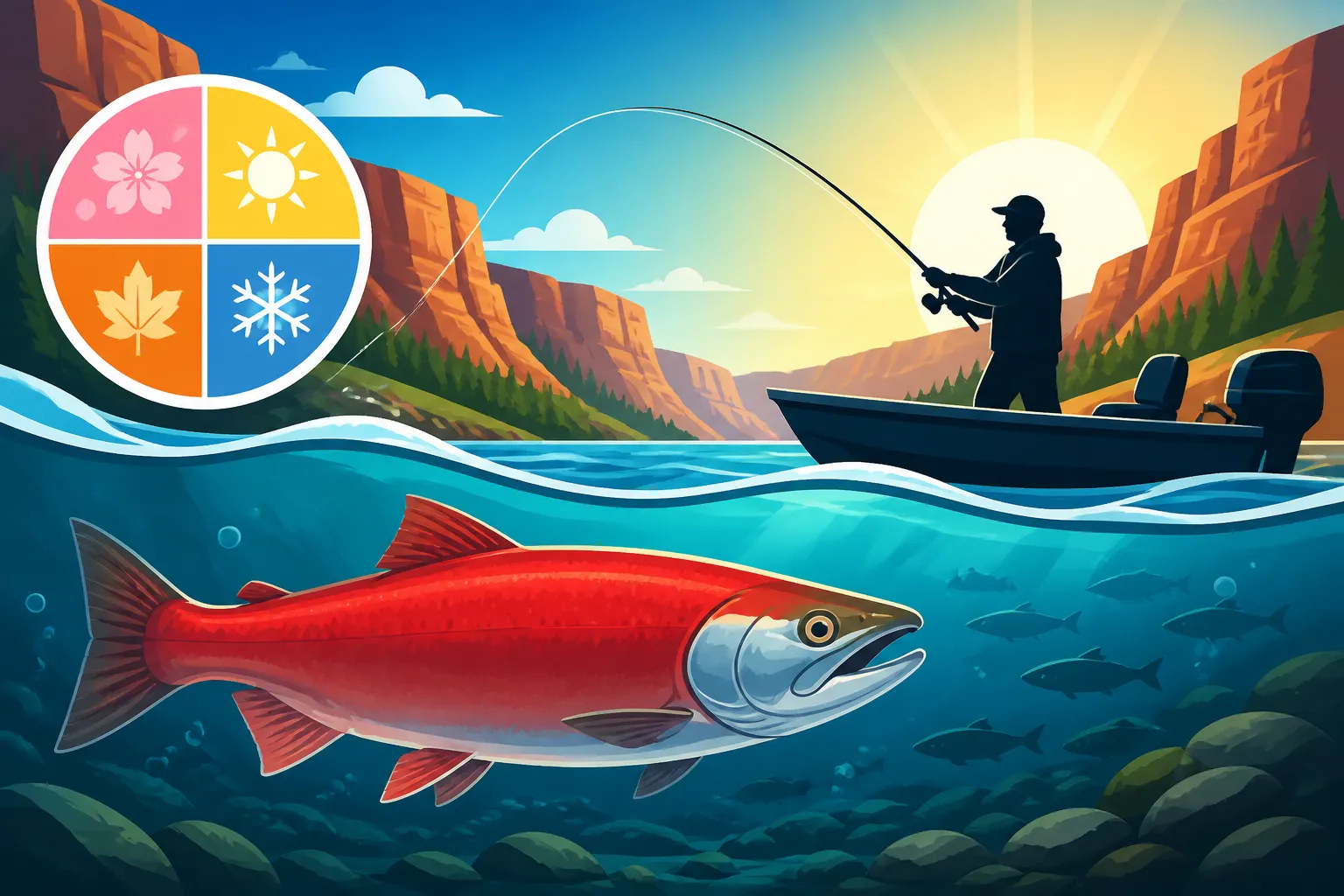
Flaming Gorge Kokanee Seasons at a Glance
To help you visualize the best times and strategies, here's a quick overview:
| Season | Approximate Dates | Typical Depth Range | Key Behavior | Primary Techniques | Considerations |
|---|---|---|---|---|---|
| Late Spring/Early Summer | May – Mid-July | 20-60 feet | Active feeding, schooling, moving shallower | Slow trolling with dodgers/lures | Often the most consistent bites. |
| Mid-Summer | Late July – August | 60-100+ feet | Seeking deep, cold water; less active feed | Deep trolling with downriggers | Requires good electronics; fewer, but larger fish. |
| Late Summer/Early Fall | Late August – October | Variable, concentrating in arms | Spawning migration, color change, non-feeding | Trolling (reaction strikes), snagging (if legal) | Check specific spawning regulations, ethical considerations. |
| Late Fall/Winter | November – April (Ice Fishing) | 10-60 feet (under ice) | Slower metabolism, somewhat scattered | Ice jigging, tip-ups, deadsticking | Requires specialized ice fishing gear, safety. |
This table provides a general guideline, but remember that conditions can vary year to year based on snowpack, water temperatures, and other environmental factors.
Disclaimer
Always consult the latest Wyoming Game and Fish Department regulations before heading out to fish. Fishing conditions, rules, and limits can change frequently. This guide is for informational purposes only and does not constitute official legal advice.