How to Set the Hook on a Trout Without Losing It
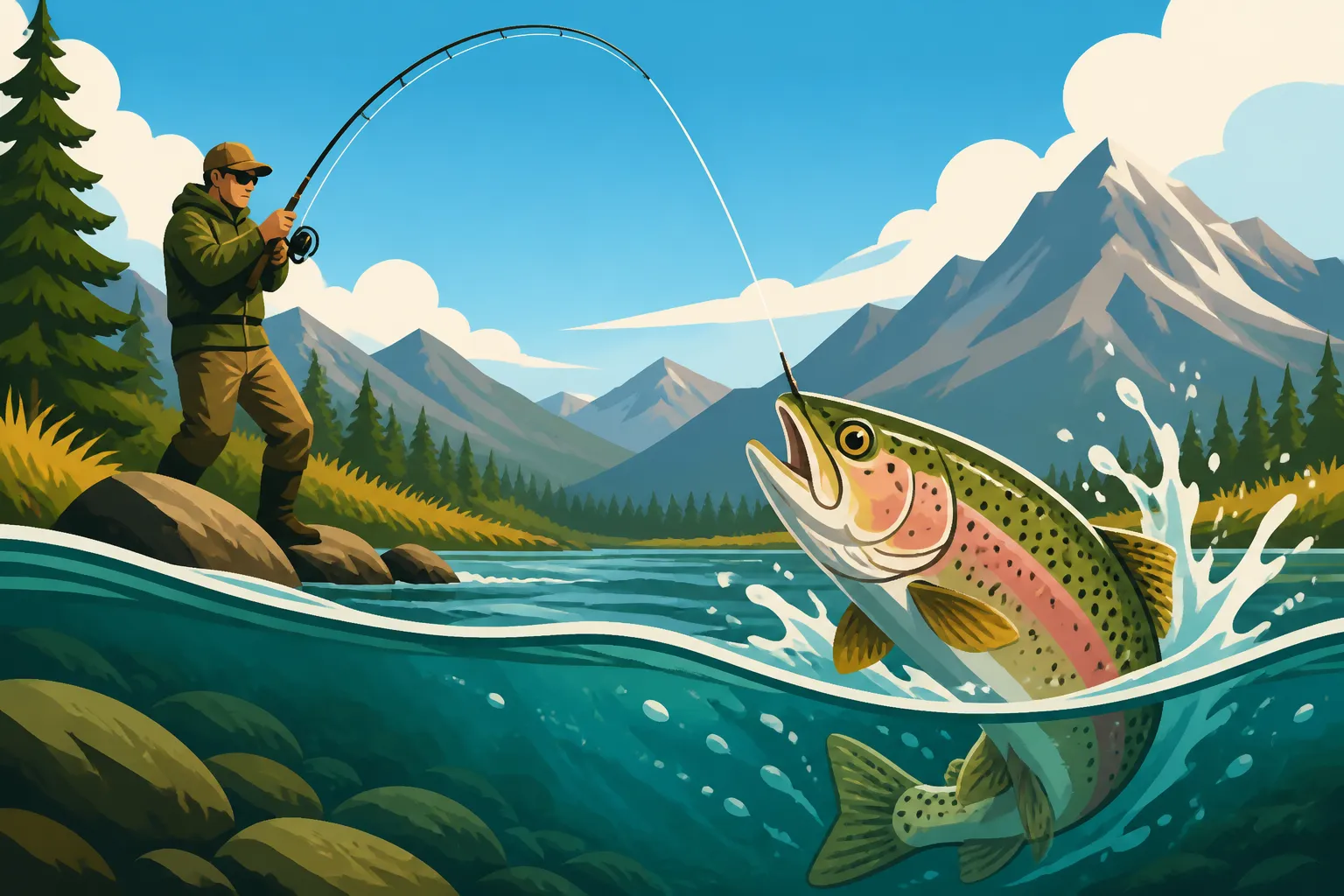
There's nothing quite as frustrating as feeling that subtle, electric tug on your line, the unmistakable sign of a trout taking your offering, only to lift your rod and feel… nothing. You reel in to find your bait gone, or your fly dislodged, and the fish long vanished into the clear Wyoming waters. It’s a moment that can make even the most seasoned angler sigh, but often, the key to converting those nibbles into landed fish lies in understanding and mastering the art of setting the hook. This guide will walk you through the nuances of recognizing a bite and executing the perfect hookset, no matter your fishing style, so you can stop telling tales of "the one that got away" and start sharing photos of your catch.
Understanding the Trout's Bite and Why You Miss Them
Before you can set the hook effectively, you need to understand what's happening on the other end of your line. Trout are often more delicate eaters than you might imagine, especially when the water is clear or the pressure is high. Their "take" can range from a violent smash to an almost imperceptible nudge, and missing that small window is why so many anglers end up empty-handed.
The Elusive "Take" – What It Feels Like (and Doesn't)
When a trout bites, it's not always the dramatic pull you see in cartoons. Sometimes, especially with fly fishing or sensitive spin setups, it can be incredibly subtle. For a fly angler using a nymph rig, the indicator might just twitch slightly, hesitate, or briefly dip. It might not even fully submerge; it could simply slow down, or you might see your line pause unnaturally in the current. These are often the most common "takes" for wary trout in pressured streams. When fly fishing, especially for species like the Snake River Fine-Spotted Cutthroat Trout in a clear mountain stream, you’re not necessarily feeling the bite directly. You're seeing the interruption in the natural drift of your line or indicator.
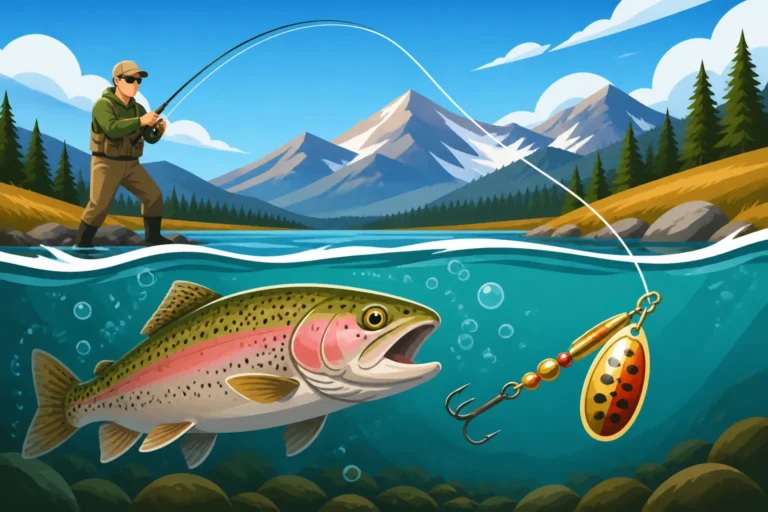
With spin fishing, it can vary. A powerful rainbow trout might hit a spinner like a freight train, but a more cautious brown trout might just "thump" your lure and then mouth it for a second before letting go. Sometimes, it feels less like a bite and more like your lure suddenly snagged on something soft, or the line just went slack when it shouldn't have. Learning to discern these subtle changes requires practice and focus, but it’s a skill that will dramatically increase your success rate. Pay close attention to any deviation from the expected movement of your lure or bait.
Common Mistakes Leading to Missed Hooksets
There are a few universal missteps that lead to the heartbreak of a missed fish. One of the biggest culprits is being distracted. If you're looking around, chatting, or not focused on your line, you'll miss those critical few tenths of a second. Another common mistake is having too much slack in your line. Whether you're drift fishing a fly or casting a spinner, excessive slack creates a delay between the fish taking the bait and you feeling it. By the time the line tightens up enough for you to react, the trout might have already spit the hook.
Many anglers also react too slowly or too quickly. The "wait for the rod to bend" advice, while well-intentioned for some species, can often lead to missed trout, particularly with artificial lures or flies. Trout can inhale and exhale a fly faster than you can blink. Conversely, a panicky, overly aggressive hookset when the fish is barely mouthing the bait can rip it right out of their mouth. It’s about finding that Goldilocks zone – not too fast, not too slow, but just right. We'll dive into how to find that timing next, as it differs considerably between various techniques and even species found in Wyoming’s diverse waters.
The Fundamentals of a Proper Hookset
Setting the hook isn't a single, one-size-fits-all motion. It's a combination of timing, angle, and force that needs to adapt to the situation at hand. Think of it as a fluid, responsive action rather than a brute-force yank. The goal is to drive the hook point cleanly into the trout's mouth, where it can hold firm without causing unnecessary damage if you plan on practicing Catch and Release Best Practices for Trout.
Timing is Everything: When to Set the Hook
This is arguably the most crucial aspect. For fly fishing with an indicator, you set the hook the instant the indicator does anything out of the ordinary—a twitch, a dip, a pause, or a lateral movement. Don't wait for it to disappear completely unless you’re intentionally targeting a deep, slow take. That brief change in movement is usually the trout inhaling your fly. When fishing dry flies, you set when you see the fish rise and take the fly. For a sub-surface nymph rig, the subtle pause can be tough to distinguish from current, but if you're truly focused on How to Fish a Nymph Rig Under an Indicator, you'll learn to recognize it.
For spin fishing with lures or bait, the timing can be a bit more forgiving but still critical. If you feel a distinct "thump" or a hard tug, set the hook immediately. If it's a lighter tap-tap-tap, especially with bait, sometimes a slight delay of a second or two allows the fish to fully commit and take the bait deeper into its mouth, resulting in a more solid hookup. However, this is a fine line; waiting too long can mean the fish feels the hook and spits it. Many anglers find success by setting the hook on any unnatural feel or movement of the line. Your rod will tell you a story; listen to it carefully.
The Right Angle and Force for Different Techniques
The direction and power of your hookset are just as important as the timing. Generally, you want a sharp, deliberate, but controlled upward or sideways motion of the rod.
- Upward: This is typical for most fly fishing and many spin fishing scenarios. You lift your rod tip sharply, from a low position (say, 9 o'clock) to a higher position (11 or 12 o'clock). This motion quickly takes up slack and drives the hook upwards into the roof of the trout's mouth, which is often a solid and secure place for the hook to hold.
- Sideways (Sweep Set): This is often preferred in situations with a lot of slack, like when fishing soft plastics or jigs on a spinning rod, or when you're fishing parallel to the bank. Instead of lifting straight up, you sweep the rod horizontally, often turning your body into the motion, creating a long, continuous pull that minimizes slack and sets the hook. This can be very effective when you're casting across a stream like portions of the North Platte River and want to sweep the hook away from the strong current.
- Controlled Force: You don't need to try and rip the fish's head off. A firm, quick snap of the wrist and forearm is usually enough to seat the hook. Overpowering the hookset can tear the hook out of a soft-mouthed fish or even break lighter tippet and leaders, especially when using delicate presentations on a Best Fly Rod Weight for Wyoming Trout Streams setup. The goal is just enough force to penetrate, not to yank the fish out of the water.
Remember to keep tension on the line after the hookset. Many fish are lost immediately after the set because the angler relaxes, allowing slack to form, and the hook to dislodge. Keep that rod bent and the line tight!
Hookset Techniques for Different Fishing Styles
Each method of fishing for trout comes with its own rhythm and optimal hookset. Adapting your technique to your chosen gear and bait is paramount to success. A hookset that works perfectly with a dry fly might tear the bait out of a trout's mouth if you're using a worm.
Fly Fishing: The Upstream Mend and Strip Set
Fly fishing often demands a more nuanced approach. When you're dry fly fishing on a clear stream, watching a trout sip your fly off the surface, the hookset is usually a gentle, swift lift of the rod tip straight up. It's often referred to as "lifting into the fish" rather than "jerking." The timing is key: wait until the fish turns down with the fly, signifying it has fully committed. If you set too early, you'll pull the fly away from its mouth.
For nymph fishing or other sub-surface presentations, especially in moving water, the technique typically involves a "strip set" or an "upstream mend and lift." With a strip set, rather than lifting the rod, you aggressively pull the fly line downstream (or sideways) while simultaneously sweeping your rod horizontally, then lifting. This helps take up any slack and sets the hook in the direction of the fish's travel. This is particularly effective for those elusive nymph takes where your indicator merely pauses. If you're using a technique like How to Fish a Nymph Rig Under an Indicator, you often combine an upstream mend (to control your drift) with a subtle lift or sweep the instant that indicator behaves abnormally. The motion should be smooth and continuous, not a sharp, violent jerk. This ensures minimal disturbance to the fish if you miss and allows for a quicker second cast.
Spin Fishing: The Sweep and the Twitch
Spin fishing offers a bit more variety in hookset styles, often depending on the lure or bait used. When fishing with spinners or spoons, which are often retrieved steadily, a trout strike typically feels like a sudden stop or a solid thump. In this scenario, a quick, firm lift or sweep of the rod tip is usually best. Don't drop your rod tip; keep it high to maintain tension. For active lures, like those used for Best Lures for Wyoming Rainbow Trout, you're often already in direct contact with the fish, so a prompt and assertive hookset works well.
When using jigs or soft plastics, where you might be bouncing the lure along the bottom or twitching it, the bite can be very subtle—a slight weight, a faint tap, or simply the line going slack when it shouldn't. Here, a "sweep set" is often highly effective. Instead of a vertical lift, sweep the rod to the side, turning your body into the motion, creating a long, powerful pull. This helps remove slack and drives the hook home. If you're fishing heavier gear or larger trout, like those found in Wyoming’s deeper reservoirs, you might need a more pronounced sweep. Remember, always keep a slight bend in your rod and try to keep direct contact with your lure while retrieving to feel those subtle takes. For beginners learning Spin Fishing Techniques for Beginners, starting with an upward sweep can be a great foundational skill.
Bait Fishing: Waiting for the Commitment
Bait fishing, especially with live bait like worms or PowerBait, often involves waiting a moment longer for the fish to fully ingest the offering. If you set the hook on the first subtle tap, you'll likely pull the bait right out of the fish's mouth before it's had a chance to commit. With bait, the sequence often goes something like this: you feel a tap, then another, then perhaps a steady pull as the fish swims away. That is when you set the hook.
Many anglers using bait with a bobber will wait for the bobber to fully disappear or start moving steadily across the water before setting. Without a bobber, you might feel a series of tentative taps, followed by the line moving steadily or the rod tip bending definitively. At that point, a firm, moderate lift of the rod tip (often from 9 o'clock to 11 o'clock) should be sufficient to set the hook. This is especially true if you are targeting species known for gentler bites, or if you're using natural baits where fish need a moment to take it in, such as when using Best Bait for Brown Trout in Fall where they might mouth the bait before swallowing. The key here is patience, but not too much patience, as a fish can swallow the hook too deeply if you wait excessively.
Gear Considerations for Better Hooksets
Your equipment plays a significant role in your ability to detect bites and successfully set hooks. You can have the best technique in the world, but if your rod is too stiff or your hooks are dull, you're fighting an uphill battle. Investing a little thought into your gear can make a big difference.
Rod Action, Line, and Hook Sharpness
- Rod Action: The "action" of your rod refers to where it bends. A fast-action rod bends mostly in the tip, offering excellent sensitivity for detecting subtle bites and providing a quick, powerful backbone for hooksets. This is often preferred for jigging or when fishing with lures that require precise feel. A moderate-action rod bends more through the middle, offering a bit more forgiveness and helping to absorb head shakes, which can be useful when fighting larger trout or using lighter line. If you're learning How to Set Up a Drop Shot Rig for Trout, a fast-action rod will often give you the best feel.
- Fishing Line: The type of line you use greatly affects sensitivity and hookset efficiency. Braided line has virtually no stretch, transmitting even the lightest taps directly to your rod hand, making it excellent for bite detection and powerful hooksets. However, its lack of stretch can sometimes lead to hooks pulling out of soft-mouthed fish if you're too aggressive. Fluorocarbon line offers a good balance of low stretch, excellent abrasion resistance, and near invisibility underwater, making it a favorite for many trout anglers. Monofilament line has more stretch, which can absorb some of the shock of a strike and provide a bit more forgiveness, but it sacrifices some sensitivity. For beginners, choosing the right How Much Line Weight to Use for Trout can feel overwhelming, but generally, lighter lines increase sensitivity.
- Hook Sharpness: This is non-negotiable. A dull hook simply won't penetrate reliably. Before every trip, and even periodically throughout the day, check your hook points. Run the hook point lightly across your thumbnail; if it slides, it's dull. If it digs in, it's sharp. Always carry a small hook file or sharpener with you. This simple act can drastically improve your hookup ratio. Many hooks come reasonably sharp out of the package, but snags, rocks, and even fish can dull them quickly.
Using Indicators and Floats Effectively
For many types of trout fishing, especially with flies or bait, indicators and floats are your eyes on the water. Learning to "read" them is a critical skill for proper hooksets.
- Strike Indicators (Fly Fishing): These small, buoyant devices attach to your leader and suspend your nymph or weighted fly at a specific depth. They are designed to show even the most subtle take. The key is to watch them constantly. Any hesitation, dip, dart, or unnatural movement in the drift warrants a hookset. Don't wait for it to be pulled completely under. Often, the softest takes are just a slight wobble. Using an indicator correctly is vital for success in Fly Fishing Techniques for Wyoming Trout Streams when targeting sub-surface feeders.
- Bobbers (Spin/Bait Fishing): Similar to strike indicators, bobbers suspend your bait or lure. The principles are much the same: watch for any unnatural movement. A slight dip, a twitch, or the bobber laying on its side (if it was upright) can signal a bite. As mentioned earlier with bait fishing, you often wait for the bobber to be pulled completely under or to start moving steadily before setting the hook, giving the fish time to fully commit. Selecting the right size and sensitivity of bobber for the depth and current you're fishing can dramatically improve your bite detection.
By understanding the nuances of how trout feed, practicing deliberate hookset techniques for your chosen fishing style, and ensuring your gear is optimized, you’ll significantly reduce those heartbreaking misses. Every twitch, every bump, every pause in the line is a potential fish. Stay focused, react confidently, and enjoy the thrill of a solidly hooked trout fighting on your line in Wyoming's beautiful waters!
| Fishing Style | Bite Indication | Recommended Hookset Action | Key Gear Tip |
|---|---|---|---|
| Dry Fly Fishing | Visible rise/sip, fly disappears | Gentle, swift lift of rod tip (upward) | Sharp, light-wire hooks |
| Nymph Fishing | Indicator twitch, dip, pause, or unnatural drift | Strip set (downstream pull) + horizontal sweep / upstream mend + lift | Fast-action rod, sensitive indicator |
| Spin/Lure Fishing | Thump, sudden stop, light tap, line slackens | Quick, firm upward lift or side sweep | Sharp hooks, low-stretch line (e.g., fluorocarbon) |
| Bait Fishing | Repeated taps, steady pull, bobber submerges | Moderate, steady upward lift | Patient timing, sharp medium-gauge hooks |
Disclaimer
This article is for general informational purposes only and does not constitute professional advice. Laws, prices and regulations vary by location and change over time. Consult a qualified professional for guidance on your specific situation.