Brook Trout Fishing in Wyoming
There's something truly special about chasing brook trout in Wyoming. While they might not get the same trophy-fish hype as some of their larger cousins, these vibrant, feisty fish offer an incredibly rewarding experience, often found in stunning, secluded high-country settings. Many anglers pass them by, not realizing the joy (and deliciousness!) these smaller char can provide. This guide is dedicated to bringing the often-overlooked brook trout into the spotlight, helping you understand where to find them, what gear to use, and the techniques that will make your next Wyoming brook trout adventure a memorable one.
Understanding Wyoming's Brook Trout
Brook trout, or "brookies" as they're affectionately called, are truly a gem of the cold, clear waters they inhabit. Their stunning coloration and often aggressive feeding habits make them a blast to catch, but there's a bit more to these fish than just their pretty spots. Understanding their characteristics and typical behaviors is key to successfully targeting them and appreciating their place in Wyoming's diverse aquatic ecosystems.
Identifying Brook Trout vs Brown Trout
It's easy to confuse trout species, especially when you're excited to land a fish in a remote stream. However, distinguishing a brook trout from a brown trout is fairly straightforward once you know what to look for, and it's important for understanding regulations and the fish you're targeting.
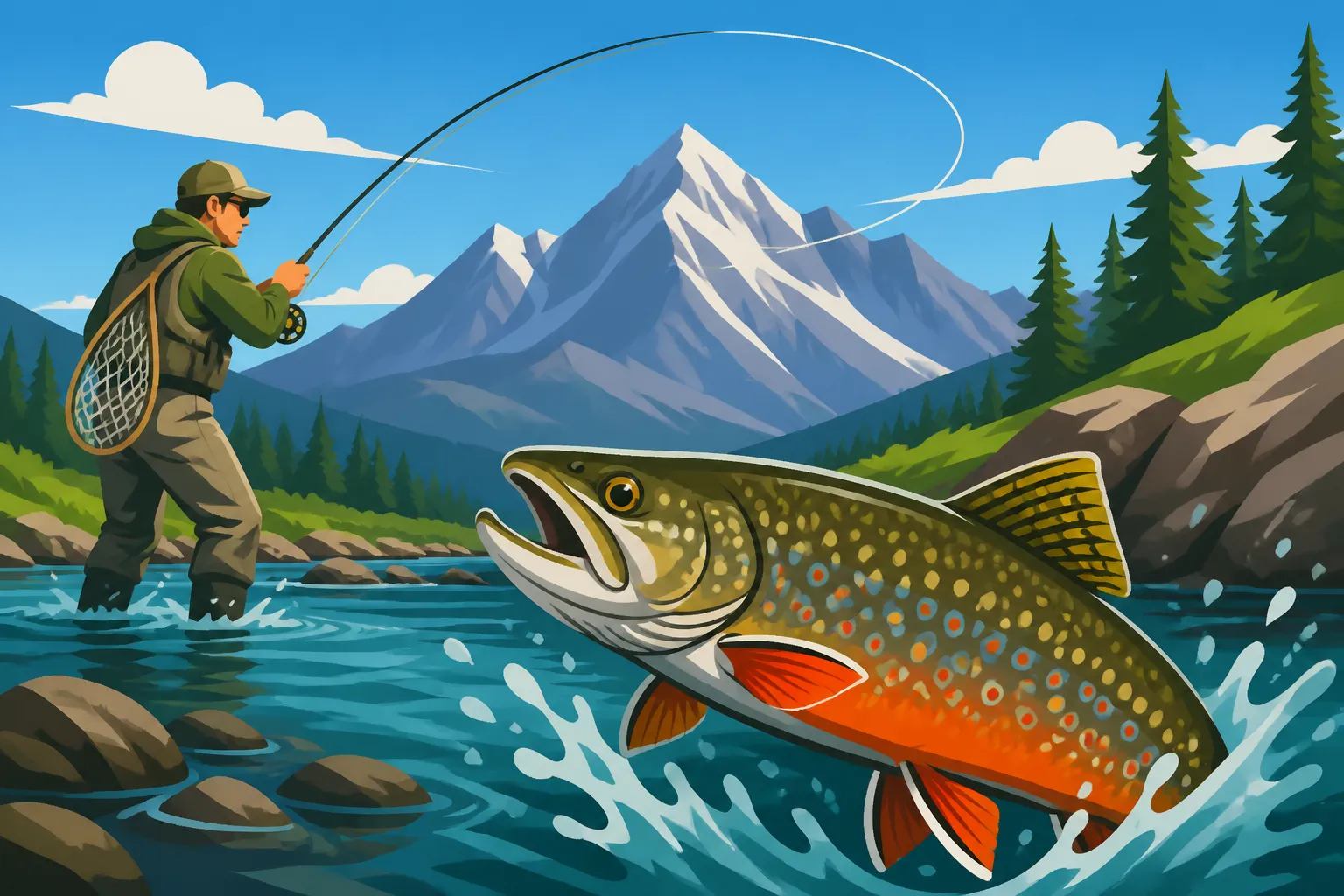
Brook trout, despite their name, are actually a type of char, closely related to lake trout and arctic char. Their most striking feature is their vibrant, worm-like markings (called vermiculations) across their olive-green back and sides, which often extend onto their dorsal fin. You'll also notice bright red spots, each encircled by a distinct blue halo, scattered along their flanks. Their lower fins (pelvic and anal) are often edged with white, followed by a black stripe, and then a reddish-orange hue, a distinctive "leading edge" that stands out. Their tail fin is typically square or only slightly forked. Identifying Brook Trout vs Brown Trout dives deeper into these unique markers.
Brown trout, on the other hand, tend to have larger, more prominent dark spots (often ringed with a lighter halo) and sometimes a few red or orange spots that lack the distinct blue halo of a brook trout. Their overall coloration is typically a golden-brown to olive-brown. Brown trout usually have a more deeply forked tail than brook trout. While both can inhabit similar waters, brook trout often prefer the colder, higher-elevation tributaries and smaller streams where brown trout might struggle to establish a foothold. Knowing these visual cues will not only help you identify your catch but also give you a better appreciation for the specific fish you've landed.
Brook Trout Habitat and Behaviors
Brook trout are creatures of the cold. They absolutely thrive in the pristine, oxygen-rich waters found in Wyoming's high-elevation streams, rivers, and alpine lakes. Think crystal-clear mountain creeks tumbling over rocks, beaver ponds nestled in subalpine meadows, or serene lakes reflecting snow-capped peaks. These are the places where brookies truly shine.
They prefer water temperatures generally below 68°F (20°C) and will seek out cold springs, deep pools, and shaded areas when temperatures rise. Unlike some larger trout species that demand extensive river systems or massive reservoirs, brook trout are perfectly content in smaller, more intimate water bodies. Their smaller size, typically ranging from 6 to 12 inches in Wyoming, allows them to inhabit these tighter spaces where larger predators might not venture, or where food sources are more limited.
In terms of behavior, brook trout are often opportunistic and aggressive feeders. They'll readily strike at a wide variety of insects, small crustaceans, and even tiny fish. This aggressive streak, particularly in waters where they face less competition, is what makes them so much fun to catch. They're not usually as wary as large brown trout or wild cutthroat in heavily fished waters, though they can still be spooky in very clear, shallow streams. You'll often find them lurking in pockets of slower water behind boulders, beneath undercut banks, or at the edges of current seams, waiting for an easy meal to drift by.
Are Brook Trout Considered Invasive in Wyoming?
This is a really important question, and the answer is nuanced. While brook trout are native to the eastern United States, they are not native to Wyoming or the vast majority of the western states. They were introduced to Wyoming in the late 19th and early 20th centuries by early anglers and fish managers who sought to provide more fishing opportunities.
Because of their highly adaptable nature, prolific breeding, and ability to thrive in challenging, cold environments, brook trout have successfully established populations throughout Wyoming's high country. While this has certainly created fantastic fishing opportunities, it also comes with an ecological cost. In many waters, brook trout compete directly with Wyoming's native cutthroat trout species, such as the Yellowstone cutthroat and Snake River fine-spotted cutthroat. They outcompete native fish for food and habitat, and in some cases, they can even hybridize with native cutthroat, diluting the genetic integrity of the native populations. Are Brook Trout Considered Invasive in Wyoming? goes into more detail about this delicate balance.
For these reasons, the Wyoming Game and Fish Department often manages brook trout populations differently than native species. In many waters, regulations for brook trout are quite liberal, sometimes even encouraging anglers to harvest them to help reduce their numbers and mitigate their impact on native fish. This isn't to say brook trout are "bad" fish; rather, it highlights the complex challenges of managing introduced species in an ecosystem where they were not historically present. As an angler, understanding this context can help you make informed decisions about catch and release versus harvest, and appreciate the larger conservation goals at play.
Where to Find Brook Trout in Wyoming
One of the most appealing aspects of brook trout fishing in Wyoming is the sense of adventure it brings. These fish are often found in places that require a bit of effort to reach, rewarding the persistent angler with solitude, stunning scenery, and eager fish. While some spots are more accessible, the true magic of brook trout often lies off the beaten path.
High-Elevation Streams and Alpine Lakes
If you're dreaming of classic Wyoming brook trout fishing, you're likely imagining pristine high-country environments. Wyoming's mountain ranges are absolutely teeming with small streams and alpine lakes that serve as perfect brook trout habitat. The Wind River Range, in particular, is legendary for its vast network of high-elevation lakes and streams, many of which are home to thriving brook trout populations. Here, you'll find everything from small tarns tucked into cirques to larger, deeper lakes, all offering incredible opportunities.
Other mountain ranges like the Bighorns and the Absarokas also boast numerous high-country waters that hold brookies. While the Tetons are more renowned for their cutthroat and lake trout, some of the smaller, higher tributaries and lakes can also surprise you with brook trout. Getting to these spots often involves a decent hike, sometimes an overnight backpacking trip, but the reward is immense: breathtaking vistas, a profound sense of solitude, and often, brook trout that are more than willing to strike. Remember to check local trail conditions and wilderness area regulations before heading out. For more on these remote gems, check out High-Elevation Lakes in the Wind River Mountains and Best Backpacking Fishing Lakes in the Wind Rivers.
Smaller Tributaries and Headwater Creeks
You don't always need to hike to an alpine lake to find brook trout. Many smaller tributaries and headwater creeks lower down in the mountain ranges, often feeding into larger rivers, can hold excellent populations. These are the intimate waters that flow through dense riparian zones, creating endless small pockets, riffles, and pools.
Brook trout are masters of these smaller environments. They'll tuck into surprisingly shallow water, under grassy banks, or behind small logs, making them a challenge to spot but a delight to catch. Beaver ponds are another fantastic place to look. These natural impoundments create ideal stillwater habitat with plenty of cover and food sources, often holding larger brook trout than you might expect from such a small body of water. Fishing these creeks requires a more stealthy approach, as the fish can be easily spooked in the clear, shallow water. It's often a game of short, accurate casts to tight spots, but the thrill of pulling a bright brook trout from a tiny stream is unmatched.
Overlooked Front-Country Ponds and Lakes
While the allure of the backcountry is strong, don't discount more accessible waters. There are often smaller, less-pressured ponds and lakes in the front country or lower elevations that hold brook trout, especially if they are frequently stocked by the Wyoming Game and Fish Department. These might not offer the same wilderness experience, but they can be excellent options for a quick afternoon outing, for introducing kids to fishing, or when you don't have time for a multi-day trek.
These waters can include community fishing ponds, smaller state park lakes, or even reservoirs that have cold water inputs from nearby streams. The key is to do a bit of research. The Wyoming Game and Fish Department's website is a great resource for stocking reports and specific water body information. While these spots might not offer trophy brook trout, they often provide consistent action and can be a great way to hone your skills before tackling more challenging, remote locations. These accessible waters are often where you'll find that eager brook trout to kick off a lifelong love of fishing.
Essential Gear for Brook Trout Fishing
One of the beauties of brook trout fishing is that it doesn't always require a huge investment in specialized gear. Because they typically inhabit smaller waters and aren't usually massive fish, a lighter, more nimble setup is often ideal. However, having the right tools for the job can significantly enhance your experience and success.
Rod and Reel Setup for Small Waters
When targeting brook trout, especially in the tight confines of high-mountain streams and small ponds, finesse is often more important than brute strength. For spin fishing, an ultralight rod is your best friend. A rod between 4.5 and 6 feet in length, with a light or ultralight action, will allow for delicate presentations and make even a small brook trout feel like a champion fighter. Pair this with a small spinning reel, loaded with 4 to 6-pound test monofilament or fluorocarbon line. The lighter line will allow for longer casts with small lures and be less visible in clear water. Brands like Shimano, Daiwa, or Pflueger offer excellent ultralight combos that are perfect for this application.
For fly fishing, a short, light-weight rod is similarly ideal. A 2-weight to 4-weight fly rod, typically 6.5 to 7.5 feet long, provides the delicate touch needed for small streams. This setup allows for short, accurate casts and protects light tippets when a brook trout suddenly decides to make a run for it. A small, lightweight reel balanced to the rod, and a weight-forward floating line will complete your setup. The joy of battling a feisty brook trout on such light gear is truly something to experience – they may be small, but they punch above their weight! You might even find some great value options for these setups if you browse online retailers.
Fly Fishing Essentials
If fly fishing is your passion, or if you're looking to get into it for brook trout, a few essentials will set you up for success. Brook trout are generally not picky eaters, especially in remote waters, but presenting the right fly can certainly improve your chances.
Small dry flies, mimicking common mountain insects, are often highly effective. Patterns like a Parachute Adams, Royal Wulff, or an Elk Hair Caddis in sizes #14 to #18 are usually reliable choices. When fish aren't looking up, small nymphs such as a Prince Nymph, Hare's Ear Nymph, or a Pheasant Tail Nymph in sizes #14 to #20 can be deadly, fished with or without a small indicator. Don't overlook small streamers like a #10 or #12 Woolly Bugger in black or olive; brook trout are aggressive and won't hesitate to chase a streamer. You can find excellent selections of these flies and fly boxes on platforms like Amazon, which makes stocking up convenient before your trip.
Beyond the flies, a good fly vest or chest pack is invaluable for keeping your tools organized and accessible. You'll want a reliable pair of nippers, forceps for hook removal, and spare spools of tippet in sizes 4X to 6X. A small net can also be helpful for landing fish quickly and safely, especially if you plan to practice catch and release in some areas. Having a variety of patterns and the right accessories will ensure you're ready for whatever the brook trout (and the stream) throw at you.
Spin Fishing Lures and Baits
For spin anglers, a small tackle box filled with a few key items will be all you need. Brook trout are incredibly receptive to small, flashy lures that imitate insects, minnows, or other small aquatic life.
Classic inline spinners are arguably the most consistently effective lure for brook trout. Think Mepps Aglias, Panther Martin, or Rooster Tail spinners in sizes #0, #1, or #2, with silver, gold, black, or natural colors. Their vibrating blades and flash are irresistible to aggressive brookies. Small spoons, like a Kastmaster or a Little Cleo in similar small sizes, can also work wonders, especially in ponds or larger pools where you need a bit more casting weight. Tiny jigs, often tipped with a piece of worm or scented bait, can be incredibly effective when fished slowly along the bottom or under a bobber.
Natural baits are also a go-to for brook trout, especially if you're fishing with kids or just want to maximize your chances. A small piece of earthworm, a salmon egg, or even a bit of PowerBait on a small hook (#8 or #10) under a bobber will often entice a strike. Many anglers swear by classic spinners like those found readily available on Amazon, often buying them in multi-packs to cover different color and size options. The key with all these baits and lures is to keep them small and present them naturally.
| Feature | Brook Trout (Salvelinus fontinalis) | Brown Trout (Salmo trutta) |
|---|---|---|
| Scientific Family | Salmonidae (Char) | Salmonidae (Trout) |
| Coloration | Olive green back with distinct white/black/orange leading edges on fins; red spots with blue halos; worm-like (vermiculation) markings on back. | Golden-brown to olive; dark spots (often ringed with light halo); some red/orange spots without blue halos. |
| Tail Fin | Square or slightly forked | Moderately to deeply forked |
| Spots | Red spots with blue halos (ocelli); light vermiculations | Dark spots (black/brown) with light halos; some red/orange spots without blue halos. |
| Native Range | Eastern North America | Europe and Western Asia |
| Preferred Habitat | Cold, clear, high-oxygen streams & alpine lakes; often smaller waters. | Wider range of habitats; often larger rivers, lakes, and tailwaters. |
| Average Size | 6-12 inches (Wyoming) | 10-20+ inches (Wyoming) |
| Wyoming Status | Introduced/Non-Native | Introduced/Non-Native |
Effective Techniques for Catching Brook Trout
Brook trout might be eager biters, but that doesn't mean you can just waltz up to the stream and expect them to jump on your hook. Especially in their clear, often shallow, high-country homes, a thoughtful approach and refined techniques can make all the difference between a few missed strikes and a banner day.
Stealth and Approach
In the small, crystal-clear streams and lakes favored by brook trout, stealth is paramount. These fish are incredibly wary, and their survival depends on their ability to avoid predators. A heavy footfall on the bank, a sudden shadow, or even bright clothing can send them scurrying for cover.
Always try to approach the water from downstream, or, if fishing a lake, approach from well back from the bank. This keeps you out of their line of sight as much as possible, as fish generally face upstream. Stay low, using natural cover like bushes, rocks, or changes in terrain to break up your silhouette. Think of yourself as a hunter stalking prey – slow, deliberate movements are key. Make your first cast count, aiming for pockets, runs, or under banks where fish are likely to be holding, before you've potentially spooked them. Often, the fish closest to you in a small pool will be the first to flee, so try to cast to the furthest holding water first, then work your way closer.
Fly Fishing Strategies
Fly fishing for brook trout in Wyoming's high country is a truly quintessential experience. The challenge and reward are immense. Because you're often dealing with small, intimate water, accuracy and delicate presentation are far more important than distance.
Short, accurate casts are key. You'll rarely need to make a 60-foot cast; often, 10-20 feet is all it takes. Focus on hitting the edges of current seams, behind boulders, into undercut banks, or at the head of a pool. Drifting a dry fly over a promising lie or letting a nymph tumble naturally through a riffle will often elicit an aggressive strike. A common and highly effective strategy is the dry-dropper rig: a buoyant dry fly on the surface with a small nymph tied off the bend of the hook, suspended a foot or two below. This allows you to cover both feeding zones simultaneously. How to Fish a Nymph Rig Under an Indicator and How to Fish Dry Flies on Slow-Moving Water offer excellent advice for specific presentations. In tight quarters, sometimes a simple roll cast is all you need to get your fly to the target without snagging overhead branches. Be prepared for strikes almost immediately after your fly hits the water!
Spin Fishing Tactics
Spin fishing for brook trout is equally effective and often a great way to introduce beginners to the sport, especially given the brook trout's willingness to bite. The same principles of stealth and natural presentation apply, but with a different set of tools.
When using spinners or small spoons, cast upstream or across the current and allow the lure to swing naturally downstream, retrieving just fast enough to get the blade spinning or the spoon wobbling. This mimics a natural food item drifting with the current. Vary your retrieve speed and depth until you find what the fish are responding to. In slower pools or beaver ponds, fan casting can be very effective: cast to different parts of the water body, covering it thoroughly. If using bait, a small split shot or two above your hook will help get your bait down into the feeding zone. Often, a tiny bobber can help detect subtle bites and keep your bait suspended just off the bottom. Remember to use light line and small swivels to avoid spooking fish in the clear water.
Brook Trout Regulations and Conservation
Understanding the specific regulations surrounding brook trout in Wyoming is crucial for responsible angling. Unlike many native species which often have protective regulations, brook trout management often takes a different approach due to their introduced status.
General Wyoming Regulations for Brook Trout
For many waters in Wyoming, brook trout are managed with quite liberal regulations. This often means higher daily bag and possession limits compared to native trout species like cutthroat or even larger brown trout. In some general regulation waters, there might not even be a size limit, and the daily creel limit could be quite generous. This is largely because brook trout are non-native and, in many areas, their populations are so robust that they can outcompete native fish.
However, it is always imperative to check the specific regulations for the water you plan to fish. While general regulations might be liberal, certain drainages, specific streams, or lakes might have unique rules designed to protect native species or manage particular fisheries. The Wyoming Game and Fish Department publishes an annual fishing regulation booklet, and online resources are available to help you pinpoint the exact rules for your chosen spot. Wyoming Fishing Regulations Every Angler Should Know and How Bag and Possession Limits Work in Wyoming are essential reads before any fishing trip to the Cowboy State. Don't rely on assumptions; a quick check can save you from unintentional violations.
Why Conservation Efforts Differ
The difference in regulations for brook trout versus native species stems from a broader conservation philosophy. For native fish, like the Yellowstone cutthroat trout, conservation efforts focus on protecting their habitat, preventing hybridization, and ensuring sustainable populations. This often translates into stricter limits, catch-and-release requirements, or even specific gear restrictions (like barbless hooks) in certain areas.
For non-native brook trout, the conservation goal in many Wyoming waters is often to manage their population to reduce their impact on native species. This isn't about eradicating them entirely, but rather keeping their numbers in check to create a more balanced ecosystem. In some cases, brook trout might serve as a valuable food source for larger predators, including native fish and wildlife. Their prolific nature means they can often rebound quickly even with high harvest rates. Understanding this distinction helps anglers appreciate the complex science behind fisheries management in Wyoming.
Catch and Release vs. Harvest Decisions
Given the liberal regulations and the ecological context, deciding whether to catch and release or harvest brook trout is often a personal choice, but it's one where the Wyoming Game and Fish Department might subtly encourage harvest in certain areas.
If you're fishing a high-density brook trout stream where they are known to outcompete native cutthroat, keeping your catch can actually contribute to the health of the overall ecosystem by reducing competitive pressure on native fish. And let's be honest: brook trout are absolutely delicious! Their delicate, flaky white meat is a culinary delight, especially when cooked fresh over a campfire after a long day of hiking and fishing.
Of course, if you choose to release any fish, whether it's a brook trout or another species, always practice proper Catch and Release Best Practices for Trout. Handle the fish gently, keep it in the water as much as possible, use wet hands, and use forceps or pliers for quick hook removal. Even when harvest is encouraged, ethical angling practices remain paramount.
Planning Your Wyoming Brook Trout Adventure
A successful brook trout fishing trip in Wyoming requires a bit of planning, especially if you're venturing into the backcountry. From knowing the best time to go to packing the right essentials, a little preparation goes a long way toward a rewarding and safe experience.
When to Go: Best Seasons and Times
The window for prime brook trout fishing in Wyoming, particularly in the high country, generally runs from late spring through early fall. The exact timing depends heavily on elevation and snowmelt.
- Late Spring (May-June): As the snow begins to melt at lower and mid-elevations, some streams become accessible. However, many high-country lakes and streams will still be locked under ice or experiencing heavy runoff, making fishing challenging. Always check conditions.
- Summer (July-August): This is prime time for high-elevation brook trout. By July, most alpine lakes are ice-free, and runoff has typically subsided in the streams, leading to clear, fishable water. The weather is generally stable, though afternoon thunderstorms are common. This is when the fish are most active, aggressively feeding on insect hatches. When Wyoming's High Lakes Become Fishable provides more insights into this specific timing.
- Early Fall (September-Early October): This can be a fantastic time for brook trout, especially as cooler temperatures invigorate the fish, and fewer anglers are in the backcountry. Fall colors add to the beauty. However, be prepared for rapidly changing weather, including early snowfalls at higher elevations. Access roads to trailheads can also close unexpectedly.
- Winter (November-April): While some lower-elevation streams and lakes might offer limited ice fishing opportunities for brook trout, most high-country waters are completely inaccessible due to snow and ice.
No matter the season, early morning and late evening often offer the best fishing, but in cool, shaded mountain waters, brook trout can remain active throughout the day. For a broader overview of seasonal changes, consult Wyoming Fishing Seasons Month by Month.
Packing for a Backcountry Trip
If your brook trout adventure takes you deep into the wilderness, your packing list needs to be comprehensive. Beyond your fishing gear, safety and comfort are paramount.
Start with a sturdy backpack capable of carrying all your gear. Good hiking boots are non-negotiable, providing support and protection on rugged trails. Dress in layers, as mountain weather can change dramatically from morning to afternoon. Think moisture-wicking base layers, insulating mid-layers (fleece or puffy jacket), and a waterproof/windproof outer shell. Bring plenty of water or a reliable water purification system (filter, tablets, or UV purifier).
Other essentials include:
- Navigation: A detailed map of the area (digital and physical), a compass, and ideally a GPS device or a smartphone with downloaded offline maps.
- Safety: A first-aid kit, headlamp or flashlight, knife, fire starter, and bear spray (especially in grizzly country).
- Food: Lightweight, calorie-dense food for your planned duration.
- Shelter: A lightweight tent, tarp, or bivy sack, even for day trips, in case of an unexpected overnight.
- Sun protection: Sunscreen, sunglasses, and a wide-brimmed hat.
You can find great deals on backpacking tents, portable stoves, and other essential gear on Amazon, making your trip preparation a breeze. Remember, preparedness is key to enjoying the remote beauty of Wyoming's brook trout waters safely.
Obtaining Licenses and Permits
Before you even think about casting a line, ensure you have all the necessary licenses and permits. This is not just a legal requirement but also helps fund Wyoming's robust wildlife and fisheries management programs.
Every angler aged 14 and older needs a valid Wyoming fishing license. For non-residents, there are various options, including annual, daily, or five-consecutive-day licenses. Additionally, most anglers are required to purchase a Wyoming Conservation Stamp. This stamp contributes directly to habitat projects and wildlife management efforts across the state. The cost of a license and stamp will vary depending on residency and the duration of your license.
While no specific permit is typically required just for brook trout fishing, always double-check if you're entering special management areas like national parks (e.g., Grand Teton, Yellowstone) or tribal lands, as they have their own, separate licensing requirements. For most state and federal lands, your standard Wyoming fishing license and Conservation Stamp will suffice. It's easy to purchase your license online through the Wyoming Game and Fish Department website or at numerous vendors across the state. For detailed information, refer to Wyoming Fishing License Guide for Nonresidents and Where and How to Buy a Wyoming Fishing License. Carry your license with you at all times while fishing; a digital copy on your phone is usually acceptable, but a physical copy or printed screenshot is a good backup.
The Joy of Brook Trout Fishing in Wyoming
While the technical aspects of gear and technique are important, the true essence of brook trout fishing in Wyoming extends far beyond just catching fish. It's an opportunity to immerse yourself in some of the most stunning landscapes imaginable, find tranquility, and create lasting memories.
Beyond the Catch: Experiencing the Wilderness
One of the greatest rewards of pursuing brook trout, especially in the backcountry, is the profound wilderness experience that accompanies it. These fish often lead you to places of unparalleled beauty – untouched meadows, cascading waterfalls, and serene lakes nestled beneath jagged peaks. It's an escape from the hustle and bustle of everyday life, a chance to truly disconnect and reconnect with nature.
The solitude you find on a remote brook trout stream is a rare commodity. The only sounds might be the rushing water, the whisper of the wind through pine trees, and the chirping of birds. Wildlife encounters are common, from deer and elk grazing in the distance to the majestic flight of an eagle overhead. There's a deep satisfaction in relying on your own skills and senses to navigate, find fish, and perhaps even cook your catch over an open fire. It’s about the journey, the challenge, and the feeling of accomplishment that comes from a self-sufficient angling adventure in a truly wild place.
Family-Friendly Opportunities
While some brook trout expeditions require considerable physical effort, many opportunities are perfect for families and anglers of all skill levels, including beginners and children. Brook trout, particularly in smaller, more accessible waters or high-density areas, are often less finicky than other trout species. Their aggressive nature means they're usually willing to bite, which is incredibly encouraging for kids learning to fish.
You can often find small, stocked ponds or easily accessible creeks that are perfect for a family outing. A simple spin rod with a worm or small spinner can lead to consistent action, keeping young anglers engaged and excited. Teaching a child to cast, identify a fish, and safely release or carefully keep their catch can instill a lifelong love for the outdoors. Wyoming offers many spots that are ideal for creating those cherished family memories, where the focus is less on landing a trophy and more on the shared experience in nature. Look for designated Best Kids' Fishing Ponds in Wyoming for easy access and plenty of eager brookies!
Disclaimer
This article is for general informational purposes only and does not constitute professional advice. Laws, prices and regulations vary by location and change over time. Consult a qualified professional for guidance on your specific situation.