Are Brown Trout Native to Wyoming?
It’s a question that pops into many anglers' minds as they reel in a beautiful, spotted brown trout from one of Wyoming's pristine rivers: "Is this fish supposed to be here?" The truth about brown trout in Wyoming, while perhaps surprising to some, tells a fascinating story of human intervention, ecological adaptation, and the enduring allure of a truly magnificent game fish. This guide will dive deep into the origins of the brown trout in the Cowboy State, explain why they're so prevalent now, and help you understand their place in our incredible aquatic ecosystems.
The Truth About Brown Trout in Wyoming: Not a Native Son
Let's clear the waters right away: no, brown trout are not native to Wyoming. While they've become an iconic part of our fishing landscape, providing thrilling challenges and stunning catches, their ancestral home lies across the Atlantic. This fact often surprises people, especially given how robustly they thrive in many of our state's best fishing spots. But like many prized game fish in North America, the brown trout is an introduced species, brought here by early conservation and angling enthusiasts.
European Roots: A Transatlantic Journey
The brown trout (scientific name: Salmo trutta) originated in Europe and parts of Asia. They are true old-world fish, having evolved over millennia in the rivers and lakes of places like the United Kingdom, Germany, and the Scandinavian countries. They're incredibly adaptable, known for their resilience in various water conditions and their predatory nature. It was these very qualities that made them so appealing to fish culturists and anglers looking to enhance American fisheries in the late 19th and early 20th centuries. Imagine the ambition of those early pioneers, looking at the vast, untamed waters of the American West and envisioning new opportunities for sport.
Introduction to Wyoming Waters: A Calculated Move
The first successful introductions of brown trout to North American waters occurred in the 1880s, primarily to Michigan and New York, using eggs imported from Germany. From there, their propagation spread rapidly across the continent. In Wyoming, brown trout began to be stocked in the late 1800s and early 1900s by the Wyoming Game and Fish Department, often alongside rainbow trout, another non-native but popular species. The primary motivation was to provide additional sportfishing opportunities, especially in waters that might not have supported robust native trout populations or to supplement existing ones.
Back then, the understanding of ecological impacts was far less developed than it is today. The prevailing thought was that more fish equaled better fishing, and brown trout, being hardy and fast-growing, seemed like a perfect fit. They were introduced to numerous rivers, streams, and reservoirs, often in areas where native cutthroat trout might have struggled with habitat changes or where there was simply an empty niche perceived for a large, predatory game fish. The Wyoming Game and Fish Department has a long history of managing these species, continually adapting their approach as more scientific data becomes available.
Why Non-Native Species Matter: Ecological Considerations
While brown trout are a beloved species for many anglers, their non-native status isn't just a historical footnote. It carries significant ecological implications that modern wildlife managers and informed anglers consider carefully. Understanding these impacts helps us appreciate the delicate balance of our aquatic ecosystems and the importance of native species conservation.
Impact on Native Cutthroat Trout: Competition and Predation
Wyoming is home to several subspecies of native cutthroat trout, including the Yellowstone cutthroat, Snake River fine-spotted cutthroat, and Colorado River cutthroat. These native fish evolved alongside specific predators, prey, and environmental conditions. The introduction of brown trout, being a highly adaptable and often aggressive predator, created new pressures. Brown trout can outcompete native cutthroat for food and prime habitat, especially in larger, slower-moving waters. They're also known to prey on smaller native fish, including juvenile cutthroat.
This competition and predation are particularly concerning because native cutthroat populations have faced numerous challenges over the last century, from habitat degradation to hybridization with rainbow trout. The presence of non-native brown trout can exacerbate these issues, making the recovery and conservation of our indigenous fish even more complex. Anglers often hear about conservation efforts for species like the Yellowstone Cutthroat Trout Fishing in Wyoming, and understanding the role of non-native species like browns helps clarify why these efforts are so crucial.
Ecosystem Balance: Broader Effects
Beyond direct competition with native trout, the introduction of any non-native species can ripple through an entire ecosystem. Brown trout can alter the food web, impacting invertebrate populations or other fish species they consume. While they have integrated into many of Wyoming's rivers and lakes, creating a new, albeit altered, balance, their initial introduction represented a significant shift.
Consider a river system where insects are the primary food source for native trout. If brown trout arrive and consume those insects at a higher rate, or shift the population dynamics of the insects themselves, it can affect everything from bird species that feed on those insects to the health of the native trout. This is why careful management of fish stocking, even of popular sport fish, is so vital. Modern regulations, like Wyoming Fishing Regulations Every Angler Should Know, are designed with these complex ecological interactions in mind, aiming to balance recreational opportunities with conservation goals.
Where Brown Trout Thrive in Wyoming Today: Angler's Delights
Despite their non-native status and the ecological considerations, brown trout have firmly established themselves in many of Wyoming's waters and are highly prized by anglers. Their elusive nature, aggressive strikes, and impressive size make them a truly sought-after game fish. If you're looking for a challenging and rewarding fishing experience, targeting brown trout in Wyoming is an excellent choice.
Popular Brown Trout Fisheries: A Map of Opportunity
You'll find healthy populations of brown trout in many of Wyoming's most famous rivers and reservoirs. They often prefer slightly cooler water than some warmwater species but can tolerate a wider range of temperatures than many native cutthroat.
- North Platte River System: Stretches like the "Miracle Mile" and Gray Reef are legendary for their large brown trout. The river's rich insect life and abundant forage fish allow browns to grow to impressive sizes. A lot of anglers specifically target these sections for Fall Fishing for Browns on the Miracle Mile.
- Green River: Below Fontenelle and Flaming Gorge Dams, the Green River offers excellent brown trout fishing, especially in the larger pools and undercut banks.
- Wind River: Portions of the Wind River and its tributaries also hold good numbers of brown trout, providing diverse fishing experiences from mountain streams to larger river sections.
- Big Horn River: Another fantastic tailwater fishery, the Big Horn River near Thermopolis, is known for its prolific hatches and the chunky brown trout that gorge on them.
- Large Reservoirs: Lakes like Flaming Gorge Reservoir and Boysen Reservoir, while perhaps better known for lake trout and walleye, also hold significant populations of brown trout, often found around rocky points, submerged structure, and inflowing tributaries. Trolling for these reservoir browns can be a productive method.
These areas provide consistent opportunities, and understanding the Best Month for Lake Trout at Flaming Gorge or Best Month for Walleye at Boysen Reservoir can help you time your trip to coincide with peak brown trout activity as well, especially if you're targeting multiple species.
Fishing for Brown Trout: A Rewarding Challenge
Brown trout are known for being wary, especially the larger, more mature fish. They're intelligent and often hold in complex structure, requiring careful presentation and a stealthy approach. This challenge is precisely what makes catching a trophy brown so rewarding. Fly anglers often target them with streamers, nymphs, and sometimes dry flies during prolific hatches. Spin fishers find success with various lures such as spoons, spinners, and crankbaits that imitate baitfish. When choosing gear, looking for reputable brands can make a difference. Many anglers find great deals on specific types of lures or fishing line on Amazon, ensuring they're well-equipped for those smart brown trout.
In the fall, brown trout exhibit a spectacular spawning migration, moving upstream from lakes into rivers or from larger river sections into smaller tributaries. This is a prime time to target them, but also a time when responsible angling is paramount to protect the spawning fish. Many fishing regulations, including specific seasons and closures, are designed to protect these fish during vulnerable periods, like the information found in Wyoming Fishing Seasons and Water-Specific Closures.
Distinguishing Brown Trout from Native Species: Know Your Catch
For any responsible angler in Wyoming, being able to identify your catch is crucial. Not only does it help you adhere to specific regulations for different species, but it also deepens your appreciation for the unique characteristics of each fish. Telling a brown trout apart from Wyoming's native cutthroat species is usually straightforward once you know what to look for.
Identifying Characteristics: Spots, Hues, and Jawlines
Brown trout have some distinct features that set them apart:
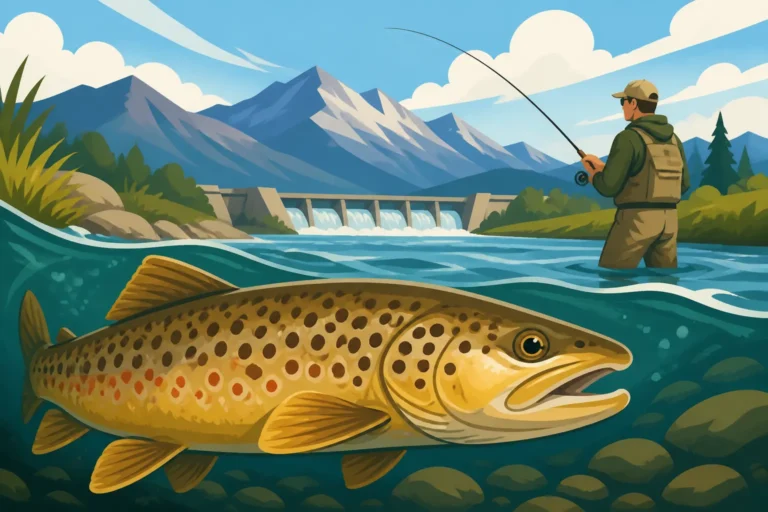
- Coloration: Their bodies typically range from golden brown to olive green on the back, fading to yellowish-brown on the sides and a cream or white belly. This can vary quite a bit depending on their habitat and diet.
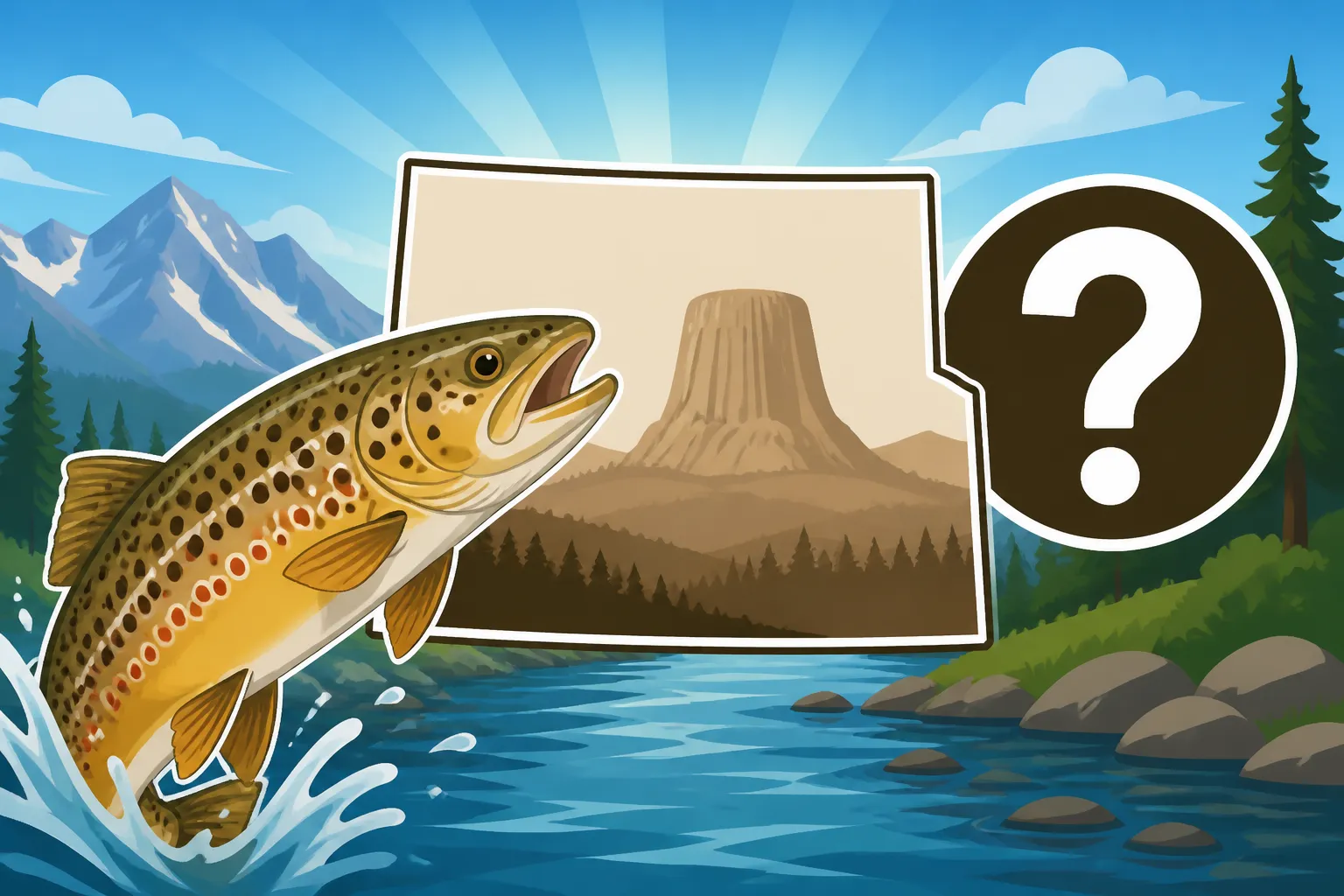
- Spots: They are covered in prominent dark spots, often ringed with a lighter halo (especially the spots on their sides). Crucially, they also have red or orange spots scattered along their sides, which are often bordered by a pale halo. These red spots are a key differentiator.
- Tail: Their tail fin is typically square or slightly emarginate and usually lacks spots or has very few faint ones.
- Mouth/Jaw: Brown trout have a relatively large mouth that extends well past the eye. Their jawline is generally quite robust.
If you're ever unsure, having a good field guide or even a quick image search on your phone can help. There are many excellent, waterproof guides available on Amazon that fit right into a tackle box or vest pocket, making on-the-spot identification easy.
Native Trout Species in Wyoming: The Cutthroat Family
In contrast, Wyoming's native cutthroat trout subspecies have their own distinctive traits:
- Cutthroat Slash: The most defining feature of a cutthroat trout is the characteristic red, orange, or sometimes yellow "slash" mark found in the fold of skin beneath their lower jaw. This is where they get their name!
- Spots: Cutthroat trout generally have smaller, darker, and more numerous spots, particularly concentrated towards the tail. They typically lack the vibrant red/orange spots found on brown trout. The spots are usually black.
- Coloration: Their overall body color can vary from silvery to olive-green or even golden, often with a rosy hue on the sides, but without the strong golden-brown base of a typical brown trout.
- Tail: Their tail fin is usually square.
Understanding these differences is not just academic; it's practical. For example, How Many Trout Over 16 Inches You Can Keep in Wyoming might vary by species or water, so accurate identification is vital for staying within the law and practicing good conservation.
Here's a quick comparison table:
| Feature | Brown Trout (Salmo trutta) | Native Cutthroat Trout (Oncorhynchus clarkii subspecies) |
|---|---|---|
| Origin | Non-native (Europe) | Native to Western North America (including Wyoming) |
| Jaw Slash | Absent | Present (red, orange, or yellow) |
| Body Spots | Dark spots, often with light halos; distinct red/orange spots on sides | Dark spots, often smaller and more numerous, especially on tail; no red/orange spots |
| Tail Spots | Few to none, faint if present | Usually heavily spotted |
| Mouth Size | Generally larger, extending past the eye | Varies by subspecies, but often does not extend past eye |
| General Color | Golden brown to olive, yellow sides | Silvery, olive, or greenish, often with rosy blush |
Being able to differentiate between these species is a fundamental skill for any angler who wants to truly understand and respect the waters they fish in. When you're out there on the water, whether it's the North Platte or a high mountain lake, a quick glance at these features will tell you the story of the fish in your hand.
Conclusion: Appreciating Wyoming's Diverse Fisheries
So, to answer the initial question definitively: no, brown trout are not native to Wyoming. They embarked on a long journey from European rivers to become one of the most popular and challenging game fish in the Cowboy State. Their introduction was a product of a different era's angling philosophy, and while they offer incredible sport, their presence also highlights the ongoing efforts to conserve Wyoming's truly native fish, especially the various cutthroat subspecies.
As anglers, our role is to appreciate the rich diversity of our fisheries, both native and introduced, while always practicing responsible fishing techniques and respecting the regulations designed to protect these precious resources. Whether you're chasing a wild, native cutthroat in a high-alpine stream or battling a massive brown trout on the Miracle Mile, every fish tells a story of Wyoming's unique and vibrant aquatic world. And for those looking to learn more about the complexities of our fish populations, additional resources like Are Brown Trout Native to Wyoming? can provide even deeper insights.
Disclaimer
This article is for general informational purposes only and does not constitute professional advice. Laws, prices and regulations vary by location and change over time. Consult a qualified professional for guidance on your specific situation.