Best Bait for Freshly Stocked Rainbow Trout
There's a special kind of excitement that comes with fishing for freshly stocked rainbow trout in Wyoming's lakes and reservoirs. You know they're there, often in good numbers, but sometimes it feels like they've got an invisible shield up, making them frustratingly hard to tempt. Many anglers find themselves wondering what magic bait will finally get those feisty rainbows to bite. This guide is all about cutting through that confusion, helping you understand the unique behavior of these recently introduced fish and pinpointing the best baits and techniques to ensure you fill your creel, or at least have an incredibly active day on the water.
Understanding Freshly Stocked Rainbow Trout Behavior
When the Wyoming Game and Fish Department stocks a lake or pond, they're not just dropping in wild fish. These are hatchery-raised trout, and their upbringing has a profound impact on how they behave in their new environment. Understanding this transition is key to choosing the right bait and presentation.
Why Stocked Trout Act Differently
Imagine growing up in a comfortable, food-rich environment where meals are consistently provided. That's essentially the life of a hatchery trout. They're fed a specific type of pellet food, often at regular intervals, and they don't have to contend with predators or fight for every morsel. When these fish are introduced into a new lake or river, it's a huge change. They're suddenly in an unfamiliar world, surrounded by natural forage they've never seen, and exposed to dangers they've never encountered. This initial shock means their natural instincts are a bit dulled.
Initially, these trout aren't looking for complex insect patterns or subtle presentations. They're programmed for an easy meal, and often, that means something resembling what they've always eaten. Their initial hunger response is driven by the lack of their accustomed feed, making them less wary than their wild counterparts. This window of opportunity is precisely why certain baits work so incredibly well.
Their Immediate Feeding Frenzy
Upon release, stocked trout often exhibit what can only be described as an immediate, almost desperate, feeding frenzy. They're not just hungry; they're competitive. Having been raised in close quarters with thousands of other fish, they're used to jostling for food. This competition carries over to their new home, and anything resembling food, especially if it's easy to spot and grab, will often trigger a bite. This is when flashy lures or brightly colored dough baits truly shine.
Think of it like a buffet line where everyone is trying to get their fill. They're less concerned about the gourmet qualities of the meal and more about simply getting something. This behavior makes them relatively easy to catch in the first few days or even weeks after stocking. This is the prime time to capitalize on their lack of wariness and strong feeding drive. Knowing How Soon After Stocking You Can Catch Fish can really help you time your trips for maximum success.
How Their Diet Changes Over Time
While they might start off as opportunistic pellet-eaters, stocked rainbow trout are remarkably adaptable. Over time, their instincts kick in, and they begin to recognize and feed on the natural forage available in their new waters. This might include insects, small minnows, leeches, and even crustaceans like scuds. As they acclimate, they become much more like wild trout – warier, more selective, and harder to fool.
This transition means that a bait that was dynamite on day one might be completely ignored a month later. Anglers who consistently catch trout in stocked waters understand this evolution and adjust their tactics accordingly. They might start with the "easy" baits, but then transition to more natural presentations like small worms, tiny jigs, or even flies as the fish become more accustomed to their wild diet. It's a testament to the resilience of these fish, but also a challenge for us anglers to stay on our toes!
The Go-To Baits for Freshly Stocked Trout
When it comes to tempting freshly stocked rainbow trout, you really don't need to overthink it. Their hatchery upbringing gives us a few distinct advantages, making certain baits almost foolproof.
PowerBait and Dough Baits
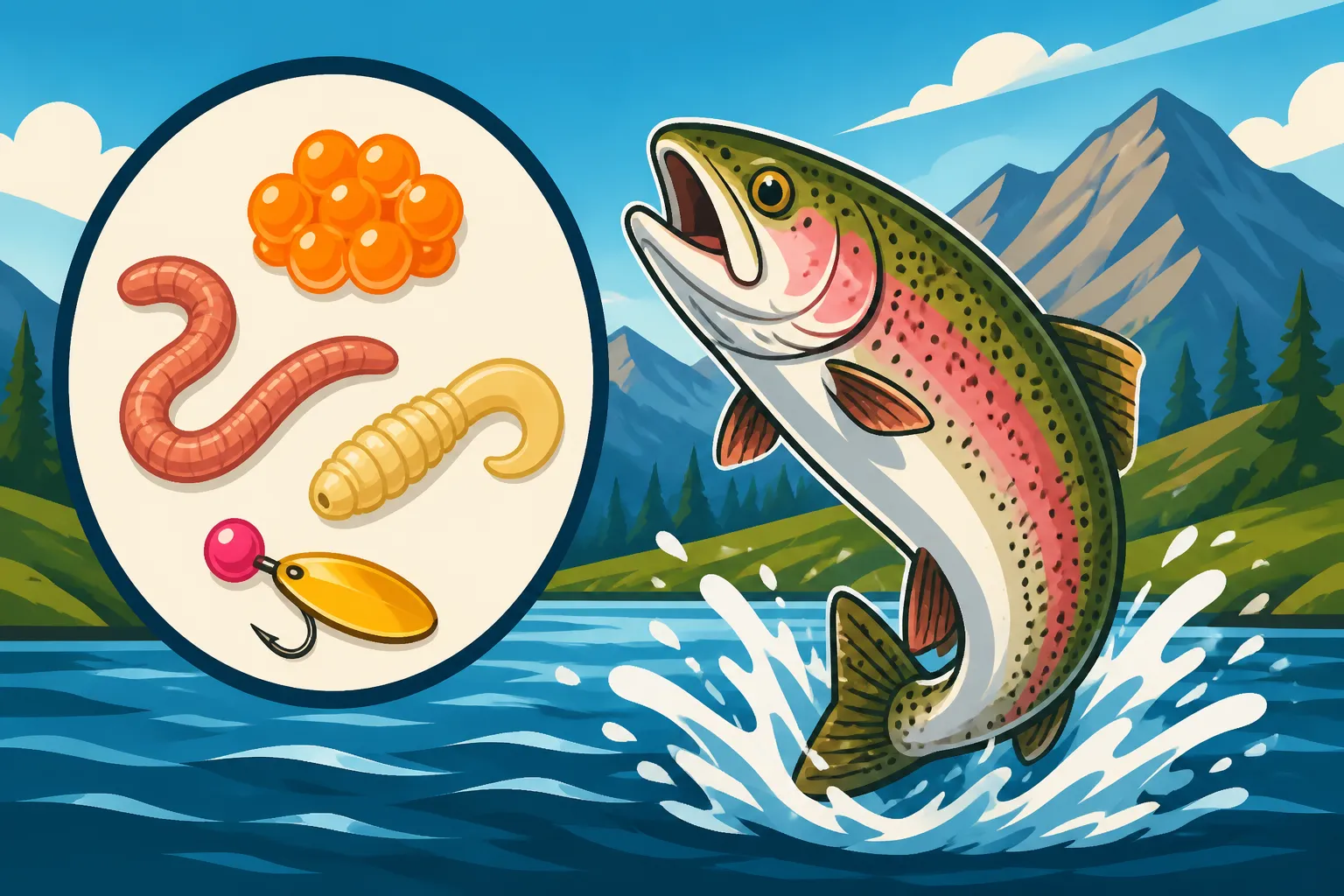
If there's one bait that's synonymous with catching stocked rainbow trout, it's PowerBait or other similar dough baits. These specially formulated baits are designed to float, often infused with scents that mimic their hatchery feed, and come in an incredible array of vibrant colors. The floating action is crucial because stocked trout often cruise just off the bottom or suspend in the water column. When rigged properly, PowerBait lifts off the bottom, putting it right in their strike zone.
You'll find these baits in various forms, from moldable dough to pre-formed nuggets. Experiment with colors like fluorescent orange, chartreuse, rainbow, or even a simple white. Sometimes, a subtle change in hue can make all the difference. To rig it, simply pinch off a piece, roll it into a pea-sized ball, and cover your hook completely. Using a small treble hook or a single baited hook with a small split shot about 12-18 inches above it will keep your bait floating perfectly. Many anglers swear by these for their consistent results, and you can usually find a wide variety of colors and scents readily available on Amazon or at any local tackle shop.
Worms and Live Bait
Before PowerBait came along, worms were and still are, a classic and incredibly effective bait for trout. The natural scent, wiggling action, and realistic feel of a live worm are hard for any fish to resist, including newly stocked rainbows. They might not have encountered a real worm in their hatchery lives, but the instinct to strike something alive and edible is strong.
Small garden worms or pieces of nightcrawlers work wonders. You don't always need a whole nightcrawler; a section about an inch or two long threaded onto a small hook (size 8 or 10) is often perfect. You can present worms under a bobber, letting them drift naturally, or fish them on the bottom with a small weight. The key is to keep the presentation as natural as possible. A lightly weighted worm allows it to sink slowly and enticingly, mimicking a natural food item. For kids, nothing beats the excitement of seeing a bobber go down with a worm on the end – it's a fantastic way to introduce them to the joy of fishing, especially on Best Kids' Fishing Ponds in Wyoming.
Small Spinners and Spoons
While scent-based baits and worms excel when trout are actively foraging, sometimes a bit of flash and vibration is what it takes to trigger a strike, especially if the fish are a bit spread out or if the water has some color to it. Small inline spinners and spoons are fantastic for this. Their rotating blades or wobbling action create both visual attraction and vibrations that trout can detect from a distance.
Lures like a classic Mepps Aglia or a Panther Martin spinner in sizes #0 to #2 are often very productive. Colors like silver, gold, or even those with a touch of chartreuse or orange can be incredibly effective. For spoons, a small Kastmaster or a Little Cleo in silver or gold, typically in 1/8 to 1/4 ounce sizes, can mimic a fleeing baitfish. The key is to retrieve them slowly enough that the lure maintains its action without spinning uncontrollably. These aren't just for fly fishing either; Spin Fishing Techniques for Beginners can be mastered quickly with these types of lures. A few of these tucked into your tackle box, maybe picked up from Amazon before your trip, will give you a versatile option for those actively feeding trout.
Presenting Your Bait for Maximum Success
Having the right bait is only half the battle; how you present it to those freshly stocked rainbow trout makes all the difference. These fish, while less wary than wild trout, still respond best to presentations that feel natural and accessible.
The Importance of Light Line and Small Hooks
One of the biggest mistakes anglers make when targeting stocked trout is using line that's too heavy or hooks that are too large. While these fish are often aggressive, they can still be put off by tackle that looks unnatural. Freshly stocked rainbows are often smaller, generally in the 10-14 inch range, so delicate tackle is not just preferred, it's often essential.
Opt for monofilament or fluorocarbon line in the 2 to 4-pound test range. This lighter line is much less visible in the water, and its suppleness allows your bait to move more freely and naturally. Paired with this light line should be small hooks – think size 8, 10, or even 12. These smaller hooks are easier to conceal within your bait (like a PowerBait ball or a small worm), and they fit perfectly into the mouths of smaller trout. Using a small, sharp hook also increases your hook-up ratio, ensuring that when a trout bites, you're more likely to land it. This subtle approach can be the game-changer on a tough day.
Still Fishing vs. Slow Retrieve
There are two primary ways to present bait to freshly stocked trout: still fishing and a slow retrieve. Both have their merits depending on the situation and the trout's mood.
Still fishing is often the most productive method, especially when trout are grouped up or cruising in a specific area. This involves casting your bait out and letting it sit, usually with a weight to get it to the bottom (for PowerBait, use a floating setup, so the bait floats off the bottom). If using a bobber, the bobber keeps your bait suspended at a desired depth. The key here is patience. Watch your line or bobber for any subtle movement. Often, stocked trout will nibble at the bait before fully committing. This method is excellent for covering a specific zone where you know fish are present, perhaps in a recently stocked pond or a calm cove in a reservoir.
A slow retrieve, particularly with spinners or spoons, can be effective when you're trying to locate scattered fish or entice a reaction strike. Cast your lure out and reel it in slowly and steadily, allowing the lure's action to do the work. Vary your retrieve speed slightly, or add a subtle twitch of your rod tip, to give the lure a more erratic, injured-baitfish look. This can often trigger a follow and strike from a curious trout. Sometimes, even with PowerBait or a worm, a very slow, almost imperceptible retrieve can cover more water and help you find where the fish are holding.
Reading the Water for Stocked Trout
Understanding where freshly stocked trout are likely to hang out is crucial. They won't always spread out immediately, often preferring to stick together in familiar groups. Look for areas with deeper water access, as this provides them with a sense of security and often cooler temperatures, which trout prefer. In ponds and smaller lakes, they might congregate near the stocking point for the first few days, before dispersing.
Also, pay attention to any subtle structure. Drop-offs, submerged brush, or even the shadows cast by trees along the bank can offer a holding spot for these fish. They also tend to stick to the edges of the water column, especially in the upper layers if the water is cool and oxygenated. If you see other anglers catching fish in a particular spot, it's a good indicator that fish are present there. Knowing How to Find Recently Stocked Wyoming Waters can greatly enhance your chances of finding these hot spots. Don't be afraid to move around until you find where they are actively feeding.
Beyond the Basics: Adapting Your Approach
While the tried-and-true baits often work wonders, being prepared to adapt your strategy can turn a slow day into a successful one, especially as stocked trout get a bit more settled.
When to Switch Baits
One of the biggest lessons in fishing is knowing when to change tactics. If you've been casting the same PowerBait color for 30 minutes with no bites, it's time to switch. This could mean changing to a different color of PowerBait, trying a worm, or moving to a small spinner. Sometimes, a subtle change in scent or a different visual appeal is all it takes to get those fish interested again.
Conditions like sunlight, water clarity, and even pressure from other anglers can influence what bait works best. On bright, sunny days, sometimes more natural colors or subtler presentations are effective, while on overcast days, brighter colors can grab attention. Don't be afraid to experiment! Carry a variety of baits and lures with you so you have options. Having a small tackle box filled with options, easily replenished from stores or Amazon, is key. Even if your go-to bait worked yesterday, today might call for something completely different.
The Role of Scent Attractants
Scent plays a huge role in a fish's world, and for stocked trout, it can be an extra edge. Many commercial baits already come scented, but you can further enhance their appeal with liquid or gel scent attractants. These can be applied to worms, lures, or even unscented dough baits.
Scents like garlic, anisse, or those designed to mimic hatchery food pellets can draw trout in and encourage them to hold onto the bait longer, giving you more time to set the hook. Even adding a dab of scent to a spinner can sometimes make the difference between a follow and a strike. It's an easy and inexpensive way to boost the attractiveness of your offering, especially in slightly turbid water where visual cues might be reduced.
Catch-and-Release Considerations
While many anglers target freshly stocked trout for a tasty meal, some prefer catch-and-release, especially if they're practicing or simply enjoying the sport. If you plan to release your catch, it's important to do so responsibly to ensure the fish's survival. Freshly stocked trout are already under stress from their relocation, so careful handling is paramount.
Use barbless hooks, or pinch down the barbs on your hooks with pliers. This makes removal much easier and causes less damage to the fish's mouth. Wet your hands before handling the fish to protect its protective slime coat. Try to keep the fish in the water as much as possible, removing the hook quickly and gently. If the fish is bleeding or deeply hooked, it's often best to keep it, as its chances of survival are significantly reduced. Understanding Catch-and-Release Best Practices for Trout ensures that you're doing your part to keep Wyoming's fisheries healthy.
Here's a quick look at some common baits and their ideal scenarios for stocked rainbow trout:
| Bait Type | Best Use | Pros | Cons |
|---|---|---|---|
| PowerBait / Dough Bait | Still fishing, clear to murky water, any depth | Floats off bottom, strong scent, vibrant colors | Can be messy, sometimes requires specific rigging |
| Worms (Nightcrawlers) | Still fishing, natural presentation, all conditions | Natural scent/action, universally appealing | Can be fragile, sometimes less visible in murky water |
| Small Spinners | Active retrieve, searching for fish, clear water | Flash & vibration, triggers reaction strikes | Requires movement, can spook wary fish if retrieved too fast |
| Small Spoons | Active retrieve, deeper water, mimicking baitfish | Strong flash, cast long distances | Can be less effective if fish are not actively chasing |
| Corn | Still fishing, easy bait, light pressure | Cheap, easy to use, familiar hatchery scent (sometimes) | Less durable, less natural action, often less effective than other options |
Disclaimer
This article is for general informational purposes only and does not constitute professional advice. Laws, prices and regulations vary by location and change over time. Consult a qualified professional for guidance on your specific situation.