How Long It Takes to Learn Fly Casting on a Guided Trip
The dream of fly fishing in Wyoming – casting a line gracefully across a pristine river, watching a trout rise to your perfectly presented fly – is something many of us cherish. But if you're new to the sport, that elegant cast can feel incredibly daunting. You might wonder, "How long will it actually take me to get the hang of this?" This guide will break down the learning process, what to expect on a guided trip, and how quickly you can develop a functional fly cast on Wyoming's beautiful, yet sometimes challenging, waters.
How Fly Casting Feels to a Beginner on Wyoming Waters
Stepping onto the bank of a Wyoming river, fly rod in hand for the first time, can be a mixture of excitement and utter bewilderment. That smooth, rhythmic motion you've seen in videos often feels impossible when you first try it yourself. It's perfectly normal to feel a bit clumsy; everyone starts there. A guided trip is specifically designed to help you navigate this initial learning curve.
The Initial Awkwardness and the "Aha!" Moment
Your very first attempts at fly casting will likely involve a lot of wrist flicking, perhaps whipping the line behind you into the grass, or having it plop unceremoniously in front of you. This is the "awkward phase," and every single fly angler has been through it. Your guide will start you off with the basics, often even on dry land, focusing on the core mechanics of loading the rod and releasing the line. They'll emphasize using your arm and shoulder, not just your wrist, much like painting a broad stroke or casting a ball. They'll also introduce the concept of the "stop" – the precise moment at the back and front of your cast where the rod stops to propel the line.
The "aha!" moment often comes when you finally feel the line "load" the rod, creating that spring-like tension that sends the line flying. It might be a short cast at first, maybe only 15 or 20 feet, but it feels like magic. Your guide will be right there, watching your every move, offering small, immediate adjustments. They might say, "Slow down that back cast," or "Stop your hand higher on the forward cast." These micro-corrections are invaluable and are a huge advantage of learning with a pro. You won't be left guessing what you're doing wrong.
Breaking Down the Overhead Cast: The Foundational Skill
The overhead cast is the bedrock of fly casting, and it’s where most guided lessons begin. It involves bringing the rod back over your shoulder, allowing the line to extend behind you, then bringing it forward to propel the line toward your target. Sounds simple, right? In practice, it's about timing, acceleration, and a crisp stop. Your guide will often compare the motion to a clock face, perhaps telling you to stop the rod at 1 o'clock on the forward cast and 11 o'clock on the back cast. This visual cue can be incredibly helpful for beginners.
You'll practice this motion repeatedly, first without any line, then with just a leader, and finally with the full fly line. The guide will help you understand the power stroke – that brief, accelerating push that loads the rod – and the importance of a smooth, straight line path. On many Wyoming rivers, like parts of the North Platte River Fishing Guide, a consistent overhead cast is essential for presenting flies to wary trout in open water. It’s not about brute force; it’s about finesse and rhythm. Expect your guide to demonstrate, explain, and then have you try it, providing continuous feedback.
Beyond the Overhead: Roll Casts and Basic Presentation
Once you start getting a feel for the overhead cast, your guide will likely introduce other essential casts, especially the roll cast. The roll cast is a lifesaver on many Wyoming streams where brush, trees, or high banks prevent a full back cast. Instead of sending the line behind you, the roll cast uses the water surface to load the rod, "rolling" the line out in front. This cast is particularly useful for fishing small pockets, under overhanging branches, or when you need to quickly pick up your line and recast.
Your guide will demonstrate how to perform a roll cast, emphasizing a smooth, arcing motion that keeps the line on the water until the very last moment. Mastering this cast can dramatically expand your fishing opportunities, allowing you to access spots that would be impossible with an overhead cast. You'll also start to learn about presentation – not just getting the fly out there, but getting it out there softly and accurately. This means learning to "lay out" the line gently, avoiding a splashy entry that could spook fish. A guided trip, whether it's a Snake River Full-Day Float Trip Cost or a wade trip, provides the perfect environment for this hands-on learning, with the guide constantly adjusting your approach based on the specific water you're fishing.
What Truly Impacts Your Casting Learning Curve
While everyone learns at their own pace, several factors can significantly influence how quickly you pick up fly casting during a guided trip. It's not just about the hours you put in; it's about your personal attributes, the quality of instruction, and even the natural environment you're learning in.
Your Athleticism, Prior Experience, and Patience
Let's be real: some people just have a knack for picking up new physical skills. If you have a background in sports that involve rhythmic movements, hand-eye coordination, or using a "tool" as an extension of your arm – think golf, tennis, or even throwing a frisbee – you might find fly casting comes a bit more naturally. Your muscle memory for smooth, powerful acceleration and crisp stops could give you a head start. Conversely, if you're not particularly athletically inclined, it might take a bit longer for those movements to feel natural.
However, prior experience isn't just about athletics. Have you done any other forms of fishing? Even spin fishing can give you a basic understanding of how to cast and retrieve line, though fly casting is a distinct skill. Most importantly, your patience and willingness to try, fail, and try again are paramount. Fly casting can be frustrating at first, and those who embrace the learning process, rather than getting discouraged by every miscast, will progress much faster. A good guide, which you can often find reviews for on platforms like FishingBooker, understands this and will tailor their teaching to your individual learning style and pace. They know that every angler, regardless of their background, can learn to cast effectively with the right guidance.
The Guide's Expertise and Teaching Philosophy
This is perhaps the most crucial factor on a guided trip. A fantastic fishing guide isn't just someone who knows where the fish are; they're also an excellent teacher. They should be able to break down complex movements into simple, understandable steps, diagnose your specific casting issues quickly, and offer constructive, encouraging feedback. When you're Hiring a Fishing Guide in Wyoming, look for someone with a reputation for being patient and good with beginners. Some guides specialize in teaching, while others focus more on putting experienced anglers on fish.
A truly skilled instructor will have a "bag of tricks" – different analogies, drills, and teaching methods to help you grasp the concepts. They won't just tell you what to do; they'll show you, explain why it works, and help you feel the correct motion. They'll identify if you're overpowering the cast, stopping too late, or not generating enough line speed. Their patience and ability to adapt their instruction to your individual needs will make a world of difference. When researching Best Guides for Teaching Beginners to Fly Fish, pay attention to reviews that specifically mention the guide's teaching abilities, not just their fishing success. Remember, even if you book a Guided Fly Fishing Trips in Jackson Hole, Wyoming, the quality of the individual guide can vary.
Wyoming's Variable Conditions: Wind, Water, and Obstacles
Wyoming is stunning, but it's also a place of wild, unpredictable weather. Wind, in particular, can be a major challenge for new fly casters. A gusty day on the Miracle Mile Stretch of Wyoming's North Platte River can make even a short cast feel like an impossible task. Your guide will teach you techniques to cast into and with the wind, such as using a tighter loop or a more assertive power stroke, but persistent wind will naturally slow down your learning progression compared to a calm day.
Beyond wind, the water itself presents challenges. Fishing a small, brushy mountain stream demands different casting skills than a wide-open tailwater. Overhanging trees, tricky currents, and deep pockets all require specific approaches. Your guide will help you adapt, teaching you how to mend your line to control drift or how to perform roll casts when an overhead cast is impossible. While these conditions can add complexity, they also provide invaluable real-world practice that a casting lesson on a lawn simply can't replicate. Learning in these dynamic environments with immediate feedback from your guide will accelerate your ability to fish effectively in varied situations.
Realistic Expectations: What You Can Master on a Guided Trip
So, after considering all these factors, what can you realistically expect to learn about fly casting on a guided trip in Wyoming? It’s important to set achievable goals and understand that "mastery" is a lifelong pursuit, but "functional competence" is definitely within reach.
From Flailing to Functional: One Day's Progress
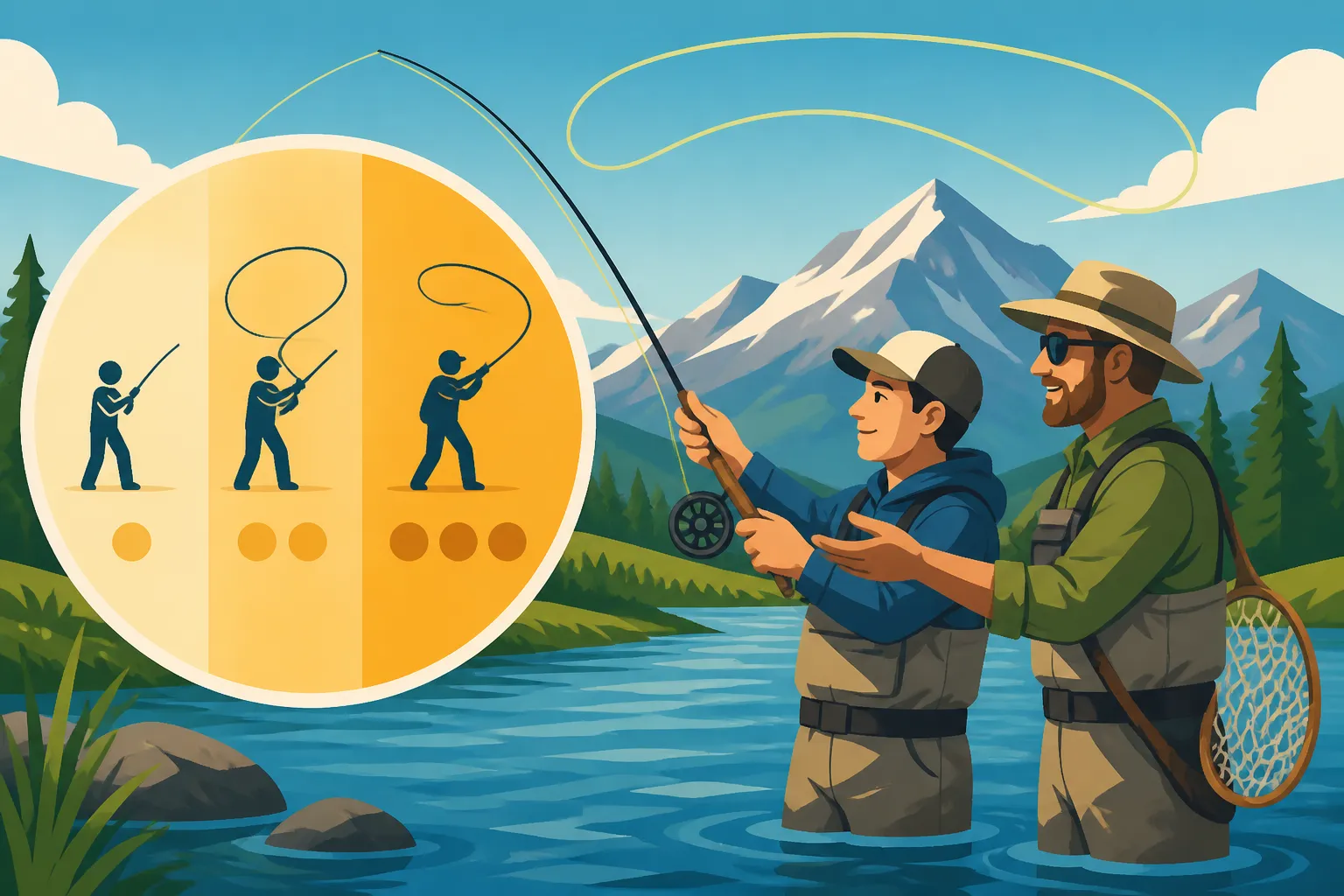
For most absolute beginners, a single full-day guided trip is usually enough to develop a "functional" fly cast. What does that mean? It means you'll be able to:
- Consistently cast 20-30 feet with reasonable accuracy.
- Perform a basic overhead cast and a simple roll cast.
- Understand the fundamental mechanics of loading the rod, the power stroke, and the stops.
- Get your fly on the water without excessive splashing or tangling.
- Mend your line to get a decent drift.
You won't be effortlessly throwing long, tight loops like a seasoned pro, but you will be able to effectively present a fly to fish in many situations. Your guide will focus on getting you to a point where you can actually participate in the fishing, rather than just practicing casting. They'll show you how to read the water, identify likely holding spots, and most importantly, how to hook and land a fish. For many, catching their first fish on a fly rod is the ultimate "lesson learned" moment. If your main goal is to simply get comfortable enough to fish independently, one full day or even two half-days with a dedicated guide focusing on instruction can get you there. When considering Do Guides Offer Fly Casting Lessons?, remember that most reputable guides will integrate teaching into any trip, especially for beginners.
The Benefits of Extended Instruction: Half-Day vs. Full-Day vs. Multi-Day
The amount of time you dedicate to instruction directly correlates with how refined your casting will become. Here’s a general idea of what you can expect from different durations:
| Trip Duration | Primary Casting Focus | Typical Achievable Skill Level for Beginners |
|---|---|---|
| Half-Day (4 hours) | Fundamentals: Basic overhead cast, grip, timing. | Consistent 15-20ft casts, understanding basic retrieve. May land a fish or two. |
| Full-Day (8 hours) | Refinement: Overhead and roll casts, accuracy, mending, line control, handling wind. | Consistent 20-30ft casts, ability to fish effectively in varied scenarios, landing multiple fish. |
| Multi-Day (2+ days) | Advanced: Double haul, curve casts, specific presentations, adapting to complex situations, troubleshooting. | Developing smooth, efficient casting, tackling diverse water types, improving distance and accuracy significantly. |
A half-day trip is excellent for an introduction to the basics. It lets you get a feel for the rod and line, and often, you'll land a fish or two, which is incredibly motivating. However, the time is limited, so deep dives into technique or advanced casts aren't usually possible.
A full-day trip is where most beginners see the most significant progress. The extended time allows for thorough foundational instruction in the morning, followed by applying those skills to actual fishing scenarios in the afternoon. The guide can continually watch your casting, correct mistakes, and introduce concepts like line management and basic mending. You'll likely leave with a solid, functional cast and a much clearer understanding of the sport.
For those truly serious about accelerating their learning and delving into more advanced techniques, a multi-day trip is ideal. This allows for repeated practice, reinforcement of good habits, and the introduction of more complex casts like the double haul, which dramatically increases casting distance. Over several days, you and your guide can identify your specific challenges and work on them in different environments, from large rivers to smaller streams. Platforms like FishingBooker can help you find guides offering multi-day packages or even customized Multi-Day Guided Fishing Trips in Wyoming.
Continuing Your Journey: Practice Beyond the Guide
Even after a fantastic guided trip, the journey of improving your fly casting is ongoing. Think of your guided trip as an intensive jumpstart. Your guide has given you the tools and shown you the path, but consistent practice at home will solidify those skills.
Many anglers practice in their backyard or a local park, focusing on smooth loops and accuracy at various distances. Setting up targets (like a hula hoop or a bucket) can make practice more engaging. It’s also crucial to remember the advice your guide gave you. Did they emphasize slowing down, or stopping higher? Keep those mental notes at the forefront of your practice sessions. Remember that Fly Fishing Techniques for Wyoming Trout Streams often involve specific casts and presentations, so practicing these will only enhance your future trips. The more you cast, the more those motions become second nature, allowing you to focus less on the mechanics and more on the magic of fishing itself.
Disclaimer
This article is for general informational purposes only and does not constitute professional advice. Laws, prices and regulations vary by location and change over time. Consult a qualified professional for guidance on your specific situation.