Brown Trout Fishing in Wyoming
There's nothing quite like the thrill of chasing a wild brown trout in Wyoming's pristine waters, but many anglers find themselves scratching their heads when it comes to consistently hooking these elusive, intelligent fish. They can be incredibly finicky, especially the larger ones, leaving even experienced fishers feeling frustrated. This comprehensive guide will dive deep into everything you need to know to successfully target and land brown trout, from understanding their behavior to mastering the right techniques and gear for Wyoming's diverse fisheries.
Understanding the Wyoming Brown Trout
Brown trout ( Salmo trutta ) are not native to Wyoming, but they've become an iconic and highly sought-after species across the state, revered for their challenging fight and often impressive size. They were introduced from Europe in the late 19th and early 20th centuries and have since established robust, self-sustaining populations in many of Wyoming's rivers and reservoirs. Unlike some other trout species, brown trout are known for their predatory nature and their ability to grow to truly massive sizes, making them a prime target for trophy hunters.
Identifying Brown Trout and Their Behavior
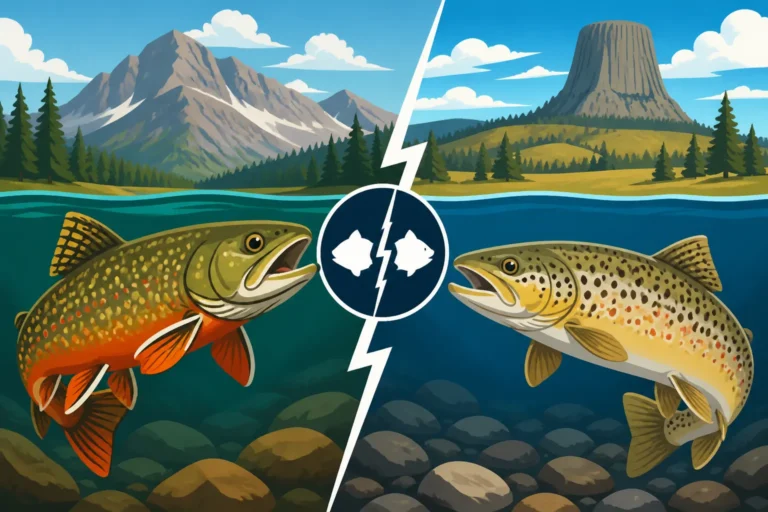
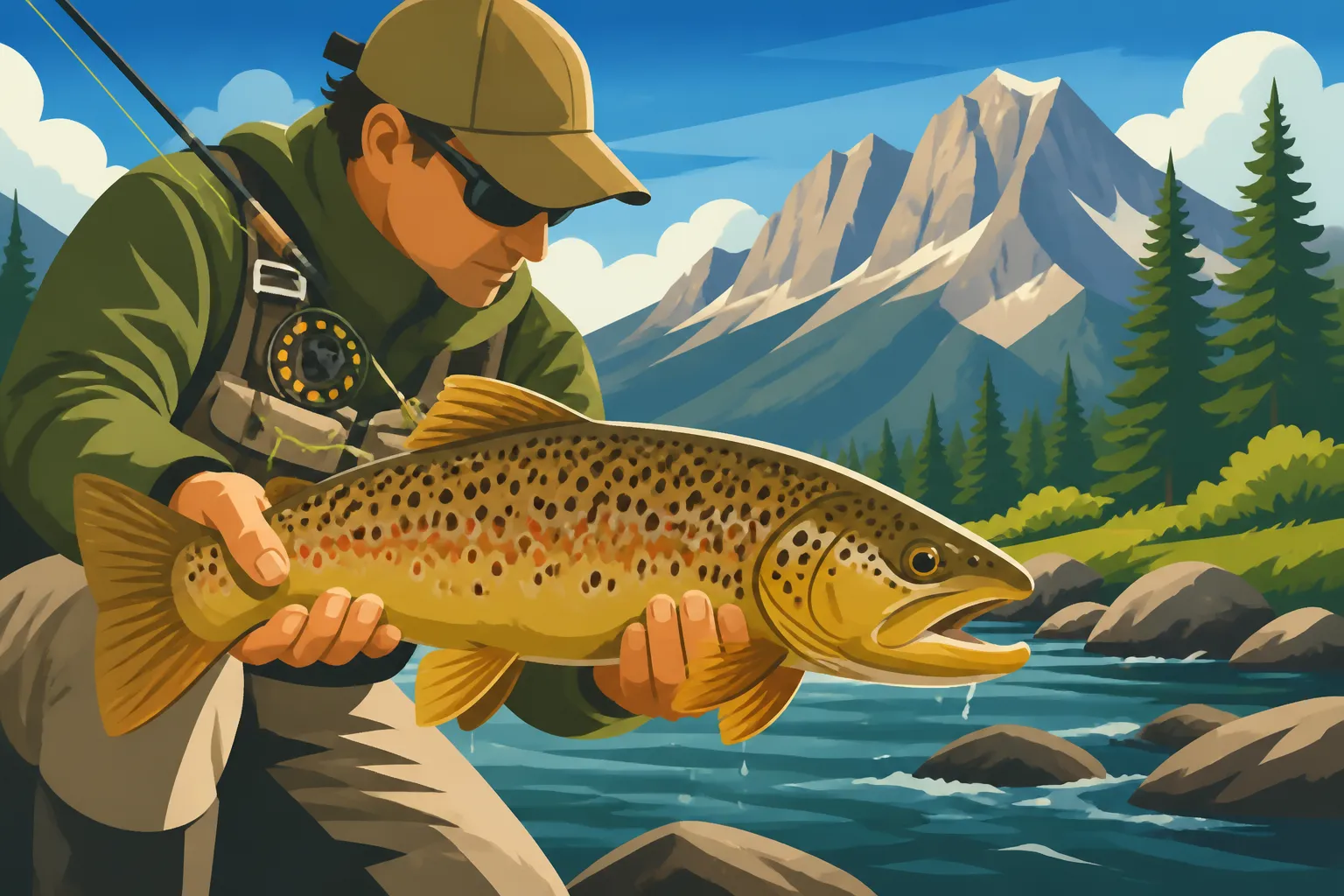
Telling a brown trout apart from other species in Wyoming is usually quite straightforward, though it can get a little tricky with hybrids like cutbows. Brown trout typically have a golden-brown to olive-green back, fading to silvery or yellowish flanks and a creamy belly. Their most distinguishing feature is the presence of dark spots, often ringed with a lighter halo, scattered across their body, head, and dorsal fin. Some of these spots might even be reddish-orange, particularly on larger, older fish. The adipose fin (the small fleshy fin near the tail) is usually unmarked. Their square or slightly forked tail is another good indicator. These fish are incredibly adaptable and can thrive in a wide range of water conditions, from cold, clear mountain streams to warmer, turbid reservoir environments. They are also notoriously wary, possessing an acute sense of their surroundings, which makes them a formidable adversary for any angler. Understanding How Big Brown Trout Get in Wyoming can really motivate you to pursue these impressive fish.
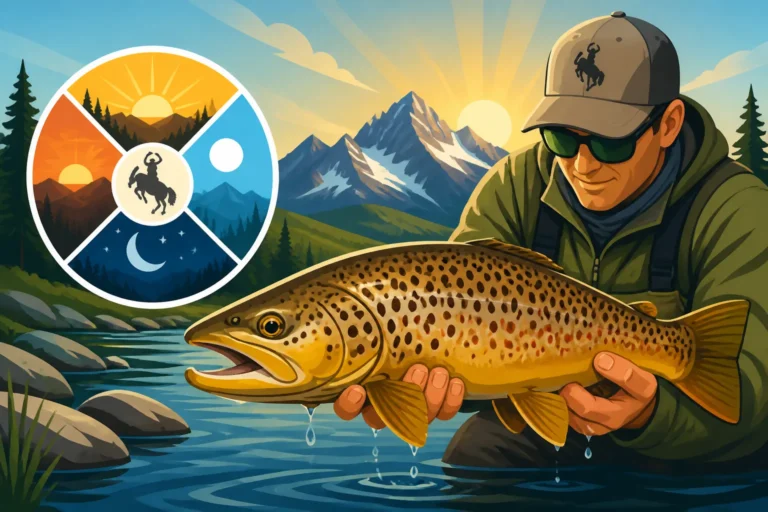
Brown trout are opportunistic feeders, meaning they'll eat just about anything that presents itself, but their diet shifts as they grow. Younger browns might focus on aquatic insects like mayflies, caddis, and stoneflies, along with terrestrial insects that fall into the water. As they mature, their diet often transitions to include larger prey such as sculpins, dace, minnows, crayfish, and even smaller trout or rodents. This predatory instinct is what allows them to achieve such impressive sizes. They tend to be most active at dawn, dusk, and even into the night, particularly during warmer months, when they feel safer from predators and are more likely to ambush prey. Their territorial nature, especially among larger individuals, also plays a significant role in where and how you might find them.
Why Brown Trout Thrive in Wyoming
Wyoming offers a perfect storm of conditions that allow brown trout to flourish, creating some of the best brown trout fisheries in the Lower 48. The state boasts an abundance of cold, oxygen-rich rivers and streams, many of which are fed by snowmelt from the towering mountain ranges. These waters provide ideal spawning habitat with gravel bottoms and consistent flows, as well as plenty of holding water in the form of deep pools, undercut banks, and complex riparian vegetation. Furthermore, many of Wyoming's reservoirs offer vast expanses of deep, cool water with abundant forage, allowing brown trout to grow exceptionally large.
The rich insect life in Wyoming's rivers and the prevalence of baitfish in its reservoirs provide a robust food source for brown trout at all stages of their life cycle. Coupled with thoughtful management by the Wyoming Game and Fish Department, which includes maintaining healthy habitat and sensible regulations, brown trout populations remain strong and vibrant. Anglers who respect these regulations and practice good catch-and-release techniques contribute directly to the continued health of these fisheries. It’s also important to remember that Are Brown Trout Native to Wyoming? is a common question, but their success here is a testament to the quality of the habitat.
Prime Locations for Wyoming Brown Trout
Wyoming is a brown trout angler's paradise, with countless rivers, streams, and reservoirs offering incredible opportunities. While browns can be found in almost any coldwater fishery, some locations are particularly renowned for their healthy populations and the potential for trophy-sized fish. Knowing where to focus your efforts is half the battle when targeting these wily creatures.
Famous Rivers and Tailwaters
When you talk about brown trout in Wyoming, certain rivers immediately come to mind. The North Platte River, particularly the stretches below Gray Reef Dam and Pathfinder Reservoir known as the "Miracle Mile," is legendary. These tailwater fisheries offer consistent flows and stable water temperatures, creating an incredibly rich environment for aquatic insects and baitfish, which in turn leads to robust trout growth. Anglers here regularly encounter brown trout in the 18-24 inch range, with much larger fish always a possibility. Wyoming's North Platte River Fishing Guide is an essential read if you plan on visiting this iconic fishery. The river's complexity, with its deep runs, riffles, and wide-open stretches, demands a variety of techniques, but the rewards are well worth the effort.
Beyond the North Platte, the Green River below Flaming Gorge Dam is another world-class brown trout destination. This cold, clear tailwater provides optimal habitat and an abundance of food, allowing browns to reach impressive sizes. The Snake River, particularly its lower reaches, also holds a healthy population of browns, though it's often more celebrated for its native cutthroat. Other rivers like the Bighorn and the Shoshone also offer fantastic brown trout opportunities, often in more secluded, less-pressured environments. These river systems are characterized by their diverse structures, from fast-moving pocket water to slow, meandering stretches with undercut banks and fallen timber, all of which are prime brown trout lies.
Productive Reservoirs and Lakes
While rivers get a lot of attention, Wyoming's reservoirs are often where truly monstrous brown trout lurk. These vast bodies of water provide deep, cold refuge and an endless buffet of baitfish like kokanee salmon, suckers, and perch, allowing brown trout to grow to truly astonishing dimensions. Flaming Gorge Reservoir, straddling the Wyoming-Utah border, is famous for its massive lake trout, but it also boasts a fantastic brown trout population. Anglers often target browns here by trolling large streamer patterns or stickbaits in the cooler months, or by targeting specific submerged structures.
Another excellent reservoir for brown trout is Fontenelle Reservoir on the Green River. While perhaps less well-known than Flaming Gorge, it consistently produces large brown trout, particularly in the fall during their spawning movements. Smaller, high-country lakes, especially those in the Wind River Range, can also harbor surprising populations of wild brown trout, though these often require a significant hike to access. Fishing these lakes often means finding robust, wild fish that rarely see artificial flies or lures. Remember, the key to reservoir browns is often covering a lot of water and understanding their forage base and seasonal movements.
Seasonal Strategies for Brown Trout
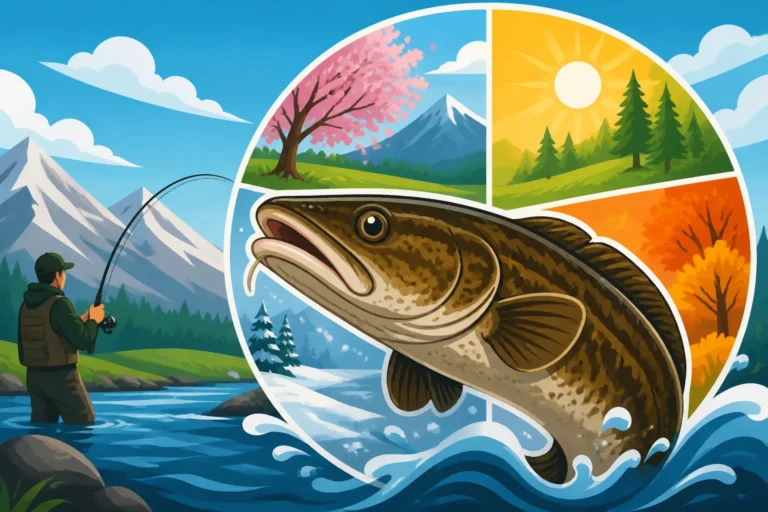
Brown trout behavior changes dramatically with the seasons, driven by water temperature, food availability, and their spawning cycle. Understanding these seasonal shifts is crucial for consistent success. What works in the spring might be completely ineffective in the fall, so adapting your approach is key to staying on top of the brown trout bite.
Spring and Summer Approaches
As winter ice melts and water temperatures begin to rise in the spring, brown trout become more active and hungry after a period of slower metabolism. Early spring often sees them concentrated in slower, deeper pools, eagerly consuming nymphs and emerging insects. As the snowmelt subsides and rivers clear, aquatic insect hatches become more prolific, leading to fantastic dry fly fishing opportunities. Mayfly, caddis, and stonefly hatches can bring browns to the surface, offering exciting visual strikes. During this time, covering water with attractor patterns, streamer fishing, or drifting nymphs through prime holding water can be highly effective.
Summer presents its own set of challenges and opportunities. While morning and evening fishing can be superb with continued insect hatches and active feeding, midday heat can push browns into deeper, cooler water or into heavily shaded, oxygenated areas like riffles and undercut banks. During the hottest parts of summer, night fishing can be incredibly productive for larger brown trout, as they feel more secure under the cover of darkness and actively hunt baitfish. Streamers and mice patterns fished at night can entice aggressive takes from even the most cautious browns. It's also a great time to explore higher elevation streams and lakes, which remain cooler throughout the summer.
Fall and Winter Tactics
Fall is arguably the most exciting time to target brown trout in Wyoming, especially if you're chasing a true trophy. As water temperatures drop and the days shorten, brown trout begin their pre-spawn feeding frenzy, bulking up on protein to prepare for reproduction. This is when they become incredibly aggressive, readily chasing large streamer patterns that imitate baitfish or other trout. Many browns will migrate upstream from larger rivers or reservoirs into their spawning tributaries. This phenomenon is why Wyoming Fall Fishing for Migrating Browns is so popular. Anglers focusing on these pre-spawn fish can experience some of the most intense action of the year.
| Season | Typical Water Temp (F) | Primary Food Source | Recommended Techniques | Best Time of Day |
|---|---|---|---|---|
| Spring | 40-55 | Nymphs, emerging insects, baitfish | Nymphing, Streamers, Dry Flies (hatches) | Mid-morning, late afternoon |
| Summer | 55-68 | Terrestrials, caddis, baitfish | Dry Flies (early/late), Nymphing, Night Streamers | Early morning, late evening/night |
| Fall | 45-55 | Baitfish, large insects | Streamers, Nymphing, Egg Patterns (spawn) | All day, especially midday |
| Winter | 32-40 | Nymphs, small baitfish | Deep Nymphing, Small Streamers, Indicator Fishing | Warmest part of day (midday) |
Winter fishing for brown trout can be surprisingly good, especially on tailwater fisheries that remain ice-free. While the fish are less active, they still need to feed, often concentrating in deeper, slower pools. Deep nymphing with heavy tungsten patterns, indicator fishing with midge and small nymph imitations, or slowly stripping small streamers can be very effective. Ice fishing on certain reservoirs can also yield brown trout, though it requires specific techniques and gear. Patience is a virtue in winter, but the reward can be a beautiful, vibrant brown trout against a snowy backdrop. Understanding the nuances of Best Time of Year to Fish the North Platte River often revolves around these seasonal changes.
Effective Techniques for Catching Brown Trout
Successfully catching brown trout often comes down to matching your technique to the conditions, the specific water you're fishing, and the fish's mood. These fish are smart, and their predatory nature means they respond well to various presentations. Having a diverse toolkit of techniques will dramatically increase your odds, especially when targeting trophy browns.
Fly Fishing Strategies
Fly fishing is arguably the most popular and often most effective method for brown trout in Wyoming's rivers and streams.
- Nymphing: This technique involves drifting artificial insect larvae (nymphs) along the river bottom, imitating the vast majority of a trout's diet. It's incredibly versatile and effective year-round, especially in tailwaters. Using a strike indicator to detect subtle bites and a variety of weighted nymphs, often fished in a multi-fly rig, allows you to target trout holding in different water columns. Understanding Nymphing Techniques for Wyoming Tailwaters can unlock a lot of success. Focus on seams, current breaks, and the heads and tails of pools where trout expend less energy to feed.
- Streamer Fishing: Few techniques are as exciting for brown trout as streamer fishing. This involves stripping or swinging larger flies that imitate baitfish, leeches, or other larger prey. Brown trout, especially big ones, are aggressive predators and will often chase down and violently strike a streamer. Articulated streamers, weighted flies like Sculpin patterns, and flashy options can be deadly. Vary your retrieve speed and depth, and don't be afraid to cast into tight cover or across fast currents. Streamer Fishing for Wyoming Brown Trout is a specialty technique that can lead to truly memorable catches.
- Dry Fly Fishing: While brown trout can be notoriously selective on dry flies, when a strong hatch is on, it offers some of the most rewarding fishing. Imitating mayflies, caddis, or stoneflies with realistic patterns, or simply using a high-floating attractor pattern, can bring them to the surface. Focus on slower eddies, riffles, and the edges of current where browns can sip emerging insects. Presentation is key with dry flies; a drag-free drift is almost always essential.
Spin Fishing and Bait Fishing
Fly fishing certainly has its charm, but spin fishing and bait fishing are equally effective, and sometimes even more so, for brown trout, particularly in larger reservoirs or when targeting deep-holding fish.
- Lure Fishing: Spin casting with lures is a highly effective way to cover water and entice aggressive strikes from brown trout. Spoons, spinners, and hard jerkbaits (like Rapala or similar designs) are classic choices. When choosing lures, consider colors that mimic local baitfish or bright, flashy options that stand out. Vary your retrieve speed and depth to find what triggers bites. Trolling these same lures from a boat can be incredibly productive on large reservoirs like Flaming Gorge, allowing you to cover vast areas and find schools of baitfish that browns are actively hunting. Don't forget, even trout species like rainbows respond well to similar lures, so looking at guides like Best Lures for Wyoming Rainbow Trout can give you ideas for browns too.
- Bait Fishing: While often disdained by purists, bait fishing can be deadly for brown trout, especially when targeting larger, less active fish in deeper water. Live bait, where legal, such as minnows or nightcrawlers, can be irresistible. PowerBait, salmon eggs, or even corn (check local regulations carefully before using corn as bait) can also be effective, particularly in waters where trout are accustomed to such offerings. When bait fishing, presentation is still important. Use just enough weight to get your bait to the desired depth, and present it naturally with minimal drag. A subtle bite might be all you get from a large brown, so pay close attention.
Essential Gear for Brown Trout Anglers
Having the right gear isn't just about catching fish; it's about making your time on the water more comfortable, efficient, and ultimately, more enjoyable. Brown trout can be found in diverse environments, so your gear selection might vary depending on whether you're wading a small stream or trolling a vast reservoir.
Rods, Reels, and Lines
For fly fishing brown trout in Wyoming's rivers, a 9-foot, 5-weight or 6-weight fly rod is a fantastic all-around choice. This setup offers enough backbone for larger fish and casting streamers, while still being delicate enough for dry flies. If you're specifically targeting larger browns with heavy streamers, a 7-weight rod might be more appropriate. Pair your rod with a reliable reel that has a smooth drag system, as larger browns can make powerful runs. A weight-forward floating line is standard for most river applications, but a sinking-tip or full-sinking line will be essential for deep nymphing or streamer fishing in strong currents or on larger rivers. For smaller streams, a lighter 3-weight or 4-weight might offer more finesse and fun with smaller fish.
Spin fishermen will find a medium-light to medium action spinning rod, around 6.5 to 7 feet in length, ideal for brown trout. This provides the sensitivity for lighter lures and baits, combined with the power to handle larger fish. A spinning reel in the 2000-3000 size range, spooled with 6-10 pound monofilament or fluorocarbon, or even braided line with a fluorocarbon leader, will cover most situations. The choice of line material depends on your preference for stretch, abrasion resistance, and visibility. Many anglers find excellent deals on versatile spinning combos and fly fishing outfits on Amazon, making it easy to get started or upgrade your existing setup.
Terminal Tackle and Accessories
Your terminal tackle—the bits and pieces at the business end of your line—are just as important as your rod and reel.
- Leaders and Tippet: For fly fishing, a tapered leader matched to your fly line, typically 9 to 12 feet long, is crucial for good turnover. Add fluorocarbon tippet (4x to 0x, depending on fly size and fish wariness) for stealth and abrasion resistance. Spin fishermen will benefit from a fluorocarbon leader, especially in clear water, to reduce line visibility.
- Hooks and Weights: If you're bait fishing, a variety of small, sharp hooks (size 8-12 often works well for trout) is essential. Split shots or small sliding weights will help get your bait to the desired depth.
- Flies and Lures: Carry a diverse selection. For fly anglers, this means various nymphs (e.g., Pheasant Tail, Hare's Ear, Prince Nymph, Pat's Rubber Legs), dry flies (e.g., Parachute Adams, Elk Hair Caddis, Stimulator), and streamers (e.g., Woolly Buggers, Sculpzillas, Articulated Streamers). Spinners should have a range of colors and sizes (Mepps, Panther Martin). Spoons (Kastmaster, Daredevil) and jerkbaits (Rapala, Rebel) are also excellent choices.
- Waders and Boots: If you're planning to wade rivers, breathable chest waders and sturdy wading boots with good ankle support are non-negotiable. Felt soles or rubber soles with studs provide the best grip on slippery river bottoms.
- Other Essentials: A quality net (rubberized mesh is gentle on fish), forceps or pliers for hook removal, nippers, polarized sunglasses (crucial for seeing fish and structure), sunscreen, insect repellent, and a reliable headlamp for early morning or night fishing are all vital. And don't forget your Wyoming Fishing Regulations Every Angler Should Know booklet – it's your bible on the water! You can often find a great selection of these smaller, essential items on Amazon as well, from leaders to fly boxes.
Conservation and Regulations for Brown Trout
Wyoming is a state that deeply values its natural resources, and its fishing regulations are designed to protect and enhance its fisheries, including brown trout. Understanding and adhering to these rules is not just about avoiding fines; it's about being a responsible angler and ensuring future generations can enjoy the same incredible fishing opportunities.
Understanding Bag and Possession Limits
Brown trout, like other game fish in Wyoming, are subject to specific bag and possession limits. These limits often vary by water body, so it's absolutely critical to consult the most current Wyoming Game and Fish Department regulations booklet before you head out. Generally, there's a statewide aggregate limit for trout, meaning a combination of different trout species. For brown trout specifically, there might be size restrictions, such as only being allowed to keep fish within a certain slot size, or only one fish over a certain length. This is particularly common in trophy brown trout fisheries, designed to protect the breeding population of larger fish. For example, some waters may allow you to keep four trout, but only one can be over 16 inches.
The difference between a "bag limit" and a "possession limit" is important to grasp. Your daily bag limit is the number of fish you can legally keep in one 24-hour period. Your possession limit is the total number of fish you can have in your possession at any given time, including those at your campsite, vehicle, or home. This limit is often higher than the daily bag limit, allowing you to accumulate fish over multiple days of fishing, but it's crucial to never exceed your possession limit. Always check for specific nuances, as some waters might have a reduced daily limit or special regulations during spawning seasons. Make sure you fully understand How Bag and Possession Limits Work in Wyoming.
Catch-and-Release Best Practices
While keeping a few browns for the dinner table is a cherished part of fishing for many, practicing catch-and-release, especially for larger, wild brown trout, is a cornerstone of conservation in Wyoming. These larger fish are vital to the health and genetic diversity of the population. Proper handling significantly increases a released fish's survival rate.
Here are some best practices:
- Minimize Fight Time: Bring the fish to hand as quickly as possible without over-stressing it.
- Keep Them Wet: Try to keep the fish in the water as much as possible. If you must lift it for a photo, do so quickly and support its entire body horizontally. Avoid holding fish vertically by the jaw or gills, which can cause internal damage.
- Wet Hands: Always wet your hands before touching a fish to protect its protective slime coat, which defends against disease.
- Use Barbless Hooks: Barbless hooks make hook removal much easier and faster, reducing stress and injury to the fish. Many renowned brown trout waters, like certain sections of the North Platte, actually require barbless hooks. You can pinch down the barbs on your existing hooks with pliers.
- Use a Rubber Net: A soft, knotless, rubberized net is far gentler on a fish's fins and slime coat than traditional nylon nets.
- Quick Hook Removal: Use forceps or pliers to quickly remove the hook. If the fish is deeply hooked, especially in the gills, it's often best to cut the line as close to the hook as possible rather than tearing at the fish's internals.
- Revive Gently: If a fish is lethargic, hold it upright in the water, facing into a gentle current, allowing water to flow over its gills until it swims away under its own power. Don't simply toss it back; make sure it's strong enough to survive. Adhering to Catch-and-Release Rules on Wyoming Waters is a sign of a truly ethical angler.
Special Regulations and Protected Waters
Wyoming has a complex system of special regulations that can apply to specific rivers, sections of rivers, or even individual lakes. These regulations might include bait restrictions (e.g., fly fishing only, artificial lures only), gear restrictions (e.g., single-point hooks only, barbless hooks required), or even seasonal closures to protect spawning fish or critical habitat. For brown trout, these often come into play during their fall spawning season or on blue-ribbon fisheries that hold exceptionally large or wild populations.
For instance, certain stretches of the North Platte or the Green River might have very specific rules regarding tackle and limits that differ from the statewide regulations. It's not uncommon to find areas designated as "trophy brown trout" waters where harvest is either prohibited or severely restricted. Always consult the detailed maps and text within the Wyoming Game and Fish Department regulation booklet. These booklets are available online, at license vendors, and in many local fishing shops. Ignorance of the rules is never an excuse, and violations can lead to hefty fines and even loss of fishing privileges.
Advanced Tips for Trophy Brown Trout
Chasing a truly massive brown trout is a different game than simply catching numbers of smaller fish. Trophy browns are elusive, highly intelligent, and often solitary creatures. They demand patience, dedication, and a deep understanding of their habits. If you're hoping to land that fish of a lifetime in Wyoming, these advanced tips can help you elevate your game.
Targeting Big Browns: When and Where
The absolute best time to target trophy brown trout in Wyoming is typically during the fall, leading up to and during their spawning season. As mentioned earlier, this is when they become most aggressive, actively feeding to build energy reserves and moving into shallower water or up tributaries to spawn. Best Season to Catch a Trophy Brown Trout in Wyoming is unequivocally autumn. During this period, they are more susceptible to large, aggressive presentations like streamers. Another prime time can be during low-light conditions – dawn, dusk, and even throughout the night in summer. Larger browns often move into shallower feeding lies under the cover of darkness, feeling safer from predators like ospreys and eagles.
As for where to find them, trophy browns are masters of stealth and efficiency. They gravitate towards areas offering ample cover, food, and minimal current. Look for:
- Undercut banks: These offer shade, protection from predators, and a natural ambush point for insects and baitfish drifting by.
- Deep pools and runs: Especially those with logjams, large boulders, or other complex bottom structure. These areas provide sanctuary and cooler water during warmer periods.
- Confluence of currents: Where two currents meet, or where a side channel enters the main river, food often concentrates, and browns will hold on the seam.
- Behind large obstructions: Big rocks, submerged trees, or bridge abutments create current breaks where fish can rest and wait for food.
- Edges of riffles: Large fish will often sit at the very tail of a riffle, where the current slows, picking off insects that wash down.
In reservoirs, target deep points, submerged humps, drop-offs, and areas with significant structure where baitfish congregate. Trolling large swimbaits or spoons at precise depths can be effective.
Master the Presentation and Fly/Lure Choice
When it comes to trophy browns, it's often not about having the most flies or lures, but about presenting the right one, at the right time, in the right way.
- Streamer Presentation: This is paramount for big browns. Don't just cast and strip. Experiment with varying retrieve speeds, pauses, twitches, and depths. Sometimes a slow, methodical retrieve is key; other times, an erratic, aggressive strip will trigger a chase. Casting streamers across current and allowing them to swing and pause at the end of the swing can imitate a fleeing baitfish. Think about imitating a wounded or panicked prey item. For example, some anglers tie their own flies, and instructions on How to Tie a Woolly Bugger for Wyoming Rivers can be a great start for a versatile streamer.
- Matching the Hatch (for Dry Flies/Nymphs): While trophy browns are more predatory, they still feed on insects. If you see a major hatch, carefully observe the size, shape, and color of the natural insects. Present a perfect imitation with a drag-free drift. For nymphing, use larger, heavier nymphs that represent stoneflies, caddis larvae, or even sculpins, fished deep along the bottom.
- Lure Selection for Spinners: For spin anglers, bigger isn't always better, but it's often more productive for big fish. Large spoons and deep-diving crankbaits that mimic the local forage can be highly effective. The key is to match the hatch of baitfish. If the reservoir has kokanee salmon, a lure imitating a kokanee could be deadly. Experiment with color patterns – natural colors on bright days, brighter or darker colors on overcast days or in stained water.
- Stealth and Approach: Big browns are incredibly wary. Any sudden movement, loud noise, or shadow can send them scurrying for cover. Approach their likely holding lies slowly and cautiously. Keep a low profile, cast accurately, and avoid spooking the fish before you even make your first cast. Sometimes, wading from downstream or casting from a distance is necessary.
Night Fishing and Low Light Opportunities
Don't underestimate the power of fishing after dark for truly massive brown trout. Many of the largest browns are primarily nocturnal hunters, especially in heavily fished rivers or during hot summer months. As daylight fades, they gain confidence and move out of their deep daytime refuges to feed in shallower, more accessible water.
- Gear for Night Fishing: A reliable headlamp (with a red light option to preserve night vision), a sturdy landing net, and familiar tackle are essential. You won't be changing flies frequently, so pre-tie your leaders and rig your setups.
- Fly/Lure Choices: Large, dark-colored streamers that create a strong silhouette against the moonlit sky are often preferred. Black or dark brown Woolly Buggers, articulated streamers, or even mouse patterns can be incredibly effective. For spin anglers, topwater lures that create a commotion or dark-colored jerkbaits fished slowly can trigger explosive strikes.
- Safety First: Night fishing can be dangerous. Be intimately familiar with the water you're fishing during the day, identify potential hazards, and always go with a buddy. Stick to well-known, easily accessible stretches of water.
- Sensory Focus: Your sight will be diminished, so rely more on your hearing and feel. Listen for rises, feel for subtle bumps and takes, and pay attention to the cadence of your retrieve. This is a game of intuition and experience, and it's incredibly rewarding when you connect with a nocturnal giant.
Common Challenges and How to Overcome Them
Even with the best preparation and knowledge, fishing for brown trout in Wyoming can present its fair share of frustrations. From unpredictable weather to finicky fish, overcoming challenges is part of the angling experience. Recognizing these common hurdles and having a plan to address them can save a lot of heartache and lead to more successful days on the water.
Dealing with Weather and Water Conditions
Wyoming weather is famously unpredictable. A beautiful, sunny morning can quickly turn into a windy, stormy afternoon, drastically impacting fishing conditions.
- Wind: Wind can make casting fly lines a nightmare and create chop on stillwaters, making it hard to detect subtle bites. For fly anglers, learn a double-haul cast to punch through the wind, and consider using heavier fly lines or shorter leaders. For spin fishermen, heavier lures can help cut through the wind. On reservoirs, fish the leeward side where the wind is less intense, or where it's blowing baitfish and food into a concentrated area. Understanding How Wind Affects Fishing on Wyoming Reservoirs is crucial.
- High Water/Runoff: Spring runoff can turn clear rivers into raging, muddy torrents, making fishing nearly impossible. However, brown trout still need to eat. During runoff, focus on slower side channels, eddies, backwaters, and the very edges of the main current where fish can escape the fastest flows. Use large, dark, heavily weighted nymphs or streamers that push a lot of water and offer a strong silhouette in the turbid water. Fish will often hug the bottom, so getting your flies or lures deep is paramount. If rivers are unfishable, consider lakes or tailwaters below large dams, which often remain clearer.
- Low Water: Conversely, extremely low water can make fish incredibly spooky and concentrate them in fewer, smaller pools. Stealth becomes even more critical. Use longer, lighter leaders and smaller flies or lures. Fish during low light conditions when fish feel more secure. This is also when covering water efficiently and being extremely quiet on approach really pays off.
Pressured Waters and Finicky Fish
Some of Wyoming's most famous brown trout waters, like the North Platte's Miracle Mile, see a lot of angler pressure. This can make the fish incredibly wary and selective.
- Go Smaller and Lighter: When fish are pressured, they've seen every size 14 Parachute Adams imaginable. Downsize your flies, use lighter tippet (e.g., 6x or 7x), and focus on perfect, drag-free drifts. Sometimes, a tiny midge or a very subtle nymph presentation is all it takes. For spin anglers, consider micro-lures or very subtle soft plastics.
- Vary Your Retrieve: Don't get stuck in a rut. If your standard streamer strip isn't working, try slowing it down, speeding it up, adding long pauses, or twitching the fly erratically. The same goes for nymphs; experiment with different mend timings and depths.
- Fish Off-Hours or Obscure Spots: Most anglers hit the prime spots during midday. Try fishing very early, late, or even at night. Explore less accessible stretches of river, hike a bit further, or use a boat to access areas bank anglers can't reach. The brown trout holding in these spots are often less pressured and more willing to bite.
- Think Like a Brown Trout: Put yourself in the fish's shoes. Where would you hide? Where would you feel safe? Where would food funnel to you with minimal effort? These fish are survivors, and they'll gravitate to the most advantageous positions. Remember, The Miracle Mile Stretch of Wyoming's North Platte River didn't get its reputation by being easy!
Gear Failures and Unexpected Issues
Few things are more frustrating than a gear malfunction when the fishing is hot, or realizing you forgot a crucial item.
- Always Carry Spares: Extra leaders, tippet, a variety of flies/lures, split shot, and hooks should always be in your pack. A spare spool of line for your reel isn't a bad idea either.
- Essential Tools: Multi-tool, pliers, nippers, and forceps are indispensable. Having them readily accessible can save a fish's life and your fishing time.
- Layer Your Clothing: Wyoming weather can change rapidly. Always layer your clothing so you can add or remove items as conditions dictate. A waterproof rain jacket is a must, even on sunny days.
- First Aid Kit: A small, personal first aid kit is crucial for minor cuts, scrapes, or hook punctures.
- Know Your Limits: Don't attempt to cross fast, deep water if you're unsure of the footing. If a storm rolls in, seek shelter. It's always better to pack it in and fish another day than to risk injury or worse.
By anticipating these challenges and preparing for them, you'll be well on your way to a more successful and enjoyable brown trout fishing experience in Wyoming.
Conclusion
Brown trout fishing in Wyoming is an experience that combines stunning natural beauty with the thrill of pursuing a truly intelligent and powerful fish. While they might not be native, their successful introduction has created a world-class fishery that draws anglers from across the globe. From the legendary waters of the North Platte to the vastness of Flaming Gorge, understanding the brown trout's behavior, knowing where and when to find them, and mastering the right techniques are all keys to success. Whether you prefer the delicate art of dry fly fishing, the aggressive dance of streamer stripping, or the steady approach of bait and lure casting, Wyoming offers endless opportunities to connect with these remarkable fish. Always remember to respect the resource, follow regulations, and practice responsible angling to ensure that Wyoming's brown trout continue to thrive for generations to come.
Disclaimer
This article is for general informational purposes only and does not constitute professional advice. Laws, prices and regulations vary by location and change over time. Consult a qualified professional for guidance on your specific situation.