Why Wyoming Requires Boat Inspections for Invasive Species
It's a familiar scene for any angler heading to their favorite Wyoming fishing spot: you've got your gear packed, the boat hitched, and all you can think about is hitting the water. Then, you see the sign: "Mandatory Boat Inspection." It can feel like a hassle, an unwelcome delay when all you want to do is cast a line. Believe me, I get it. But these inspections aren't just bureaucracy for the sake of it; they are absolutely critical to protecting the very waters we love to fish from a silent, devastating invasion. This guide is all about peeling back the layers to understand exactly why Wyoming takes aquatic invasive species so seriously and what our collective role is in keeping our pristine lakes and rivers healthy.
The Looming Threat: Understanding Aquatic Invasive Species (AIS) in Wyoming
Imagine waking up one day to find your favorite fishing lake completely changed. The clarity is gone, the native fish populations are dwindling, and the once-thriving ecosystem is now struggling to survive. This isn't a doomsday scenario; it's the very real threat posed by Aquatic Invasive Species (AIS). These aren't just annoying weeds or pesky bugs; they are foreign invaders that disrupt ecosystems, damage infrastructure, and can permanently alter the recreational opportunities we cherish.
What Exactly Are AIS and Why Are They So Dangerous?
At its core, an Aquatic Invasive Species is any non-native organism that causes or is likely to cause economic or environmental harm, or harm to human health. They can be plants, animals, or even microscopic organisms, and they typically arrive in new waters by hitching a ride on boats, fishing gear, or even waders. Once established, they can reproduce rapidly, outcompeting native species for food and habitat, altering water chemistry, and even changing the physical structure of the aquatic environment. Our native fish, like the Yellowstone cutthroat trout or the various species in the Snake River, have evolved over millennia to thrive in specific conditions, and when those conditions are drastically altered by an invader, they simply can't adapt fast enough. It's a profound threat to the biodiversity and natural heritage of Wyoming.
Specific Invaders: Zebra Mussels, Quagga Mussels, and New Zealand Mudsnails
While there are many potential AIS, a few stand out as particularly insidious threats that Wyoming is actively fighting to keep out. You've probably heard the names: zebra and quagga mussels. These tiny, striped mollusks might look harmless, but they are filtering machines that can completely strip the water of plankton, which is the base of the food chain. This starves native fish and invertebrates. They also attach to anything solid—boat hulls, docks, pipes, even other mussels—creating thick mats that clog infrastructure and destroy spawning beds. Imagine what this would do to the fishing at a place like Wyoming's Flaming Gorge Reservoir Fishing Guide if these mussels got a foothold.
Then there are New Zealand mudsnails, even smaller than the mussels, but just as dangerous. These snails reproduce asexually, meaning a single snail can start an entire colony. They reach incredible densities, sometimes hundreds of thousands per square meter, consuming vast amounts of food resources and offering little nutritional value to fish that try to eat them. They've already caused significant problems in other Western states, and their presence could devastate the delicate stream ecosystems vital for trout fishing. Protecting our waters from these particular invaders is a high-stakes game. For more details on species to watch out for, check out Invasive Fish Species Wyoming Anglers Should Report.
The Devastating Ecological and Economic Impacts
The ripple effects of an AIS invasion are truly staggering. Ecologically, we're talking about a fundamental shift in the entire aquatic food web. Native insects and fish that rely on certain food sources disappear, leading to a cascade of problems for everything from waterfowl to raptors. Water clarity might change drastically, affecting aquatic plants and light penetration. It's not just about losing a few fish; it's about losing the entire ecological balance that makes Wyoming's waters so special.
Economically, the costs are astronomical. Think about public utilities: water intake pipes for towns and irrigation systems can become completely clogged by mussels, requiring expensive and constant cleaning. Hydroelectric dams face similar issues, potentially impacting power generation. Recreational industries, like fishing and boating, would suffer immensely. Property values around affected lakes could plummet. Taxpayer money would be diverted from other critical services to fund endless containment and management efforts, which are rarely 100% successful. In other states, millions, sometimes billions, have been spent battling these invaders. Wyoming is trying to avoid that fate, and boat inspections are a major part of that prevention.
Wyoming's Unique Vulnerability and the Role of Boat Inspections
Wyoming is a land of incredible natural beauty, with pristine rivers and lakes that are the envy of anglers worldwide. This very purity, however, makes our waters incredibly vulnerable to the introduction of AIS. We're a headwater state, meaning many of our rivers begin here and flow out to other regions, creating a complex, interconnected system that, once compromised, is incredibly difficult to clean.
Why Our Pristine Waters Are a Prime Target
Our cold, clear, nutrient-rich waters are an ideal habitat for many of the invasive species Wyoming is trying to keep out. Unlike some developed areas, many of Wyoming's lakes and rivers have not been exposed to a wide array of foreign organisms, making their native ecosystems highly susceptible to new threats. Think of a healthy immune system suddenly confronted with a novel pathogen – it's unprepared. The fact that Wyoming draws anglers and boaters from all over the country, and indeed the world, for its unparalleled fishing opportunities, also increases the risk. A boat from an infested lake in another state, even if it looks clean on the surface, can carry dormant larvae or hidden plant fragments capable of starting a new population here. The interconnectivity of our waterways, from the Yellowstone system to the North Platte, means that if an invader gets into one major water body, it can quickly spread to others, making containment a nightmare. This is why you'll see inspection stations at entry points and near popular fishing destinations. For a deeper dive into the overall rules, see Wyoming Fishing Regulations Every Angler Should Know.
How Boat Inspections Act as the First Line of Defense
Boat inspections are our frontline defense against this silent invasion. They are designed to intercept AIS before they can enter Wyoming's waters and establish a foothold. Think of it like a customs checkpoint for your boat. Inspectors are trained to identify hidden aquatic hitchhikers, even microscopic ones, that can cling to hulls, motors, trailers, and fishing gear. Without these mandatory checks, the risk of a new infestation would skyrocket, potentially undoing decades of conservation work. It's a proactive approach that, while sometimes inconvenient, is far more effective and less costly than trying to eradicate an established population. If we didn't have these inspections, species like zebra mussels could quickly spread throughout our beloved fishing spots like Wyoming's Yellowstone Lake Fishing Guide, with devastating consequences.
The Inspection Process: What to Expect When You Stop
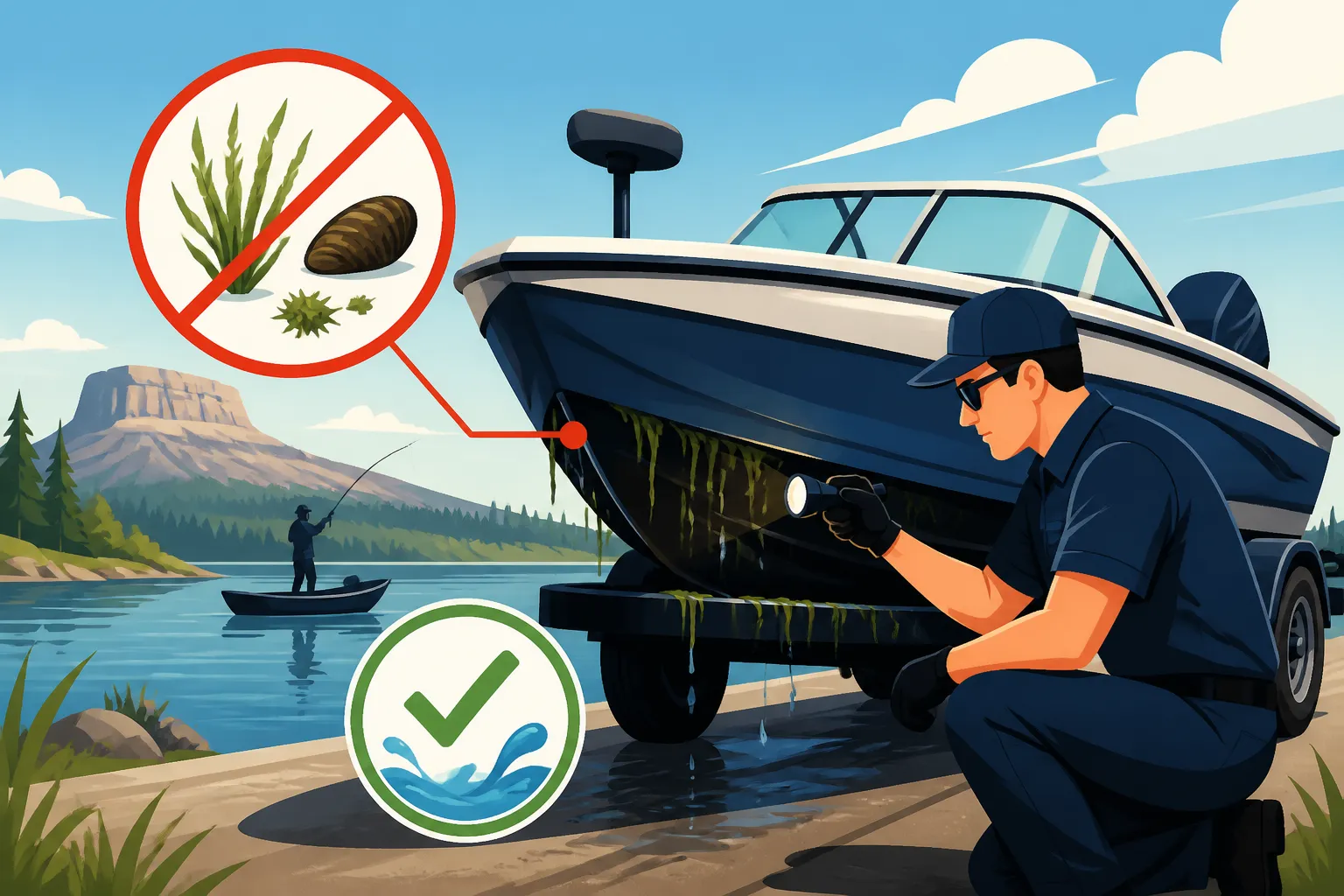
When you pull up to a Wyoming Game and Fish boat inspection station, whether it's on a major highway or near a boat launch, you can expect a thorough but usually quick process. The friendly, knowledgeable staff will guide you. First, they'll ask you where your boat has been recently. This helps them assess the risk. Then, they'll perform a visual inspection of your boat, trailer, and any attached gear. They're looking for any signs of mussels, plant fragments, mud, or standing water. They'll pay close attention to crevices, bilges, live wells, motors, and anything that could harbor an invader.
If they find anything suspicious, or if your boat has been in a high-risk waterbody, they may recommend or require decontamination. This typically involves hot, high-pressure washing to kill and remove any organisms. It might sound like a pain, but it's a small price to pay for protecting our fisheries. Remember, these folks are trying to protect your fishing future. You can often find informational pamphlets at the stations, or even grab one to toss in your tackle bag, perhaps one you ordered from Amazon that includes a handy checklist. The key is to be cooperative and understanding. It genuinely makes the process smoother for everyone.
Your Crucial Role: Clean, Drain, Dry and Beyond
It's easy to think that boat inspections are solely the responsibility of the state, but every angler, every boater, plays a critical part in preventing the spread of AIS. The official inspections are vital, but what you do before and after your time on the water is just as, if not more, important. Your actions are the ultimate defense.
The "Clean, Drain, Dry" Mantra: Step-by-Step Guidance
This isn't just a catchy phrase; it's a foundational strategy for AIS prevention. It's something every responsible boater and angler should practice religiously, every single time they move from one waterbody to another.
Here's how it breaks down:
- Clean: Before you leave the boat ramp or shoreline, thoroughly inspect your boat, trailer, waders, fishing gear, and even your boots. Remove any visible mud, plants, or animals. This includes fishing lines, anchors, and anything that has touched the water. Even tiny fragments can cause an infestation. You might even keep an extra set of brushes in your tackle box, maybe even a set you picked up from Amazon, specifically for cleaning your boat after each use. Pay special attention to the prop, trailer bunks, and any hidden compartments.
- Drain: Completely drain all water from your boat and equipment. This means bilges, live wells, bait buckets, coolers, and motor. Pull drain plugs and leave them out during transport. Many AIS larvae are microscopic and can survive in even a small amount of standing water. Remember that often-ignored little puddle in the bottom of your jon boat? That's a potential petri dish. Some anglers even carry a small, portable power washer, easily found on Amazon, for those quick clean-ups, especially after fishing waters where Wyoming's Combined Possession Limit Explained allows for a good catch.
- Dry: Allow all equipment to thoroughly dry before using it in another waterbody. A good rule of thumb is five days in warm, dry weather or even longer in cool, damp conditions. This desiccation is lethal to many AIS. If you can't wait that long, or if you're traveling between lakes, that's when a professional decontamination or a self-service hot wash becomes essential. Many anglers swear by portable drying towels, often found on Amazon, that absorb water quickly to aid in the 'Dry' step.
This simple, three-step process is incredibly effective. Make it a habit, and you'll be contributing significantly to the health of Wyoming's aquatic ecosystems.
Reporting Suspicious Sightings and What to Do If You Encounter an AIS
Sometimes, despite everyone's best efforts, an invasive species might pop up. If you're out fishing and you see something that looks unusual – maybe a strange plant, an unfamiliar mollusk attached to a rock, or fish that don't look quite right – it's your duty to report it. Don't try to remove it yourself or move it. This could inadvertently spread the problem further.
Instead, if you suspect you've found an AIS:
- Take photos: Get clear pictures from multiple angles.
- Note the location: Mark it precisely with GPS if possible, or describe it as accurately as you can (e.g., "south end of Lake XYZ, near the old submerged tree").
- Contact Wyoming Game and Fish: Call their regional office or use their online reporting tools. They have dedicated staff who can investigate and take appropriate action.
- Do NOT collect or transport: Leave the suspected species where it is.
- Clean and Decontaminate Your Gear: If you've been in contact with a suspected AIS, thoroughly clean, drain, and dry all your equipment before visiting another waterbody.
Your quick action could be the difference between an isolated sighting and a full-blown infestation. Remember, early detection is key to successful management. For more information about what to do in such a situation, read What Happens If You Catch an Invasive Species in Wyoming. Having a good, bright headlamp, which you can find on Amazon, can be really helpful for those late-night cleaning sessions or unexpected checks.
The Long-Term Benefits of Collective Vigilance
While boat inspections and the Clean, Drain, Dry mantra might seem like small individual actions, their cumulative effect is monumental. By consistently adhering to these practices, we're not just preventing problems today; we're safeguarding the future of Wyoming's fishing heritage. We're ensuring that future generations can enjoy the same pristine waters and abundant fish that we do. Imagine your grandkids reeling in a trophy trout from a river that remained healthy because you took an extra five minutes to clean your boat.
The alternative is grim: diminished fisheries, ecological collapse in some areas, and constant, expensive battles against established invaders. The small inconvenience of an inspection or a thorough cleaning pales in comparison to the irreversible damage AIS can cause. Our collective vigilance creates a strong barrier against these threats. It's an investment in conservation, in recreation, and in the unique natural character of Wyoming. You can find all sorts of specialized scrubbing tools and even anti-fouling cleaners, available through retailers like Amazon, to make your job easier, ensuring your boat is always ready for the next adventure while protecting our precious resources. Let's work together to keep Wyoming wild and free of invasive species. This collective effort is critical for every angler, whether you're fishing in the high-alpine lakes where How Water Temperature Changes Wyoming Trout Behavior is key or exploring major rivers. How Wyoming Sets In-Season Emergency Closures also plays a role when new threats are identified, but prevention is always the best strategy.
Disclaimer
This article is for general informational purposes only and does not constitute professional advice. Laws, prices and regulations vary by location and change over time. Consult a qualified professional for guidance on your specific situation.