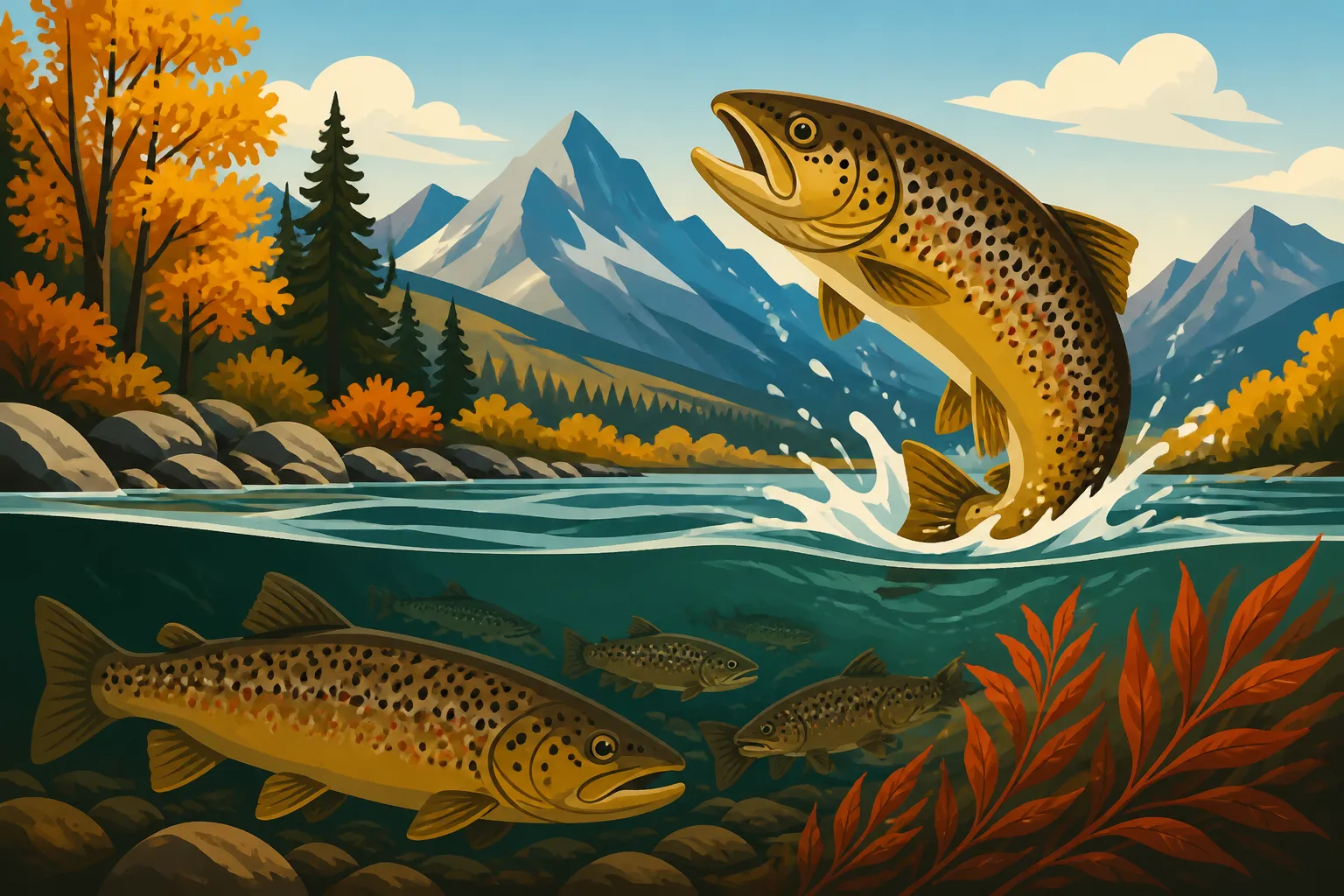
Fall Spawning Runs for Wyoming Brown Trout
The crisp autumn air, the golden leaves reflecting on the water, and the knowledge that some of the biggest, most aggressive brown trout are on the move – there's nothing quite like it. But for many anglers, the fall brown trout spawning run in Wyoming can feel like a secret code, hard to crack and even harder to predict, leading to missed opportunities on truly spectacular fish. This guide is here to demystify the magic of the fall spawn, helping you understand the "why," "when," and "where" so you can experience some of Wyoming's most exhilarating fishing.
Understanding the Fall Spawn Cycle
When we talk about the fall brown trout spawn, we're really delving into a fascinating natural event driven by instinct and environment. It's more than just fish moving around; it's a specific biological imperative that transforms their behavior and makes them incredibly exciting targets for anglers. Understanding this cycle is the first step to successful fall fishing.
The Biological Drive: Why Brown Trout Spawn in Fall
Unlike rainbow trout, which typically spawn in the spring, brown trout are autumn spawners. This isn't just a quirk; it's a deeply ingrained evolutionary strategy. As water temperatures begin to drop from their summer highs, usually starting in late September and continuing through October and into November, it signals to the brown trout that it's time to reproduce. Their bodies undergo physiological changes, and their focus shifts almost entirely to finding mates and suitable spawning grounds. This drive makes them highly active, often pushing into shallower waters or up tributaries they wouldn't normally frequent. It's during this time that male browns develop those iconic hooked jaws (kypes) and brilliant colors, making them some of the most stunning fish you'll ever encounter. This instinctual push often means they are less cautious and more willing to strike a fly or lure, not necessarily because they're hungry, but out of aggression or territorial defense.
Water Temperature and Timing
Water temperature is the master key that unlocks the brown trout spawn. While the calendar gives us a general idea, the actual timing can vary significantly year to year based on weather patterns. Typically, brown trout begin their spawning migrations when water temperatures drop into the 50s Fahrenheit (around 10-15°C) and peak when they are in the low to mid-40s (around 4-7°C). A prolonged warm fall can delay the spawn, pushing the best fishing deeper into November, while an early cold snap can bring it on sooner. Anglers often keep a close eye on local river temperatures, using simple thermometers or online resources, because a drop of just a few degrees can trigger a noticeable shift in fish behavior. How Water Temperature Changes Wyoming Trout Behavior goes into more detail on this critical factor. Knowing these temperature windows helps you predict when the big fish will be moving and when their aggressive pre-spawn and spawning activity will be at its peak. It's not just about hitting the water; it's about hitting it at the right biological moment.
Visual Cues: Redd Formation and Fish Behavior
One of the most important things you can learn about the fall spawn is how to identify a "redd." A redd is a spawning bed, typically an oval-shaped depression in the gravel that female trout create by fanning their tails to excavate eggs. Downstream from the redd, you'll often see a small pile of cleaner, lighter-colored gravel. These are critical areas, and knowing how to spot them is crucial for ethical angling during the spawn. You'll often see multiple fish on or near a redd: a large female, perhaps several smaller males trying to get in on the action, and a larger, dominant male aggressively defending the area. Their behavior becomes highly territorial and focused. Males will chase off intruders, including other fish and even flies or lures that come too close. This aggressive, defensive behavior is what makes them so catchable, but it also means we, as anglers, have a heightened responsibility to be respectful and avoid disturbing their reproductive efforts.
Prime Locations for Brown Trout Spawning Runs
Wyoming is a brown trout paradise, and come fall, certain waters become legendary for their spawning runs. While the general principle of brown trout seeking shallow, gravelly areas to spawn holds true, the specifics of where they do this can vary widely. Knowing the prime locations will dramatically increase your chances of connecting with a trophy brown.
Iconic Rivers: North Platte and Snake River
When you talk about fall brown trout in Wyoming, the North Platte River and the Snake River are almost always at the top of the list. These are truly iconic fisheries. On the North Platte, particularly the stretches known as The Miracle Mile Stretch of Wyoming's North Platte River and Gray Reef, you'll find large brown trout migrating upstream from reservoirs like Pathfinder and Seminoe. These fish are often enormous, having spent years gorging on forage in the deeper waters of the reservoirs, and they return to the river to spawn. The Snake River, especially below Jackson Lake Dam, also sees impressive runs. Here, the Snake River fine-spotted cutthroat trout are often the main draw, but robust brown trout populations also make significant movements. These river systems offer a mix of large main channels, side braids, and tributary mouths, all potential hotspots for migrating browns. The sheer size of these rivers means fish can be spread out, but if you hit the timing right, the rewards can be incredible.
Smaller Tributaries and Lake Inlets
Don't overlook the less obvious spots! While the big rivers get all the glory, countless smaller tributaries that feed into larger rivers and lakes become vital spawning grounds. Brown trout from lakes will often push into the very first stretches of these feeder streams, sometimes traveling just a few hundred yards, seeking out ideal gravel beds. Similarly, smaller rivers that connect to reservoirs will see fish running upstream. These areas can be fantastic for wading anglers, often providing a more intimate fishing experience than the vast main stem rivers. The challenge here is finding them – these smaller waters can be ephemeral, only holding fish during the peak of the run, and require a bit more exploration. However, the reward can be a less pressured fish and a more serene environment. Pay attention to maps and look for smaller, gravel-bottomed streams emptying into larger bodies of water.
Tailwaters: A Unique Fall Opportunity
Tailwaters, the sections of river immediately below dams, offer a unique and often highly productive environment for fall brown trout. Dams create a stable environment where water temperatures are regulated, often staying warmer later into fall or cooler in summer, which can extend the fishing season. Many of Wyoming's best tailwaters, like the Grey Reef section of the North Platte below Alcova Dam or the Green River below Flaming Gorge Dam, are renowned for their abundant insect life and nutrient-rich waters, growing large fish. Brown trout in these sections often don't have far to travel to find suitable spawning gravel, and the consistent flows can make for predictable holding water. The unique dynamics of a tailwater fishery mean that fish are often concentrated, but also can be very wary. Success here often depends on precise presentations and understanding the specific hydraulics of the river below the dam. Nymphing Techniques for Wyoming Tailwaters can be a great resource for fishing these productive areas.
Best Techniques and Gear for Fall Browns
Catching these magnificent fish during their spawning run requires specific techniques and gear. Fall browns are often aggressive but can also be particular, so having the right approach in your tackle box is key. This isn't just about throwing any lure; it's about understanding what triggers their instincts.
Streamer Fishing: Imitating Prey
One of the most exciting and effective ways to target aggressive pre-spawn and spawning brown trout is with streamers. These large, flashy flies are designed to imitate baitfish like sculpins, minnows, or even smaller trout. During this time of year, brown trout are not just feeding; they're also highly territorial. A streamer stripped aggressively through their perceived territory can elicit a fierce, instinctual strike, often out of pure aggression rather than hunger. Colors like olive, black, brown, and white are popular, often with some flash. Weighted streamers can help you get down into deeper runs or pools where big browns might be holding. Think about fishing these flies near structure, undercut banks, or the edges of current seams where larger fish ambush prey. The takes can be violent and incredibly exciting. For an in-depth look at this thrilling method, check out Streamer Fishing for Wyoming Brown Trout.
Nymphing and Egg Patterns
While streamers are great for aggressive fish, don't forget about nymphing and egg patterns, especially when brown trout are actively spawning on redds or positioned immediately downstream. When female trout lay eggs, some inevitably get washed downstream, creating a natural food source for opportunistic fish. Egg patterns, tied in various shades of orange, pink, and yellow, can be incredibly effective when drifted naturally through runs below spawning beds. Pairing an egg pattern with a larger, darker nymph (like a Pat's Rubber Legs or a Stonefly nymph) can also be a deadly combination, imitating both a potential food source and a larger insect. Remember, when nymphing, a delicate presentation and a good drift are paramount. The goal is to imitate a natural, defenseless food item tumbling along the bottom. You can find some excellent materials for tying your own egg and nymph patterns, or even pre-tied assortments, on sites like Amazon.
Gear Considerations: Rods, Reels, and Lines
For fall brown trout, especially when targeting larger fish in powerful rivers, your gear needs to be up to the task.
- Rods: A 6 or 7-weight fly rod, typically 9 to 10 feet long, provides the backbone needed to cast larger streamers and handle bigger fish. For spin anglers, a medium-heavy spinning rod around 6'6" to 7'6" with a fast action will give you the sensitivity for detecting subtle takes and the power for strong hooksets.
- Reels: A reliable reel with a smooth, strong drag system is non-negotiable. Whether fly or spinning, your reel needs to be able to slow down a hard-charging brown. It's not just about capacity; it's about control. You can find many durable and high-performing options from various manufacturers on Amazon, often with good customer reviews to help you choose.
- Lines: For fly fishing, a weight-forward floating line is standard, but a sink-tip line can be invaluable for getting streamers down to depth in faster, deeper water. For spin fishing, 8-12 lb fluorocarbon or monofilament line is a good starting point, with fluorocarbon offering better abrasion resistance and lower visibility.
- Waders and Boots: The water will be cold, so warm, breathable waders and sturdy wading boots with good grip are essential for safety and comfort. Many anglers swear by felt soles for river wading, though rubber soles with studs are also popular. What to Wear Ice Fishing in Wyoming might seem like an extreme comparison, but dressing in layers for cold water is a universal principle for fall fishing.
Here's a quick comparison of popular fall brown trout techniques:
| Technique | Best Conditions | Ideal Target Behavior | Pros | Cons |
|---|---|---|---|---|
| Streamer Fishing | Aggressive, pre-spawn fish; windy days; lower light | Territorial, actively hunting baitfish | Triggers aggressive strikes; exciting visual takes | Can be tiring to cast large flies; requires active retrieve |
| Nymphing | Actively spawning fish; clear water; tricky bites | Opportunistic feeders; post-spawn fish | Effective for lethargic fish; can imitate many food | Requires precise weight and drift; less active |
| Egg Patterns | Fish downstream of active redds | Feeding on loose eggs | Highly effective when fish are "on the eggs" | Very specific use case; requires ethical angling |
| Spin Fishing (Lures) | Versatile; good for covering water quickly | Aggressive, territorial fish | Easy to cast; can use various lures (spinners, jerkbaits) | Can be less subtle than fly fishing |
Conservation and Ethical Angling During the Spawn
Fishing during the brown trout spawn offers incredible opportunities, but it also comes with a significant responsibility. These fish are at their most vulnerable, engaged in the critical act of reproduction. Practicing ethical angling ensures these magnificent fish continue to thrive for future generations.
Avoiding Spawning Beds (Redds)
This is perhaps the most crucial ethical consideration. As discussed, redds are those tell-tale clean, oval depressions in the gravel where trout lay their eggs. Actively spawning fish are concentrated on these beds, and any disturbance can severely impact their reproductive success. Wading through redds can crush eggs or disturb spawning pairs, leading to failed reproduction. Even targeting fish directly on redds, while sometimes "easy" fishing, is generally frowned upon by the angling community because it pulls fish off their critical task. The best practice is to identify redds and actively avoid wading on or near them. Fish holding immediately downstream of redds, feeding on dislodged eggs, are fair game, but always give the spawning pair their space. Many regulations, like those detailed in Wyoming Fishing Regulations Every Angler Should Know, encourage this behavior.
Catch and Release Best Practices
During the spawn, brown trout are under immense stress. They're expending vast amounts of energy to migrate, spawn, and defend their territory. This makes proper catch-and-release techniques even more vital to ensure their survival.
- Minimize Fight Time: Use appropriate gear to land fish quickly, reducing exhaustion.
- Keep Fish in Water: Avoid removing the fish from the water entirely. If you need a photo, do it quickly with the fish partially submerged. How to Handle a Trout to Keep It Alive After Release provides excellent guidelines.
- Wet Hands: Always wet your hands before touching a fish to protect its delicate slime coat, which is vital for disease resistance.
- Barbless Hooks: Consider using barbless hooks, or crimping down barbs on your hooks. This makes hook removal quicker and causes less damage to the fish. Certain waters, like parts of the North Platte, even require barbless hooks. For specific details, see Barbless Hook Requirements on the North Platte River.
- Careful Hook Removal: Use forceps or pliers to quickly remove hooks. If a hook is deeply set, cut the line as close to the hook as possible rather than tearing the fish's mouth.
- Revive Carefully: If the fish seems sluggish, hold it gently in the current, facing upstream, until it swims away on its own power. Don't "pump" it back and forth, as this can force water the wrong way through its gills.
By following these practices, we respect the fish and the resource, ensuring that the next generation of brown trout has a chance to thrive.
Understanding Regulations: Special Closures or Restrictions
Wyoming Game and Fish Department (WGFD) works hard to manage fisheries sustainably, and this often includes specific regulations during spawning periods. While there aren't typically widespread closures during the entire brown trout spawn, some specific waters might have special restrictions. These could include:
- Gear Restrictions: Requiring barbless hooks or restricting bait.
- Time-of-Day Restrictions: Limiting fishing to certain hours.
- Area Closures: Temporarily closing very specific stretches of river or tributary mouths that are critical spawning areas.
It is absolutely crucial to Reading the Wyoming Fishing Regulations Booklet every year and check for any water-specific regulations, especially before venturing out during the fall. Ignorance of the law is never an excuse, and violating spawning regulations can lead to significant fines and penalties. Always consult the most current WGFD regulations available on their website or from a local license vendor before you hit the water.
Timing Your Trip: When and Where to Go
Timing is everything when it comes to fall brown trout. While the general "fall" window is broad, understanding the different phases of the spawn can help you pinpoint the best opportunities and tailor your approach.
Early Fall: Pre-Spawn Aggression
As September gives way to October, and the first hints of autumn creep into the air, you enter the pre-spawn phase. Water temperatures are dropping, but not yet at their lowest, and fish are beginning to migrate from their summer holding areas to staging points closer to spawning grounds. This is arguably one of the best times to target large brown trout. They are actively feeding to pack on calories for the rigors of spawning, and males are becoming increasingly aggressive and territorial. This is when streamers often shine, as fish are willing to chase down a big meal. Look for fish in deeper pools and runs, often near structure, as they move into position. The weather can still be pleasant, making for an enjoyable day on the water before the true cold sets in. Rivers and the upstream sections of reservoirs are prime targets. Consider exploring Fishing Wyoming's Snake River Below Jackson Lake Dam or the larger sections of the North Platte.
Peak Spawn: Mid-Fall Opportunities
Mid-fall, typically from late October through mid-November, is when the actual spawning activity peaks. This is when you'll find the most fish on redds in the shallow, gravelly areas of tributaries and main river margins. The fish are intensely focused on reproduction, and while they may not be actively feeding in the traditional sense, their aggression levels can be off the charts. This is when egg patterns and smaller, subtle nymphs can be incredibly effective when fished downstream of redds. Streamers can still work for those hyper-aggressive males defending their territory. However, remember the ethical considerations: avoid wading on redds and handle fish with extreme care. The weather during this period can be highly variable, ranging from mild, sunny days to blustery, snowy conditions, so be prepared for anything. This is a time when understanding Catch-and-Release Rules on Wyoming Waters is paramount.
Late Fall: Post-Spawn Recovery
As spawning winds down in late November and moves into December, you enter the post-spawn recovery phase. Many fish, especially the larger males who have expended massive amounts of energy, will drop back into deeper, slower water. They are often lethargic, weak, and less interested in chasing aggressively. However, some still need to recover and might opportunistically feed on nymphs or smaller baitfish. This period can be challenging, but it can also offer rewards for the patient angler. Focus on deeper pools, slow runs, and areas with good cover. Smaller, subtler presentations with nymphs or even tiny streamers might be more effective. While not as flashy as the pre-spawn aggression, these fish are still beautiful and deserving of careful handling as they recuperate. For a broader view of the fishing opportunities, Wyoming Fishing Seasons Month by Month can help you plan your fishing adventures throughout the year.
The fall brown trout spawn in Wyoming is an angler's dream, offering the chance to connect with some of the state's largest and most vibrant trout. By understanding their biology, knowing where to look, employing effective techniques, and above all, practicing responsible angling, you can make this autumn a truly unforgettable fishing season.
Disclaimer
This article is for general informational purposes only and does not constitute professional advice. Laws, prices and regulations vary by location and change over time. Consult a qualified professional for guidance on your specific situation.