Are There Sturgeon in Wyoming Rivers?
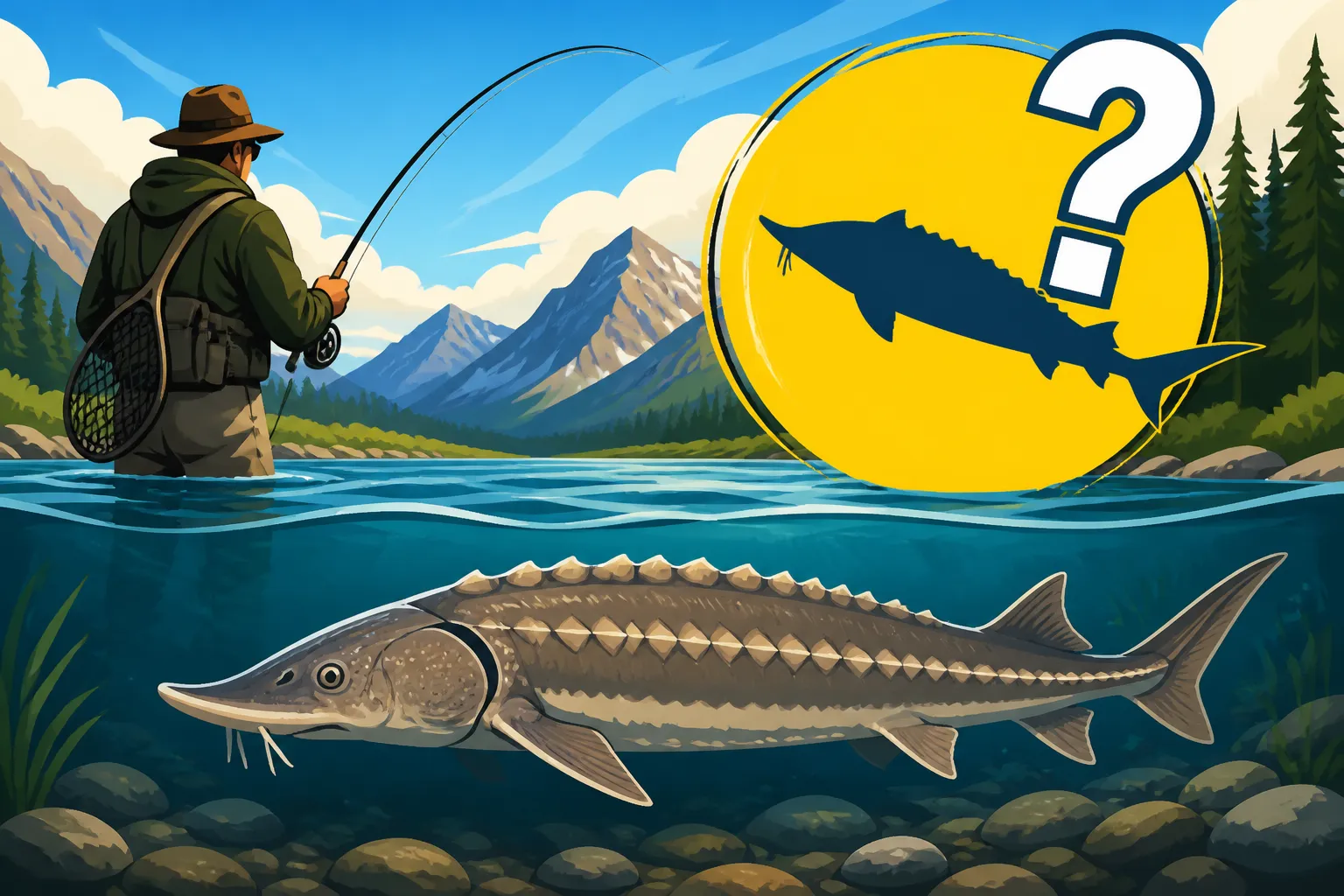
It's a common question, especially for anglers who dream of battling truly massive freshwater fish: "Are there sturgeon in Wyoming rivers?" The short, realistic answer is almost certainly no. While the idea of encountering one of these ancient giants in the Cowboy State's pristine waters is exciting, Wyoming's unique geography and aquatic ecosystems just aren't set up for sturgeon to thrive, and you won't find them as part of our native or stocked fisheries. This guide will dive into why that's the case and what other impressive, large fish you can target here.
Sturgeon in Wyoming: The Unlikely Truth
Let's address the big question head-on: the likelihood of finding sturgeon in Wyoming's rivers is incredibly, astronomically low. We're talking about a species that requires very specific habitats, and frankly, Wyoming just doesn't provide them. While it's a fun thought, it's important for anglers to understand what fish are genuinely available in our waters.
A Rare or Non-Existent Sight
You won't find sturgeon listed in the official Wyoming Game and Fish Department regulations booklet. They aren't native to any of our drainages, nor are they part of any stocking program. This means that if you're picturing yourself reeling in a massive, armored fish from the North Platte or the Snake, you're likely dreaming of a different state's waters. The species commonly referred to as "sturgeon" in North America, such as the Pallid Sturgeon, Lake Sturgeon, or Green Sturgeon, have historical ranges that simply don't extend into Wyoming. If someone claims to have caught a sturgeon in Wyoming, it would be an extraordinary, isolated event, likely a misidentification, or a highly unauthorized and illegal introduction.
Why Wyoming Isn't Sturgeon Country
Sturgeon are fascinating creatures, often living for many decades and growing to immense sizes. They typically inhabit large, slow-moving rivers, deep lakes, and estuaries, often needing long stretches of uninterrupted river systems for spawning migrations. Think of major river basins like the Mississippi, Missouri, Columbia, or systems connected to the Great Lakes or the Atlantic Ocean.
Wyoming's river systems, while beautiful and productive, are primarily cold, fast-flowing mountain rivers and high-desert streams. Many are interrupted by dams that create reservoirs, further fragmenting any potential migratory pathways. Our primary river systems, such as the Green, Snake, Yellowstone, and North Platte, originate in high mountains and flow through varied terrain, but they lack the characteristics necessary to sustain sturgeon populations. The waters are often too cold, too fast, or too isolated from the historical sturgeon ranges further east or west. Our state is renowned for its trout fisheries, a completely different type of aquatic environment, as you'd discover when exploring Wyoming's Coldwater Fish Species.
Where Sturgeon Are Found and Why Wyoming Differs
Understanding where sturgeon thrive helps illustrate why Wyoming isn't their natural home. It's all about habitat and historical connections.
Native Sturgeon Habitats
Across North America, different species of sturgeon have carved out niches in specific, grand hydrological systems:
- Lake Sturgeon: These majestic fish are primarily found in the Great Lakes basin and the large rivers flowing into them, as well as parts of the Mississippi River drainage. They prefer large, deep lakes and rivers with gravel bottoms for spawning.
- Pallid Sturgeon: An endangered species, the Pallid Sturgeon calls the turbid, braided channels of the Missouri and Mississippi Rivers home. They need vast, complex riverine habitats, and their populations have suffered greatly due to habitat alteration. While parts of the North Platte eventually feed into the Missouri, the journey for a sturgeon to reach Wyoming waters is virtually impossible due to distance, dams, and differing river characteristics.
- White Sturgeon: Found in the Pacific Northwest, particularly the Columbia River system, these are North America's largest freshwater fish. They require large, deep, slow-moving rivers and estuaries for their life cycle.
- Atlantic Sturgeon: As their name suggests, these sturgeon inhabit the Atlantic coast, migrating between saltwater estuaries and freshwater rivers to spawn.
These are just a few examples, but the common thread is large, interconnected, and often deep river and lake systems. Wyoming, while geographically vast, doesn't possess these specific types of riverine highways that sturgeon need for survival and reproduction. You won't find many guides offering trips for these specific fish, though Hiring a Fishing Guide in Wyoming can connect you with experts for our native species.
Historical Distribution vs. Wyoming's Geography
When we look at historical distributions, sturgeon have never been a part of Wyoming's natural fish fauna. The continental divide, the headwaters of major river systems, and the geological history of the region have simply not aligned with sturgeon needs. Our rivers are born high in the Rockies, carving their way through mountains and plains, but they don't offer the extensive, lowland, slow-moving sections critical for sturgeon.
Consider the North Platte River, for example. While it's a fantastic fishery known for trout, it flows from the mountains, through high-plains reservoirs, and eventually joins the South Platte to form the Platte River, which then flows into the Missouri. While there are sturgeon in the lower Missouri River system, the numerous dams (like Pathfinder, Alcova, and Glendo Reservoirs) and the changing river characteristics along the way effectively create insurmountable barriers for sturgeon to migrate upstream into Wyoming. It's a prime example of how even connected systems don't necessarily mean shared species across their entire length.
| Feature | Typical Sturgeon Habitat | Typical Wyoming River/Lake Habitat |
|---|---|---|
| Water Body Size | Very large rivers, deep lakes, estuaries | Mountain streams, medium to large rivers, reservoirs, high-alpine lakes |
| Water Speed | Slow to moderate currents, deep pools | Fast-flowing rapids, riffles, deep holes, variable reservoir depths |
| Water Temperature | Moderate to warm, often fluctuating | Primarily cold water, especially in mountain streams and tailwaters |
| Connectivity | Long, unimpeded migratory pathways | Often fragmented by dams, high elevation barriers |
| Bottom Substrate | Gravel, sand, mud for feeding and spawning | Rocky, gravel, silt, varying lake bottoms |
| Food Sources | Benthic invertebrates, small fish, detritus | Aquatic insects, smaller fish, crustaceans |
This table clearly illustrates the fundamental differences that make Wyoming an unsuitable environment for sturgeon populations.
Could a Sturgeon Ever Be Found in Wyoming? (The "What If")
While exceedingly improbable, it's worth briefly touching on the absolute fringe possibilities and, more importantly, what to do if you encounter something truly unusual.
Accidental Introductions or Migrations
In the realm of extreme hypotheticals, there are only two scenarios where a sturgeon might end up in Wyoming:
- Illegal or Accidental Stocking: Someone, perhaps with a misguided idea or through sheer ignorance, could illegally introduce a sturgeon into a Wyoming water body. This is a severe violation of wildlife laws, as introduced species can have devastating impacts on native ecosystems by competing for food, introducing diseases, or preying on native fish. Such an act would be incredibly rare and almost certainly result in the death of the sturgeon due to unsuitable habitat. You can find comprehensive information on Wyoming's rules in How Bag and Possession Limits Work in Wyoming and Wyoming Fishing Regulations Every Angler Should Know.
- Extraordinarily Rare Migration: As mentioned earlier, river systems like the North Platte connect to the Missouri, which hosts sturgeon. However, the gauntlet of dams, thousands of miles, and vastly different water conditions makes a natural sturgeon migration into Wyoming practically impossible. It would be an event for the record books, requiring a sturgeon to navigate conditions entirely foreign to its species.
In either of these highly unlikely events, the sturgeon would almost certainly be an isolated individual with no hope of establishing a breeding population. Their complex life cycles and specific needs just wouldn't be met in our waters.
Reporting Unusual Catches
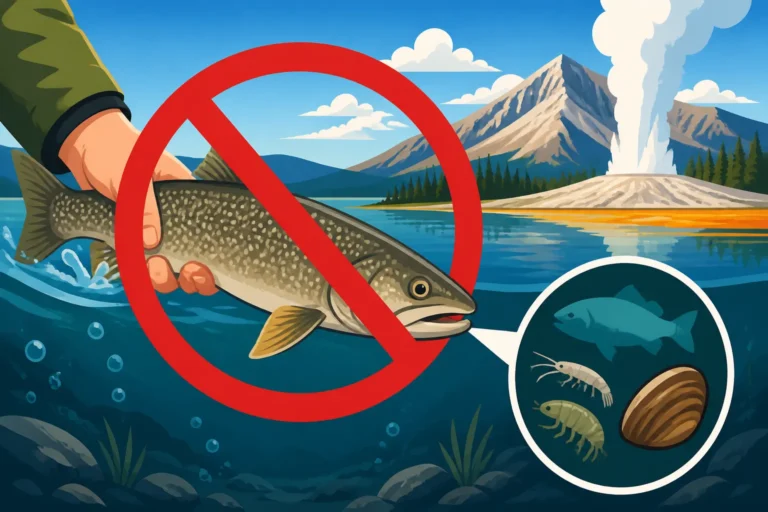
If, by some incredible twist of fate, you were to catch a fish in Wyoming that you genuinely believe is a sturgeon or any other species you cannot identify, the absolute best course of action is to report it immediately to the Wyoming Game and Fish Department. They are the experts on our aquatic ecosystems and have protocols for identifying and managing unusual or invasive species. It's crucial not to release an unknown or suspected invasive fish back into the water. Instead, take clear photos from multiple angles, note the exact location, and contact Game and Fish. They will guide you on the next steps. Ignoring such a catch could contribute to ecological problems, so it's vital to be a responsible angler. Learning What Happens If You Catch an Invasive Species in Wyoming is excellent preparation for any angler.
Alternative Large Fish to Target in Wyoming (Beyond Sturgeon)
While sturgeon aren't on the menu, Wyoming offers incredible opportunities to catch truly impressive, large freshwater fish that will challenge any angler. We might not have the ancient giants of the Great Lakes or the Columbia, but we have plenty of species that will give you a fight to remember.
Targeting Lake Trout for a Big Fish Fight
If you're after a fish that grows to impressive sizes and provides a powerful, deep-water battle, look no further than the Lake Trout (also known as Mackinaw). These char are native to northern North America and thrive in many of Wyoming's large, cold, deep reservoirs, such as Flaming Gorge, Jackson Lake, and Boysen Reservoir. They can grow to be quite large, with trophy specimens weighing well into the double digits.
Anglers specifically target Lake Trout by trolling with specialized gear in deep water, or through jigging, particularly during ice fishing season. Landing a big "laker" is an experience comparable to many saltwater battles, requiring heavy tackle and a good deal of patience and skill. Lake Trout (Mackinaw) Fishing in Wyoming is a fantastic resource for learning more about these magnificent fish and where to find them. You can find specialized trolling lures and heavy-duty rods on retailers like Amazon, perfect for tackling these Wyoming heavyweights.
Walleye, Pike, and Ling: Other Impressive Catches
Wyoming's warmwater and coolwater fisheries also offer a diverse array of larger game fish for those seeking a different kind of challenge:
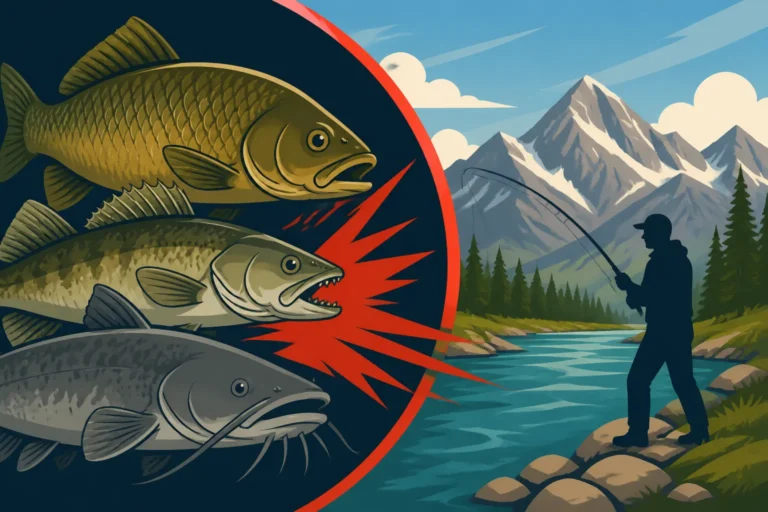
- Walleye: These highly sought-after fish are famous for their delicious white meat and challenging nature. Found in many of our larger reservoirs like Boysen, Glendo, Keyhole, and Seminoe, walleye can grow to significant sizes. They're often targeted with jigs, crankbaits, or by trolling, and they put up a spirited fight. Learning the nuances of Walleye Fishing in Wyoming can significantly improve your chances of landing a trophy.
- Northern Pike: While not as widespread as some other species, Northern Pike are present in certain Wyoming waters, known for their aggressive strikes and razor-sharp teeth. They are ambush predators and can grow very large, offering an exciting, toothy fight.
- Ling (Burbot): Also known as freshwater cod, ling are unique, often overlooked bottom-dwelling fish found in deep, cold waters. They are particularly popular for ice fishing, where anglers use glow-in-the-dark jigs and bait. While perhaps not as visually impressive as a sturgeon, their unique appearance and tasty meat make them a fun target.
Each of these species offers its own unique thrill and challenge, providing plenty of opportunities for anglers to chase large fish without needing to wish for a sturgeon that simply isn't here. Exploring Best Wyoming Reservoirs for Trophy Fish will give you a great starting point for finding these exciting targets. Remember, always check the current regulations in the Wyoming Fishing Regulations Every Angler Should Know before heading out, and consider picking up a good Wyoming fish identification guide (many are available on Amazon) to help you distinguish between species.
Disclaimer
This article is for general informational purposes only and does not constitute professional advice. Laws, prices and regulations vary by location and change over time. Consult a qualified professional for guidance on your specific situation.