Trolling Techniques for Wyoming Reservoirs
There's nothing quite like the immense feeling of potential when you launch your boat onto a vast Wyoming reservoir, the morning sun just kissing the distant peaks. But let's be honest, that hopeful feeling can quickly turn to frustration if you're not getting bites. Trolling, while seemingly straightforward, has a real art and science to it, especially on our big, deep waters where fish can be scattered and finicky. This guide is here to unravel the mysteries of effective trolling, helping you unlock the secrets to consistent success on Wyoming's incredible reservoirs.
Understanding Wyoming's Reservoirs for Trolling
Wyoming's reservoirs are magnificent bodies of water, but they're not all created equal, especially when it comes to trolling. They offer vast expanses, deep channels, and diverse structures that can either hide fish exceptionally well or concentrate them in predictable patterns. Mastering these waters starts with understanding their unique characteristics and the fish that call them home.
Unique Challenges of Reservoir Trolling in Wyoming
Trolling on a Wyoming reservoir isn't like casting a fly on a small stream. The sheer scale can be daunting. You're dealing with immense depths, often hundreds of feet, which means getting your lure to the right level is paramount. Then there's the wind – oh, the wind! Wyoming is famous for its relentless breezes, which can make boat control and maintaining a consistent trolling speed a real challenge. One minute it's calm, the next you're fighting whitecaps. This variability means your gear needs to be robust, and your approach adaptable. You might be targeting a specific depth over an old river channel, only for a gust of wind to push your boat off course, or a sudden change in current to throw off your lure's presentation. Waters like those found in Wyoming's Flaming Gorge Reservoir Fishing Guide or Wyoming's Boysen Reservoir Fishing Guide are perfect examples of places where these challenges really come into play. It's not just about covering water; it's about covering the right water, at the right depth, despite whatever Mother Nature throws at you.
Key Fish Species to Target When Trolling
Wyoming's reservoirs are home to an exciting array of game fish, many of which respond incredibly well to trolling. Knowing your target species helps immensely in choosing the right techniques and gear.
- Lake Trout (Mackinaw): These deep-dwelling giants are often the primary target for trollers in larger reservoirs like Flaming Gorge, Jackson Lake, or Glendo. They prefer cold, deep water, often congregating around submerged structures or deep points. Trolling is exceptionally effective for them, as it allows you to cover vast areas of their preferred habitat.
- Walleye: While often associated with jigging, walleye in reservoirs like Boysen, Keyhole, and Glendo are very susceptible to trolling with crankbaits and crawler harnesses. They tend to relate more to structure and lower light conditions, making precise trolling patterns crucial.
- Kokanee Salmon: These landlocked sockeye salmon are prized for their spirited fights and delicious meat. They're typically found schooling in open water, often suspending at specific depths, which makes trolling with small, flashy lures a top technique. Flaming Gorge is a prime example of a reservoir known for its kokanee.
- Rainbow and Brown Trout: Many reservoirs also hold healthy populations of rainbow and brown trout. These fish can be found at various depths depending on the season and time of day, often shallower than lake trout. Trolling spoons and small crankbaits can be very productive for them, especially along shorelines or over underwater points.
Understanding the habits of these species, their preferred depths, and what they eat is the first step in successful trolling.
Seasonal Considerations for Reservoir Trolling
The dynamic nature of Wyoming's reservoirs means that trolling strategies need to shift with the seasons. What works in June might be completely ineffective in October.
- Ice-Out (Spring): After the ice melts, fish often become more active and can be found shallower as water temperatures begin to rise and baitfish move closer to the surface. Trout, in particular, will cruise shorelines and points. This is a great time to troll spoons or shallow-diving crankbaits closer to the surface or at mid-depths. The fish are hungry after a long winter and often less picky.
- Summer Thermocline: As summer progresses, most reservoirs develop a thermocline – a distinct layer where warm surface water meets cold deep water. Most cold-water fish, like trout and salmon, will congregate in or just above this thermocline, seeking optimal temperature and oxygen levels. Walleye might still be tied to structure but will also move deeper. This is when downriggers and lead core line become absolutely essential for precise depth control. Understanding How Water Temperature Changes Wyoming Trout Behavior is critical here.
- Fall Turnover: In autumn, the surface water cools, eventually reaching the same temperature as the deeper water. This causes the lake to "turn over," mixing the water column. Fish can become scattered during this period but will eventually settle into new patterns, often feeding aggressively as they prepare for winter. Brown trout, in particular, will move shallower for their spawning runs, offering exciting trolling opportunities near river mouths or rocky points. Trolling during this time often requires experimentation with different depths as fish relocate.
Essential Gear for Successful Trolling
Trying to troll effectively without the right equipment is like trying to chop down a tree with a butter knife – frustrating and largely unsuccessful. Investing in quality gear, or at least understanding what each piece does, will dramatically increase your chances of success.
Rods, Reels, and Line Selection
Your rod, reel, and line are the direct connection to the fish, and for trolling, specific setups are incredibly beneficial.
- Rods: For downriggers, you'll want a rod with a soft tip but plenty of backbone. The soft tip helps absorb the shock when the line releases from the downrigger clip, preventing instant slack and missed bites. A medium-heavy action rod, around 7 to 8.5 feet, is often ideal. For planer boards, slightly longer rods (8.5-10 feet) with a moderate action can help spread lines wider and absorb surges from the boat, keeping lures tracking true. A good rod holder setup is also non-negotiable for trolling, ensuring your rods stay secure and at the correct angles. You can find specialized trolling rods on platforms like Amazon, designed with these specific features in mind.
- Reels: Levelwind baitcasting reels are generally preferred for trolling due to their line capacity, robust drag systems, and ease of use when deploying and retrieving lines. A line counter reel is a game-changer, allowing you to consistently reproduce successful setups by knowing exactly how much line you have out. This is invaluable when trying to hit a specific depth or when sharing information with fellow anglers.
- Line: The choice between monofilament, fluorocarbon, and braided line depends on your setup and target species.
- Monofilament: Affordable, stretchy, and forgiving. Its stretch can act as a shock absorber. However, it has more drag in the water, making it harder to reach deep depths with light lures.
- Braided Line: Incredibly strong for its diameter, virtually no stretch, and very sensitive. Its thin diameter cuts through the water with less resistance, allowing lures to run deeper. However, its lack of stretch means fish can tear off if you're not careful, and it's highly visible. Many anglers use braid as their main line and then add a fluorocarbon leader for stealth.
- Fluorocarbon: Less visible than mono or braid, with minimal stretch and excellent abrasion resistance. It sinks, which can help lures run deeper. It's often used as a leader material in conjunction with braided mainlines.
- Lead Core Line: This is a specialized line with a lead core wrapped in a braided sheath. It's color-coded, usually every 10 yards, and designed to sink at a predictable rate (often 5-7 feet per color at typical trolling speeds). This is a fantastic system for reaching specific depths without downriggers, though it requires specialized calculations and a longer, softer rod.
The Importance of Electronics: Fish Finders and GPS
In the vastness of Wyoming's reservoirs, electronics are your eyes and ears beneath the surface. Without them, you're essentially trolling blind.
- Fish Finders (Sonar): A high-quality fish finder is non-negotiable. It allows you to:
- Identify Depth and Structure: See the bottom contour, identify submerged points, humps, old river beds, and drop-offs. These are key areas where fish congregate.
- Locate Baitfish: See bait balls (schools of smaller fish) which are magnets for larger predators. If you find the bait, you're usually close to the game fish.
- Mark Fish: Clearly see individual fish or schools of game fish as arches or dense marks on your screen. This tells you if fish are present and at what depth. Modern units, especially those with CHIRP sonar, offer incredible detail and target separation, making it easier to distinguish between species.
- GPS and Mapping: Integrated GPS is equally vital.
- Navigation: Safely navigate large reservoirs, especially in low light or fog.
- Waypoints: Mark successful trolling passes, fish sightings, or productive structure. This allows you to return to exact spots and replicate successful patterns.
- Contour Maps: Many GPS units come preloaded with detailed lake maps showing depth contours, submerged features, and navigation aids. Studying these maps before you even launch can help you plan your trolling routes and identify potential hot spots. Look for units that offer highly detailed charts for Wyoming's specific reservoirs.
Terminal Tackle and Lure Selection
This is where the fun really begins – choosing what you'll present to the fish!
- Spoons: Classic trolling lures that imitate injured baitfish. They come in various sizes, shapes, and colors. Brands like Cast Champ, Daredevle, or Luhr-Jensen are common choices. Long, thin spoons flutter enticingly, while broader spoons have a wider wobble. Experiment with silver, gold, copper, and bright colors like chartreuse or orange, especially in stained water.
- Crankbaits: Designed to dive to specific depths, crankbaits are fantastic for walleye, trout, and even smaller lake trout. They come in diving, shallow, and deep-diving models. Rapala, Storm, and Berkley offer a huge range. Match the size and color to the prevalent baitfish in the reservoir. For instance, if the reservoir has a lot of small kokanee, a smaller crankbait in a similar color might be deadly.
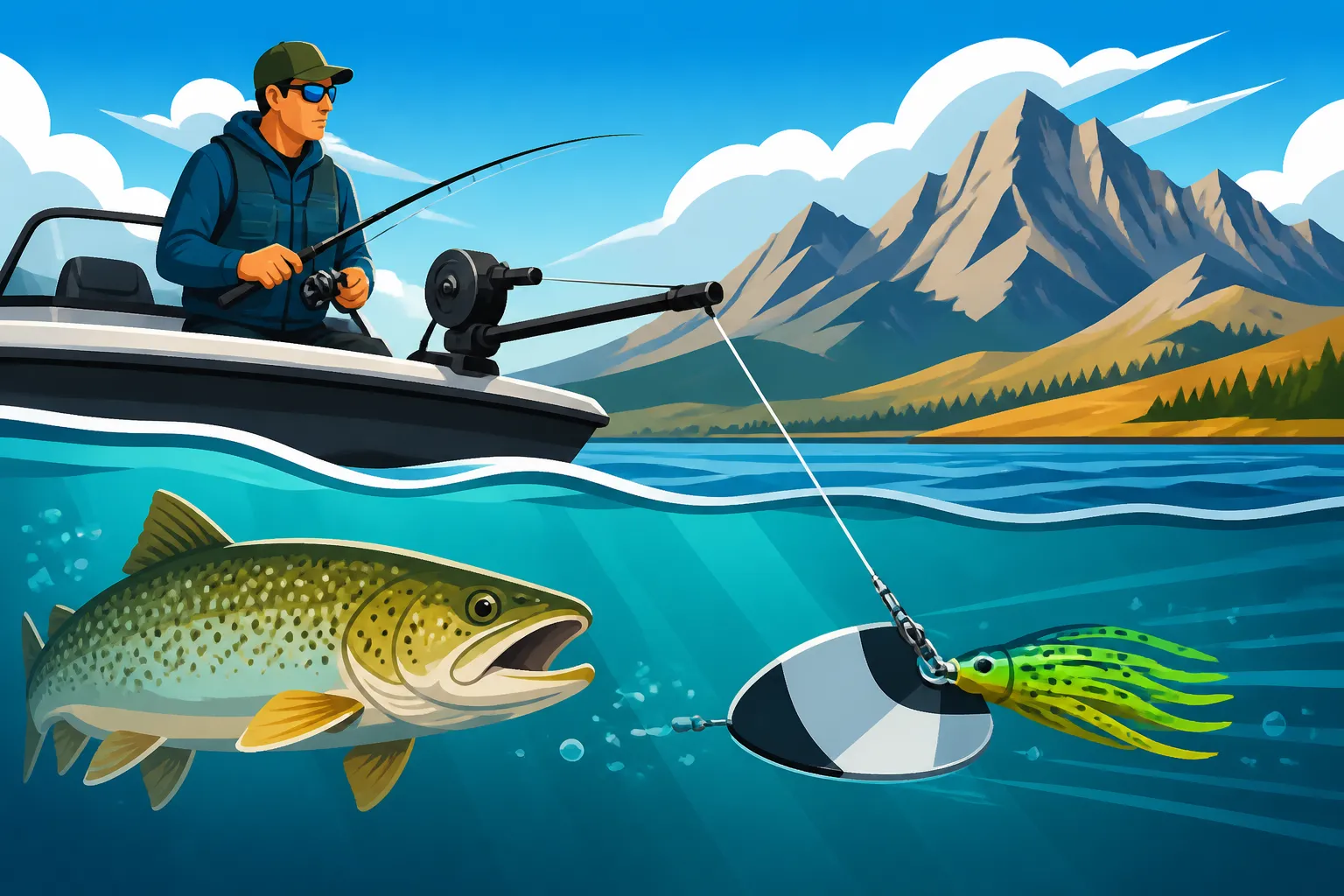
- Dodgers and Flashers: These are not lures themselves but attractors. They create flash, vibration, and erratic movement in the water, drawing fish towards your trailing lure or bait. Dodgers have a wide, side-to-side wobble, while flashers rotate. They're typically paired with a short leader (18-36 inches) to a small spoon, hoochie, or baited hook. They are absolutely critical for kokanee salmon and very effective for lake trout.
- Spinner Rigs/Crawler Harnesses: Especially deadly for walleye, these rigs typically consist of a clevis-mounted blade (Colorado, Indiana, or willowleaf) and beads, often followed by two or three hooks for presenting a live nightcrawler. They can be trolled behind bottom bouncers or snap weights.
- Hooks and Leaders: Always use sharp hooks! Upgrade factory hooks on lures if they seem dull. For leaders, fluorocarbon is generally preferred for its invisibility and abrasion resistance. The length of your leader will depend on the lure and the species; for dodgers/flashers, it's typically shorter to allow the attractor's action to transfer to the lure.
Mastering Depth Control: Getting Your Lure Where the Fish Are
This is perhaps the single most critical aspect of successful reservoir trolling. You can have the perfect lure, the perfect speed, and be over the perfect spot, but if your lure isn't at the fish's depth, you're just exercising your boat. Wyoming's deep reservoirs demand precision.
Downriggers: Precision Depth for Deep Water Fish
Downriggers are the gold standard for getting lures to exact depths in deep water, making them indispensable for targeting lake trout, kokanee, and even deep-dwelling rainbow and brown trout.
- How They Work: A downrigger consists of a weighted ball (typically 8-12 lbs) attached to a cable, which is lowered to a precise depth using a crank or electric motor. Your fishing line, with a lure attached, is then clipped to a release mechanism on the downrigger cable. When a fish strikes, the line releases from the clip, allowing you to fight the fish directly without the weight of the downrigger ball.
- Settings and Maintenance: Proper tension on the release clip is crucial. Too tight, and the fish might not pull free; too loose, and your line might pop out prematurely. Experimentation is key. Ensure your downrigger cables are in good condition, and regularly check for fraying. Keeping your downrigger counter accurate is also important for consistent depth. Many modern downriggers, like those from Cannon or Scotty, include features like auto-stop and adjustable retrieval speeds.
- Benefits: Downriggers allow you to precisely target fish at specific depths, even when they're hundreds of feet down. They let you use lighter rods and lines, providing a more sporting fight, as you're not fighting the drag of heavy lead. They also enable you to fish multiple lines at different depths off the same boat. This precision is invaluable on waters like Flaming Gorge when hunting for trophy Lake Trout (Mackinaw) Fishing in Wyoming.
Planer Boards: Covering Wide Swaths of Water
While downriggers are about depth, planer boards are about width. They allow you to spread out multiple lines away from the boat's prop wash and noise, covering a much broader area and presenting your lures to undisturbed fish.
- Different Types:
- In-Line Planer Boards: Smaller, individual boards that attach directly to your fishing line. They're easy to deploy and retrieve and are great for two to four lines. Brands like Offshore Tackle or Church Tackle are popular.
- Mast System Planer Boards: Larger boards that run off a main tow line attached to a mast on your boat. Your fishing lines are then clipped to releases on the main tow line, allowing them to slide out to the desired position. This system can handle many more lines (up to 10 or more) and is ideal for covering very wide areas, especially for walleye or schooling trout.
- Setting Up and Managing Multiple Lines: When using planer boards, particularly a mast system, careful organization is key to prevent tangles. Start with the lines furthest from the boat, deploying them first, then work your way closer. Use different lengths of line or different dive curves on your lures to ensure they're not running into each other. Staggering your lines can help cover various depths horizontally. For instance, you might have one line running shallow, one mid-depth, and one deeper, all off the same side of the boat, spaced wide apart by your boards. This is incredibly effective when fish are scattered or when trying to locate their preferred depth.
Lead Core Line and Snap Weights: Simpler Depth Solutions
Not every angler needs or wants the complexity of downriggers or a full planer board mast system. Lead core line and snap weights offer simpler, yet effective, ways to get your lures deeper.
- Lead Core Line: As mentioned earlier, this line is designed to sink. The key is understanding its dive rate. A common rule of thumb is that one color (10 yards) of lead core will get your lure down about 5-7 feet at typical trolling speeds, though this can vary with lure type, line diameter, and speed. You'll typically spool lead core onto a line counter reel and then attach a fluorocarbon leader (10-30 feet) to your lure. The beauty of lead core is its simplicity – just let out the desired number of colors, and you're at your approximate depth. It’s a versatile choice for targeting kokanee or rainbow trout that are suspending mid-water, and it allows for a more direct fight with the fish than a downrigger.
- Snap Weights: These are adjustable weights that clip onto your main fishing line. You typically let out your lure a certain distance (e.g., 50 feet), then attach the snap weight and let out additional line until you reach your desired depth. Snap weights allow you to adjust depth easily without changing your entire line setup. They are effective for targeting fish at various mid-range depths, offering more flexibility than just relying on the lure's diving bill. They are especially useful for getting crankbaits or spinner rigs deeper for walleye or trout. Just be mindful of how much line you let out after the weight, as this will influence your actual running depth. Many anglers keep a selection of snap weights on hand, ranging from 1/2 ounce to several ounces, to adapt to different depth requirements.
Reading the Water and Interpreting Your Electronics
Trolling isn't just about driving around with lines in the water; it's about making informed decisions based on what you see and what your electronics tell you. The ability to "read" the water and accurately interpret your fish finder and GPS is what separates consistent success from random luck.
Identifying Structure and Cover
Fish are creatures of habit and often relate to specific features in their environment. In reservoirs, this means structure and cover.
- Points: Submerged or visible points extending from the shoreline are classic fish magnets. Fish will stage on the sides of points, especially during feeding periods, or use them as navigation highways. Trolling around the tips and along the flanks of points is often highly productive.
- Humps: Underwater islands or rises from the bottom provide excellent ambush points and foraging areas. Fish will often hold on the windward side of humps, where current may concentrate baitfish.
- Old River Channels: Many reservoirs are formed by damming rivers, leaving behind the original riverbed as a distinct channel. This channel often has deeper water and varying contours, acting as a thoroughfare for fish. Trolling directly over or along the edges of these channels can be very effective, especially for lake trout and walleye.
- Submerged Timber/Brush: Trees and brush left in the reservoir provide excellent cover and habitat for baitfish, which in turn attract predators. While trolling through dense timber can lead to snags, trolling along the edges of submerged forests can be incredibly productive. Your fish finder can help you pinpoint these hidden hotspots.
Using your GPS with detailed contour maps, you can identify these structures before you even get there. Then, use your fish finder to confirm what's actually there and where the fish might be holding in relation to it.
Locating Baitfish Schools and Game Fish
Your fish finder is your window into the underwater world. Learning to interpret its signals is crucial.
- Bait Balls: These appear as dense clouds or clumps of small marks on your screen. If you find bait, you're usually in the right neighborhood. Game fish are rarely far from their food source. Troll around and through these bait balls, varying your depth to see where the predators are positioned in relation to them.
- Arches: On traditional 2D sonar, individual fish often appear as arches. A full, strong arch usually indicates a larger fish that passed through the sonar cone. Pay attention to the depth of these arches. Are they near the bottom? Suspended mid-water? Near structure?
- Density and Distinguishing Species: While sonar can't always give you a definitive species ID, you can often infer. Lake trout might appear as larger, more isolated arches in deep water. Schools of kokanee will show up as dense clumps, often higher in the water column. Walleye might be tighter to the bottom or structure. Modern Side Imaging or Down Imaging technologies on units from brands like Humminbird or Lowrance can offer even more detail, allowing you to see fish suspended off to the sides of your boat or tightly hugging the bottom.
When you see fish or bait, mark a waypoint on your GPS. This allows you to make precise turns and troll through that productive area again and again.
Understanding Water Temperature and Thermoclines
Water temperature is one of the most significant factors influencing fish behavior. Every species has a preferred temperature range, and finding that range is key.
- Fish Preferences: Cold-water species like trout and salmon thrive in cooler temperatures (typically 45-65°F). Walleye prefer slightly warmer water but still avoid extreme heat.
- Thermoclines: As discussed in the seasonal section, a thermocline is where water temperature changes rapidly with depth. Your fish finder will often show this as a distinct horizontal line or fuzzy layer. During summer, many game fish will orient themselves to this layer, either in it, just above it, or just below it, seeking optimal oxygen and temperature. If your sonar shows fish consistently at a certain depth, and that depth corresponds to a thermocline, you've likely found a major piece of the puzzle.
- Depth Implications: Without a thermocline (e.g., after spring ice-out or fall turnover), fish might be more scattered vertically. With a strong thermocline, you can significantly narrow down your target depths. Pay attention to your boat's temperature gauge and use it in conjunction with your fish finder to locate these critical thermal layers. This knowledge can save you hours of unproductive trolling at incorrect depths.
Trolling Strategies for Specific Wyoming Species
To truly excel at trolling in Wyoming, you need to tailor your approach to the specific fish you're hoping to catch. Each species has its own preferences for depth, speed, and lure presentation.
Lake Trout Mackinaw: Deep Water Giants
Lake trout are often the prized target for trollers in Wyoming's largest and deepest reservoirs, offering thrilling fights and impressive size.
- Speed: Lake trout generally prefer slower to moderate trolling speeds, typically between 1.5 to 2.5 miles per hour. However, don't be afraid to experiment. Sometimes a slight increase or decrease in speed can trigger a bite.
- Lure Size: When targeting trophy lake trout, don't shy away from larger lures. Spoons in the 4-6 inch range, large crankbaits, or tube jigs are very effective. Colors often lean towards natural baitfish patterns (silver, white, perch colors), but bright colors can work in stained or deep water.
- Depth: This is the most crucial factor for lake trout. They are almost exclusively found in cold, deep water, often from 50 feet down to 150 feet or more, depending on the reservoir and time of year. This is where downriggers truly shine. Use your fish finder to locate baitfish schools and any arches indicating lake trout, then set your downrigger ball to that exact depth.
- Presentation: Trolling Tube Jigs for Lake Trout at Flaming Gorge is a particularly effective technique. These jigs, often tipped with a piece of cut bait or a scent, can be trolled directly off downriggers or behind dodgers. Spoons like the Northern King or Apex are also highly effective, especially in silver, blue, or chartreuse. Troll over deep structure, points, and along old river channels. Sometimes, bouncing the downrigger ball just off the bottom in deeper water can stir up interest. Remember to check local regulations for specific waters, as some areas may have special rules for lake trout. For comprehensive insights, check out our guide on Lake Trout (Mackinaw) Fishing in Wyoming.
Walleye: Low and Slow Tactics
Walleye are cunning and can be challenging, but trolling is a highly productive method for them in Wyoming's walleye factories like Boysen Reservoir.
- Structure: Walleye are heavily structure-oriented. Troll along drop-offs, submerged humps, weed edges (if present), and the contours of old river channels. They often hug the bottom, so precise depth control is important.
- Speed: Walleye generally prefer a slower presentation than trout, typically 0.8 to 1.8 miles per hour. This allows their preferred lures, like crankbaits and crawler harnesses, to work effectively.
- Lure Type:
- Crankbaits: Medium-diving crankbaits in perch, shad, or firetiger patterns are excellent. Brands like Berkley Flicker Shads or Rapala Shad Raps are popular choices. Choose lures that dive to the target depth when trolled.
- Crawler Harnesses: These are incredibly effective, especially when tipped with a fresh nightcrawler. Troll them behind bottom bouncers or snap weights to keep them close to the bottom. The flashing blade and scent of the crawler are irresistible to walleye.
- Depth: Walleye will be found at various depths depending on light conditions and structure. In low light (dawn, dusk, overcast days), they might be shallower. During bright daylight, they typically move deeper, often concentrating near the bottom or tight to structure. Use lead core or snap weights to keep your lures in the strike zone, often just inches off the bottom or ticking structure. While trolling is excellent, sometimes Jigging for Walleye at Boysen Reservoir can also be very effective for hitting specific structure. For more detailed information, our guide on Walleye Fishing in Wyoming is a must-read.
Kokanee Salmon: Schooling and Finicky
Kokanee salmon are a schooling species known for their beautiful colors and hard fight on light tackle. They require a slightly different trolling approach.
- Speed: Kokanee often prefer a slightly faster trolling speed than lake trout or walleye, usually between 1.5 to 2.5 miles per hour. The speed imparts action to their typically smaller, flashy lures.
- Color: Kokanee are notoriously color-sensitive. Pink, orange, chartreuse, and sometimes blue or green are common favorites. Experimentation is key on any given day. Scent, like Pro-Cure or Mike's Lure Juice, applied to corn or a Gulp Maggot, is also very important.
- Depth: Kokanee are typically open-water, schooling fish that suspend at specific depths, often in the top 50 feet, but sometimes deeper. They are often found following baitfish or congregating around the thermocline. Downriggers are the most effective tool for precise depth control for kokanee. Pay close attention to your fish finder to locate schools and set your lures accordingly.
- Presentation: Small, flashy lures are the ticket. Mini-hoochies (squid skirts) trolled behind dodgers or flashers are exceptionally popular. Small spoons (Krocodiles, Sling Blade) in bright colors are also effective. Tipping the hook with a kernel of shoepeg corn (often dyed and scented) is a common trick that significantly increases bites. For more specifics, delve into Kokanee Salmon Fishing in Wyoming and Kokanee Salmon at Flaming Gorge Reservoir.
Rainbow and Brown Trout: Versatile Trolling Options
Rainbow and brown trout are widely distributed in Wyoming's reservoirs and offer versatile trolling opportunities, especially in the shallower to mid-depth ranges.
- Depths: Early in the season, both rainbows and browns can be found quite shallow, cruising shorelines and points. As the water warms, they'll move deeper, often congregating around the thermocline or near inflows. Browns, especially during their fall spawn, will stage near river mouths. Use a combination of lead core, snap weights, or shallow-diving crankbaits to hit different depths.
- Presentation:
- Spoons: Classic trolling spoons like Daredevle, Cast Champ, or Little Cleo in various sizes and colors (silver, gold, firetiger, rainbow trout patterns) are highly effective. Varying the size and action can make a big difference.
- Crankbaits: Shad-imitating crankbaits (Rapala Shad Rap, Countdown) or minnow-imitating lures (floating Rapalas) can be deadly, especially when targeting brown trout that are preying on baitfish.
- Colors: For rainbow trout, bright colors, especially those with some UV or glitter, can be very attractive. For brown trout, natural baitfish patterns often excel, though bold colors can also trigger an aggressive strike.
- Speed: Moderate trolling speeds (1.8 to 2.8 mph) generally work well for both species. Pay attention to how the lure is swimming at different speeds.
- Locating Fish: Troll along main lake points, over submerged humps, near creek or river inflows, and along main lake contours. For more information on these specific species, check out our dedicated guides on Rainbow Trout Fishing in Wyoming and Brown Trout Fishing in Wyoming.
Advanced Trolling Techniques and Troubleshooting
Once you've got the basics down, it's time to refine your approach. The difference between a good troller and a great one often lies in the subtle adjustments they make throughout the day.
Varying Speed and Direction: Triggering Bites
Fish, especially larger, more wary ones, often won't commit to a lure that's running in a perfectly straight line at a constant speed. Introducing variations can be a powerful trigger.
- S-Turns: Instead of a straight line, make gentle, sweeping S-turns with your boat. As your boat turns, the lures on the inside of the turn will slow down and sink slightly, while those on the outside will speed up and rise. This creates an erratic, injured-baitfish action that can induce a strike when a straight retrieve fails.
- Pauses and Acceleration: Briefly taking the boat out of gear (a pause) or accelerating for a few seconds can also make your lures change depth and action dramatically. These sudden changes can often provoke a reaction strike.
- Prop Wash Manipulation: For fish that are holding just below the surface or in the prop wash, varying your speed can change the disturbance pattern, sometimes attracting curious fish or making your lure stand out.
- Current Compensation: On larger reservoirs with noticeable current (especially near dams or inlets), varying speed helps you maintain consistent lure action. Troll against the current for a slower, deeper presentation, and with it for a faster, shallower one.
Experimenting with Lure Colors and Sizes
Fish can be incredibly particular about what they eat, and their preferences can change throughout the day, with weather conditions, or based on the available forage.
- Matching the Hatch: If you know what baitfish are prevalent in the reservoir (e.g., kokanee fry, perch, shiners), try to use lures that mimic their size, shape, and color. This is the most consistent strategy.
- Water Clarity: In clear water, natural, muted colors (silver, subtle greens, browns) and smaller lures often work best. In stained or cloudy water, brighter, more aggressive colors (chartreuse, orange, firetiger) and lures with more vibration or flash can be more effective at getting noticed. UV-reactive lures can also be excellent in deeper or darker conditions.
- Sunlight Conditions: On bright sunny days, metallic or highly reflective lures can flash brilliantly. On overcast days, duller or matte finishes might be more appealing.
- Trial and Error: Don't be afraid to change lures frequently if you're not getting bites. Start with a few proven patterns, but have a diverse selection of colors and sizes. Keep notes on what works, when, and where. Sometimes, just a slight variation in a shade of pink or a different size of spoon can make all the difference. Remember, what works for one reservoir might not work for another, or even on a different day on the same reservoir. Carrying a good tackle box with a variety of lures, perhaps sourced from a wide selection on Amazon, is always a good idea.
Dealing with Wind and Current
Wyoming is known for its challenging conditions, and wind and current can easily derail a trolling trip if you're not prepared.
- Boat Control in Wind: Strong winds make it difficult to maintain a consistent speed and direction.
- Drift Sock/Sea Anchor: Deploying a drift sock can significantly slow your boat down and help stabilize it, allowing you to troll at very slow speeds or maintain a consistent drift if you're combining trolling with drifting.
- Kicker Motor: A smaller, auxiliary motor can provide precise speed control at very low RPMs, which is often crucial for walleye or for navigating tricky winds.
- Electric Trolling Motor: A bow-mounted electric trolling motor with GPS Spot-Lock feature is a lifesaver. It can hold your boat on a precise course or at a specific spot, even in strong winds, allowing you to focus on fishing.
- Trolling with the Wind: Sometimes it's easier to troll directly with or against the wind, rather than trying to hold a crosswind course.
- Lure Presentation in Current: Current, whether from inflows, outflows, or wind-driven, affects how your lures run.
- Upstream vs Downstream: When trolling upstream against current, your lures will run deeper and have a tighter action. When trolling downstream with the current, they will run shallower and have a wider, more erratic action. Adjust your speed and line deployment accordingly.
- Weight Adjustment: In strong currents, you might need to use heavier downrigger balls, more lead core, or heavier snap weights to keep your lures at the desired depth.
- Line Scope: More line out means more current drag, which can lift your lures. Keep an eye on your sonar to confirm your lures are at the correct depth.
Safety and Etiquette on Wyoming Reservoirs
While the focus is on catching fish, safety and respectful behavior on the water are paramount. Wyoming's reservoirs can be wild places, and sharing them safely is everyone's responsibility.
Navigation and Awareness of Other Anglers
Large reservoirs attract a diverse range of users, from other anglers to recreational boaters and personal watercraft.
- Right of Way: Understand basic boating rules of the road. Powerboats generally give way to sailboats, and all boats should operate at safe speeds, especially in crowded areas or no-wake zones. When trolling, be mindful of other trollers and give them plenty of space. Avoid cutting directly across another angler's trolling path, which can lead to tangles and frustration. Give ample berth to bank anglers as well.
- Communication: If you're running multiple lines or planer boards, it's good practice to display a red or orange flag to indicate lines out. A friendly wave or a quick chat on the radio can prevent misunderstandings with other boaters. Always maintain a lookout for debris, other vessels, and changes in the weather.
- Local Knowledge: If you're new to a particular reservoir, study navigation charts beforehand. Be aware of submerged hazards that aren't always marked, especially during low water years. Local bait shops or guides can often provide valuable insights into current conditions and potential hazards.
Weather Preparedness and Emergency Gear
Wyoming weather can change in an instant. A sunny, calm morning can quickly turn into a dangerous afternoon storm with high winds and lightning.
- Check Forecasts: Always check the weather forecast before heading out, and continue to monitor it while on the water. Look for wind advisories, chances of thunderstorms, and temperature drops.
- Safety Kit: Have all required safety gear on board:
- Life Jackets: Ensure there's a properly fitting life jacket for every person on the boat, and make sure children wear theirs at all times.
- Fire Extinguisher: Check its expiration date.
- Signaling Devices: Whistle, horn, flares, or a signal mirror.
- First-Aid Kit: Stocked for common injuries.
- Anchor and Rope: Sufficient for the depth you're fishing.
- Bailing Device: Bucket or pump.
- Communication: Fully charged cell phone (in a waterproof bag) and/or a marine VHF radio. Remember, cell service can be spotty on some Wyoming reservoirs.
- Dress in Layers: Temperatures can fluctuate dramatically. Always bring extra layers, waterproof outerwear, and warm hats, even on seemingly warm days. Hypothermia is a real risk if you get wet and the temperature drops.
- Know When to Head In: Don't push your luck. If dark clouds gather, winds pick up, or you hear distant thunder, head for shore immediately. No fish is worth risking your life.
Conservation and Responsible Angling Practices
As anglers, we are stewards of Wyoming's precious aquatic resources. Responsible practices ensure these fisheries remain vibrant for generations to come.
- Know the Regulations: Always carry a copy of the current Wyoming Fishing Regulations and understand the bag and possession limits, size restrictions, and specific rules for the waters you are fishing. These rules can change annually and often vary from one reservoir to another. For a deeper dive, read Wyoming Fishing Regulations Every Angler Should Know.
- Catch and Release: If you're not planning to keep fish, practice proper catch and release techniques. Minimize handling, wet your hands before touching fish, use barbless hooks (or pinch down barbs), and release fish quickly and gently. Revive fish by holding them upright in the water until they can swim away on their own.
- Prevent Invasive Species: Clean, Drain, Dry! Always clean your boat, trailer, and all fishing gear (waders, nets, buckets) thoroughly after each outing to prevent the spread of aquatic invasive species like zebra mussels or whirling disease. Wyoming Game and Fish Department (WGFD) has mandatory boat inspections at many access points, which are crucial for protecting our waters.
- Leave No Trace: Pack out everything you pack in, including discarded fishing line, old lures, and food wrappers. Do not litter. Keep our reservoirs beautiful for everyone.
- Respect Wildlife: Wyoming is rich in wildlife. Observe animals from a distance and avoid disturbing them, especially nesting birds or big game near the shorelines.
Disclaimer
Please note that fishing regulations, conditions, and fish populations can change. Always consult the most current Wyoming Game and Fish Department regulations before heading out. Safety on the water is your responsibility; ensure you have appropriate safety gear and check weather conditions.