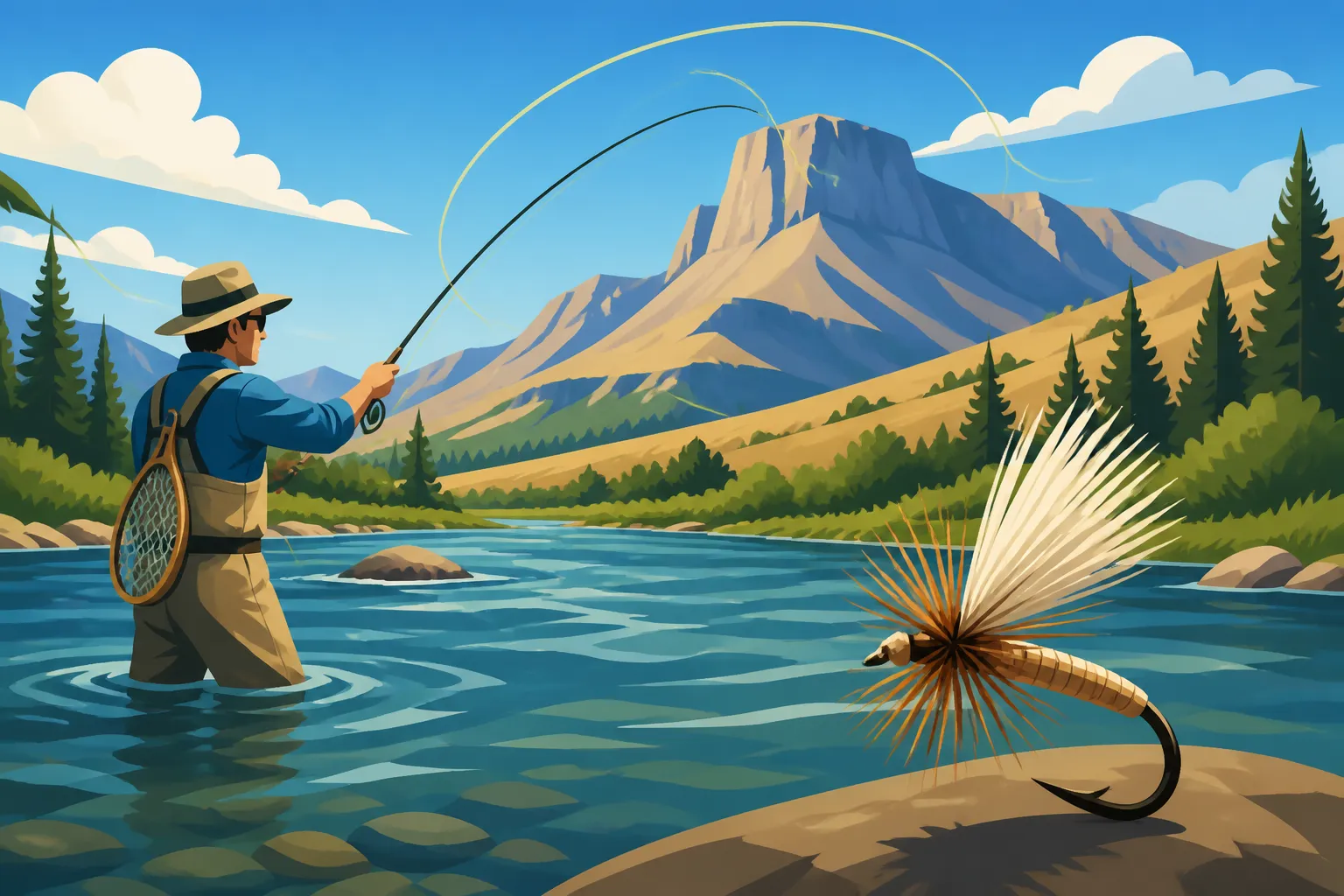
Dry Fly Fishing on the North Platte River
There’s nothing quite like the heartbreak of seeing a perfect rise, knowing big trout are actively feeding, but not being able to present a dry fly successfully. It’s a common frustration on a river as legendary as Wyoming’s North Platte, where the fish are often educated and the conditions can be challenging. This guide is dedicated to helping you unlock the magic of dry fly fishing on this iconic river, transforming those missed opportunities into unforgettable angling moments.
Why Dry Fly Fishing on the North Platte is a Must-Do Experience
The North Platte River, particularly its tailwater sections like Gray Reef and the Miracle Mile, is renowned for its incredible trout population and the consistent presence of aquatic insects. While nymphing often takes center stage due to the sheer density of subsurface food, neglecting dry fly opportunities means missing out on some of the most visually thrilling and satisfying fishing experiences Wyoming has to offer. When the conditions align, and a strong hatch brings these wild fish to the surface, it’s a spectacle every angler dreams of.
The Thrill of the Surface Take
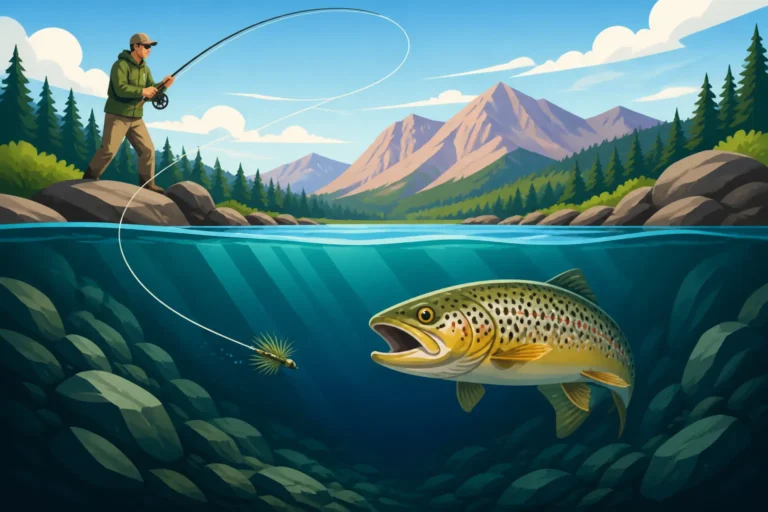
Let’s be honest, there’s an undeniable rush that comes with seeing a trout slowly sip your tiny imitation off the surface. It’s a visual game, a test of your observation skills, casting accuracy, and delicate presentation. Unlike nymphing, where the strike is often felt, dry fly fishing offers a direct, explosive, or sometimes almost imperceptible visual connection to the fish. The North Platte’s clear, cold waters make these surface takes even more vivid, allowing you to watch the entire process unfold. It’s a true angler’s high, and it keeps us coming back for more.
Understanding the North Platte's Unique Dry Fly Opportunities
The North Platte is a complex river system with varying flows and conditions depending on the section and time of year. Below its dams, the water temperature remains relatively stable, fostering robust insect populations. This means that while some rivers have fleeting dry fly windows, the North Platte often offers extended periods where trout are actively feeding on the surface. From tiny midges in the colder months to prolific caddis and mayfly hatches in spring and summer, there's almost always a chance to throw a dry fly. Knowing Best Time of Year to Fish the North Platte River is crucial for planning your trip around these hatches.
Essential Gear for North Platte Dry Fly Success
Having the right tools for the job can make all the difference, especially when you're trying to fool a wary North Platte trout. This isn't just about having a fly rod; it's about having the right fly rod, matched with the appropriate line, leader, and tippet for delicate dry fly presentations. Don't underestimate the impact of properly balanced tackle.
Choosing the Right Rod, Reel, and Line Setup
For most dry fly situations on the North Platte, a 9-foot, 4-weight fly rod is often considered the sweet spot. It offers enough length for good line control and mending, while the 4-weight allows for delicate presentations of smaller flies and provides a sporting fight with the river's typically strong trout. If you anticipate larger, wind-resistant dries or potentially bigger fish, a 5-weight can also be a good choice, especially on wider sections. For a deeper dive into rod choices, check out Best Fly Rod Weight for Wyoming Trout Streams.
Your reel should simply balance your rod and hold your line, backing, and a few feet of additional line. A disc drag is nice, but not strictly necessary for dry fly fishing where you're not usually fighting fish on the reel. As for fly line, a weight-forward floating line is essential. Look for lines designed for delicate presentations or those with a longer front taper to help lay out your leader smoothly and quietly. Brands like Scientific Anglers or Rio offer excellent choices that can really improve your casting accuracy and finesse.
Leaders, Tippet, and Fly Selection
This is where the rubber meets the road for dry fly fishing. A good leader for dry flies needs to turn over smoothly and land softly. A 9-foot tapered leader, finishing with a 4X or 5X tippet, is a great starting point for most North Platte situations. If you're using very small flies (size 20 or smaller) or fishing exceptionally clear, calm water, you might need to drop down to 6X tippet. Always carry a spool of fresh tippet, as you'll be constantly tying on new flies and extending your leader. A good selection of fluorocarbon and monofilament tippet (like Orvis or Rio) is essential.
When it comes to flies, variety is key. The North Platte boasts a diverse insect population, and trout can be incredibly selective. You’ll want to stock your fly box with various sizes and patterns of:
- Mayflies: Pale Morning Duns (PMDs), Blue Winged Olives (BWOs), Green Drakes, Tricos (especially in late summer/fall mornings). Patterns like Parachute Adams, Sparkle Dun, or Extended Body versions are deadly.
- Caddis: Mother's Day Caddis, Yellow Sallies, and various small tan/olive caddis patterns. Elk Hair Caddis, X-Caddis, and Goddard Caddis are consistent producers.
- Midges: Griffiths Gnat, Zebra Midges, Sprout Midges in sizes 18-24. These are important year-round, especially in colder months.
- Terrestrials: Hoppers, ants, and beetles become very important from mid-summer through fall. A good selection of foam hoppers, ants, and beetle patterns can be found on Amazon.
Having a good selection of each in various sizes (from tiny 24s to larger 8s or 10s for hoppers) will prepare you for most hatches.
Mastering Dry Fly Presentation and Mending
Presentation is paramount in dry fly fishing. It's not enough to just cast to a rising fish; your fly needs to land gently, drift naturally, and remain drag-free for a convincing presentation. This is where the artistry and challenge of dry fly fishing truly shine.
Casting Accuracy and Delicate Landings
The North Platte's trout are often highly educated, having seen countless flies drift over their heads. A sloppy cast that slaps the water or lands with a splash will send them darting for cover. Focus on a smooth, controlled casting stroke that allows your fly to settle softly on the water, much like a natural insect would. Practice your accuracy, aiming for precise targets – sometimes just inches upstream of a rising fish. The goal is for your fly to land first, followed by your leader and line, creating as little disturbance as possible. This is especially true when fishing in calm water or during sparse hatches.
The Art of the Drag-Free Drift
This is perhaps the single most important aspect of successful dry fly fishing. A drag-free drift means your fly is moving at the exact same speed as the current, without being pulled or pushed unnaturally by your fly line. Any unnatural movement, or "drag," will immediately alert a trout that something is amiss, and they'll refuse your offering.
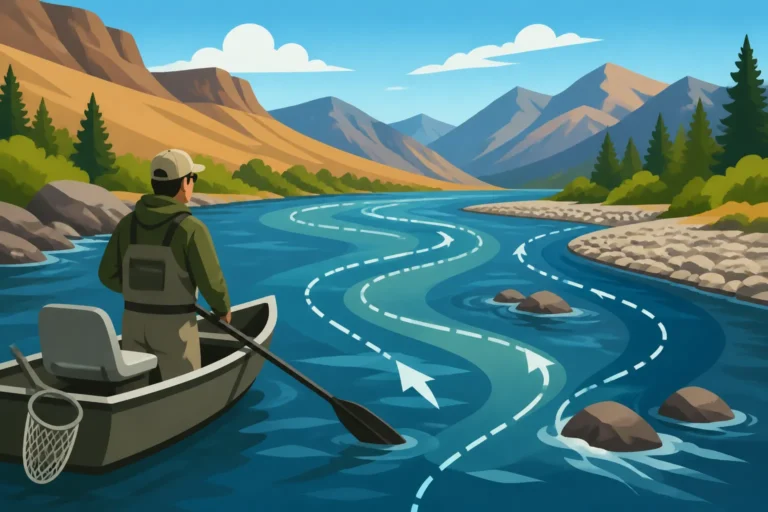
Achieving a drag-free drift often requires constant "mending" – subtly manipulating your fly line on the water to counteract different current speeds. If your line is pulling your fly upstream, throw an upstream mend to put slack in the line between you and the fly. If it's pulling downstream, an aerial mend or a downstream mend can help. It takes practice and keen observation of how your fly is moving relative to the surrounding water. Learning to "read the water" is fundamental, as discussed in How to Read Water When Trout Fishing. Pay close attention to current seams, eddies, and subtle differences in water speed across the river.
Reading the Water for Dry Fly Opportunities
Understanding where trout hold and feed, especially on the surface, is critical for increasing your dry fly success. The North Platte offers a variety of water types, and each presents unique opportunities.
Targeting Riffles, Runs, and Eddy Lines
Trout love structure and current seams where food is funneled to them. When fishing dry flies, pay close attention to:
- Riffles and Pocket Water: These oxygenated, bubbly sections are prime feeding lies, especially during strong hatches. Trout will often hold behind rocks or in small depressions, waiting for insects to drift into their feeding lane. Casting into Reading Riffles and Runs on Wyoming Trout Streams often yields good results.
- Runs: The long, consistent stretches of current are where many North Platte trout hold. Look for predictable rising patterns here, often indicating a steady flow of food.
- Eddy Lines and Seams: Where fast water meets slow water, or where a current brushes against a bank, food accumulates. These "seams" are often incredibly productive, as trout can hold in slower water and easily dart into faster currents to intercept bugs.
- Undercut Banks and Overhanging Vegetation: These areas provide cover and shade, and they're also places where terrestrial insects like ants and grasshoppers might fall into the water. Don't forget to present a grasshopper pattern tightly to an undercut bank, especially on a breezy summer afternoon.
Look for consistent rising patterns. A fish that rises once sporadically might just be a random opportunistic feeder. But a fish that rises every 10-20 seconds in the same general area is actively feeding and is a prime target for a dry fly.
Identifying Hatches and Matching Your Fly
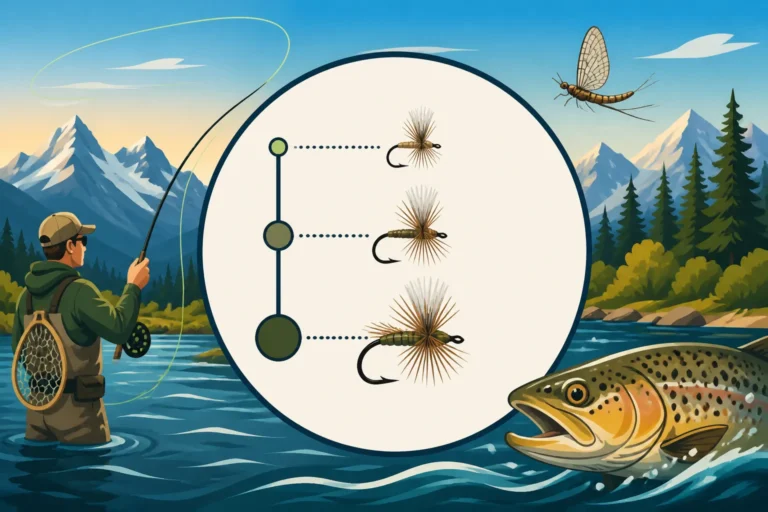
The phrase "matching the hatch" isn't just a quaint saying; it's a cornerstone of successful dry fly fishing. North Platte trout, especially on the more heavily fished sections, can become incredibly selective during a hatch. This means they might only eat a specific size, color, or even specific stage of an insect.
When you see fish rising, take a moment to observe:
- What are they eating? Look for natural insects drifting on the surface. Are they small, dark midges? Larger, tan caddis? Long, slender mayflies?
- How are they eating? A gentle sip often indicates a mayfly duns, while an aggressive splash might be a caddis or a struggling adult.
- Size and Color: Try to find a fly in your box that closely mimics the size and color of the naturals. Don't be afraid to use a magnifying glass (or a good pair of reading glasses from Amazon) to get a closer look at the natural insects.
Sometimes, the trout aren't keying in on the adult stage. They might be eating "emergers" – insects struggling to break free of their nymphal shuck at the surface. In these cases, a "dry-dropper" rig (a dry fly with a small nymph or emerger tied off the bend) can be incredibly effective. Consider patterns like a CDC emerger or a Sparkle Dun. To help with selection, consider what are generally considered Best Wyoming Fly Patterns for Cutthroat Trout, as many of these will apply to other trout species in the North Platte.
Seasonal Considerations and Specific Hatches
The North Platte River's dry fly opportunities ebb and flow with the seasons, dictated largely by water temperatures, flows, and insect life cycles. Knowing what to expect when can help you plan your trips and fill your fly box appropriately.
Spring and Early Summer Hatches
Spring on the North Platte can be a mixed bag, often dependent on runoff and weather. Once flows stabilize and water temperatures begin to climb, around late April to early June, you'll start to see more consistent dry fly action.
- Midges: These tiny insects are a staple year-round but can provide excellent dry fly fishing on warmer spring days, especially on the calmer stretches.
- Blue Winged Olives (BWOs): These small, dark mayflies typically hatch on cloudy, cool, or drizzly days in spring (and again in fall). They can bring large numbers of trout to the surface. Have plenty of BWO dry patterns in sizes 18-22.
- Mother's Day Caddis: Usually in May, this hatch can be truly prolific. Clouds of tan caddis fly over the river, and trout gorge themselves. This is an exciting time for dry fly fishing, often requiring larger Elk Hair Caddis or Goddard Caddis patterns in sizes 14-16.
- Pale Morning Duns (PMDs): As summer approaches, typically starting in June, PMDs become a dominant hatch. These light-colored mayflies (sizes 14-18) are a favorite food for trout, and the hatches can last for several hours in the late morning and early afternoon.
Understanding How Water Temperature Changes Wyoming Trout Behavior will help you predict these hatch timings more accurately.
Mid-Summer and Fall Dry Fly Bonanzas
Mid-summer, from July through August, offers some of the most consistent and varied dry fly fishing, with terrestrials playing a significant role.
- Caddis & PMDs: These hatches often continue, especially in the mornings and evenings.
- Green Drakes: These larger, olive-bodied mayflies can hatch from late June into July, providing opportunities for big fish on larger dry flies (sizes 10-14).
- Yellow Sallies: Small, bright yellow stoneflies that hatch in summer. Trout love them!
- Terrestrials: This is prime time for hoppers, ants, and beetles. Grasshoppers are especially important from late July through September. Wind can blow these insects into the water, triggering aggressive strikes from large trout. Big foam hopper patterns (sizes 8-12) fished tight to the banks can be incredibly effective. Don't forget smaller ants and beetles for quieter water.
- Tricos: In late summer and early fall, particularly in late August and September, the tiny black Trico mayflies hatch in massive numbers, usually first thing in the morning. This requires incredibly delicate presentations with tiny dry flies (sizes 22-26) and fine tippet. The "spinner fall" later in the morning, when the mated adults fall to the water, can be even more intense. This is a classic example of Matching the Hatch on Wyoming Rivers.
As fall progresses into October, BWO hatches return, and terrestrials remain important until the first hard freezes. These cooler months can offer some of the best dry fly fishing for larger, more aggressive trout.
Troubleshooting and Advanced Dry Fly Tactics
Even on the North Platte, there will be days when the fish seem to ignore your perfect presentation. Don't get discouraged! Often, a slight adjustment to your technique, fly, or approach can make all the difference.
When Fish Refuse Your Fly: What to Change
It's a frustrating scenario: you see a trout rising steadily, you make what feels like a perfect cast, and the fish either ignores your fly or, even worse, "noses" it without taking. This selectivity is common on heavily fished waters. Here's your troubleshooting checklist:
- Check Your Drift: Is your fly truly drag-free? Even the slightest unnatural drag will turn fish off. Re-evaluate your mending and line control.
- Size Matters: Your fly might be the right pattern, but the wrong size. Go one size smaller. If that doesn't work, try one size larger. Trout can be surprisingly precise.
- Tippet Size: Is your tippet too heavy or shiny? Try dropping down a size (e.g., from 4X to 5X). Finer tippet creates less disturbance and allows the fly to move more naturally. A spool of your favorite fluorocarbon tippet from Amazon can be invaluable here.
- Presentation Angle: Are you casting directly at the fish? Sometimes, casting slightly upstream or downstream of the fish's lie, allowing the fly to drift into its feeding lane from a different angle, can be more effective.
- Subtle Variations: Is the fish eating emergers instead of full adults? Try a Sparkle Dun or a Comparadun pattern that sits lower in the water. Or, conversely, try a high-floating parachute pattern if they're struggling with duns.
- Move On: If a fish consistently refuses your fly despite all your efforts, sometimes it's best to simply move on to another rising fish. There might be something subtly different about its feeding behavior or its specific holding lie that makes it uncatchable.
Fishing the Dry-Dropper and Other Hybrid Rigs
While this guide focuses on pure dry fly fishing, the North Platte sometimes calls for a strategic blend of techniques. A dry-dropper rig is perhaps the most common and effective hybrid. This involves tying a small nymph or emerger (your "dropper") off the bend of your buoyant dry fly.
The dry fly acts as both an indicator and an attractor, while the nymph or emerger fishes subsurface, imitating an insect rising to the surface or drifting just below. This is incredibly effective when trout are indecisive or when a hatch is just starting or winding down. You might be targeting fish eating subsurface, but if a fish takes the dry, that's a bonus! Often, the dry fly on these rigs is a slightly larger, more visible pattern like a Chubby Chernobyl or a larger Elk Hair Caddis, allowing it to support the weight of the dropper. Even a small tungsten-bead nymph can be effectively fished this way.
Another tactic, especially during prolific hatches where you want to keep track of a tiny dry fly, is to use a slightly larger, more visible "sighter" dry fly tied to your leader, and then tie a very small, realistic dry fly a foot or two behind it. This allows you to spot the general area of your tiny offering, and you watch for any subtle disturbance near either fly.
Conservation and Etiquette on the North Platte
The North Platte River is a precious resource, and responsible angling is crucial for its continued health and the enjoyment of all who visit. Practicing good etiquette and conservation helps preserve the dry fly fishing opportunities for generations to come.
Handling Trout with Care: Catch and Release Best Practices
Many of the wild trout in the North Platte have been caught and released multiple times. Minimizing stress and injury to these fish is paramount. Here are some key practices:
- Wet Your Hands: Always wet your hands thoroughly before handling a fish. Dry hands can remove the fish's protective slime layer, leaving it vulnerable to disease.
- Keep Them Wet: Try to keep the fish in the water as much as possible, especially during photos. A few seconds out of the water is usually fine, but prolonged exposure, particularly in warm weather, can be fatal.
- Use Barbless Hooks: Crimp down the barbs on all your dry flies. This makes hook removal much easier and less damaging to the fish. Many sections of the North Platte, like those near Grey Reef, even have specific regulations regarding barbless hooks.
- Support the Fish: If you must lift a fish for a quick picture, support its body horizontally with two wet hands, one gently under the belly and the other supporting the tail. Avoid squeezing or hanging the fish vertically by its jaw or tail.
- Revive Carefully: If a fish is lethargic after the fight, hold it gently in the current, facing upstream, until it can swim away on its own. Don't pump it back and forth; this can actually reduce oxygen flow over its gills. These techniques are elaborated in Catch and Release Best Practices for Trout.
Respecting Other Anglers and the Environment
The North Platte is popular, and you'll often share the water with other anglers, whether they're wading, floating, or fishing from the bank.
- Give Space: Always give other anglers plenty of space. A good rule of thumb is to stay at least a few hundred feet upstream or downstream of another angler, especially if they are wade fishing. If you're floating, try not to anchor directly above or below someone actively fishing.
- Communicate: A friendly wave or a quick chat can go a long way. If you're approaching another angler, ask if they mind if you pass or fish a nearby spot.
- Pack It In, Pack It Out: Leave no trace. Take all your trash, including discarded fishing line and tippet, out with you. Consider picking up any litter you find, even if it's not yours.
- Respect Private Property: Be aware of land ownership and only access the river through designated public access points or with landowner permission. Wyoming has specific rules regarding stream access.
By following these simple guidelines, you ensure that the North Platte remains a world-class dry fly destination for everyone.
North Platte Dry Fly Fishing Seasons at a Glance
To help you visualize the best times for dry fly action on the North Platte River, here’s a quick overview. Remember, these are general guidelines, and actual hatch timings can vary year to year due to weather and water conditions.
| Season | Dominant Hatches/Insects | Key Dry Flies (Sizes) | Notes |
|---|---|---|---|
| Early Spring | Midges, Early BWOs | Griffiths Gnat (20-24), BWO Parachute (18-22) | Cold water, fish can be sluggish; focus on slow runs and eddies. |
| Late Spring | Mother's Day Caddis, PMDs, BWOs, March Browns | Elk Hair Caddis (14-16), Parachute PMD (16-18), BWO Parachute (18-20) | Excellent dry fly action once flows stabilize; can be very prolific. |
| Early Summer | PMDs, Green Drakes, Golden Stones, Yellow Sallies, Caddis | Parachute PMD (16-18), Green Drake (10-14), Chubby Chernobyl (8-12), Elk Hair Caddis (14-18) | Strong hatches and varied options; hoppers may start to appear. |
| Mid-Summer | Terrestrials (Hoppers, Ants, Beetles), PMDs, Caddis, Tricos | Foam Hoppers (8-12), Ant/Beetle (14-18), Parachute PMD (16-18), Trico Spinner (22-26) | Terrestrials are key; Trico spinner falls in the morning. |
| Fall | BWOs, Terrestrials (Hoppers), Midges, Mahoganies (smaller fall mayflies) | BWO Parachute (18-22), Foam Hoppers (10-14), Griffiths Gnat (20-24) | Cooler temps can bring out aggressive fish; excellent brown trout fishing. |
| Winter | Midges | Griffiths Gnat (20-24), Flimsy Midge (22-26) | Sparse but intense dry fly opportunities on warm, calm days. |
This table serves as a handy reference, but always check current hatch reports and water conditions before you head out. A quick call to a local fly shop will often give you the most up-to-date information.
Disclaimer
Please note that fishing regulations, conditions, and recommended techniques can change. Always consult the most current Wyoming Game and Fish Department regulations before heading out on the water. This guide is for informational purposes only and should not be considered a substitute for official regulations or expert advice.