Best Technique for Fishing High and Off-Color Water
Ever plan a perfect fishing trip to your favorite Wyoming river, only to arrive and find the water looking like a chocolate milkshake after a big rain or snowmelt? It's a truly disheartening sight, especially when you've traveled miles with high hopes for clear water and hungry fish. We've all been there, staring at that raging, murky torrent and wondering if it's even worth rigging up a rod. But don't despair! While it certainly changes the game, high and off-color water doesn't have to mean a wasted day. With the right adjustments to your gear and technique, you can absolutely still find success. This guide will walk you through exactly how to tackle these challenging conditions, turning potential frustration into a rewarding fishing adventure.
Understanding High and Off-Color Water Challenges
When a river or lake swells and turns opaque, it presents a unique set of challenges for anglers. This isn't just about the aesthetics; the changes fundamentally alter how fish behave and interact with their environment. Understanding why this happens and how it affects the fish is the first step to adapting your strategy.
Why Wyoming Waters Get High and Muddy
Wyoming's rivers and streams are dynamic systems, heavily influenced by weather patterns and seasonal changes. The most common culprits for high and off-color water are:
- Spring Runoff: This is perhaps the most significant factor. As the abundant winter snowpack in the mountains begins to melt rapidly in spring and early summer, rivers swell dramatically. This surge of water carries with it sediment, silt, and organic debris, transforming crystal-clear streams into turbid, fast-moving waterways. Anyone who fishes Wyoming in May or June knows this phenomenon well; it's why many anglers ask, "Is Runoff Season a Bad Time to Fish Wyoming Rivers?" The answer, as you'll soon learn, is not necessarily!
- Heavy Rainstorms: A significant rain event, especially after a dry spell, can quickly blow out a river or muddy up a lake. The rainfall washes soil from the banks and surrounding landscape into the water, decreasing visibility and increasing flow. This can happen any time of year, but it's particularly noticeable after intense summer thunderstorms.
- Dam Releases: While less frequent, controlled releases from reservoirs can also drastically increase river flows downstream. If the reservoir itself is turbid, or if the increased flow scours the riverbed, the water can become off-color.
These conditions impact fish in several ways. The increased current often forces fish to seek refuge in slower pockets, eddies, or behind structure. The reduced visibility means fish rely less on sight and more on other senses like their lateral line (to detect vibrations) and smell. This sensory shift is key to our approach. Moreover, the influx of nutrients and stirred-up invertebrates can sometimes mean a feeding frenzy, if you can present your offering correctly.
How Murky Water Affects Fish Behavior
Imagine trying to navigate a dense fog – that's what it's like for a fish in off-color water. Their primary sense of sight is severely limited. This forces them to behave differently:
- Seeking Shelter from Current: Fast, high water is exhausting. Fish will seek out any seam, eddy, undercut bank, or large rock that offers a break from the main current. These become prime ambush points where they can conserve energy and wait for food to drift by. Knowing "Where Trout Hide in Fast-Moving Water" is absolutely critical in these scenarios.
- Reduced Visibility and Sensory Reliance: With sight diminished, fish depend more on vibrations and scent. This means loud, flashy, or smelly baits and lures become more effective. They're trying to locate food in a vast, dark expanse, so anything that makes a strong impression will stand out.
- Closer to the Bottom: The heaviest particles and most dislodged food items (like nymphs, worms, and sculpins) often move along the riverbed. Fish, particularly trout, will often hug the bottom, searching for these easy meals. This informs our presentation techniques.
- Opportunistic Feeding: High water often washes a bounty of new food into the system – worms, drowned terrestrial insects, and dislodged aquatic invertebrates. This can make fish more aggressive feeders, even if visibility is low, as long as they can detect your offering.
Understanding these behavioral shifts is paramount. It tells us where to cast, what to use, and how to present it to maximize our chances.
Essential Gear and Tackle Adjustments for Murky Conditions
Fishing high and off-color water isn't just about technique; it often requires a practical shift in your gear setup. You need equipment that can handle stronger currents, present larger offerings, and create enough presence to be noticed in the murk. Don't worry, you don't need to buy a whole new setup, but some smart adjustments can make a world of difference.
Selecting the Right Rod, Reel, and Line
The increased water flow and larger lures often demand a more robust setup than you might typically use in clear, low-water conditions.
- Rods: For spinning gear, a medium-heavy action rod, perhaps 6'6" to 7'6" in length, is often ideal. This provides the backbone needed to cast heavier lures and baits, and to control larger fish in strong currents. If you're a fly angler, you might consider bumping up a rod weight or two, say from a 5-weight to a 6- or 7-weight, to handle heavy nymph rigs, larger streamers, and manage thick fly lines and indicators in turbulent water.
- Reels: Your standard reel should be fine, but ensure it's spooled with fresh line. You might experience more snags in off-color water, and you don't want old, weak line breaking prematurely.
- Line: This is where an important adjustment comes in. Monofilament line, with its inherent stretch, can be a good choice in high water because it acts as a shock absorber against powerful fish runs and the drag of the current. However, many anglers prefer the low-stretch and abrasion resistance of braided line, especially if fishing around heavy cover. If using braid, consider a fluorocarbon leader of 10-15 lb test. Why fluorocarbon? While fish aren't relying on sight as much, it's still good practice, and its abrasion resistance against submerged debris is a huge plus. Don't be afraid to go heavier on your leader or main line. "How Much Line Weight to Use for Trout" can be a helpful read here. Forget the finesse in these conditions; you need strength.
Terminal Tackle: Weights, Hooks, and Leaders
This is where you'll make some of the most critical changes to ensure your bait or lure gets down to where the fish are holding and stays there.
- Weight, Weight, Weight: This cannot be stressed enough. High water means increased current, and you need to use significantly more weight to get your offering to the bottom, where the fish are often hunkered down.
- For spin fishing: Think heavier bullet weights, split shots, or even slinky weights for drift fishing bait. The goal is to feel your weight ticking along the bottom, not sailing over it.
- For fly fishing: You'll be adding more split shot to your nymph rigs, sometimes a lot more than you're used to. Tungsten nymphs, which are denser and sink faster, also become incredibly valuable. Using an indicator that can support a lot of weight without dragging under is also crucial.
- Larger, Stronger Hooks: Fish tend to be less finicky about hook size in murky water. Since they're relying on vibration and scent, they're often hitting more aggressively. Don't be afraid to use slightly larger, strong hooks, especially when fishing bait.
- Heavier Leaders: As mentioned with line, thicker, more abrasion-resistant leaders are your friend. You'll be bumping against rocks, snags, and other debris on the bottom. A 6-8 lb fluorocarbon leader for trout (where you might normally use 4 lb) or even 10-12 lb for larger species like brown trout in rivers, is a wise choice. Sites like Amazon often have a fantastic selection of fluorocarbon leader material in various strengths if you need to stock up.
High-Visibility Lures and Baits
Since visual cues are reduced, your lures and baits need to appeal to a fish's other senses. This means focusing on vibration, flash, profile, and scent.
- Colors that Pop: Forget your subtle, natural patterns for a moment. In off-color water, fish respond to high-contrast colors. Bright, fluorescent colors like chartreuse, hot pink, orange, or fire tiger patterns really stand out. Think about the colors that create a stark contrast against the murky background. "Best Lures for Wyoming Rainbow Trout" often includes several high-visibility options perfect for these conditions.
- Lures with Vibration and Flash: Anything that displaces a lot of water or throws off strong vibrations will get a fish's attention.
- Spinners: Larger bladed spinners (like a Panther Martin or a larger Mepps Aglia) that thump and flash are incredibly effective. A larger blade creates more vibration, signaling its presence. Learning "How to Fish a Spinner for Rainbow Trout" can be adapted for these conditions by focusing on slower retrieves and brighter colors.
- Spoons: Wobbly spoons like a Kastmaster or Dardevle create flash and a distinct movement profile.
- Plugs/Crankbaits: These can be great for aggressive fish. Choose models that dive to the depth you expect fish to be and have a good rattling sound or strong wobbling action. Brands like Rapala offer many options.
- Scented Baits and Soft Plastics: Scent becomes a superpower in off-color water.
- Natural Baits: Worms, salmon eggs, powerbait, and even cut bait (where legal) are excellent choices because of their strong natural scent.
- Scented Soft Plastics: Many soft plastic lures come pre-scented or can be enhanced with an applied fish attractant. Look for plastics with a lot of movement, like grubs, tubes, or creature baits, that also allow you to add a strong scent.
- Streamers for Fly Anglers: For fly fishing, large, dark-colored streamers with a lot of movement are deadly. Think black, olive, or brown Woolly Buggers, or patterns with flashabou. Adding a dab of scent to your flies can also be surprisingly effective. Check out "How to Fish a Streamer for Trophy Brown Trout" for inspiration.
When selecting your gear, prioritize durability and effectiveness in low-visibility, high-flow environments. It’s about making your offering impossible to ignore.
Proven Fishing Techniques for High and Off-Color Waters
Now that your gear is dialed in, let's talk about the techniques that put you directly in front of those fish. Remember, fish are often hunkered down, conserving energy, and relying on senses beyond sight. Your presentation needs to cater to these realities.
Slow and Low: The Mantra for Murky Water
This is the golden rule for fishing in high and off-color conditions. Fish are less likely to chase a fast-moving bait or fly. They need time to detect it, move towards it, and commit to the strike.
- Slower Retrieves: If you're spin fishing, reel in slower than you normally would. Allow your lure or bait to spend more time in the strike zone. Think of it as a methodical sweep rather than a quick retrieve.
- Bouncing the Bottom: As mentioned, fish often hug the bottom. Your goal is to get your offering down there and keep it there, gently ticking along the substrate. This means using enough weight to maintain contact with the bottom without constantly snagging. For bait anglers, a simple bottom-bouncing rig with a worm or PowerBait is incredibly effective.
- Targeting the Seams and Eddies: Fish will congregate in areas where the current is reduced. Look for:
- Seams: The transition line between fast-moving water and slower water. This is a prime holding spot where fish can wait for food to be swept past them in the faster current, then dart out to grab it.
- Eddies: Swirling pockets of slower water behind large rocks, logs, or points. Fish will sit in the slack water of an eddy, facing upstream, ready to ambush anything that drifts in.
- Undercut Banks and Submerged Structure: Any feature that breaks the current provides shelter. Cast close to these structures.
- Learning "How to Read Water When Trout Fishing" becomes even more crucial in these conditions, as identifying these subtle current breaks is key.
Bait Fishing Strategies
Bait truly shines in off-color water because of its potent natural scent. Fish don't need to see it clearly to find it.
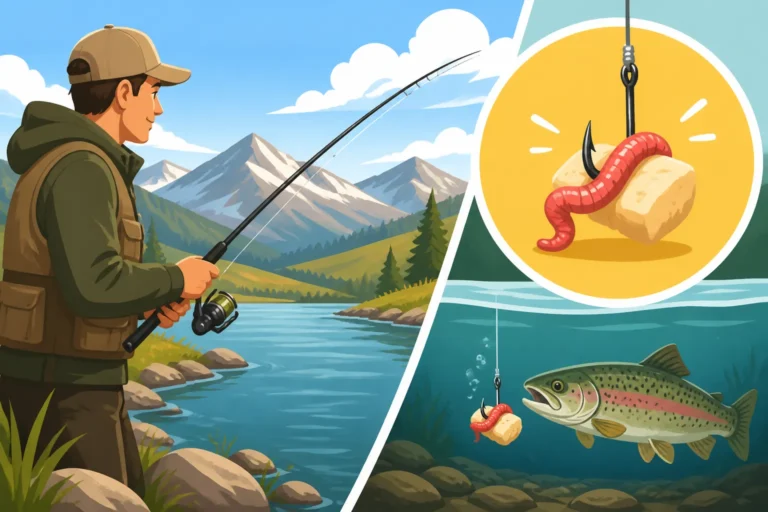
- Worms (Nightcrawlers, Earthworms): The absolute king of bait in muddy water. Worms provide both scent and vibration, and their wriggling action is irresistible. Rig them on a single hook with enough weight to get them to the bottom, allowing them to tumble naturally in the current.
- Salmon Eggs/PowerBait: These highly scented options are excellent, especially for stocked trout. Use a small glob on a light hook (like a treble hook or an egg hook) with a split shot or two a few inches above to keep it near the bottom.
- Marshmallows and Corn (Check Regulations!): While less common, some anglers use these, particularly for carp or other species. Always double-check local regulations; some waters restrict these baits.
- Dead Baits and Cut Baits: For larger predatory fish like pike or sometimes even brown trout, a chunk of dead baitfish can be very effective, releasing a strong scent trail. Again, ensure legality in your target water.
When bait fishing, focus on a dead drift or a very slow retrieve. Let the scent do the work, and be patient for the strike.
Lure Fishing Strategies
Spinning lures offer vibration, flash, and often a larger profile that fish can detect from further away.
- Heavy Spinners and Spoons: Cast upstream or slightly quartering upstream and allow your lure to sink before beginning a slow, steady retrieve. You want the blades to be barely turning, creating vibration, or the spoon to wobble tantalizingly. The key is to keep it near the bottom.
- Deep-Diving Crankbaits: If you know fish are holding in deeper pools or along distinct ledges, a deep-diving crankbait with a strong wobble and rattle can be very effective. These lures often come in high-contrast colors perfect for murky conditions.
- Jigs with Scented Trailers: A lead-head jig tipped with a scented grub, worm, or a chunk of PowerBait is a versatile option. Bounce it along the bottom, or make short hops and pauses. The combination of weight, profile, and scent is a powerful trifecta.
- Focus on the Take: In off-color water, strikes can be subtle. The line might just stop moving, or you might feel a slight tap. Watch your line carefully for any unnatural movement, and be ready to set the hook.
Fly Fishing Strategies
Fly fishing in off-color water requires a major departure from delicate dry fly presentations, but it can be incredibly rewarding for aggressive trout.
- Heavy Nymph Rigs: This is your bread and butter. You need to use large, heavily weighted nymphs (often tungsten beaded) and substantial amounts of split shot. The goal is to get your flies deep, fast. "Nymphing Techniques for Wyoming Tailwaters" can give you a strong foundation, but be prepared to add even more weight.
- Flies to Use: Think larger patterns like Pat's Rubber Legs, Girdle Bugs, San Juan Worms (especially in a vibrant red or pink), Prince Nymphs, or larger stonefly patterns. Darker colors like black and olive often provide better contrast.
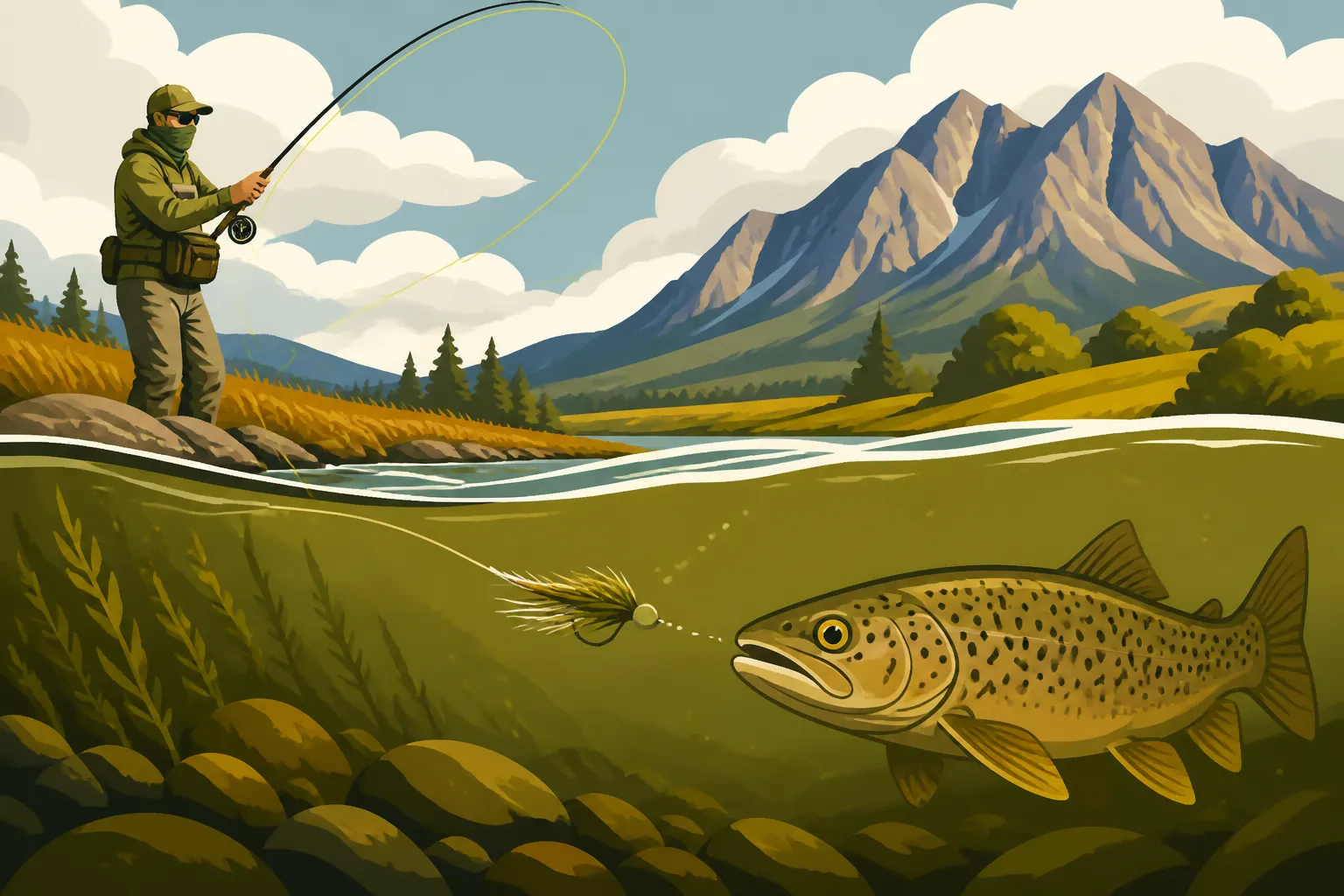
- Large Streamers: Big, flashy, and dark streamers are excellent for imitating baitfish or large aquatic insects dislodged by the current. Fish them on a sinking line or with heavy split shot, stripping them slowly and erratically to mimic a struggling creature. Colors like black, olive, brown, or white can be very effective.
- Indicator Fishing: Use a highly visible indicator that can support the heavy weight of your nymph rig. Keep your drifts short and focused on the seams and slower water.
- Short, Powerful Casts: You won't be making long, graceful casts. Focus on accurate, powerful casts to get your heavy rig into the desired holding water.
- "High-Sticking": This technique involves holding your rod tip high to keep as much line off the water as possible, reducing drag and allowing your heavy nymphs to sink vertically and maintain a more natural drift in turbulent flows.
- Scent on Flies: Don't be shy about adding a tiny dab of scent to your nymphs or streamers. In very murky water, this extra attractant can make a huge difference.
Remember, the goal is to get your offering in front of the fish at their depth, in their comfort zone, and with enough presence to trigger a strike. It’s all about meeting the fish where they are.
Safety Considerations and Best Practices
Fishing high and off-color water is not without its risks. The same conditions that make fishing challenging can also make it dangerous. Prioritizing your safety is non-negotiable.
Assessing Water Conditions Safely
Before you even step into the water, take a good look around.
- Check Flow Rates and Forecasts: Always check stream gauges and weather forecasts before heading out. The Wyoming Game and Fish Department website is an excellent resource for real-time flow data. If flows are exceptionally high or predicted to rise further, it might be best to choose a safer alternative or postpone your trip.
- Observe the Water:
- Current Speed: Is the current so fast that you can't realistically wade or maintain a safe footing?
- Debris: Are large logs, branches, or other significant debris floating down the river? These can be hazardous to waders and boaters alike.
- Water Level: Has the water risen to levels that cover familiar landmarks or create new, dangerous channels?
- Avoid Unknown Waters: If you're unfamiliar with a particular stretch of river, especially during high water, err on the side of caution. It's much safer to stick to known, accessible areas where you understand the bottom contour and current patterns.
Remember, fish are not worth risking your life. There's always another day to fish.
Essential Safety Gear for High Flows
Being prepared with the right safety gear can make all the difference if something goes wrong.
- Wading Staff: This is perhaps the most important piece of gear for wading in high or swift water. A sturdy wading staff provides a crucial third point of contact, helping you maintain balance and test the depth and stability of the bottom before you take a step. It also helps you recover if you stumble.
- Wading Belt: Always wear a wading belt, cinched tightly. In the event of a fall, it helps prevent your waders from filling completely with water, which can be incredibly dangerous.
- Personal Flotation Device (PFD): For anyone fishing from a boat, raft, or even wading in deep, swift currents, a PFD is a smart choice. It can be a lifesaver.
- Sturdy Wading Boots with Good Traction: Felt soles are excellent for slippery rocks, but they can be prohibited in some areas to prevent the spread of aquatic invasive species. Rubber soles with studs or cleated soles offer superior grip in strong currents and on uneven, slippery riverbeds.
- Communication Device: Carry a fully charged cell phone (in a waterproof case) or a satellite messenger like a Garmin InReach, especially if fishing alone or in remote areas.
- Buddy System: Whenever possible, fish with a buddy. They can assist you if you get into trouble.
Ethical Angling and Environmental Awareness
Even in challenging conditions, our responsibility to the fishery and environment remains.
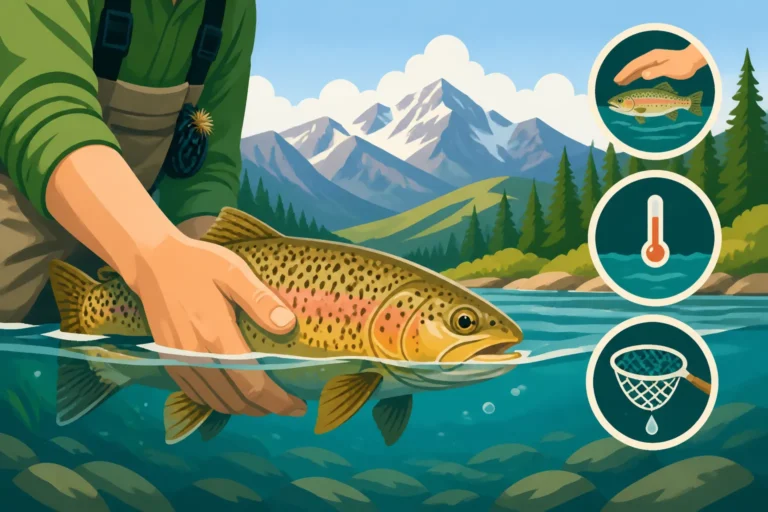
- Catch and Release Practices: If you're practicing catch and release, be extra mindful of the fish's well-being. Fighting a fish in strong currents can exhaust it more quickly. Land the fish as quickly and gently as possible, keep it in the water as much as possible for photos, and ensure it's revived properly before release.
- Respect Private Property: High water doesn't change property lines. Always be aware of "Fishing From Boats vs Banks: Different Rules" and respect private land. Obtain permission if you plan to access waters through private property.
- Avoid Spreading Invasive Species: High water can inadvertently move invasive species. Always clean, drain, and dry your gear, boat, and waders thoroughly between fishing trips to different waters. This is vital in Wyoming to protect our pristine fisheries.
By taking these precautions and being mindful of your surroundings, you can enjoy fishing in high and off-color water safely and responsibly, increasing your chances of success and creating memorable experiences on Wyoming's beautiful rivers.
| Technique/Lure Type | Best for Off-Color Water | Why It Works | Notes |
|---|---|---|---|
| Natural Baits | Worms, Salmon Eggs, Cut Bait | Strong scent trail, natural food source, high appeal to lateral line | Rig heavy, allow for slow drift or bottom bouncing. Check local regs. |
| Heavy Spinners | Larger blades (e.g., Mepps Aglia, Panther Martin) in bright colors (chartreuse, orange) | Creates strong vibration, high visual contrast, flash from blade rotation | Retrieve slowly, keep near bottom, target current seams. |
| Wobbling Spoons | Kastmaster, Dardevle in bright colors or chrome/gold | Distinct wobbling action, flash, heavy weight for casting and sinking | Good for casting into deep pools or across strong currents. |
| Deep-Diving Crankbaits | Rattling, wide-wobbling models in bright colors or fire tiger pattern | Strong vibration and sound, aggressive profile, reaches depth | Great for targeting submerged structure or defined drop-offs. |
| Jigs with Scented Trailers | Dark-colored jigs with scented grubs or plastic worms (e.g., PowerBait Power Grubs) | Combines weight for depth, profile, and irresistible scent | Fish with a hop-and-drop retrieve along the bottom. |
| Heavy Nymph Rigs (Fly Fishing) | Tungsten-beaded nymphs (Pat's Rubber Legs, San Juan Worms), multiple split shot, high-viz indicator | Gets flies deep quickly, mimics dislodged food, good profile | Use shorter drifts, target current breaks, consider a larger rod. |
| Large Streamers (Fly Fishing) | Black, olive, brown Woolly Buggers, articulated streamers, patterns with flashabou | Mimics baitfish/large insects, creates movement and vibration | Fish on a sinking line or with heavy weight, slow, erratic strips. |
Disclaimer
Fishing conditions can change rapidly. Always consult the latest Wyoming Game and Fish Department regulations before heading out, as rules for specific waters, bag limits, and seasons can vary. Safety should always be your top priority when fishing in high water or challenging conditions.