Where Trout Hide in Fast-Moving Water
There’s nothing quite as exhilarating, and sometimes as frustrating, as trying to fish a fast-moving river or stream in Wyoming. You see all that beautiful, oxygenated water, but where on earth do the trout actually hang out without being swept away? It’s a common challenge, leaving many anglers scratching their heads, but fear not! This guide will break down the secrets to understanding where trout hide in fast-moving water, giving you the knowledge to approach these dynamic environments with confidence and success.
Understanding Fast Water Dynamics and Trout Behavior
When you look at a rushing river, it might seem like a chaotic, relentless force, but for a trout, it's a finely tuned machine. They've evolved to thrive in these conditions, and their survival depends on conserving energy while maximizing feeding opportunities. This means they're constantly looking for prime real estate—spots where the current is just gentle enough to allow them to hold their position without expending too much effort, but close enough to the main flow to ambush drifting food.
The Trout's Instinct for Efficiency and Safety
Imagine trying to stand upright in a powerful current all day long. Exhausting, right? Trout feel the same way. Their primary goal in fast water is energy conservation. They're cold-blooded creatures, and burning too many calories fighting the current means less energy for growth, spawning, and escaping predators. So, they instinctively seek out "holding lies" – places where the water flow is significantly reduced, offering a comfortable break from the main current. These spots might be subtle, just a foot or two wide, but they are goldmines for a hungry trout.
Beyond energy, safety is a huge factor. Fast-moving water often exposes trout to aerial predators like osprey and eagles, or even land-based threats along the banks. Holding close to structure, under cover, or in deeper, slower pockets provides a sense of security. It’s a delicate balance: they want to be out of the full force of the current but still positioned to dart out and grab a passing meal, then quickly retreat to safety. Understanding this fundamental drive is the first step to knowing where to cast.
How Current Creates Holding Lies
The physics of water flow plays a crucial role in creating these coveted holding lies. Water is a fluid, and as it encounters obstructions or changes in depth, its speed and direction are altered. Rocks, submerged logs, changes in the riverbed, and even irregularities in the bank all create micro-environments where the current slows down dramatically. These are the places trout instinctively gravitate towards. Think of it like a swimmer in a fast-flowing river finding a calm eddy behind a large boulder – that's precisely what a trout does, just on a much smaller scale.
The current also delivers food directly to them. Insects, larvae, small fish, and other aquatic delicacies are swept downstream, and trout position themselves strategically to let this natural conveyor belt bring dinner right to their noses. The trick for us anglers is to identify these seams and pockets where the food funnels and the trout are waiting. A good starting point is always to look for anything that disrupts the smooth flow of the water, as these disruptions often create the perfect ambush points.
Prime Holding Lies in Riffles and Runs
Riffles and runs are often the most intimidating parts of a river for anglers, but they are also incredibly productive. These sections are characterized by broken, choppy water and relatively consistent depth. Don't let the turbulence fool you; beneath that surface commotion are numerous places where trout are actively feeding and holding. Learning to read these seemingly chaotic stretches is a skill that will pay dividends on any Wyoming trout stream.
Pocket Water: Micro-Havens in Turbulent Flows
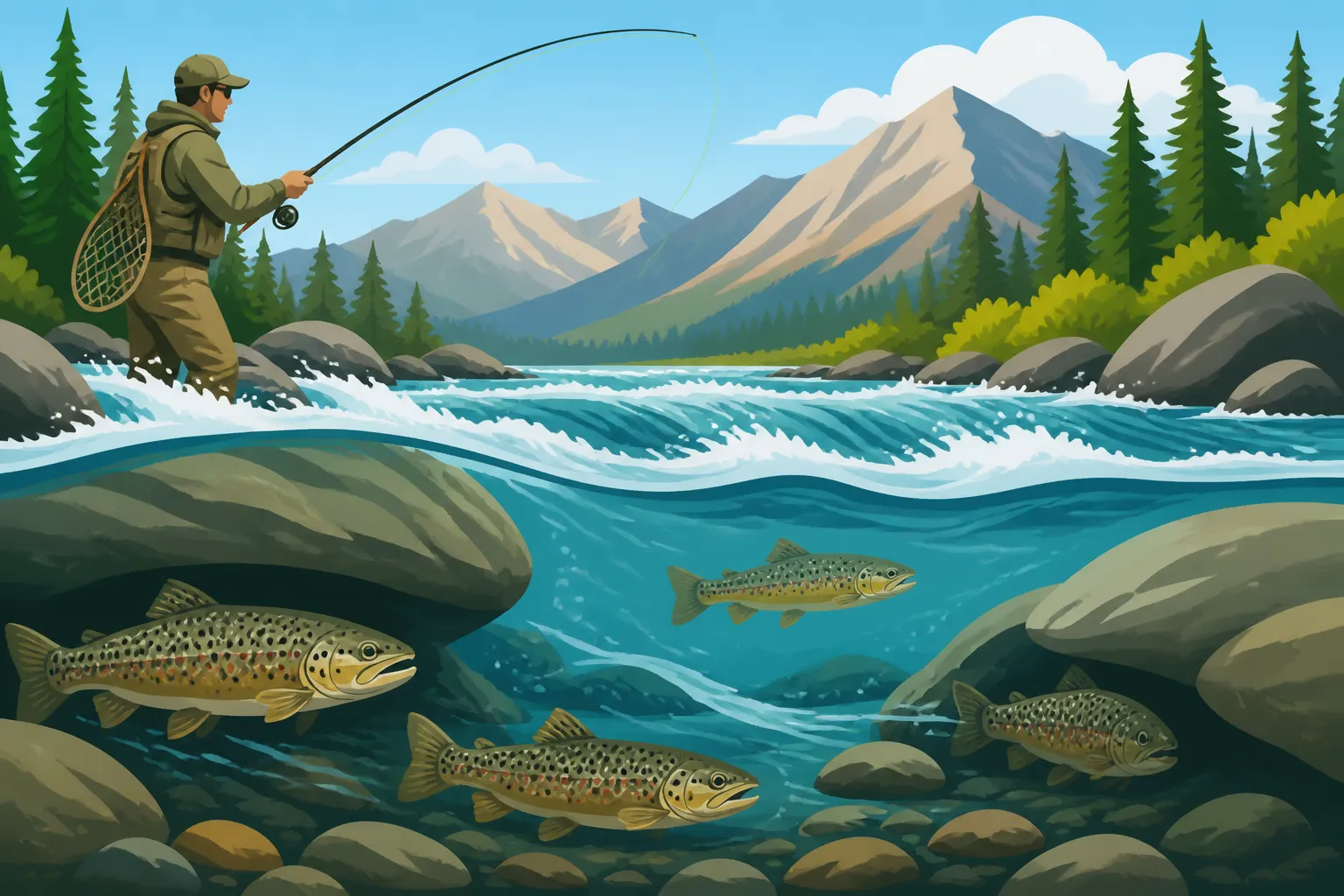
Pocket water is exactly what it sounds like: small, calm "pockets" of water created behind or in front of obstructions in a faster current. These obstructions can be boulders, bedrock formations, submerged logs, or even significant changes in the riverbed contour. A trout can sit in the relatively slower water of a pocket, conserving energy, while waiting for food to drift past in the faster current on either side. These pockets are often found in riffles or around rapids, where the main flow is quite swift.
To fish pocket water effectively, you need precise casting and a good understanding of your drift. Often, a short, accurate cast upstream of the pocket is all it takes, allowing your fly or lure to sink naturally into the calmer water. These spots can hold surprisingly large fish, as the constant food supply and cover offer ideal conditions. Always remember that the biggest fish will often take the prime lie, so if you catch a small one, there might be a larger fish nearby in an even better spot. You'll often find yourself doing short, targeted casts, almost like a sniper, to hit these small windows of opportunity.
Seams and Current Breaks: Where Fast Meets Slow
One of the most fundamental principles of finding trout in moving water is to look for "seams." A seam is simply the boundary line where a fast current meets a slower current. Imagine two rivers flowing side by side, one rushing and one meandering; the line between them is a seam. On a trout stream, these can be formed by a large boulder, a log, a drop-off, or even just the slower water along the bank. Trout love seams because they offer the best of both worlds: reduced current to hold their position and a constant conveyor belt of food being carried by the faster flow.
These current breaks are often visible as distinct lines or changes in the water's surface texture. The fast current will typically carry a lot of food, and trout will sit just inside the slower water, nose pointed upstream, waiting for morsels to drift into their zone. This makes them ideal targets for drifting nymphs or streamers. When you're trying to figure out How to Read Water When Trout Fishing, paying close attention to these seams is paramount. You might try casting your fly into the faster water upstream and letting it drift naturally into the slower seam where a trout is likely waiting. It’s a technique that requires patience and practice but yields consistent results.
Undercut Banks and Overhanging Vegetation: Shelter and Shade
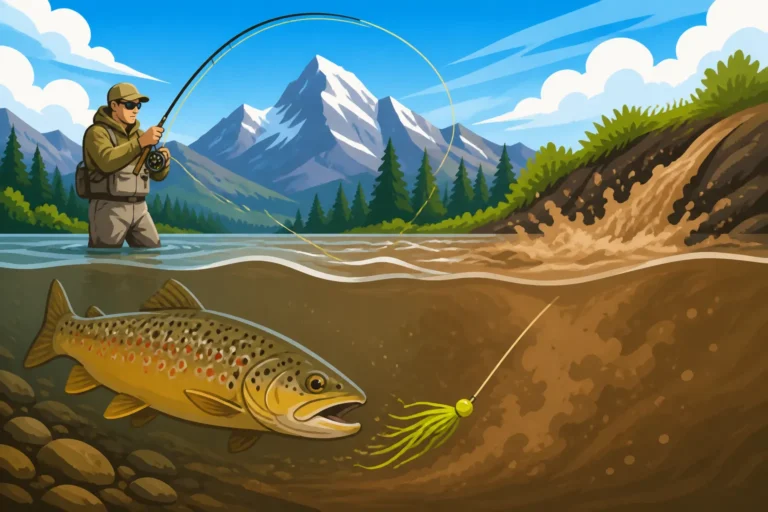
Don't neglect the edges! Undercut banks, where the water has eroded the soil beneath the bank creating a hidden cavity, are absolute magnets for trout. These areas provide deep, dark cover, protection from predators, and a buffer from the strong main current. Trout can tuck themselves way back into these recesses, feeling incredibly secure. Similarly, overhanging vegetation – bushes, trees, or even tall grasses – provides shade and additional cover, making trout feel safer and more willing to hold in shallower water than they otherwise would.
Fishing undercut banks requires a delicate touch. You need to get your fly or lure right up against, or even slightly under, the bank. This often means a side-arm cast or a precise roll cast to avoid snagging overhead branches. The trout in these spots can be very spooky, so a stealthy approach is critical. Drifting a nymph or a small streamer along the bank, allowing it to swing into the undercut, can be incredibly effective. Sometimes, a careful cast with a dry fly right into the shade of an overhanging branch can entice a wary fish. If you're looking for more details on this specific technique, our guide on How to Fish an Undercut Bank offers some great tips.
Deeper Hides in Pools and Eddies
While riffles and runs are excellent for active feeding, deeper pools and the quieter waters of eddies offer trout substantial refuge, especially larger, more mature fish. These areas provide more significant cover from predators, deeper holding lies, and often a more stable environment where trout can rest, digest, and conserve energy before their next feeding foray.
Head, Body, and Tail of a Pool: Each Zone Has Its Secrets
Every pool, no matter its size, can typically be broken down into three distinct zones: the head, the body, and the tail. Each offers different opportunities for trout, and therefore, different fishing strategies for you.
- The Head of the Pool: This is where the faster water from an upstream run or riffle dumps into the deeper, slower pool. It’s a transition zone, often highly oxygenated, and acts as a natural funnel for food. Trout will often hold right at the seam where the fast water meets the slow, positioning themselves to pick off drifting insects as they enter the pool. This area can be incredibly productive, especially during active feeding periods. Think of it as the prime real estate for opportunistic feeders.
- The Body of the Pool: This is the deepest, often slowest part of the pool. Larger trout, especially those looking for maximum security and minimal energy expenditure, will often hold here. They might be resting, or simply waiting for conditions to change. Fishing the body of the pool often requires getting your flies or lures down deep, using techniques like nymphing with weighted flies or slowly retrieved streamers. This is where patience often pays off, as these deeper fish can be less active but often larger. For deep-water tactics, check out How to Fish a Deep Pool for Big Trout.
- The Tail of the Pool: As the water flows out of the pool and begins to constrict and speed up again, you reach the "tail." This is another excellent feeding zone. The water here is often shallower and faster than the body of the pool, but still slower than the downstream riffle. Trout often stack up here, particularly during hatches, waiting for insects to get swept out of the pool. Dry fly fishing can be exceptionally good in the tail of a pool, as trout will rise to take insects before they're carried away.
Eddies and Backcurrents: Respite from the Rush
Eddies and backcurrents are fascinating features that provide a complete reversal of the main flow. They form behind large obstructions, like massive boulders, fallen trees, or sharp bends in the river, where the main current sweeps past and creates a swirling, often upstream-moving, pocket of water. For a trout, an eddy is like a peaceful oasis in a turbulent world. They can hold here with almost no effort, allowing the backcurrent to bring them food that has been swept past and then recirculated.
Fishing eddies requires a bit of finesse. You'll want to cast upstream of the eddy, letting your presentation drift into the swirling water, mimicking natural food items. Sometimes, letting a streamer swing through the eddy can entice a fish that's less interested in actively rising. Larger trout often prefer these undisturbed lies, as they offer both security and a steady, low-effort food source. It’s worth exploring all parts of an eddy, from the very edge where it meets the main current to the calmer center. For specific techniques, our guide on Nymphing Techniques for Wyoming Tailwaters often covers how to target these calmer pockets that can be found even in powerful tailwaters.
| Fast Water Feature | Trout Holding Strategy | Angling Approach |
|---|---|---|
| Pocket Water | Behind or in front of rocks/boulders; out of main current. | Short, accurate casts; dead drifts into pockets. |
| Seams/Current Breaks | Just inside the slower water, facing upstream. | Cast into faster current, let drift into the seam; retrieve streamers. |
| Undercut Banks | Deep inside the eroded cavity; under overhanging cover. | Precise casts tight to the bank; drift nymphs/streamers into cavity. |
| Head of Pool | At the transition from fast to slow water. | Target seams with nymphs or dry flies; focus on feeding lanes. |
| Body of Pool | Deepest, slowest part of the pool. | Get flies/lures deep; slow retrieves; try streamers or weighted nymphs. |
| Tail of Pool | Where water exits the pool and speeds up again. | Dry flies during hatches; nymphs as food is flushed out. |
| Eddies/Backcurrents | Anywhere in the swirling, reverse-flow water. | Cast upstream of eddy; allow natural drift; swing streamers through. |
Reading the River: Visual Cues and Approaching Fast Water
Successfully locating trout in fast water often comes down to developing your "fishy eye"—the ability to quickly assess a stretch of river and identify potential holding lies. It’s not just about knowing where they hide, but how to spot those places amidst the rush, and then how to approach them without spooking your target. This skill takes time on the water, but there are definite shortcuts to accelerate your learning.
Looking for the "Soft Spots"
The biggest takeaway from understanding trout behavior in fast water is this: trout are looking for "soft spots." These are areas where the water is noticeably calmer, slower, or deeper than the surrounding fast current. Visually, these soft spots can manifest in several ways:
- Changes in Surface Texture: Look for areas where the water appears smoother, darker, or less turbulent than the surrounding rush. This often indicates a deeper section or a significant current break.
- Foam Lines and Debris: Foam, bubbles, and small bits of debris (leaves, twigs) will naturally collect and swirl in slower water, often along seams or in eddies. These foam lines are essentially natural indicators of where food is concentrating, and where trout are likely to be. They are nature's arrows pointing to the fish.
- Color Changes: Deeper water often appears darker. If you see a sudden, darker patch in a shallower, faster run, it could indicate a hole or depression where a trout might be holding.
- Subsurface Structure: Keep an eye out for visible rocks, logs, or changes in the streambed. Even if you can't see the trout, you know these structures create current breaks and pockets. A good pair of polarized sunglasses, easily found on Amazon, can be an absolute game-changer for spotting these subtle underwater clues.
When you're walking along the bank, try to mentally "slow down" the river. Visualize how the water flows around obstacles and where those calmer pockets might form. Don't just look at the surface; try to imagine what the riverbed looks like underneath.
Strategic Angling for Fast Water Trout
Once you've identified a promising soft spot, your approach and cast become critical. Trout in fast water are often very attuned to vibrations and sudden movements, so stealth is paramount.
- Approach from Downstream: Whenever possible, approach a promising lie from downstream. This keeps you out of the trout's direct line of sight and minimizes the chances of casting a shadow over the water. Trout typically face upstream, so they'll be looking in the opposite direction.
- Low Profile: Stay low to the ground. If you're wading, move slowly and deliberately. Avoid stomping or making excessive noise. A reliable wading staff, essential for stability in strong currents, which you can browse on Amazon, can also help you move quietly and confidently.
- Accurate Casting: Fast water demands accurate casting. You often have a very small window to get your fly or lure into the prime lie and achieve a natural drift. Practice your roll casts, side-arm casts, and even bow-and-arrow casts for getting into tight spots under overhanging branches or into small pockets.
- Manage Your Line: In fast water, managing your line effectively is crucial to avoid drag, which makes your fly look unnatural. Learn techniques like mendng your line upstream to keep your fly drifting at the same speed as the current. This is a core skill for Fly Fishing Techniques for Wyoming Trout Streams.
- Patience and Persistence: Don't be discouraged if your first few casts don't produce. Fast water fishing can be challenging, but it's incredibly rewarding. Systematically work through a promising area, targeting each potential lie with a few precise drifts before moving on. Sometimes it takes a few tries to figure out the exact angle and drift needed to entice a strike. Bringing a small, easily accessible fly box, like those often available on Amazon, filled with various nymphs and streamers, ensures you can quickly adapt to changing conditions.
By understanding the trout's motivations and the physics of the river, and then applying a strategic approach, you'll start to unlock the incredible fishing opportunities that fast-moving Wyoming waters have to offer. It's a journey of learning, observing, and continually refining your skills, and every fish you catch in these challenging environments will feel like a true victory.
Disclaimer
This article is for general informational purposes only and does not constitute professional advice. Laws, prices and regulations vary by location and change over time. Consult a qualified professional for guidance on your specific situation.