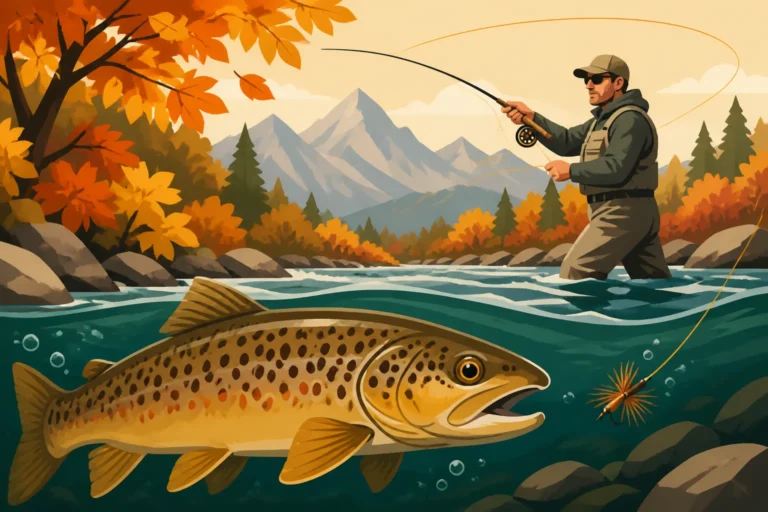
Best Technique for Fishing Pocket Water
Many anglers, myself included, have stood at the edge of a rushing Wyoming river, looking at a section of chaotic, fast-moving water, and thought, "There's no way fish can live in that." We often gravitate towards the calmer pools or the long, smooth runs, but in doing so, we miss out on some of the most productive and exciting trout fishing available. This guide will walk you through the most effective techniques for fishing pocket water, helping you demystify these turbulent stretches and consistently hook into some incredible trout.
Understanding Pocket Water: A Trout's Paradise (and a Challenge for Anglers)
When you look at a river, especially those beautiful freestone streams that tumble down from Wyoming's mountains, you’ll see a variety of different water types. There are the slow, deep pools, the long, gentle glides, and then there's pocket water. This dynamic environment can seem intimidating, but once you understand what makes it tick, you'll see why it's a prime target for savvy anglers.
What Defines Pocket Water?
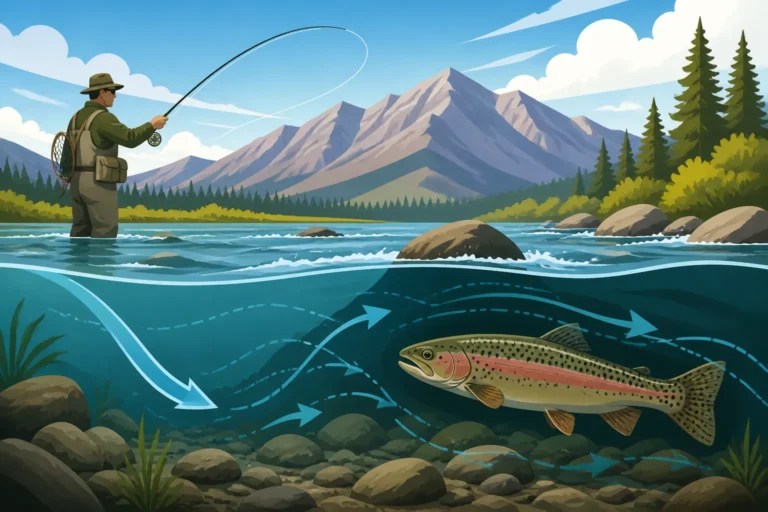
Pocket water is essentially a section of river characterized by an abundance of large rocks, boulders, and sudden changes in depth and current speed. Imagine a bowling alley floor, then dump a truckload of basketballs, footballs, and bowling balls on it and turn on the water flow—that's pocket water. You'll see mini-plunge pools, turbulent eddies, fast seams next to calmer spots, and lots of aerated, foamy water. The current often crashes over and around these obstacles, creating a complex, ever-changing environment. It's not a calm, easy drift; it's a constant battle of currents.
The key to identifying pocket water isn't just seeing rocks, but understanding the flow around them. These rocks create "pockets" or areas of reduced current where fish can rest without expending too much energy. These pockets might be directly behind a large boulder, along its sides, or even in a deeper scour hole created by the force of the water. The surface can be broken and choppy, making it hard to see what's beneath, which often deters less experienced anglers. But trust me, beneath that turbulent surface lies a thriving ecosystem.
Why Pocket Water Holds So Many Fish
So, why do trout love this chaotic environment? It all comes down to a few key factors: food, oxygen, and cover.
Firstly, food delivery is constant and abundant. The fast currents in pocket water act like a conveyor belt, dislodging insects, worms, and small crustaceans from the streambed and sweeping them downstream. Trout can simply position themselves in a current break, wait for the food to drift by, and expend minimal energy to snatch a meal. They don't have to chase food; it comes right to them. This makes it a highly efficient feeding zone.
Secondly, oxygenation is usually excellent. The tumbling, crashing water constantly mixes with air, introducing high levels of dissolved oxygen. This is particularly important for trout, which thrive in cold, oxygen-rich environments. During warmer months or in waters that might otherwise be a bit sluggish, pocket water remains a sanctuary of cool, oxygenated conditions.
Lastly, cover is king. All those rocks and boulders provide a myriad of hiding spots from predators, both aerial (like eagles and ospreys) and terrestrial (like raccoons or even us anglers!). A trout can quickly dart out from behind a rock to grab a meal and then retreat to its safe haven. The broken surface water also acts as camouflage, making it much harder for predators to spot them from above. For more on this, you might find our guide on Where Trout Hide in Fast-Moving Water helpful. It's a true fortress for fish, offering both security and sustenance.
Essential Gear for Tackling Wyoming's Pocket Water
Fishing pocket water effectively requires a slightly different approach to gear than, say, Euro nymphing a flat, slow tailwater or trolling a vast reservoir. You need accuracy, control, and the ability to get your offering down quickly in unpredictable currents.
Rods, Reels, and Line Choices
When it comes to fly fishing in pocket water, you're often making shorter, more precise casts, and battling fish in close quarters. A rod that's too long can be a hindrance, snagging on bankside vegetation or making delicate presentations difficult.
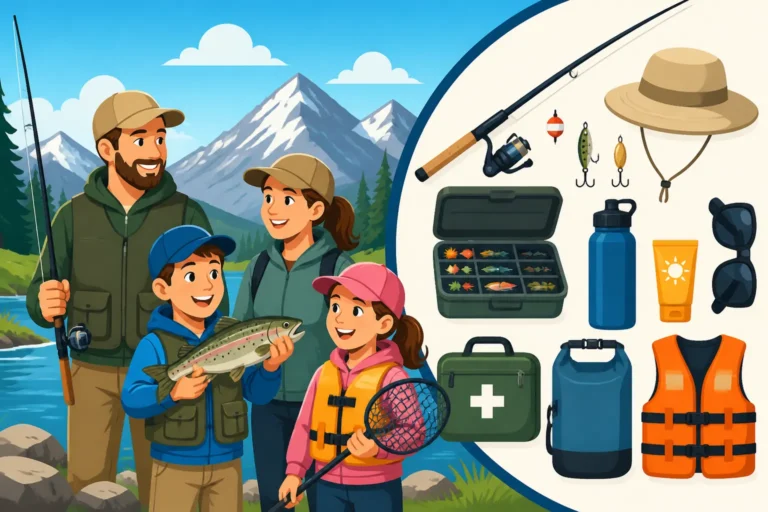
- Rods: My preference is typically a shorter, lighter rod – think a 7'6" to 9-foot rod in a 3- to 5-weight. A 7'6" 3-weight is fantastic for smaller streams and highly accurate casts, while a 9-foot 5-weight gives you a bit more backbone for larger fish or slightly windier conditions, without being overly cumbersome. The shorter length helps you maneuver around obstacles and present flies with accuracy. For a deeper dive, check out our piece on Best Fly Rod Weight for Wyoming Trout Streams.
- Reels: Your reel for pocket water doesn't need to be a high-dollar, large arbor drag monster. It mainly serves as line storage. A simple, reliable click-and-pawl or disc drag reel that balances your rod is perfectly adequate.
- Line: Weight-forward floating lines are standard. What's more important is your leader and tippet setup. For traditional indicator nymphing, a standard 9-foot tapered leader with 3-4 feet of fluorocarbon tippet (4x-6x) is common. For tightline nymphing (which we'll discuss more later), you'll often use a specialized, longer leader designed for sensitivity and minimal sag.
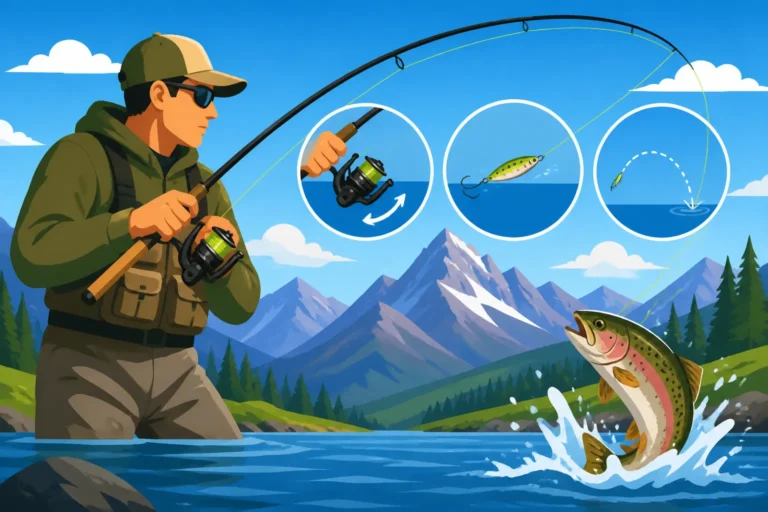
For spin fishing, the principles are similar: accuracy and control are paramount.
- Rods: Ultralight to light-action spinning rods, typically between 5'6" and 6'6" in length, are ideal. The shorter length allows for quick, accurate flick casts into tight pockets, and the lighter action helps you feel subtle bites. A fast tip can be crucial for setting the hook quickly.
- Reels: A small, smooth spinning reel in the 1000 to 2500 series size, spooled with light line, is perfect. Look for good drag and smooth retrieve.
- Line: I generally recommend 4 to 6-pound test monofilament or fluorocarbon. Braided line can be used, but you'll want a fluorocarbon leader for abrasion resistance and stealth in the rocky environment.
Finding the right gear can make all the difference, and you can often find great deals and a wide selection of rods, reels, and lines on platforms like Amazon. It's worth investing in quality, but you don't need to break the bank.
Lures, Flies, and Bait for Pocket Water
The goal in pocket water is to get your offering down to the fish quickly and keep it in the strike zone as long as possible. This means patterns and lures that sink fast and present well in turbulent water.
For fly fishing, subsurface presentations are usually the most effective:
- Nymphs: This is your bread and butter. Heavy, buggy nymphs that imitate stoneflies, caddis larvae, and mayfly nymphs are key. Think patterns like:
- Pheasant Tail Nymphs (size 12-18): A classic that imitates a variety of mayflies.
- Hare's Ear Nymphs (size 10-16): Another versatile pattern, good for caddis and mayfly imitations.
- Pat's Rubber Legs (or other stonefly patterns) (size 6-12): These are fantastic, especially with added weight, for imitating larger stoneflies which are a staple in many Wyoming rivers.
- Perdigons/Jig Nymphs: These flies are specifically designed to sink fast and penetrate the water column quickly, often tied on jig hooks to ride hook point up, reducing snags.
- Using a two-nymph rig, with a heavier lead nymph and a lighter dropper, is a common and effective strategy.
- Dry-Dropper Rigs: While nymphs are primary, a dry-dropper can be incredibly effective, especially when trout are looking up or when you want the added strike indicator of a dry fly. Use a buoyant dry fly, like a Chubby Chernobyl, a large stimulator, or a hopper pattern, with a nymph suspended 12-36 inches below it. The dry fly acts as both an attractor and an indicator.
- Small Streamers: Sometimes a small, weighted streamer (e.g., a small Woolly Bugger in black, olive, or brown, size 8-12) can be swung through deeper pockets or retrieved with short strips to provoke an aggressive strike.
For spin fishing, select lures that get down quickly and have some weight to them:
- Inline Spinners: Classic inline spinners like Mepps Aglias or Panther Martin Spinners (sizes 0-3) are deadly. Their blades flash and vibrate, attracting fish, and their compact design helps them get through currents. Look for ones with bright colors or natural patterns.
- Small Jigs: Micro jigs tipped with small plastic grubs, tubes, or even a piece of bait can be incredibly effective. Small marabou jigs are also excellent. The jig-and-plastic combo allows for precise depth control and a natural presentation.
- Spoons: Tiny casting spoons can also work, especially in deeper pockets where their fluttering action can entice a strike.
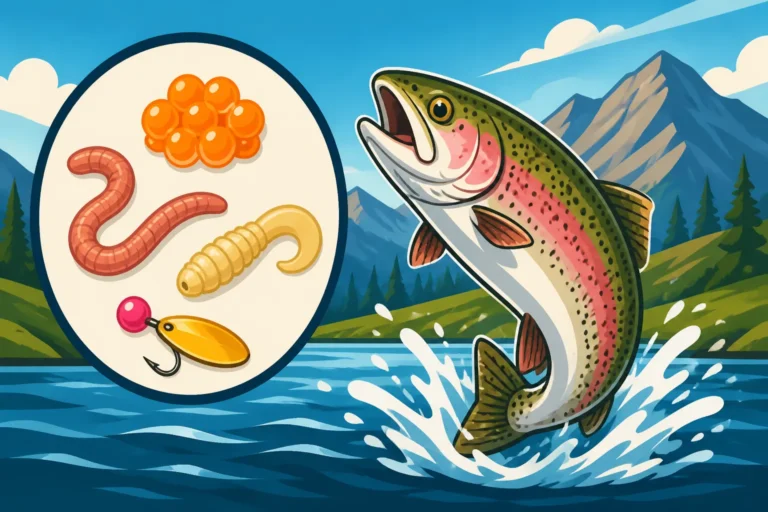
- Bait: While not always my first choice in fast water due to presentation challenges, natural baits like worms, salmon eggs, or powerbait can be effective when drifted naturally into pockets, especially under a small split shot. Just be mindful of local regulations on bait use, as many of Wyoming's blue-ribbon trout streams have restrictions.
Remember, having a diverse selection of these lures and flies can be a game-changer, and you can stock up on a wide array of options at your local fly shop or even through retailers on Amazon.
Masterful Techniques for Fishing Pocket Water
Now for the fun part: getting your offering into those fish-holding pockets and enticing a bite! Whether you're a fly angler or prefer spin gear, precision and control are key.
Fly Fishing: Nymphing and Dry-Dropper Rigs
Fly fishing in pocket water is a dance between precision casting, line management, and reading the subtle cues of the river.
Tightline Nymphing (Euro Nymphing)
If there's one technique that truly shines in pocket water, it's tightline nymphing, often referred to as Euro nymphing. This method minimizes drag and maximizes sensitivity, allowing your flies to sink quickly and naturally in turbulent currents.
- The Setup: This involves a longer, specialized leader (often 15-25 feet, largely monofilament or fluorocarbon) with a brightly colored sighter section at the end, eliminating the need for a traditional strike indicator. You typically use two weighted nymphs, with the heaviest at the bottom to get your rig down fast.
- The Cast: Forget long, graceful loops. Tightline nymphing employs short, lob-like casts, often just upstream of the pocket you're targeting. The goal is to get the flies into the water with minimal slack and allow them to sink immediately.
- The Drift: This is where the magic happens. You hold your rod tip high, keeping as much line off the water as possible to prevent drag. You follow the flies with your rod tip, maintaining a tight connection to your nymphs. The sighter is your visual cue; any twitch, hesitation, or sudden movement means a fish has eaten your fly. It's a very active, hands-on style of fishing.
- Reading the Strike: Because you have a direct connection to your flies, strikes often feel like a subtle "tick" or a sudden heaviness. However, with the sighter, you'll primarily be watching for visual cues. Don't hesitate to set the hook at the slightest indication; trout in pocket water often take and spit flies very quickly. For a deeper dive into this highly effective method, consider our article on Nymphing Techniques for Wyoming Tailwaters.
Indicator Nymphing
While tightline nymphing is superb, traditional indicator nymphing still has its place, especially for beginners or when fishing slightly less turbulent pockets.
- The Setup: Use a buoyant strike indicator (like a Thingamabobber or Airlock indicator) placed 1.5 to 2 times the depth of the water from your lead fly. Employ a two-nymph rig, again with the heavier fly at the bottom.
- The Drift: The challenge here is managing drag. Cast upstream and slightly across, aiming to get your flies into the pocket. Immediately mend your line upstream to minimize the indicator being pulled faster than your flies. The goal is to achieve a natural, drag-free drift where your indicator moves at the same speed as the surrounding current. Watch your indicator for any hesitation, sideways movement, or sudden dip.
- Maintaining Contact: In choppy water, it can be hard to spot a subtle take. Use a high-stick retrieve where possible, lifting your rod tip to keep excess line off the water.
Dry-Dropper
This technique is excellent for "searching" water or when trout might be feeding on both surface and subsurface insects.
- The Setup: Tie a large, buoyant dry fly (like a Chubby Chernobyl, Hopper, or large Stimulator) to your leader. Then, from the bend of the dry fly's hook, tie a piece of tippet (12-36 inches) to a nymph. The dry fly acts as both an attractor and a strike indicator for the nymph.
- The Cast & Drift: Cast the rig into likely pockets, allowing the dry fly to drift naturally. Watch the dry fly intently. If it hesitates, twitches, or disappears, set the hook! The advantage here is that you're presenting two different food sources at different depths simultaneously. Plus, watching a dry fly disappear in a foamy seam is incredibly exciting!
Spin Fishing: Precision Casting and Retrieves
Spin fishing in pocket water demands accurate casting and active lure manipulation to entice strikes. For those new to spin fishing or looking for a refresher, our guide on Spin Fishing Techniques for Beginners can be a great resource.
Casting into Pockets
Accuracy is paramount. You need to drop your lure right into the sweet spot – that small, calmer eddy behind a boulder or the seam where fast water meets slow.
- Short, Targeted Casts: Forget bombing out long casts. Focus on short, underhand, or sidearm casts that gently place your lure exactly where you want it. This reduces splash and minimizes spooking fish.
- Positioning: Try to position yourself upstream or perpendicular to the pocket. Casting upstream and allowing your lure to drift naturally into the pocket, or casting across and letting the current sweep it in, are both effective.
- Angle of Attack: Don't cast directly into the fastest current unless you're prepared for immediate drag. Aim for the edge of the fast water, letting your lure enter the pocket from the "side door."
Spinner and Jig Presentation
Once your lure is in the water, how you work it is crucial.
- Get it Down Quickly: Pocket water can be surprisingly deep, and fish often hug the bottom. Allow your spinner or jig to sink for a moment after casting before beginning your retrieve.
- Maintain Contact: The chaotic currents will try to pull your line and lure. Keep your rod tip up and maintain a tight line to feel strikes and guide your lure.
- Erratic Retrieves: Trout in pocket water are opportunistic. A lure that wobbles, darts, and pauses often mimics a stunned or injured baitfish, triggering a reaction strike. Experiment with varying your retrieve speed, adding small twitches of the rod tip, and even briefly pausing your retrieve to let the lure flutter down.
- Work the Whole Pocket: Don't just cast once and move on. Fan cast to hit different angles of the pocket. Try casting above the pocket and letting the current bring your lure down, then retrieve. Cast directly into the pocket, let it sink, then retrieve. Don't be afraid to cast several times into the same promising spot, varying your presentation slightly each time. Having a good selection of Best Lures for Wyoming Rainbow Trout can certainly help with this varied approach.
Reading the Water and Approaching Stealthily
The success of fishing pocket water often hinges on two critical skills: knowing where to cast and how to approach without spooking the fish. This requires a keen eye and a thoughtful approach.
Identifying Prime Lies within Pocket Water
As we discussed, pocket water is a mosaic of different currents and structures. Not every patch of turbulent water will hold a fish, but many will. The trick is to identify the "sweet spots" where trout feel safe and have easy access to food. If you want a more general overview, our article How to Read Water When Trout Fishing provides excellent foundational knowledge.
- Behind Boulders and Obstacles: This is the most obvious and often most productive spot. Any large rock, log, or underwater feature that breaks the main current creates a calmer "cushion" of water directly downstream. Trout will sit in these current breaks, waiting for food to drift by. These areas also provide immediate cover.
- Current Seams: Look for lines where fast water meets slower water. These seams are natural highways for drifting food. Trout will position themselves just inside the slower current, facing upstream, ready to dart out into the faster lane to grab a meal.
- Plunge Pools and Aerated Water: Where water crashes over a rock or ledge, it often creates a small, deep plunge pool. These spots are highly oxygenated and provide excellent depth and cover. The white, foamy water on the surface also hides your presence. Don't underestimate the fish-holding power of seemingly chaotic, aerated water.
- Undercut Banks: While more common on slower stretches, pocket water can still feature undercut banks where the current has eroded the soil beneath the surface. These create fantastic overhead cover and deep hiding spots. These are true sanctuaries for larger trout. For dedicated advice on these spots, check out How to Fish an Undercut Bank.
- The Edges of Fast Water: Even without large boulders, the edges of very fast runs, where the current slows just enough, can hold fish. These fish often hug the bottom, out of the strongest current, but still benefit from the food delivery.
Crucially, remember that fish in pocket water are often much closer to you than you think. The turbulent water and broken surface offer them excellent camouflage, allowing them to hold in very shallow, seemingly exposed spots. Don't cast too far over them!
The Art of the Approach and Casting
Once you've identified a promising pocket, your approach is paramount. You want to present your fly or lure without alerting the fish to your presence.
- Downstream Approach (Where Possible): Whenever feasible, try to approach pocket water from downstream, moving slowly and cautiously upstream. This keeps you out of the fish's primary line of sight, as trout typically face upstream.
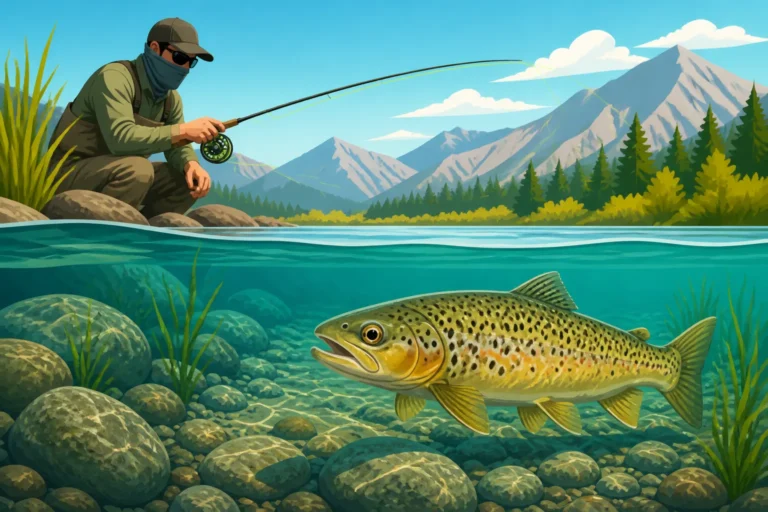
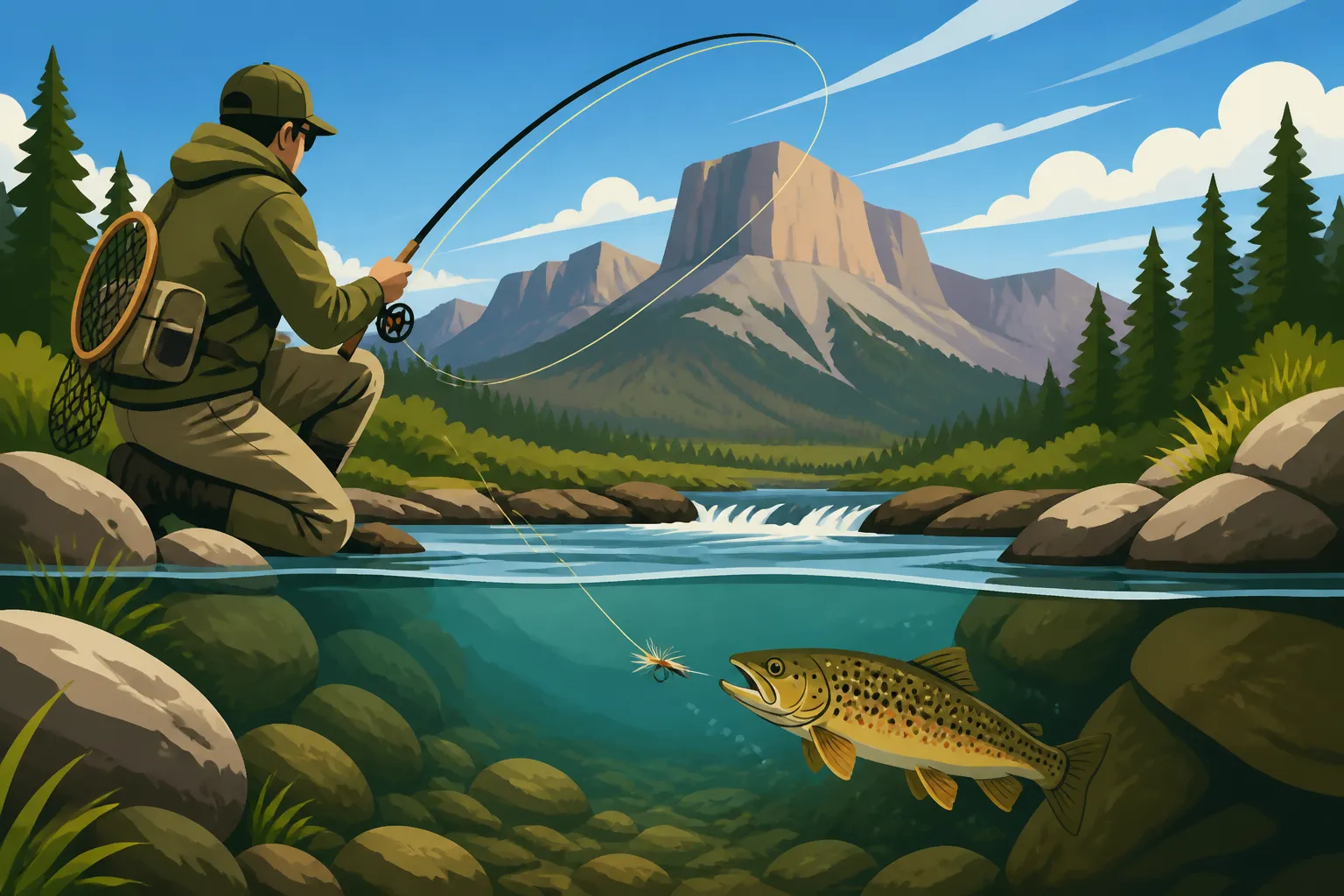
- Low Profile: Stay low, especially when moving between pockets. Avoid silhouetting yourself against the sky. Crawling, kneeling, or crouching can make a huge difference, particularly on smaller streams. For more tips on blending in, our guide on How to Fish Small Streams Without Spooking Fish can be quite useful.
- Short, Targeted Casts: As mentioned in the gear section, avoid long, splashy casts. Focus on accuracy and a gentle presentation. This means minimizing false casts in fly fishing or keeping your backcast short in spin fishing.
- High-Sticking to Minimize Drag: Whether fly fishing or spin fishing, keeping as much line off the water as possible is critical. The multiple, conflicting currents in pocket water will grab your line and create drag almost instantly, pulling your fly or lure unnaturally. By holding your rod tip high and following your drift with the tip, you reduce the amount of line exposed to the current, allowing for a more natural presentation.
- Dealing with Multiple Current Speeds: This is the ultimate challenge. Your leader and line will inevitably pass through areas of different current speeds. The key is to continuously mend your line (in fly fishing) or use subtle rod tip movements (in spin fishing) to equalize the speed of your line with the speed of your fly or lure. It's a constant adjustment, but with practice, you'll get the feel for it. Don't get discouraged if it takes a few tries to get a perfect drift; it's part of the process.
Safety and Etiquette in Fast Water Environments
Fishing in swift-moving pocket water brings its own set of considerations, not just for catching fish, but for your personal safety and the well-being of the fishery and fellow anglers.
Wading Safely in Swift Currents
Wyoming's rivers can be powerful, and pocket water is often found in the most dynamic sections. Wading safely is paramount.
- Quality Wading Gear: Invest in good wading boots with felt soles, studded soles, or a combination. The grip they provide on slippery, uneven river bottoms is invaluable. Neoprene waders offer insulation and some protection from bumps. You might also be interested in reading Do You Need Waders to Fish Wyoming Rivers in Spring? for additional insights.
- Wading Staff: A collapsible wading staff is not optional; it's a necessity in many pocket water scenarios. It provides a crucial third point of contact, helping you maintain balance and probe the depth and stability of the riverbed before committing your weight.
- Read the Current: Before stepping in, observe the water. Look for calmer, shallower paths. Avoid pushing through the strongest currents if possible.
- Three-Point Contact: When wading, always maintain three points of contact with the riverbed (two feet and the wading staff). Shuffle your feet rather than lifting them high, as this helps prevent losing balance on unseen obstacles.
- Know Your Limits: Never wade into water that feels too swift or too deep. It's simply not worth the risk. If in doubt, stay on the bank or find an easier crossing. Be particularly careful in spring during Wyoming During Spring Runoff, when water levels are often at their highest and currents are strongest.
Protecting the Fishery
Our enjoyment of Wyoming's incredible fishing relies on responsible angling practices.
- Catch and Release Practices: Many of the fish in pocket water are wild and precious. If you're not planning to keep fish (and always check local regulations for bag and possession limits), practice good catch and release. Minimize handling, keep the fish in the water as much as possible, use wet hands, and revive them gently. Our guide on Catch and Release Best Practices for Trout offers comprehensive advice on this.
- Minimize Disturbance: When moving through pocket water, try to do so quietly and with minimal disturbance. While the turbulent water provides some cover, loud splashing or heavy footsteps can still spook fish in nearby pockets.
- Leave No Trace: Pack out everything you pack in, including any discarded fishing line or packaging. Respect private property and public access points. Keep the banks and river clean for everyone to enjoy.
By mastering these techniques and practicing responsible angling, you'll find that pocket water fishing isn't just productive, it's incredibly rewarding. The challenge of deciphering the currents and fooling a wary trout in its turbulent home is one of the most exciting aspects of fishing in Wyoming.
Pros and Cons of Different Pocket Water Techniques
To help you decide which approach might be best for your next outing, here's a quick comparison of the primary techniques for fishing Wyoming's pocket water:
| Technique | Pros | Cons | Ideal for… |
|---|---|---|---|
| Tightline Nymphing (Fly) | Maximum sensitivity, excellent depth control, minimizes drag, highly effective. | Steeper learning curve, requires specialized leader, often limited to close-range. | Aggressive fish, challenging currents, deep pockets, experienced fly anglers. |
| Indicator Nymphing (Fly) | Easier to learn, clear strike indication, can cover wider areas, versatile. | More prone to drag, less sensitive, strike detection can be tricky in very turbulent water. | Beginners, varied water types, when fish are less selective, general nymphing. |
| Dry-Dropper (Fly) | Visual strike indication, presents two food sources, good for searching, exciting dry fly takes. | Can be prone to drag with lighter dry flies, less effective in very deep/fast water. | Mixed feeding patterns, searching new water, high-visibility conditions. |
| Spinners/Jigs (Spin) | Easy to learn, highly effective, covers water quickly, good for aggressive strikes. | Less "natural" presentation than flies, can snag easily, limited by lure weight. | All skill levels, covering ground, clear water, targeting active fish. |
| Bait (Spin/Baitcasting) | Often highly effective for finicky fish, simple to present. | Can be easily washed out in strong currents, specific bait regulations may apply, less sporting for some. | Slow to moderate currents within pockets, when other methods fail, casual fishing. |
Disclaimer
This article is for general informational purposes only and does not constitute professional advice. Laws, prices and regulations vary by location and change over time. Consult a qualified professional for guidance on your specific situation.