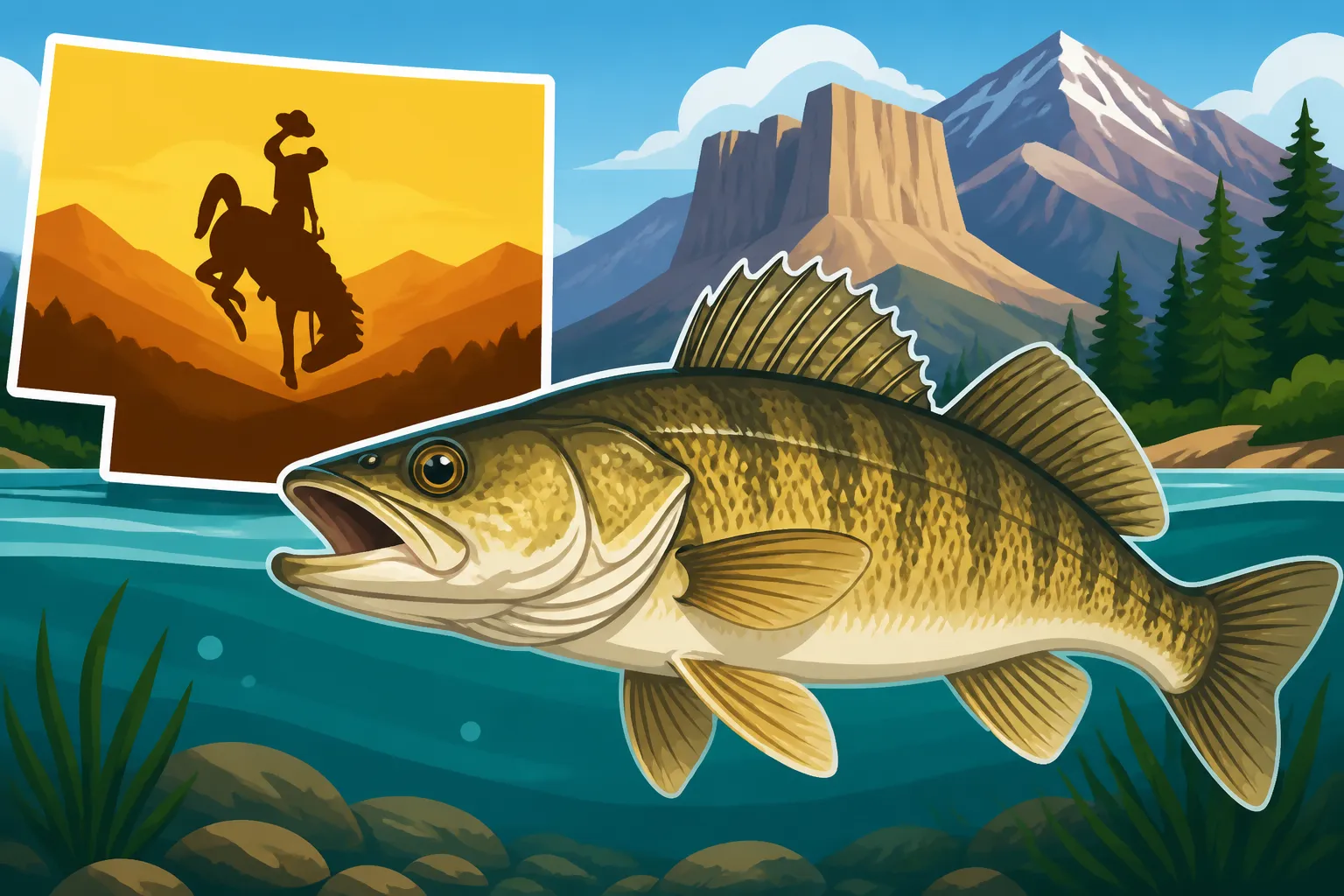
What a Sauger Is and Where They Live in Wyoming
If you've spent any time fishing in Wyoming's larger rivers or certain reservoirs, you've probably heard whispers of "sauger" or perhaps even caught one yourself, wondering if it was just a funny-looking walleye. It's a common conundrum for anglers, as these fish share a striking resemblance and often inhabit similar waters. This guide is here to demystify the sauger, helping you understand exactly what this unique fish is, where you're most likely to encounter it in the Cowboy State, and how you can successfully target it.
Understanding the Sauger: Wyoming's Spotted Cousin
For many, the first encounter with a sauger leaves them scratching their head. Is it a small walleye? A walleye with extra spots? The confusion is entirely understandable, as these two fish are close relatives, both belonging to the perch family and sharing similar elongated, torpedo-shaped bodies. However, the sauger is its own distinct species, a fascinating native fish that holds a special place in Wyoming's aquatic ecosystems.
Sauger vs. Walleye: The Key Differences
The easiest way to tell a sauger apart from a walleye is often by looking at their fins and overall pattern. Walleye typically have a large, dark spot at the base of their spiny dorsal fin and tend to be more uniformly colored, usually with an olive-brown to golden hue. Sauger, on the other hand, boast distinct dark spots scattered across their dorsal fins, creating a more mottled or banded appearance. Their bodies often have a darker, brassier color with irregular dark blotches or saddle patterns along their sides, which helps them camouflage in the turbid waters they prefer.
Beyond the spots, feel the scales on their cheeks. Walleye usually have smooth cheeks, while sauger often have rougher, partially scaled cheeks. It's a subtle but reliable distinction once you get the hang of it. From a habitat perspective, walleye are generally more adaptable and can be found in a wider range of lakes and reservoirs, while sauger tend to gravitate towards the current and turbidity of large rivers and the riverine sections of reservoirs. Understanding these subtle differences is key, especially when you're checking your catch against specific bag limits, as regulations can sometimes differ or lump them together. You can learn more about identifying these species in our deep dive, Sauger vs Walleye: What's the Difference.
Sauger Characteristics and Appearance
The sauger (scientific name Sander canadensis) is a slender, cylindrical fish, typically smaller than its walleye cousin. Most sauger caught in Wyoming will range from 12 to 20 inches in length, though larger specimens pushing 24 inches or more are certainly out there and a true trophy. Their average weight is usually between 1 to 3 pounds, but a really hefty one might tip the scales closer to 5 or 6 pounds.
Their coloration is generally a yellowish-brown or brassy olive on their backs, fading to a lighter, creamy white on their bellies. The irregular dark blotches or "saddle" markings on their sides are a hallmark feature. But the most distinguishing characteristic, as mentioned, are those rows of distinct dark spots on their spiny dorsal fin. These spots are absent on a walleye, which typically has just one large, dark blotch near the rear base of the dorsal fin and sometimes a white tip on the lower lobe of its caudal (tail) fin – another feature generally lacking in the sauger. These visual cues, once you train your eye, make identification much simpler.
Where Wyoming's Sauger Like to Hang Out
Sauger are true river dwellers at heart, preferring environments with current, turbidity, and rocky or sandy bottoms. While you might occasionally find them in clearer lake environments, they really shine in the deeper, murkier sections of Wyoming's larger river systems and the expansive, river-influenced arms of certain reservoirs.
Preferred Habitats: Rivers and Reservoirs
In Wyoming, your best bet for finding sauger will be in the slower, deeper sections of major rivers like the Big Horn River or the Tongue River, particularly below dams where current is present but not overpowering. They thrive in water that isn't crystal clear, as the slightly stained or turbid conditions offer them camouflage, helping them ambush prey. Reservoirs that have significant river inflow, creating a distinct current channel, can also hold good sauger populations. Think about areas where a river flows into a large body of water, creating deeper scour holes, submerged structure, or current seams. These are prime sauger territory.
Sauger are very sensitive to light, much like walleye, and prefer deeper water during the day, often moving into shallower feeding flats during low-light conditions like dawn, dusk, or even at night. Unlike some trout species that prefer fast, oxygenated riffles, sauger will often hold in the slower, deeper pools, eddy lines, and current breaks behind large rocks or submerged timber. These areas provide them with both cover and an advantageous position to ambush baitfish being carried by the current.
Identifying Sauger Hotspots
When you're out on the water, whether from a boat or bank, look for subtle cues that indicate potential sauger habitat. On rivers, focus on the transition zones: where a fast current meets slower water, the deeper side of a river bend, or behind any significant structure like bridge pilings or log jams. These current breaks often create "slack water" pockets where sauger can rest while waiting for food to drift by. Deep holes immediately below rapids or riffles can also be productive.
In reservoirs, pay close attention to the river channel that runs through the lakebed, especially if you have a fish finder. Sauger will often hug these submerged channels, particularly where they intersect with points, humps, or old creek beds. The deeper sections of Flaming Gorge Reservoir and Boysen Reservoir, especially their riverine arms, are known to hold these species, though walleye are often the more common catch in many of these larger impoundments. If you're looking for Walleye Fishing in Wyoming, you might just stumble upon some sauger too! A good topographic map, combined with a reliable fish finder (many great options are available on Amazon), can be invaluable for locating these underwater features.
Tips and Tricks for Catching Wyoming Sauger
Sauger can be a bit more elusive than their walleye cousins, partly because they're less widespread and partly because they often favor deeper, more challenging environments. But with the right approach, you can definitely add them to your catch list.
Best Baits and Lures for Sauger
Just like walleye, sauger are opportunistic predators that respond well to presentations mimicking their natural forage. Live bait is often king, especially minnows. Fished on a simple jig or a bottom-bouncing rig, a lively minnow is hard for a sauger to resist. Nightcrawlers and leeches (where legal) can also be effective, particularly when slowly trolled or drifted near the bottom.
When it comes to artificials, jigs are arguably the most versatile and effective lure for sauger. Think about brightly colored jigs (chartreuse, orange, white) tipped with a soft plastic grub, a small minnow, or a piece of a nightcrawler. Small crankbaits or jerkbaits that dive to the depths where sauger are holding can also be deadly, especially when retrieved with a stop-and-go action that mimics a wounded baitfish. Spinner rigs, often used for walleye, can also entice sauger, particularly when tipped with bait. You'll find a wide array of options for all these baits and lures, from trusted brands to niche tackle, readily available on Amazon.
Techniques for Targeting Sauger
The most effective techniques for sauger fishing revolve around getting your presentation close to the bottom, where these fish spend most of their time.
- Jigging: This is a classic for a reason. Whether vertical jigging from a boat over a deep hole or casting and retrieving from the bank, a jig bounced along the bottom is incredibly effective. The key is to maintain contact with the bottom and impart a subtle action. Sauger bites can be very light, feeling like a slight "tick" or just added weight to your line.
- Bottom Bouncing: When drifting or slow trolling in a boat, a bottom bouncer rig with a crawler harness or live minnow can cover a lot of ground and keep your bait in the strike zone. This is particularly useful in rivers where you're trying to find fish along a defined channel or break line.
- Slow Trolling: Small crankbaits or spinner rigs can be trolled slowly, again maintaining contact or near-contact with the bottom. Pay attention to your electronics (fish finder) to identify depth changes and structure where sauger might be holding.
- Drifting with Current: In rivers, let the current do some of the work. Use just enough weight to keep your bait or jig bouncing along the bottom as you drift downstream. This natural presentation can be irresistible to sauger.
Patience and a keen sense of touch are crucial. Sauger don't always hit aggressively; sometimes, it's just a subtle nudge. Using a sensitive rod and braided line can help you detect these faint bites. Many anglers also find success fishing for sauger during low-light hours or even at night, just like for walleye, when they tend to move shallower to feed more actively.
Sauger Fishing: Regulations and Responsible Angling
Before you head out to chase sauger, it's absolutely vital to familiarize yourself with Wyoming's fishing regulations. While sauger are a fantastic sport fish, their populations are often managed carefully, and specific rules apply.
Wyoming's Management of Sauger Populations
Sauger are generally considered a native species in many of Wyoming's drainages, particularly in the eastern part of the state. They're a valuable part of the aquatic ecosystem, serving as both predator and prey. The Wyoming Game and Fish Department (WGFD) monitors sauger populations closely, often grouping them with walleye under general "walleye/sauger" regulations. Conservation efforts focus on maintaining healthy spawning populations and ensuring sustainable harvest. It's always a good practice to practice Catch-and-Release Best Practices for Trout with any fish you don't intend to keep, particularly larger sauger which are often important for breeding.
Understanding Limits and Rules
The most important thing to remember is that regulations can vary significantly by water body. What's legal on one stretch of river might be different just a few miles downstream or in a connected reservoir. Always check the current Wyoming Fishing Regulations booklet or the WGFD website before you fish. Many times, sauger will fall under the same daily creel and possession limits as walleye, and often, both species will be counted towards a combined total. For instance, a common regulation might be a combined daily limit of six walleye/sauger, with only one over a certain size.
It's also crucial to accurately identify your catch, especially if there are size restrictions or different limits for walleye versus sauger. Misidentification can lead to violations. Carrying Your Wyoming Fishing License in the Field and knowing How Bag and Possession Limits Work in Wyoming are fundamental to a responsible and enjoyable fishing trip. If you're unsure about the current rules for a specific body of water, always err on the side of caution or consult the latest WGFD regulations. Our guide Wyoming Fishing Regulations Every Angler Should Know is a great starting point, and for finer details, always refer to Reading the Wyoming Fishing Regulations Booklet.
Here's a quick comparison of Walleye and Sauger characteristics:
| Feature | Walleye | Sauger |
|---|---|---|
| Dorsal Fin | Large dark spot at base of spiny dorsal fin | Distinct dark spots on spiny dorsal fin |
| Body Color | Olive-brown to golden, more uniform | Brassy olive to yellowish-brown, mottled |
| Body Pattern | Faint, subtle bands | Irregular dark blotches/saddle patterns |
| Tail Fin | Often has white tip on lower lobe | Generally lacks white tip |
| Cheeks | Smooth, sparsely scaled | Rough, partially scaled |
| Average Size | Larger, 1-5 lbs (often much bigger) | Smaller, 1-3 lbs (rarely over 5-6 lbs) |
| Preferred Habitat | Lakes, reservoirs, large rivers, adaptable | Turbid, current-driven rivers, riverine arms of reservoirs |
This information should equip you with the knowledge to confidently identify and target sauger in Wyoming's waters. Happy fishing, and remember to always respect the resource!
Disclaimer
This article is for general informational purposes only and does not constitute professional advice. Laws, prices and regulations vary by location and change over time. Consult a qualified professional for guidance on your specific situation.