Identifying Brook Trout vs Brown Trout
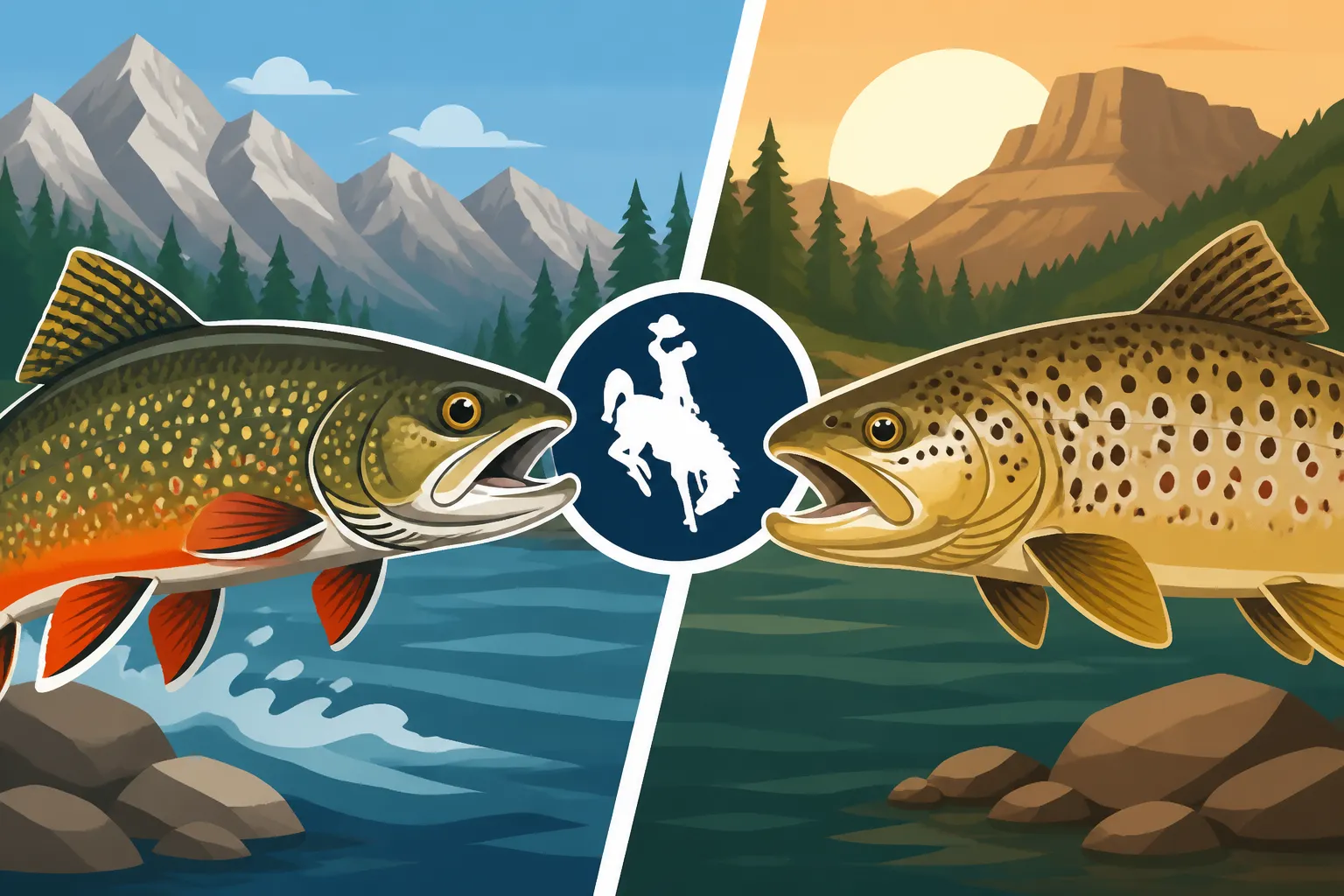
It's incredibly common for anglers, especially those new to the stunning waters of Wyoming, to find themselves scratching their heads when trying to tell the difference between a brook trout and a brown trout. They often share similar habitats, and in a fleeting moment of a fish on the line, those subtle distinctions can be a real head-scratcher. This guide is here to untangle that confusion, giving you all the visual cues and habitat knowledge you need to confidently identify these two beautiful species every time.
Why These Two Trout Species Get Confused
The struggle is real, isn't it? You've just landed a gorgeous fish from a clear mountain stream, and in the excitement, you're trying to figure out if it's a brook or a brown. They can look surprisingly similar at first glance, especially when they're fresh out of the water and flashing their vibrant colors. Both are often found in the same cold, clean water systems across Wyoming, contributing to the mix-up. This isn't just a minor detail for bragging rights; knowing the difference can be crucial for adhering to specific regulations that might apply to one species but not the other in certain drainages or fisheries.
Overlapping Habitats and Appearance
One of the biggest reasons for the confusion lies in their preferred environments. Both brook trout and brown trout thrive in cold, oxygen-rich waters, often sharing stretches of the same rivers, streams, and even some high-alpine lakes. While brook trout tend to prefer smaller, colder headwater streams, and browns can tolerate slightly warmer, larger river systems, there's a significant overlap. You might pull a brook trout from a small tributary and then a brown trout just a hundred yards downstream in the main stem.
Adding to the challenge, their general body shapes are quite similar – torpedo-like, built for strong currents. Both can display rich, mottled patterns, and their overall color can vary wildly based on their diet, water clarity, and even the substrate of the stream bed. A dark, mossy bottom can make a trout appear darker, while a sandy bottom can lighten its complexion. This natural camouflage and variation makes a quick ID tricky without knowing the specific markers to look for.
The Nuances of Spotting Differences in the Wild
Trying to identify a fish in the moment, with cold hands and maybe a bit of adrenaline pumping, is vastly different from studying a picture in a field guide. The subtle differences in spot color, haloing, or fin characteristics can be hard to discern. Sometimes, you're just focused on getting the fish unhooked and back into the water quickly, especially if you're practicing catch and release. This real-world scenario is where understanding the key distinguishing features truly comes into play. You need to know exactly what to look for to make a swift and accurate identification, ensuring you're compliant with any specific Wyoming Fishing Regulations Every Angler Should Know while also appreciating the unique beauty of each catch.
Deep Dive into Brook Trout Identification
Let's talk about brook trout, those stunning gems of Wyoming's cold, pristine waters. Often, they're the first trout species that come to mind when you picture a vibrant, colorful fish from a high-mountain stream. But what exactly makes a brook trout a brook trout, distinct from its brown-hued cousin?
Distinctive Body Markings and Coloration
The brook trout (technically a char, Salvelinus fontinalis, not a true trout, but we call them trout in everyday conversation!) is renowned for its striking appearance. The body typically ranges from an olive-green to a dark brown on the back, fading to lighter flanks and a white belly. What truly sets them apart are the worm-like, intricate markings – called vermiculations – on their back and dorsal fin. These wavy, maze-like patterns are a dead giveaway.
Beyond the vermiculations, look for small, light, worm-like markings on their backs. They also boast vibrant spots: tiny, light-colored spots (yellow or cream) on their sides, often with brilliant red spots nestled within a blue halo. These blue halos are a crucial identifier and are rarely, if ever, seen on a brown trout. The intensity of these colors, especially the red and blue, can be incredibly vivid during spawning season, making them even more beautiful.
Fin Characteristics: A Key Indicator
When examining the fins, pay close attention to the leading edges of the lower fins (pectoral, pelvic, and anal fins) and the tail. Brook trout almost always have bright white leading edges on these fins, backed by a strip of black, and then the main color of the fin. This "white-black-red/orange" fin pattern is incredibly distinctive and is often the easiest and most reliable way to differentiate a brook trout from a brown trout, even at a quick glance in the net. Imagine landing a fish; the first thing you notice might be those brilliant white-edged fins flashing in the sunlight. You can find excellent waterproof field guides that highlight these details on Amazon, which are super handy to have in your pack.
Their tail fin is typically square or slightly emarginated (a shallow fork). While it's not as dramatically forked as some other trout species, it's generally not deeply forked. The overall body shape is often described as slightly more slender than a brown trout, especially in smaller stream specimens. This combination of vermiculations, haloed spots, and the white-black fin edges makes brook trout truly unmistakable once you know what to look for. You'll often find them darting through riffles in the Brook Trout in Wyoming's Mountain Streams.
Deep Dive into Brown Trout Identification
Now, let's turn our attention to the brown trout, Salmo trutta, another beloved species that graces Wyoming's rivers and lakes. These fish are known for their resilience, elusive nature, and often, their impressive size. While they might not have the electric blue halos of the brook trout, they possess their own unique beauty and specific identifying features.
Spotting Patterns and Base Coloration
Brown trout typically exhibit a more uniform, brownish-gold body color, ranging from a light tan to a darker, almost bronzy hue. Their backs are generally olive to dark brown, lightening to yellowish-brown on the sides and a cream or white belly. The most defining feature of a brown trout is its spot pattern. They have numerous dark spots – black, dark brown, or reddish-brown – scattered across their body, head, and dorsal fin. Many of these dark spots will have a light "halo" or ring around them, which is a key distinction from the brook trout's red spots with blue halos.
In addition to the dark spots, brown trout often have red or orange spots on their sides, but these lack the vivid blue halo seen on brook trout. These spots can be quite prominent, especially on larger, mature fish. The spotting pattern usually extends below the lateral line, though it becomes less dense towards the belly. The intensity of the spotting and coloration can vary greatly depending on the specific water body and the fish's diet, from duller lake-dwelling browns to vividly marked stream fish. Understanding these patterns is critical when you're targeting Brown Trout Fishing in Wyoming.
Fin and Tail Morphology
Unlike the brook trout's distinctive white-black leading fin edges, the brown trout's lower fins typically do not have this feature. Their pectoral, pelvic, and anal fins are usually a yellowish or brownish-orange color, sometimes with darker mottling, but without those stark white margins. The dorsal fin will carry the same dark spots as the body, and the caudal (tail) fin is often squared or slightly emarginated, similar to the brook trout, but without the white edge.
The tail fin of a brown trout is generally less forked than, say, a rainbow trout, but it's not as consistently square as a brook trout's can be. Their body shape tends to be more robust and deep-bodied, especially the larger, older fish that are often found holding in deeper pools or under cover. If you're comparing two fish of similar length, the brown trout might appear stockier. Keep an eye out for these fin and tail distinctions, as they offer some of the most reliable visual cues. Picking up a good pair of polarized sunglasses on Amazon can really help you spot these subtle differences, even when the fish is still in the water.
Side-by-Side Visual Comparison
When you're out on the water, having a mental checklist of key features can make all the difference in identifying your catch correctly. Let's put these two species side-by-side to highlight their most telling differences. This isn't just about curiosity; for example, understanding these traits can inform your approach when fishing for Brown Trout in Wyoming's Tailwaters versus smaller, high-mountain brook trout streams.
Here's a quick reference table to help you compare:
| Feature | Brook Trout (Salvelinus fontinalis) | Brown Trout (Salmo trutta) |
|---|---|---|
| Scientific Name | Salvelinus fontinalis (a char) | Salmo trutta (a true trout) |
| Back/Head | Olive-green to dark brown, distinct worm-like vermiculations | Olive-brown to golden-brown, less distinct or absent vermiculations |
| Sides | Light spots (yellow/cream) with vibrant red spots, often with blue halos | Dark spots (black/brown) often with light halos, red/orange spots without blue halos |
| Lower Fins | Prominent white leading edge, backed by black stripe | No white leading edge; yellowish-brown, sometimes mottled |
| Dorsal Fin | Mottled with worm-like vermiculations | Spotted with dark spots |
| Tail Fin | Squared or slightly emarginated | Squared or slightly emarginated |
| Mouth | Usually smaller, upper jaw rarely extends past eye | Often larger, upper jaw extends well past the eye in large adults |
| Body Shape | Often more streamlined, less robust | Generally more robust, deeper-bodied |
Spotting the "White Edge" Phenomenon
The "white edge" on the lower fins of a brook trout is often the single most reliable characteristic for quick identification. Imagine pulling a fish from the current; if you see that bright white strip followed by a dark line on its pectoral, pelvic, and anal fins, almost invariably, you're holding a brook trout. This feature is consistent across all sizes and life stages, making it an incredibly valuable clue. Brown trout simply do not possess this striking fin coloration.
This white-black-color pattern is a dead giveaway, even for a beginner. It's so distinct that many anglers learn to identify brook trout almost solely on this trait. If you're ever in doubt, get a good look at those fins. It's far more reliable than trying to count spots or judge subtle shades of brown or olive.
Analyzing Spot Color, Shape, and Halos
While the white fin edges are dominant, the spots themselves offer excellent secondary confirmation. Remember, brook trout have those light, often yellow or cream spots, and crucially, their red spots are often encircled by a brilliant blue halo. This blue halo is practically exclusive to brook trout. Brown trout, on the other hand, feature darker spots (black, brown, or reddish-brown) and if they have halos, these are typically a lighter, almost smoky ring around the darker spot, never the vibrant blue.
Consider the distribution too: brook trout vermiculations are concentrated on the back and dorsal fin, while brown trout spots are scattered more broadly across the body and head. Taking a moment to examine these spot patterns can solidify your identification and prevent any mix-ups, especially in waters where both species coexist. This attention to detail will serve you well, whether you're trying to figure out How Many Trout Over 16 Inches You Can Keep in Wyoming or just admiring your catch before release.
Habitat and Behavior Clues
Beyond physical appearance, understanding where brook trout and brown trout prefer to live and how they behave can offer strong clues to their identity, even before you get them on the hook. Their ecological niches, though sometimes overlapping, have distinct preferences that often dictate where you'll encounter one versus the other.
Preferred Environments and Water Types
Brook trout are generally found in the coldest, cleanest, and highest-elevation waters. Think pristine headwater streams, small mountain creeks, and remote high-alpine lakes. They are quite sensitive to water temperature and quality, preferring temperatures below 68°F (20°C). These are the fish you might hike miles into the wilderness to find, often in relatively small, intimate streams with plenty of cover from undercut banks, fallen logs, and dense vegetation. You'll frequently find them in the Best Streams for Brook Trout in Wyoming.
Brown trout, while also preferring cool, oxygenated water, are more tolerant of a wider range of conditions. They can thrive in larger rivers, medium to large streams, and a variety of lakes and reservoirs, often tolerating slightly warmer temperatures and more turbid water than brook trout. They are highly adaptable and can be found in both fast-moving riffles and slower, deeper pools. This adaptability means you'll find them in a broader array of Wyoming waters, from the famed North Platte River to many of our larger reservoirs.
Diet and Feeding Habits
Their diets also reflect their habitats. Brook trout, being in smaller waters, often feed on aquatic insects like nymphs and adult forms of caddisflies, mayflies, and stoneflies, as well as terrestrial insects like grasshoppers and ants that fall into the water. They are opportunistic feeders but tend to stick to what's available in their specific, smaller ecosystems.
Brown trout, on the other hand, particularly larger specimens, are known for their voracious appetite and predatory nature. While they also eat a wide range of insects, they are much more likely to prey on smaller fish (including other trout species), crayfish, and even small rodents or amphibians that fall into the water. This is why brown trout often grow to larger sizes than brook trout in the same general area; their diet allows for more significant growth. This aggressive feeding behavior, especially as they get larger, is a key characteristic of the species and is a factor in their pursuit by anglers seeking Trophy Trout Fishing at Pathfinder Reservoir.
Spawning Habits and Timing
Spawning behavior can also offer some distinguishing context. Both species are fall spawners, but their precise timing and locations can differ. Brook trout typically spawn earlier in the fall, often from late September through November, in the shallow, gravelly headwaters of streams where groundwater seepage provides stable temperatures. They create small redds (nests) in these areas.
Brown trout generally spawn a bit later, usually from October through December, often migrating upstream into smaller tributaries or utilizing gravel beds in the main stem of larger rivers. Larger brown trout are famous for their fall spawning runs, where they become incredibly aggressive and can be targeted by anglers looking for a trophy fish. Learning When Brown Trout Spawn in Wyoming can significantly improve your chances of encountering these impressive fish. The timing and locations of these spawning rituals are important aspects of their life cycles and can sometimes inform your identification in specific seasonal contexts.
Conservation and Regulatory Considerations
Understanding the difference between brook trout and brown trout isn't just an academic exercise or a point of pride; it often has direct implications for conservation efforts and fishing regulations. Wyoming Game and Fish Department sets specific rules to manage fish populations sustainably, and these rules can vary by species and by water body.
Why Accurate Identification Matters for Regulations
Imagine you're fishing a stream that has a specific slot limit for brown trout, meaning you can only keep fish within a certain size range, or perhaps a reduced bag limit for brook trout because they are a native species in that particular drainage, or are more susceptible to overfishing due to their smaller size and limited habitat. If you can't accurately tell the difference, you risk inadvertently violating regulations, which can lead to fines and penalties.
For instance, some waters might have a "catch and release only" rule for a particular species, or impose limits on how many fish over a certain size you can retain. In waters where the Wyoming Trout Stream Daily Limit is tightly managed, knowing exactly which species you've caught is paramount. The consequences for misidentification, though usually unintentional, can be serious, reinforcing the importance of being able to confidently distinguish between these and other trout species, such as when you are Identifying a Yellowstone Cutthroat Trout.
Native vs. Introduced Species Status
The conservation status of brook trout versus brown trout also plays a role. In many parts of Wyoming, brook trout are considered native or naturalized, meaning they have a long history in the state's ecosystems. While they can sometimes outcompete native cutthroat trout in certain high-altitude streams, they are generally a valued part of the cold-water fishery. There are ongoing discussions and management strategies regarding whether Are Brook Trout Considered Invasive in Wyoming? in some specific contexts.
Brown trout, on the other hand, are an introduced species to North America, originating from Europe. They were brought to the U.S. in the late 19th century and have since become widely established, thriving in many waters where native species might struggle due to habitat changes. Their hardiness and ability to grow large have made them a popular game fish, but their introduced status means their management goals can differ significantly from those of native species. This difference in origin influences stocking programs, habitat restoration efforts, and, yes, fishing regulations. Knowing the lineage of the fish you catch adds another layer to your appreciation of Wyoming's diverse fisheries.
Disclaimer
This article is for general informational purposes only and does not constitute professional advice. Laws, prices and regulations vary by location and change over time. Consult a qualified professional for guidance on your specific situation.