How to Tell a Stocked Trout From a Wild Trout
It's a moment many of us anglers have experienced: you reel in a beautiful trout from a shimmering Wyoming stream or a glassy lake, and as you admire its colors, a question pops into your head. Is this a truly wild fish, born and raised in these waters, or is it a "stocker," fresh or not-so-fresh from a hatchery? This isn't just idle curiosity; knowing the difference can deepen your connection to the sport and the fish themselves. This guide will equip you with the knowledge to discern a stocked trout from its wild counterpart, helping you appreciate the diverse lives of the fish you encounter.
Why Distinguishing Wild from Stocked Trout Matters to Anglers
For many who cast a line into Wyoming's breathtaking waters, there's a certain magic to a wild fish. It's about more than just the fight; it's about the resilience, the adaptation, and the untamed spirit of a creature that has navigated the challenges of its natural environment since hatching. Understanding whether you've caught a wild or a stocked trout adds another layer to your angling experience and even contributes to broader conservation efforts.
The Thrill of the Wild Catch
There's an undeniable satisfaction that comes with landing a wild trout. These fish are products of their environment, honed by natural selection, evolving to thrive in the often harsh and unpredictable conditions of Wyoming's rivers and lakes. Their vibrant colors are a testament to their diet and habitat, and their sleek, powerful bodies reflect a lifetime of fighting currents, evading predators, and foraging for natural food. When you catch a wild fish, you're connecting with a pristine piece of nature, appreciating its struggle for survival and its innate beauty. It represents a healthy, self-sustaining ecosystem, and that feeling of accomplishment often far surpasses the simple act of catching.
Contrast this with the experience of reeling in a recently stocked trout. While still fun, especially for beginners or those seeking a higher catch rate, the thrill can be different. Stocked fish, particularly those just released, haven't had to develop the same instincts or physical prowess. They're often accustomed to a steady diet and a controlled environment, which changes their fight and overall demeanor. Many seasoned anglers chase the wild trout specifically for the challenge and the profound sense of connection to nature it offers, making the ability to distinguish them a key part of their pursuit.
Conservation and Management Implications
Beyond personal satisfaction, knowing how to spot a wild trout has significant implications for conservation and fishery management. The Wyoming Game and Fish Department works tirelessly to manage fish populations, balancing recreational opportunities with the protection of native species. When anglers can accurately differentiate between wild and stocked fish, it provides valuable observational data that can inform stocking strategies, habitat restoration projects, and protective regulations. Wyoming's Stocked Rainbow Trout Program is a massive undertaking, but it's always in careful consideration of wild populations.
For instance, the presence or absence of certain wild trout species is a strong indicator of water quality and habitat health. If wild populations are thriving, it suggests a robust and balanced ecosystem. Conversely, if anglers are primarily catching stocked fish even in areas designated for wild production, it might signal underlying environmental issues or indicate that the stocked fish are impacting the wild populations through competition or even hybridization. This knowledge helps managers make informed decisions, ensuring the long-term sustainability of Wyoming's incredible fisheries. Understanding the subtle differences empowers anglers to be more than just recreational users; it makes them active participants in the stewardship of these precious resources.
Observable Physical Differences: A Visual Guide
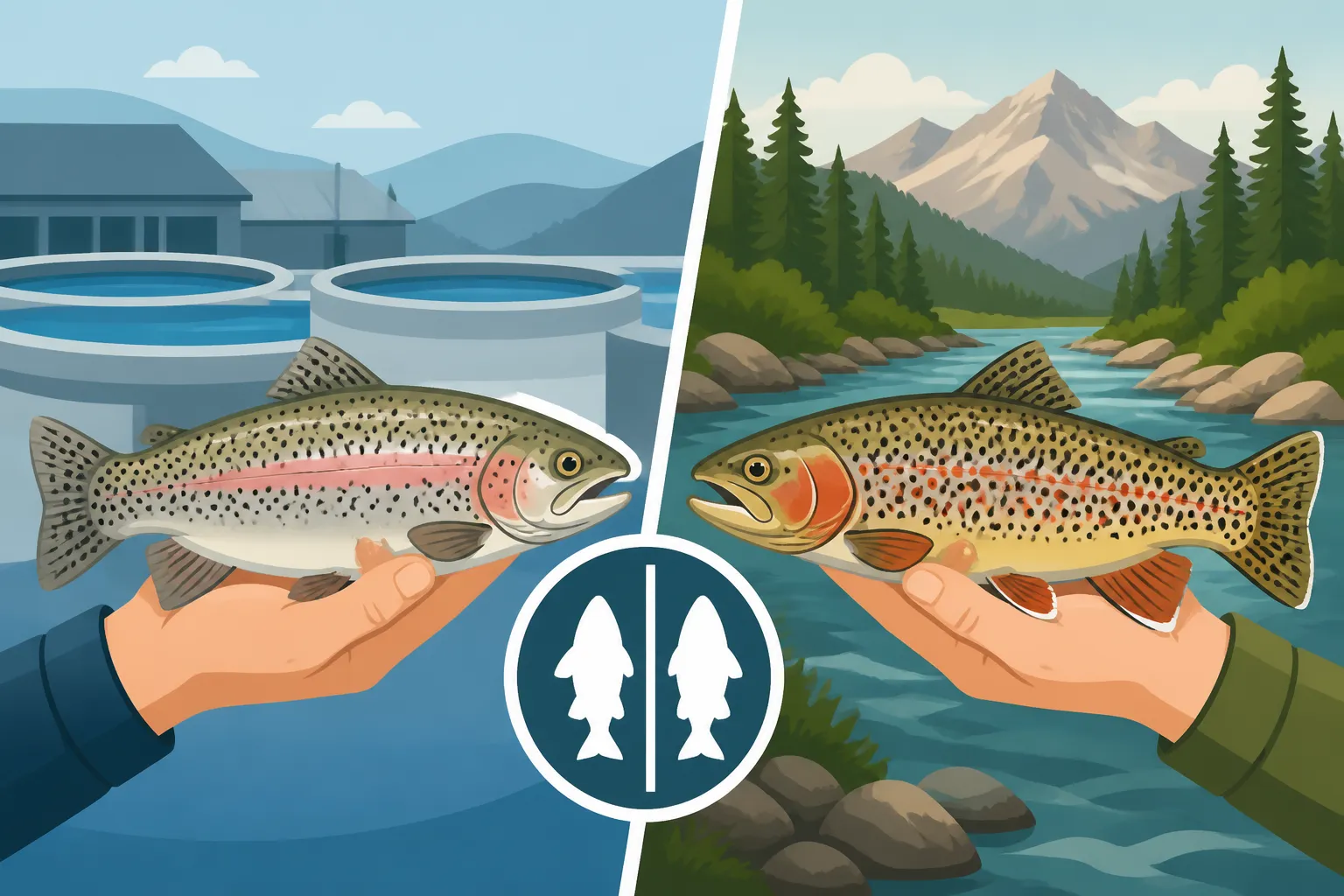
The most immediate and often clearest way to tell a stocked trout from a wild one is by looking closely at its physical characteristics. While some holdover stocked fish can begin to take on wild traits, freshly stocked fish often bear distinct marks of their hatchery upbringing.
Fin Condition and Shape
This is perhaps the most tell-tale sign, and often the first thing experienced anglers look for. Hatchery environments, by their very nature, are crowded. Trout are kept in concrete raceways or tanks, leading to constant bumping, rubbing, and nipping among fish. This environment takes a toll on their fins. Stocked trout will frequently have:
- Worn, Frayed, or Rounded Fins: Their fins, particularly the dorsal, pectoral, and caudal (tail) fins, might appear short, stubby, or tattered. The delicate rays of the fins can be worn down, giving them a rounded or clubbed appearance, a condition often referred to as "fin erosion."
- Scarring or Deformities: You might notice scars or even missing portions of fins due to aggressive interactions with other fish or rubbing against the rough surfaces of their tanks.
In stark contrast, a wild trout’s fins are a marvel of natural design:
- Pristine and Fully Formed: Wild fish have long, perfectly shaped fins that are often translucent and appear almost delicate. Each fin ray is typically intact and sharp, designed for powerful swimming and precise maneuvering in strong currents. Their caudal fin will usually be broad and symmetrical, built for bursts of speed and sustained effort against the flow.
Beyond general fin condition, there’s one definitive marker: the adipose fin clip. This small, fleshy fin located between the dorsal fin and the tail fin is often removed in hatcheries as a permanent, unambiguous identifier for stocked fish. If a trout is missing its adipose fin, or if you see a scar where it should be, you can be almost certain it's a hatchery fish. The Wyoming Game and Fish Department utilizes this method for various management purposes, and learning What a Clipped Adipose Fin Means is crucial for identification. You can delve deeper into Why Some Wyoming Trout Are Fin-Clipped to understand the reasoning behind this practice.
Body Shape, Coloration, and Markings
Beyond the fins, a trout's overall physique and aesthetic presentation can offer strong clues.
When you hold a recently stocked fish, you might notice its body feels somewhat uniform, perhaps a little soft or "doughy." They often have a plumper, more rotund appearance, especially if they've been fed a consistent, high-protein pellet diet. Their coloration can also be a bit muted, lacking the striking vibrancy seen in their wild counterparts. This is largely due to the uniform diet and lack of varied natural pigments found in their food sources in the wild. Their spots or parr marks (the vertical bars seen on juvenile trout) might be less defined or even somewhat patchy.
Wild trout, on the other hand, are typically sleek, streamlined, and muscular. Their bodies are built for performance, allowing them to navigate powerful currents and chase prey with agility. They are often described as having a "torpedo" shape. Their colors are usually incredibly vibrant and rich, a kaleidoscope of greens, browns, reds, and yellows, which serve as perfect camouflage for their specific environment. The exact hue can vary dramatically depending on the specific waterbody and its substrate. For example, a wild trout from a dark, tannin-stained stream might be darker than one from a clear, rocky riverbed. Their spots are usually crisp, well-defined, and beautifully scattered, unique to each individual fish and species. You might want to pick up a good field guide to Wyoming fish species on Amazon to help you distinguish between the subtle variations in markings of different trout species.
Snout and Mouth Characteristics
Don't forget to take a good look at the fish's head, particularly its snout and mouth. Just like fins, these areas can show wear and tear from a hatchery existence.
Hatchery trout, confined to tanks or raceways, often rub their snouts against the hard surfaces, leading to noticeable abrasions, deformities, or a blunted, rounded appearance. Their mouths might also show signs of wear or even be slightly malformed if they've been continually bumping into walls or other fish while feeding. These aren't just minor cosmetic issues; they are indicators of a life lived in a confined, artificial environment.
A wild trout, conversely, will almost always have a pristine, sharply pointed snout. Its mouth will be perfectly formed and unblemished, a testament to a life spent freely foraging in a natural habitat. They use their snouts and mouths to explore their environment, root out insects, and snap up prey, but without the constant friction of concrete walls. The precision of their mouth structure is critical for survival, reflecting a healthy, wild existence.
Beyond Appearance: Behavioral and Habitat Clues
While physical traits offer strong evidence, sometimes the fish itself, or its environment, can give you further hints. These behavioral and habitat clues can be especially useful for "holdover" stockers that have started to adapt to the wild.
Fight and Vigor
The way a trout fights on the end of your line can often reveal its origin. Wild trout, accustomed to navigating strong currents, dodging predators, and hunting for their own food, are typically much more powerful and spirited fighters. They'll often make powerful runs, jump from the water, and display acrobatic moves, demonstrating their innate strength and wild instincts. They've spent their entire lives in an environment that demands peak physical condition, and it shows when they're hooked.
Stocked trout, especially those recently released, sometimes put up a comparatively weaker fight. They might feel more "listless" on the line, lacking the explosive power and prolonged struggle of a wild fish. Having lived in a controlled environment with readily available food, they haven't developed the same muscular strength or the instinctual fight for survival. This isn't always a hard and fast rule, as some larger, longer-term stockers can certainly put up a good tussle, but generally, the raw power and tenacity of a wild trout are quite distinct. Remember to always practice Catch-and-Release Best Practices for Trout regardless of whether the fish is wild or stocked, to ensure its best chance of survival.
Location and Habitat Preferences
Where you find a trout can be as telling as how it looks. Stocked fish, particularly when first released, tend to congregate near the stocking points. They may not immediately disperse or seek out the optimal holding lies that wild fish instinctively use. You might find them in less ideal habitat, seemingly disoriented, as they adjust to their new surroundings. If you're fishing a popular spot known for recent stockings, and you're catching a lot of fish quickly in relatively open or shallow water, there's a good chance they're fresh stockers. The Wyoming Game and Fish Department often provides information on Where Wyoming Stocks Rainbow Trout, which can give you a heads-up.
Wild trout, on the other hand, are masters of their environment. They instinctively seek out prime holding water – places where they can conserve energy while having access to food and cover. This includes the subtle seams where fast and slow currents meet, deep pools, undercut banks, behind large rocks or logs, and beneath overhanging vegetation. They are adept at using structure to their advantage, making them harder to find and catch. Learning How to Read Water When Trout Fishing will help you identify these prime wild trout locations. You might find guides or books on reading water available on Amazon to further hone this skill. Understanding Wyoming Fishing Seasons Month by Month and how trout behavior changes throughout the year can also give you an edge in finding wild fish in their preferred seasonal habitats.
Diet and Stomach Contents
If you choose to keep a trout (always be sure to adhere to all Wyoming Fishing Regulations Every Angler Should Know and specific water limits), examining its stomach contents can provide definitive proof of its origin.
A recently stocked trout will often have a stomach full of pellets – the same processed food it was fed in the hatchery. These pellets are usually distinct in color and texture, unlike anything found naturally in a river or lake.
A wild trout, however, will have a diverse and natural diet. Its stomach might contain a variety of aquatic insects (caddisflies, mayflies, stoneflies), terrestrial insects (grasshoppers, ants), small baitfish, crayfish, or other crustaceans native to its particular waterbody. This varied diet contributes to its vibrant coloration and firm, healthy flesh. This is one of the clearest indicators that the fish has been living and foraging independently in a natural ecosystem.
The Nuance: When It's Not So Obvious
While the previous clues are generally reliable, the world of fish identification isn't always black and white. Wyoming's diverse waters present challenges, and sometimes, a trout can defy easy categorization, making the distinction a little trickier.
"Holdover" Stockers
One of the biggest challenges in distinguishing trout is the phenomenon of the "holdover" stocker. These are fish that were once released from a hatchery but have managed to survive in the wild for an extended period – perhaps a season, a year, or even longer. Given enough time and a suitable environment, these holdovers can undergo a remarkable transformation.
Over months, their fins can begin to heal and grow back, appearing less frayed and more aligned with those of a wild fish. Their body shape might slim down as they adapt to a more active foraging lifestyle, and their coloration can become more vibrant, influenced by a natural diet and exposure to sunlight and varied underwater environments. Essentially, they start to "go wild." Catching a holdover stocker can be incredibly satisfying because they've proven their resilience and adaptability, even if they didn't start their life in the wild. This makes the job of telling a truly wild fish from a well-adapted stocker incredibly difficult, sometimes even for seasoned biologists. This blurring of lines underscores the Wild vs Stocked Rainbow Trout in Wyoming discussion.
Hybridization and Genetic Blending
Another layer of complexity, particularly in Wyoming, involves hybridization. While distinct species, some trout can interbreed, creating hybrids that possess characteristics of both parent fish. The most common example, and a significant concern for native fish conservation, is the "cutbow" – a cross between a rainbow trout (often stocked) and a native cutthroat trout. What Are Cutbow Trout? are becoming more common in certain waters.
These hybrids can exhibit a mix of traits, making a clear distinction between a pure wild native and a stocked fish challenging. A cutbow might have the red slash under the jaw characteristic of a cutthroat, but with the spotting pattern or fin shape more reminiscent of a rainbow. This genetic blending complicates identification and poses a threat to the genetic purity of native trout populations. Preserving the distinct genetic lines of species like the Yellowstone Cutthroat Trout is a major priority for Wyoming Game and Fish, and understanding the risks of hybridization is vital for responsible angling.
Tools and Resources
Even with a keen eye and extensive experience, sometimes a definitive identification can be elusive. Fortunately, there are resources available to help. Carrying a small, waterproof field guide specific to Wyoming fish species can be invaluable. These guides, often available on Amazon or at local tackle shops, typically feature detailed illustrations or photographs and highlight key identification markers.
The Wyoming Game and Fish Department is also your best friend in this endeavor. Their website, publications, and even staff at local offices can provide detailed information on stocking schedules, specific regulations for different water bodies, and identification guides. Checking Where to Find Current Wyoming Fishing Regulations is always a good practice before heading out. If you're truly stumped, consider taking a clear photograph of your catch and respectfully contacting a local fisheries biologist or experienced guide. While not every fish will yield an immediate, definitive answer, by combining visual observation, behavioral clues, and available resources, you'll become a much more informed and appreciative angler.
Here’s a quick summary table to help you compare at a glance:
| Feature | Wild Trout | Stocked Trout (Recent Release) |
|---|---|---|
| Fins | Pristine, sharp, fully formed, often translucent | Worn, frayed, stubby, rounded, sometimes scarred |
| Adipose Fin | Present, intact | Often clipped (missing or scarred over) |
| Body Shape | Sleek, torpedo-shaped, lean, muscular | Plumper, often more uniform/bulky, sometimes soft-looking |
| Coloration | Vibrant, rich, adapts to specific habitat | Duller, paler, sometimes uniform, less vivid |
| Snout/Mouth | Pointed, intact, no abrasions | Rounded, often worn, scarred from tank walls |
| Fight | Strong, acrobatic, energetic | Often weaker, less vigorous, easily landed |
| Habitat | Specific holding lies (current breaks, cover) | Near stocking points, less discerning about cover |
| Diet (Stomach) | Natural insects, small fish, crustaceans | Often hatchery pellets |
Being able to tell the difference between a wild and stocked trout isn't just about showing off your knowledge; it's about connecting more deeply with the natural world and appreciating the incredible journey each fish has taken to reach your line. While some distinctions can be subtle, honing your observational skills will undoubtedly make you a more engaged and responsible angler in Wyoming's fantastic fisheries.
Disclaimer
This article is for general informational purposes only and does not constitute professional advice. Laws, prices and regulations vary by location and change over time. Consult a qualified professional for guidance on your specific situation.