Where to Find Kokanee Salmon at Flaming Gorge
Flaming Gorge Reservoir is a massive body of water, spanning both Wyoming and Utah, and finding a specific species like Kokanee salmon can often feel like a treasure hunt without a map. These feisty, schooling fish are a prized catch, but their pelagic nature means they’re constantly on the move, chasing their food source in the vast depths. This guide is here to equip you with the knowledge, locations, and techniques you’ll need to successfully pinpoint and catch Kokanee salmon in this incredible high-desert reservoir, taking the guesswork out of your next fishing adventure.
Understanding Kokanee Salmon in Flaming Gorge
Kokanee salmon are a unique and thrilling species to target in Flaming Gorge. Unlike their ocean-going sockeye cousins, Kokanee spend their entire lives in freshwater, making them a true landlocked salmon. They're also filter feeders, primarily consuming zooplankton, which dictates much of their behavior and where you'll find them. Knowing a bit about their life cycle and why Flaming Gorge suits them so well is the first step to a successful day on the water.
The Life Cycle and Behavior of Kokanee
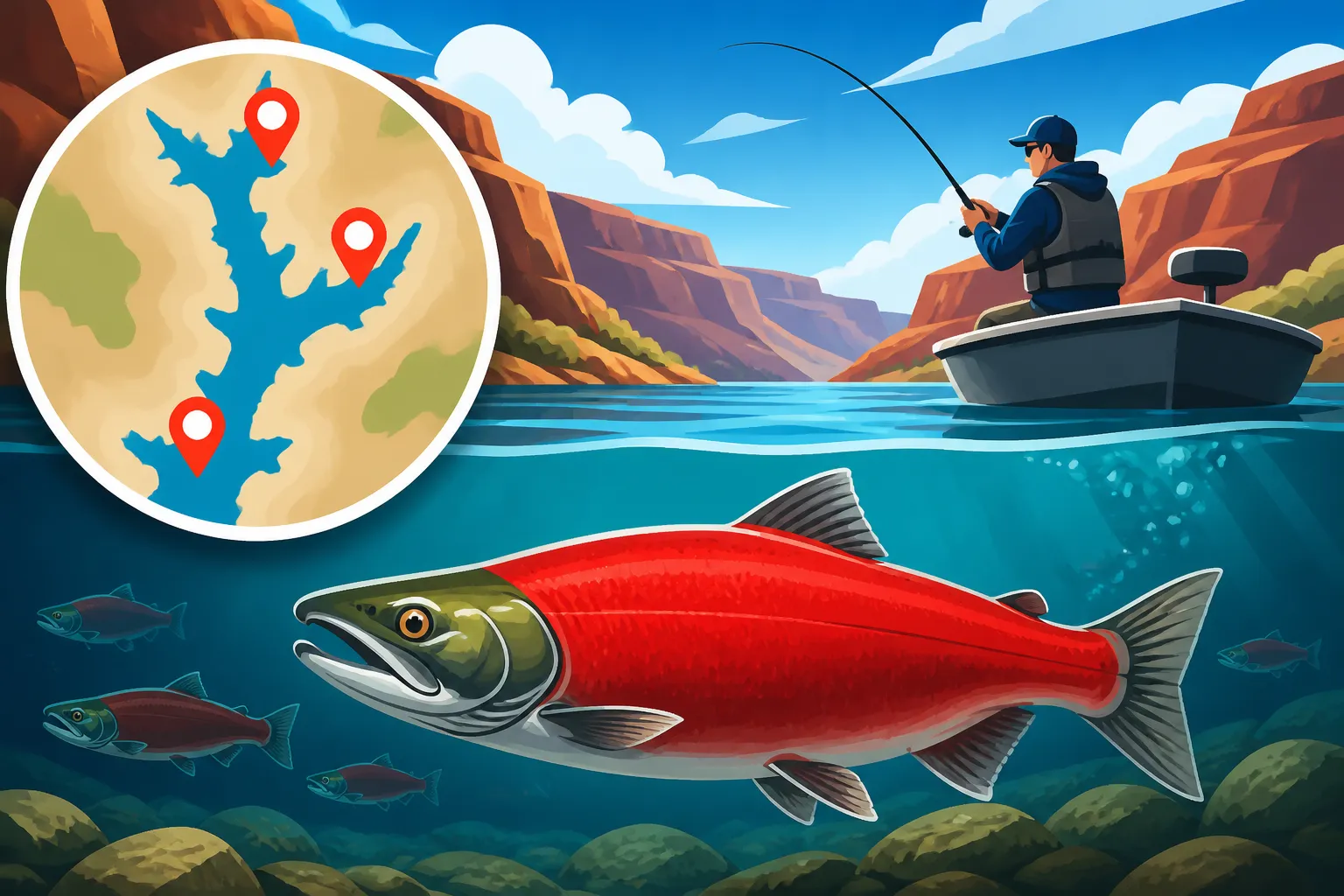
Kokanee salmon in Flaming Gorge typically have a four-year life cycle. They hatch from eggs laid in gravel beds during the fall, spend their juvenile years growing, and then return to those same areas to spawn in their fourth year, after which they die. This spawning run, usually in September and October, transforms their silver bodies into a brilliant red, and the males develop a distinct humped back and hooked jaw. During their non-spawning years, they are primarily pelagic, meaning they live in the open water column, constantly roaming in schools in search of zooplankton.
This schooling behavior is key to understanding where they'll be. Kokanee are highly temperature-sensitive, preferring water temperatures between 45 and 55 degrees Fahrenheit (7 to 13 degrees Celsius). They will orient themselves in the water column to find this ideal temperature, often referred to as the "thermocline" during summer months. They also prefer areas with ample oxygen. Their diet of zooplankton means they will follow these microscopic organisms, which are influenced by light levels, often moving deeper during bright daylight and shallower at dawn and dusk. This makes early morning and late evening prime times for targeting them.
Why Flaming Gorge is Prime Kokanee Habitat
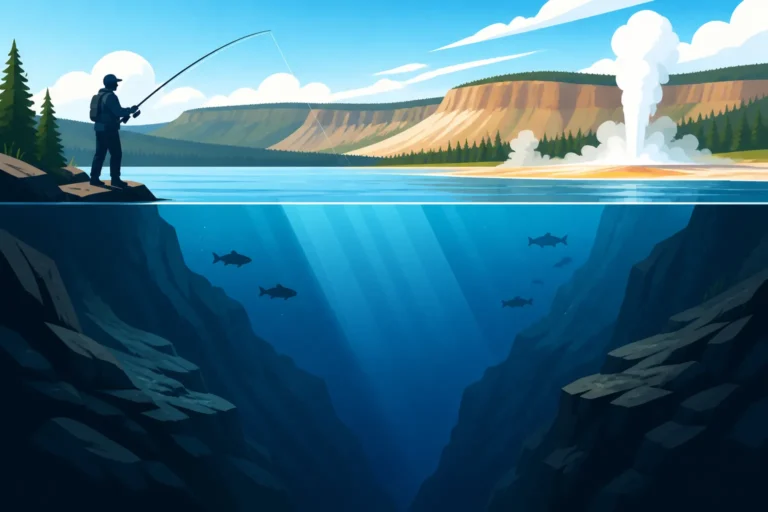
Flaming Gorge Reservoir offers an almost perfect environment for Kokanee salmon. Its immense size and depth create vast expanses of open water, providing the pelagic habitat they thrive in. The reservoir also boasts excellent water quality and a robust zooplankton population, ensuring a consistent food source for these filter feeders. The complex underwater topography, with its deep canyons, shelves, and expansive flats, provides varied habitat that allows Kokanee to disperse and find optimal conditions throughout the year.
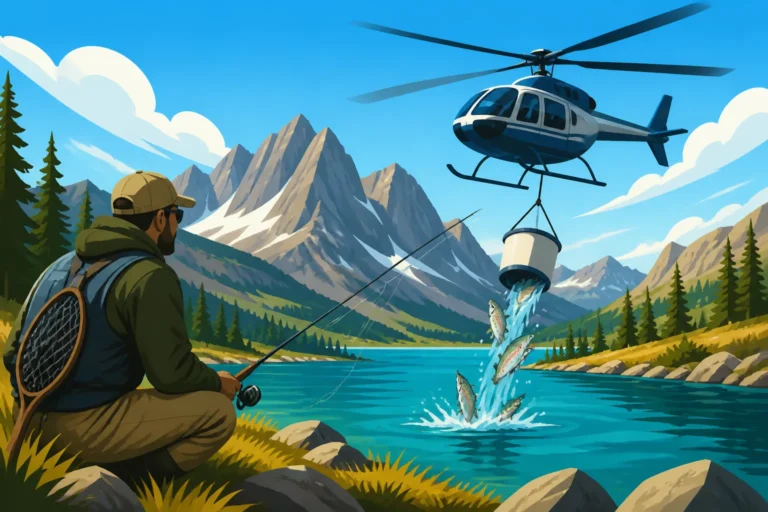
The fact that Flaming Gorge is an interstate fishery further enhances its appeal. The Wyoming Game and Fish Department and Utah Division of Wildlife Resources actively manage the Kokanee population through stocking programs and careful regulation. This collaboration ensures a healthy and sustainable fishery, contributing to the consistent quality and quantity of Kokanee available for anglers. Historically, How Kokanee Salmon Got Into Wyoming Reservoirs involved deliberate stocking efforts to create this fantastic fishery. The cool, deep waters, particularly in the northern reaches of the reservoir on the Wyoming side, maintain the ideal thermal conditions Kokanee require, even during the hottest summer months, allowing them to grow to impressive sizes.
Key Locations for Kokanee Salmon at Flaming Gorge
Flaming Gorge is truly massive, stretching over 91 miles. To find Kokanee, you need to understand their preferred habitats within this vastness. While they are pelagic, certain areas consistently hold higher concentrations due to depth, structure, and access to their food source. Both the Wyoming and Utah sides of the reservoir offer excellent opportunities, but their characteristics can vary. For a broader overview of the entire reservoir, you might want to check out the Flaming Gorge Reservoir Fishing Guide.
North End Hotspots Wyoming Side
The Wyoming side of Flaming Gorge, particularly the northern arms, is renowned for its excellent Kokanee fishing. Areas like Buckboard Crossing and the Stateline area (where the Green River arm crosses into Utah) are perennial favorites. The deep, cooler waters in these sections consistently hold schools of Kokanee, especially during the summer and early fall. The Green River arm itself, upstream from the main body, can also be productive in specific seasons as fish move in and out.
When fishing these Wyoming hotspots, look for deep channels and submerged structures. Kokanee often suspend over these features, using them as reference points or congregating where currents might bring more zooplankton. At Buckboard, the expansive open water combined with gradual drop-offs makes it a prime trolling ground. Don't be afraid to explore. Many anglers focus on the main channel, but side coves and shallower bays (early in the morning or late evening) can also hold surprises, especially as the fish begin to stage for their spawning migration. For specific details on this popular area, refer to Fishing the Buckboard Area of Flaming Gorge, Wyoming.
Southern Arm Concentrations Utah Side
As you move into the Utah section of Flaming Gorge, specifically the southern arms like Sheep Creek and Lucerne Bay, the Kokanee fishing remains robust. These areas also offer deep, cold water and ample forage. Sheep Creek, with its dramatic canyon walls, can be particularly good, as fish often hug the steep ledges and suspended baitfish. Lucerne Bay provides easy access and a vast expanse of water to cover, making it a popular choice for many anglers.
The Utah side often sees Kokanee holding at similar depths to the Wyoming side, but local currents and thermal layers can create subtle differences. It's not uncommon to find schools concentrated near points, submerged islands, or where feeder creeks enter the reservoir, especially during cooler periods. The key here is mobility and using your electronics effectively. If you're targeting Kokanee specifically, consider exploring different depths and trolling paths until you mark fish. Some anglers find that the fish on the Utah side can be slightly less pressured in certain stretches if you know where to look.
Open Water Tactics and Depths
Regardless of whether you're on the Wyoming or Utah side, most Kokanee fishing in Flaming Gorge takes place in open water, often quite a distance from shore. These fish don't typically relate to shallow cover like bass or even many trout. Instead, they are found suspended in the water column, often at significant depths. In spring, they might be shallower, perhaps 20-40 feet, but as summer progresses and the thermocline sets up, they can be as deep as 60-100 feet or even more in the middle of the day.
Your fish finder is your absolute best friend when trying to locate Kokanee. Look for dense, banana-shaped arches or tight balls of baitfish (which could be zooplankton or smaller baitfish the Kokanee are feeding on) suspended off the bottom. Once you mark fish, note the depth and try to present your lures at that exact level. Remember, Kokanee are often in large schools, so if you find one, there are likely many more. Pay attention to changes in depth based on light conditions – they'll often move up in the water column during low light and sink deeper when the sun is high.
Best Times and Conditions to Target Kokanee
Timing is everything when it comes to Kokanee fishing, and Flaming Gorge is no exception. Understanding their seasonal movements and how weather influences their behavior can dramatically increase your success rate.
Seasonal Movements and Spawning Runs
Spring (April – June): This is an excellent time to target Kokanee. As the ice melts and water temperatures begin to rise, Kokanee will often be found shallower, sometimes as high as 15-30 feet, especially in the mornings and evenings. They are actively feeding after the lean winter months and can be quite aggressive. This period offers some of the easiest Kokanee fishing before they descend into deeper water for the summer.
Summer (July – August): During the heat of summer, Kokanee move much deeper, typically suspending in the thermocline, often 50-100 feet down. This is when downriggers become absolutely essential to get your lures into the strike zone. They are still actively feeding, but you'll need to work harder to find their preferred depth and present your offering precisely. Even though they are deep, this can still be a very productive time, especially early and late in the day.
Fall (September – October): This is perhaps the most exciting time for many Kokanee anglers, as the fish begin their annual spawning run. Their bodies transform into vibrant reds, and they gather in the upper reaches of the Green River arm and other spawning tributaries. While they become less interested in feeding at this stage, they are easier to locate due to their concentration. Catching them during the peak of the spawn is often restricted by regulations, so always check Wyoming Fishing Seasons and Water-Specific Closures before heading out. The fishing just before the peak spawn can be phenomenal as they gorge themselves in preparation.
Optimal Weather and Water Conditions
Kokanee, like most fish, respond to changes in weather. Overcast days with a light chop on the water can often be ideal. The clouds diffuse the sunlight, allowing the fish to stay shallower for longer periods, and the chop breaks up the water's surface, making them less wary. Bright, sunny days will typically push Kokanee deeper into the water column, so you'll need to adjust your depth accordingly.
Water clarity also plays a role. Flaming Gorge generally has very clear water, which means Kokanee can be quite spooky. This is why long leaders and subtle presentations are often more effective. High winds can make trolling challenging and finding your target depth difficult, so calmer days are usually preferred. However, a slight breeze can create current and oxygenation that sometimes triggers a bite. Pay attention to water temperature readings on your fish finder – locating the consistent 45-55°F band is a crucial first step, as this is where the Kokanee will typically hold.
Essential Gear and Techniques for Kokanee Fishing
Targeting Kokanee salmon effectively in Flaming Gorge requires specialized gear and a methodical approach. These fish have delicate mouths, school tightly, and often require specific presentations.
Rods, Reels, and Line Setup
For Kokanee, you'll want a rod that's sensitive enough to detect their light bites but also has enough backbone to handle a good fight and the weight of your gear. A light to medium-light action spinning or casting rod, typically 6'6" to 7'6" in length, is ideal. Many anglers opt for rods specifically designed for Kokanee, which often have a very soft tip to absorb headshakes and prevent hooks from tearing out of their paper-thin mouths.
Pair this with a small, smooth spinning reel or a baitcasting reel spooled with light line. 8-10 pound monofilament or fluorocarbon main line is common, but some prefer 10-15 pound braid with a 6-8 pound fluorocarbon leader. The stretch in mono can be beneficial with Kokanee's soft mouths, while braid offers sensitivity, but requires a good rod action to compensate. Your leader should be long, often 10-20 feet, to separate your lure from the main line, making it less visible in Flaming Gorge's clear waters. Using quality swivels is crucial to prevent line twist, especially when trolling with dodgers and flashers.
Lures, Baits, and Scent Strategies
Kokanee are highly attracted to bright, flashy, and often scented lures. The most popular choices are small, brightly colored hootchies, mini squid, small spoons, and specialized Kokanee jigs. Colors like pink, orange, chartreuse, and white are perennial favorites. Often, adding a small piece of corn (usually dyed and scented) to your hook is the magic touch. The corn provides visual appeal and, more importantly, a scent trail that Kokanee find irresistible.
Scent is incredibly important for Kokanee. Many anglers "tip" their lures with commercial scents like Anise, Krill, or Garlic. Some even let their corn soak in these scents for days or weeks before a trip. The combination of visual flash, subtle movement, and a strong scent profile is what truly entices these fish. Experiment with different colors and scent combinations on a given day, as what works one day might not work the next. Having a variety of options ready to go will improve your chances dramatically.
Trolling and Downrigger Techniques
Trolling is by far the most effective technique for Kokanee in Flaming Gorge. Since they are constantly roaming in schools, covering a lot of water with multiple lines at different depths increases your odds. The setup typically involves a dodger or a flasher followed by a short leader (6-18 inches) to your lure. The dodger/flasher creates attraction through flash and vibration, drawing Kokanee in, while your lure provides the final irresistible presentation.
To get your lures to the precise depth where Kokanee are holding, downriggers are indispensable. They allow you to send multiple lines down to exact depths, crucial for staying in the narrow strike zone of a Kokanee school. Speed is also critical; a slow troll, typically between 0.8 and 1.8 miles per hour, is often most effective. Experiment with speed, making subtle changes until you find what the fish prefer. For more on this, check out Best Trolling Speed for Kokanee Salmon. Pay attention to your fish finder, and when you mark fish, drop your lines to that depth. You might also want to learn more about Downrigger Basics for Wyoming Reservoir Trout, as many principles apply directly to Kokanee.
Local Tips and Regulations for Flaming Gorge Kokanee
Fishing Flaming Gorge comes with its own set of nuances, especially concerning regulations that span two states. Being prepared and understanding the rules is just as important as knowing where the fish are biting.
Navigating the Wyoming/Utah Border Rules
One of the most unique aspects of fishing Flaming Gorge is that it straddles the Wyoming and Utah state lines. While you might assume you need two separate licenses, there's actually an interstate reciprocal agreement in place. This means that if you possess a valid annual Wyoming fishing license, you can fish the entire reservoir, including the Utah portions, and vice-versa for a Utah annual license holder. However, this reciprocity often does not extend to daily or short-term licenses. For example, a Wyoming five-day nonresident license may only be valid on the Wyoming portion of the reservoir.
It's absolutely critical to double-check the latest regulations from both the Wyoming Game and Fish Department and the Utah Division of Wildlife Resources before you go, especially if you plan to use a short-term license or are unsure about your residency. They often have specific sections dedicated to Flaming Gorge. Ignorance of the law is not an excuse, and game wardens from both states patrol the reservoir. Make sure you understand Wyoming Fishing Regulations Every Angler Should Know to avoid any potential fines or violations.
Conservation and Catch Limits
Kokanee salmon are a valuable sportfish in Flaming Gorge, and both states manage them carefully to ensure sustainable populations. This means there are specific bag and possession limits in place, which can sometimes differ slightly between the Wyoming and Utah portions, or even change year to year based on population surveys. Always check the current regulations booklet for the most up-to-date information. Typically, there's a daily bag limit for Kokanee, and a possession limit, which is usually twice the daily bag limit.
For example, a common regulation might be a daily limit of 4 Kokanee salmon and a possession limit of 8. It's also vital to accurately identify your catch, as other salmonids like Rainbow or Brown trout have different limits. Responsible angling practices, such as careful handling of fish you intend to release and only keeping what you plan to eat, contribute to the health of the fishery. If you're serious about your catch, understanding How Bag and Possession Limits Work in Wyoming is essential to stay compliant. Sometimes, the best way to get on the fish while respecting local limits is to hire a local expert. Websites like FishingBooker can help you find experienced guides who know the current regulations inside and out. If you're specifically looking for a guided Kokanee trip on the gorge, they can help you book Guided Trips for Kokanee Salmon at Flaming Gorge, Wyoming.
Summary of Kokanee Hotspots and Tactics
To help you visualize where and when to target these brilliant fish, here's a quick summary:
| Area | Best Season | Typical Depth (feet) | Key Technique | Notes |
|---|---|---|---|---|
| Buckboard Crossing | Spring, Summer | 20-100 | Trolling w/ downriggers | North end, Wyoming side; excellent open water. |
| Stateline Area | Spring, Fall | 20-80 | Trolling w/ downriggers | Near border, fish stage here for spawn; check regs. |
| Sheep Creek Arm | Summer | 40-120 | Trolling w/ downriggers | Utah side, deep canyon; fish near ledges. |
| Lucerne Bay | Spring, Summer | 30-90 | Trolling w/ downriggers | Utah side, easy access, large open area. |
| Green River Arm (upper) | Fall (spawn) | Varied | Trolling, jigging | Fish move upstream for spawning; check closures. |
| Open Water (Mid-reservoir) | Summer | 50-100+ | Trolling w/ downriggers | Look for thermocline and suspended schools. |
Remember, these are general guidelines, and Kokanee can be found throughout the reservoir. Always rely on your electronics and adapt to current conditions. If you're looking for guidance, remember that FishingBooker can connect you with knowledgeable local guides who specialize in Kokanee fishing on Flaming Gorge.
Disclaimer
Fishing conditions and regulations can change rapidly. Always consult the most current regulations provided by the Wyoming Game and Fish Department and the Utah Division of Wildlife Resources before planning your trip. The information provided in this guide is for general informational purposes only and does not constitute official legal advice.