What Yellowstone Cutthroat Trout Eat
Have you ever stared at a beautiful Wyoming river, watching trout rise, and wondered what in the world they were eating? It's a common frustration for many anglers, especially when targeting a discerning species like the Yellowstone Cutthroat Trout. Understanding what these native beauties prefer on their menu is the key to unlocking more successful days on the water, and this comprehensive guide is designed to peel back the layers of their diverse diet, helping you choose the right fly or lure every time.
The Yellowstone Cutthroat's Natural Foraging Habits
Yellowstone Cutthroat Trout, often simply called "cutties," are incredibly adaptive feeders, but their diet primarily revolves around the available food sources in their specific habitat. They're true opportunists, and their willingness to consume a wide variety of prey is part of what makes them such a captivating fish to pursue. Their diet isn't static; it changes dramatically with the seasons and the specific ecosystem they inhabit, whether it's a roaring river, a placid lake, or a high-alpine tarn.
Insect Life: The Mainstay of Their Diet
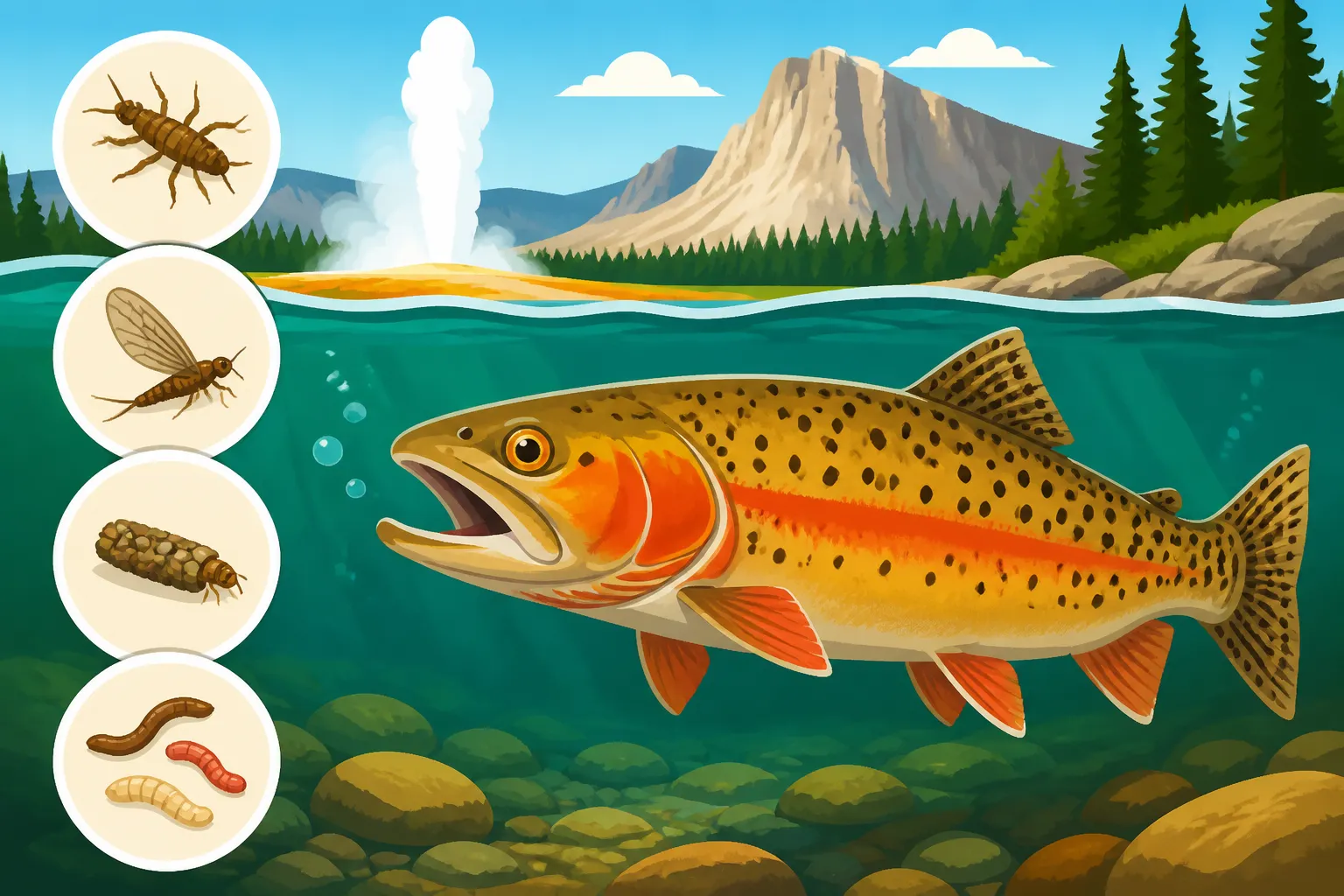
If there's one thing you can count on a Yellowstone Cutthroat to eat, it's insects. Both aquatic and terrestrial insects form the absolute foundation of their diet throughout the year. These protein-packed morsels are constantly available in varying forms, making them a reliable food source that cutthroats have evolved to master.
Aquatic insects are the bread and butter. Nymphs, larvae, and pupae of various species spend their lives in the water, clinging to rocks, burrowing in silt, or drifting in the current. Mayfly nymphs, caddisfly larvae, and stonefly nymphs are particularly important. Trout will actively dislodge these insects from the substrate, or simply wait for them to drift by. When these insects begin their transition to adulthood, emerging from the water as winged adults, it triggers a feeding frenzy often referred to as a "hatch." During these events, cutthroats will abandon their bottom-feeding habits and eagerly rise to the surface to snatch adult insects as they float downstream, making for some of the most exciting dry fly fishing experiences. Understanding these emergence patterns is crucial for any angler. You'll want to study up on Matching the Hatch on Wyoming Rivers to really dial in your presentation.
Terrestrial insects, on the other hand, are the accidental, yet highly sought-after, meal. Grasshoppers, crickets, beetles, ants, and even cicadas aren't native to the water, but they often end up there. A strong gust of wind can blow a fat grasshopper off a bankside bush, or a beetle might simply misjudge a jump and land with a splash. For a hungry cutthroat, these larger, struggling insects represent a substantial, high-calorie meal that's too good to pass up. They're particularly important during the warmer summer months when insect activity on land is at its peak. Observing the banks for signs of these land-based insects can give you a huge clue about what the fish might be looking for, even if nothing is visibly hatching on the surface.
Small Fish and Aquatic Organisms
While insects dominate, Yellowstone Cutthroat Trout are certainly not exclusive insectivores. They are predators, and smaller fish, crustaceans, and other aquatic organisms also make a significant portion of their diet, especially for larger, more mature cutthroats seeking a bigger energy payoff. This part of their diet is less about quantity and more about caloric density – a single minnow or sculpin provides far more sustenance than a handful of tiny nymphs.
Minnows and juvenile fish, including sometimes even their own smaller kin, are on the menu. Cutthroats are ambush predators when it comes to fish, often lurking in deeper pools, behind structure, or along current seams, waiting for an unsuspecting baitfish to swim by. Species like mottled sculpins, dace, and various shiner minnows are particularly vulnerable. When the opportunity arises, a cutthroat will dart out with surprising speed to engulf its prey. This predatory behavior is what makes streamer fishing so effective, as you're essentially mimicking these smaller fish. Even if you're mostly a fly angler, learning Streamer Fishing for Wyoming Brown Trout can give you insights into how to target cutthroat with similar tactics.
Beyond fish, other aquatic organisms contribute to their diet. Crayfish, small freshwater shrimp (like scuds and sowbugs), and leeches are often found in the same habitats as cutthroat trout and provide a consistent food source. These bottom-dwelling creatures are often picked off the riverbed or lake bottom, especially during periods when insect hatches are sparse. Leeches, in particular, are a high-protein snack that cutthroats rarely pass up, and larger cutthroats in lakes or slower-moving river sections will actively hunt them.
Opportunistic Feeding: What They'll Grab When Available
Yellowstone Cutthroat Trout are the ultimate opportunists, which means their diet can sometimes include things that might surprise you. If it fits in their mouth and looks edible, a cutthroat is likely to at least investigate it, and often, consume it. This is where their adaptability truly shines, allowing them to thrive in diverse and sometimes challenging environments.
Fish eggs are a prime example of opportunistic feeding. During the spawning season of other fish species, or even their own, cutthroats will gorge themselves on loose eggs drifting in the current or scattered on the bottom. These eggs are a rich, easy-to-obtain protein source, and trout will often position themselves downstream from spawning beds to intercept them. Anglers often take advantage of this by using egg-pattern flies, especially in the fall when brown trout are spawning, or in areas where whitefish or other species lay eggs.
Believe it or not, small amphibians like tadpoles and even tiny frogs can occasionally fall victim to a hungry cutthroat, especially in stillwater environments or slow-moving backwaters where these creatures are more prevalent. While not a primary food source, a cutthroat won't hesitate to snatch one up if the opportunity presents itself. Even small rodents, such as voles or mice, that accidentally fall into the water can become an unexpected, high-reward meal for a larger cutthroat. These larger items are less about constant foraging and more about capitalizing on a rare, calorie-dense event. The lesson here is that a cutthroat is always looking for an easy meal, and sometimes that means thinking outside the box when it comes to what they might consume.
Seasonal Dietary Shifts for Yellowstone Cutthroat Trout
Just like our own appetites change with the seasons, so does the menu for a Yellowstone Cutthroat Trout. Understanding these seasonal shifts is fundamental to being a successful angler. What works in July often won't even get a look in April, and vice versa. It’s all about availability, water temperature, and the trout’s metabolic needs.
Spring: Emerging Insects and Early Hatches
Spring in Wyoming, especially in the high country where many Yellowstone Cutthroat reside, can be a tricky time. Runoff often makes rivers high and muddy, and water temperatures are still quite cold. Despite these challenges, fish still need to eat, and their diet in spring reflects the early insect activity and a focus on submerged food sources.
When the water starts to warm ever so slightly and the last of the ice melts, aquatic insect activity begins to pick up. Nymphs of caddisflies, mayflies, and stoneflies become more active, dislodging from the riverbed and drifting in the current. This makes nymphing techniques incredibly effective. Early season hatches of midges and tiny blue-winged olives (BWOs) can also occur, bringing fish to the surface, particularly on warmer, overcast days. These hatches might not be as prolific as summer events, but they are a welcome sight for hungry cutthroat. Focusing on subsurface presentations with small nymph patterns, especially around structure or in slower seams where fish are conserving energy, is often the most productive strategy. Learning about Wyoming Spring Fishing: What to Expect can give you even more targeted advice.
As the runoff peaks, the water can be challenging to fish, but fish still feed. They'll often move to the slower, clearer edges of the river, seeking refuge from the strong currents and waiting for food to wash into their holding lies. Worm patterns, large stonefly nymphs, and even attractor patterns that represent a general bug soup can be effective. Terrestrial insects are usually not a major factor in the early spring, but any larger insects that fall into the water are still a welcome sight. It's a time for efficiency and targeting prime holding water, as the fish aren't expending excess energy chasing down sparse meals.
Summer: Terrestrial Bonanza and Streamer Action
Summer is perhaps the most diverse and abundant feeding season for Yellowstone Cutthroat Trout. With warmer water temperatures and longer daylight hours, insect activity both in and out of the water explodes. This is the time when cutthroats can truly feast, putting on weight before the lean months of fall and winter.
The terrestrial insect bite is legendary during the summer. Grasshoppers, beetles, ants, and various other land-based insects become a critical food source. Anglers often refer to the "hopper-dropper" rig, where a large imitation grasshopper dry fly is fished with a nymph trailing below it. This tactic acknowledges that cutthroats are looking up for terrestrials and also feeding on the prolific aquatic insects below. Hatches of larger caddisflies, green drakes, golden stoneflies, and various mayfly species provide abundant opportunities for dry fly fishing. On many Wyoming waters, particularly the famous ones like the Snake River or parts of the North Platte, you'll find cutthroats actively rising throughout the day to take these adult insects. You might find a good selection of these fly patterns on Amazon if you're stocking up for your summer trip.
Beyond insects, summer also sees increased activity from smaller baitfish and other aquatic organisms. As water temperatures rise, fish metabolism increases, and larger cutthroats will actively chase down minnows and sculpins. This is prime time for streamer fishing, especially in deeper pools or along structure. Small leeches and crayfish also become more active, providing additional subsurface forage. The combination of abundant insects, both aquatic and terrestrial, and active baitfish means that summer offers a wide array of feeding opportunities for cutthroats, making it a truly exciting time to be on the water. Check out Wyoming Summer Fishing: Peak Season Tips for more in-depth advice.
Fall: Spawning Feasts and Pre-Winter Prep
As summer fades into fall, the Yellowstone Cutthroat's diet shifts once more, driven by decreasing water temperatures, shorter days, and the instinct to pack on calories for the long winter ahead. This is a time of transition, with a mix of lingering summer foods and new, high-energy opportunities.
One of the most significant dietary factors in the fall is fish eggs. As other trout species, particularly brown trout, begin their spawning rituals, their eggs become a readily available and highly nutritious food source. Cutthroats will often move into areas where browns are spawning, positioning themselves downstream to intercept stray eggs. Egg-pattern flies can be incredibly effective during this time, even when nothing else seems to be working. It's a prime example of opportunistic feeding, where the cutthroats take advantage of another species' life cycle.
While terrestrial insect activity wanes with the cooler weather, a few hardy species, like late-season grasshoppers or crane flies, might still be on the water. More importantly, aquatic insect hatches of smaller midges and blue-winged olives can still occur, especially on milder days. However, the overall volume of insect life diminishes, forcing cutthroats to focus more on subsurface prey. This includes a higher reliance on sculpins, minnows, and larger nymphs, which become more important as the surface bite slows down. Larger streamers, fished slowly and deliberately, can imitate these bulkier prey items. The fish are looking for substantial meals, not just a quick snack, making the fall a great time to target trophy-sized cutthroat. If you're wondering when exactly these larger fish become active, Best Month to Catch Cutthroat Trout in Wyoming might shed some light.
Mimicking Their Diet: Lures and Flies for Success
Knowing what Yellowstone Cutthroat Trout eat is only half the battle; the other half is presenting something that looks just like it. Whether you're a fly angler or prefer spin fishing, choosing the right imitation and presenting it correctly are paramount to success. It’s all about convincing that wary cutthroat that your offering is a natural, irresistible meal.
Matching the Hatch with Fly Patterns
For fly anglers, "matching the hatch" is a mantra. It means identifying the specific insects that are emerging or active on the water and selecting a fly pattern that closely imitates its size, shape, and color. For Yellowstone Cutthroat Trout, this can involve a wide range of fly types throughout the year.
- Dry Flies: When cutthroats are actively rising to surface insects, dry flies are your go-to. Think patterns like Parachute Adams, Elk Hair Caddis, or various BWO (Blue-Winged Olive) imitations for smaller mayflies. For summer terrestrials, large foam patterns like a Chubby Chernobyl, a Dave's Hopper, or an Ant pattern are essential. The key here is not just the pattern, but the presentation—a delicate, drag-free drift is often what it takes to fool a sophisticated cutthroat. Many anglers find the "best Wyoming fly patterns for cutthroat trout" include local variations of these classics.
- Nymphs: Nymphs are a year-round staple, as aquatic insects spend most of their lives underwater. Popular patterns include the Pheasant Tail Nymph, Hare's Ear Nymph, Prince Nymph, and various stonefly imitations like Pat's Rubber Legs. These are fished subsurface, often with an indicator, to drift naturally along the bottom where nymphs live. Varying depths and weights is crucial to get your fly into the "strike zone." For deeper, faster water, you might need weighted nymphs to cut through the current.
- Streamers: When cutthroats are feeding on baitfish, leeches, or crayfish, streamers are the answer. Woolly Buggers (in various colors like black, olive, or brown), Sculpzillas, and various articulated baitfish patterns are highly effective. These are stripped or swung through the water to imitate the erratic movement of fleeing prey. Larger cutthroats, especially in lakes or larger river systems like the Snake River, are often taken on streamers, proving they're not just bug-eaters. You can find a huge variety of these patterns, from local tiers to more mass-produced options, on Amazon, making it easy to experiment.
Spin Fishing Lures That Imitate Prey
Spin fishing can be just as effective for Yellowstone Cutthroat Trout, especially when you choose lures that mimic their natural diet. The key is to select lures that have the right action and profile to fool a trout.
- Spinners: Classic inline spinners like Mepps Aglias or Panther Martins (in sizes 0-2) are incredibly effective at imitating small baitfish or larger aquatic insects. The flash and vibration they create can trigger an aggressive strike from a curious cutthroat. Colors like silver, gold, or brass, often with a hint of red or orange, tend to work well. Varying your retrieve speed and depth can help you find what the fish are keying in on.
- Spoons: Small casting spoons, such as Kastmasters or Little Cleos, can also imitate baitfish or even a struggling terrestrial. Their wobbling action is enticing, and they cast a long distance, which is useful for covering water in larger lakes or wide river sections. Again, metallic finishes or bright colors can be very attractive. These are particularly effective when the fish are chasing larger prey or when you need to get your lure into deeper water.
- Soft Plastics and Jigs: Tiny grub-style soft plastics, especially those that resemble minnows or aquatic worms, can be fished on light jig heads. These allow for a subtle presentation, mimicking a struggling or injured baitfish, or even a large nymph. Drifting them along the bottom or working them slowly with small twitches can be deadly, especially in slower currents or still pockets of water. For those starting out or looking for convenient options, a wide array of effective lures are often available on Amazon, allowing you to try different types and colors without breaking the bank.
Presentation Matters: How to Get Your Offering Noticed
Even with the perfect fly or lure, if your presentation isn't right, you might as well be casting a bare hook. For Yellowstone Cutthroat Trout, which can be notoriously spooky and selective, how you present your imitation is just as important as what you're presenting.
One of the most critical aspects of presentation, particularly in rivers and streams, is achieving a "drag-free drift" for dry flies and nymphs. This means your line, leader, and fly are all moving at the same speed as the current, without any unnatural drag that would indicate a fake. For dry flies, this convinces the trout your fly is a natural insect floating effortlessly. For nymphs, it ensures they look like dislodged insects tumbling downstream. Mending your line, properly casting upstream, and using longer leaders are all techniques designed to achieve this natural drift. Understanding Reading Riffles and Runs on Wyoming Trout Streams will help you identify where to focus your efforts for the best drift.
For streamers and spin lures, presentation is about imitating movement. This often involves varying retrieve speeds, adding pauses, or imparting twitches to mimic a struggling baitfish. Sometimes a fast, erratic strip is best; other times, a slow, methodical retrieve is what triggers a strike. It all depends on the current conditions, water temperature (which influences fish metabolism, as seen in How Water Temperature Changes Wyoming Trout Behavior), and the trout's mood. Observing natural prey, if possible, can give you clues. Are minnows darting quickly? Or are leeches slowly undulating? Adjust your retrieve to match. Ultimately, it’s about paying attention to the water, the fish, and experimenting until you find what they’re willing to commit to.
Understanding Yellowstone Cutthroat Feeding Behavior in Different Environments
Yellowstone Cutthroat Trout don't feed the same way in every body of water. A cutthroat in a fast-flowing river has different dietary opportunities and challenges than one in a deep, still lake or a high-alpine pool. Recognizing these environmental differences is crucial for tailoring your approach and maximizing your chances of success.
Stream and River Feeding Strategies
In the dynamic environment of a river or stream, Yellowstone Cutthroat Trout are masters of positioning. They utilize the current to their advantage, often holding in prime lies where food is delivered directly to them with minimal effort.
They'll often position themselves in current seams, which are the boundaries between faster and slower water. Insects and other food items tend to congregate and drift along these lines, making them perfect ambush points. Riffles and runs, the faster, shallower sections of a river, are also highly productive. Aquatic insects are often dislodged here, providing a constant conveyor belt of food. Trout will dart in and out of the faster water to grab morsels, then retreat to slightly slower water to conserve energy.
Deeper pools offer refuge and a chance for larger fish to feed on bigger prey, like sculpins or minnows. Undercut banks and logjams provide excellent overhead cover and allow cutthroats to hide and dart out to intercept drifting food without being exposed. When fishing rivers, understanding these holding lies is paramount. You need to cast to where the fish are comfortable and where food naturally accumulates. If you want to dive deeper, articles like Reading Riffles and Runs on Wyoming Trout Streams offer fantastic insights into decoding river dynamics.
Lake and Reservoir Foraging
Lakes and reservoirs present a vastly different feeding challenge and opportunity for Yellowstone Cutthroat Trout. Without a constant current delivering food, cutthroats here must actively search for their meals or wait for specific events.
In lakes, cutthroats often cruise the shorelines, especially in the early morning or late evening, looking for aquatic insects emerging, terrestrials falling in, or small minnows. Drop-offs and weed beds are also prime areas, as they provide cover and concentrate baitfish and invertebrate life. Deeper in the lake, cutthroats will feed on zooplankton, scuds, leeches, and even smaller lake trout or kokanee salmon. Trolling with streamers or spoons can be effective for covering vast expanses of water and locating these active feeders.
Yellowstone Lake itself, a namesake for the cutthroat species, presents its own unique dynamics. Cutthroats there feed extensively on aquatic invertebrates, especially amphipods and chironomids, which can be mimicked with small nymph and midge patterns. They also fall victim to the invasive lake trout, which preys heavily on them, making understanding the lake's ecosystem particularly complex. For those specifically interested in the species' namesake waters, Fishing Wyoming's Yellowstone Lake Guide is a must-read, as is What Fish Are in Yellowstone Lake for broader context.
High Mountain Lakes: Unique Dietary Opportunities
High-alpine lakes, often nestled in remote wilderness areas, offer some of the most pristine yet challenging environments for Yellowstone Cutthroat Trout. The diet here can be surprisingly different from lower-elevation rivers or larger lakes.
Insect life in high-mountain lakes can be sparser and less diverse than in warmer, lower-elevation waters. Midge and small mayfly hatches might occur, but they are often sporadic. Terrestrial insects, however, can be a major food source. Grasshoppers, beetles, ants, and even spiders that get blown into these exposed lakes can represent a significant portion of a cutthroat's diet. Often, a large attractor dry fly that broadly imitates a terrestrial is highly effective, even if there's no visible hatch.
These lakes also often contain small crustaceans like scuds or even freshwater shrimp, which provide a consistent food source. Smaller cutthroats might also feed on zooplankton. The key in high-alpine lakes is often to cover water and fish opportunistically. Since food sources can be scattered, a cutthroat might be more willing to move a greater distance to intercept a meal. Lures or flies that are visible and have some movement, like a small spinner or a Woolly Bugger, can be very effective in grabbing their attention. Sometimes, the simplicity of the high-alpine environment makes the fishing surprisingly straightforward if you're presenting something that looks like the few things they do eat.
Disclaimer
This article is for general informational purposes only and does not constitute professional advice. Laws, prices and regulations vary by location and change over time. Consult a qualified professional for guidance on your specific situation.