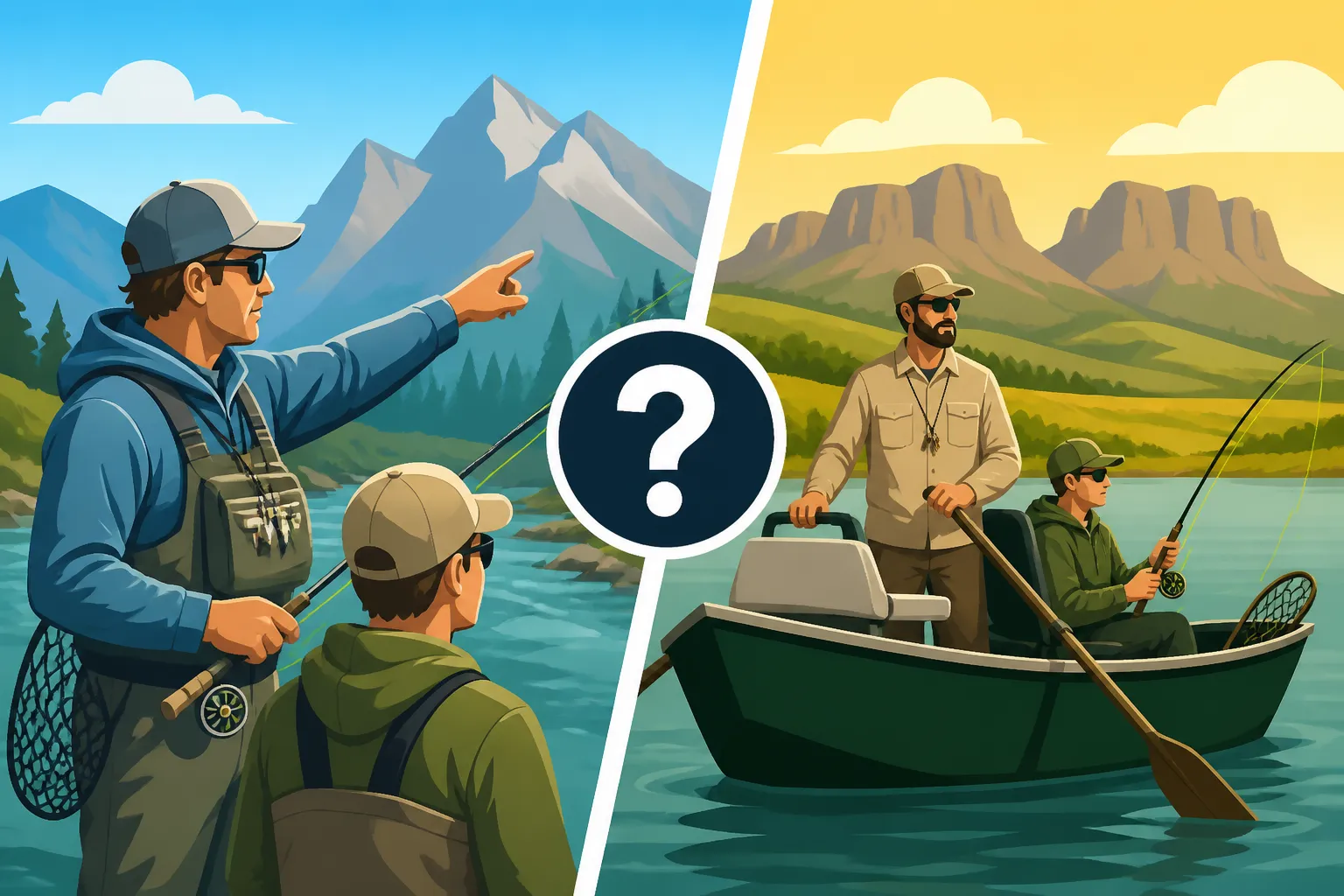
What’s the Difference Between a Guide and an Outfitter?
Planning a fishing trip to Wyoming can be a dream come true, but when you start looking into professional assistance, the terms "guide" and "outfitter" get thrown around interchangeably, leading to a lot of confusion. Many anglers scratch their heads, wondering if there's actually a difference or if it's just marketing jargon. This comprehensive guide will clear up that confusion, breaking down the distinct roles, responsibilities, and benefits of both fishing guides and outfitters in Wyoming, helping you make the best choice for your next adventure on our incredible waters.
The Dedicated Hand-On Expert: What is a Wyoming Fishing Guide?
When you imagine a fishing trip with a professional, chances are you're picturing a guide. A fishing guide in Wyoming is the person who is physically with you on the water, sharing their expertise, helping you cast, tying on flies, spotting fish, and navigating the river or lake. They are the frontline experts, the educators, and the direct facilitators of your fishing experience. Think of them as your personal fishing mentor for the day.
The Guide's Core Responsibilities
A Wyoming fishing guide's primary role revolves around the actual act of fishing and ensuring a successful, safe, and enjoyable experience for their clients. This isn't just about pointing to fish; it's about active participation and instruction. They are responsible for understanding the current conditions, knowing where the fish are holding, what they're eating, and how to best approach them. They'll often provide flies, tackle, and sometimes even waders, ensuring you have the right gear for the specific water you're fishing. Their knowledge extends to local entomology, hydrology, and fish behavior, which they'll often share with you, making your trip educational as well as productive.
For instance, if you're fly fishing the North Platte River, your guide will know exactly where the riffles and runs are most productive for trout on that particular day, which nymph rigs are getting bites, and how to present your fly to wary fish. They might even teach you a new casting technique or how to mend your line more effectively. This intimate, hands-on instruction is a hallmark of a good guide. You might be surprised at how much you learn in a single day, from understanding How to Read Water When Trout Fishing to mastering a new knot.
Legalities and Licensing for Guides
In Wyoming, guides must meet specific licensing requirements to operate legally. They usually need to hold a Wyoming Professional Guide License issued by the Wyoming Game and Fish Department. This isn't just a formality; it ensures they've demonstrated competence and understand the state's fishing regulations. Beyond state licenses, if a guide is operating on federal lands, like those managed by the Bureau of Land Management (BLM) or National Forests, they might also need to be permitted through an outfitter who holds the necessary federal permits for that specific area.
This is a critical distinction: while a guide is the one on the boat or shore with you, their ability to operate in certain areas often relies on the broader permissions held by an outfitter. A guide must also carry proof of their license, and you, as the client, should ensure they are properly credentialed for your peace of mind and safety. This also ensures they know all the intricacies of Wyoming Fishing Regulations Every Angler Should Know.
The Business Behind the Trip: What is a Wyoming Fishing Outfitter?
If a guide is the face of your fishing trip, an outfitter is the backbone. A fishing outfitter in Wyoming is typically a business entity or individual who organizes and conducts commercial guiding services. They are the ones who handle the logistics, permits, insurance, marketing, and employment of guides. Think of them as the comprehensive service provider or the "headquarters" that manages the entire operation.
The Outfitter's Broader Scope of Services
Outfitters offer a wider array of services beyond just the act of fishing itself. While they employ guides to lead the trips, their responsibilities encompass everything from booking and scheduling to providing lodging, meals, transportation, and specialized equipment like drift boats or larger lake vessels. They often package these services into multi-day trips or specialized adventures, such as Guided Backcountry Trips to Wyoming's High Lakes or float trips down a specific river stretch. An outfitter handles the administrative heavy lifting, allowing the guides to focus solely on the fishing experience.
For example, an outfitter might offer a multi-day package that includes accommodation in a cozy cabin near the Snake River, all meals, transportation to different fishing access points, and the services of a professional guide for each day. They handle the permits for operating in specific areas, maintain a fleet of boats, and ensure all their guides are properly licensed and insured. They might even coordinate with services like FishingBooker to make booking easier for clients, offering a seamless experience from inquiry to the final cast.
Legal Requirements and Permits for Outfitters
Outfitters in Wyoming operate under a different and generally more extensive set of legal requirements compared to individual guides. They need to hold an Outfitter License from the Wyoming Board of Outfitters and Professional Guides. This license covers the business itself and allows them to hire and supervise professional guides. Furthermore, if they operate on public lands, such as state parks, National Forests, or Bureau of Land Management (BLM) areas, they must acquire specific permits from those agencies. These permits often dictate the number of clients they can take, the areas they can operate in, and the duration of their season.
These federal and state permits are incredibly important, as they ensure sustainable use of natural resources and regulate commercial activity. An outfitter is responsible for carrying the necessary liability insurance to protect both their business and their clients. When you're researching potential trips, always make sure the outfitter you choose is fully licensed and permitted for the areas they operate in. This attention to detail is crucial for enjoying the best fishing in destinations like Grand Teton National Park, where specific permits are paramount. You can typically find this information on their website or by asking directly, or by using a platform like FishingBooker which often verifies guide and outfitter credentials.
Key Differences: Guide vs. Outfitter in Practical Terms
While the terms are often used interchangeably, understanding the distinction between a guide and an outfitter can profoundly impact your trip planning and expectations. It's not just semantics; it's about understanding who does what and what level of service you're getting.
Business Structure and Employment
The most fundamental difference lies in their business structure. A guide is an individual who provides the actual fishing expertise and instruction. They can be self-employed (an independent contractor) or, more commonly, employed by an outfitter. When a guide works for an outfitter, the outfitter is their employer, handling their schedule, bookings, and often providing the necessary equipment.
An outfitter, on the other hand, is a business entity. They are the "company" that employs multiple guides, owns the infrastructure (boats, vehicles, potentially lodging), and manages the entire commercial operation. They are responsible for the business side of things, including advertising, customer service, and ensuring all legal and safety standards are met across their team of guides.
Scope of Services Offered
- Guide: Focuses almost exclusively on the on-water fishing experience. Their expertise is in finding fish, teaching techniques, and providing a memorable day on the water. They might provide gear for that specific day, but typically not long-term accommodations or complex logistical support.
- Outfitter: Provides a much broader package. They arrange the entire experience, which can include multiple guides, multi-day trips, lodging, meals, transportation, and all necessary permits for various locations. They manage the entire client journey from booking to departure. Think of a guide as a specialist and an outfitter as a general contractor for your entire trip.
Consider a Wyoming Fishing License Guide for Nonresidents. An outfitter can guide you through the process of obtaining the right license as part of their package, while an independent guide might simply remind you to get one.
Permitting and Licensing Requirements
This is where things can get a bit complex but are vital to understand.
- Guide: Needs a Wyoming Professional Guide License and sometimes additional certifications (like first aid, CPR, or boat operator licenses). They usually operate under the outfitter's larger federal and state permits for specific areas. An independent guide would need to acquire their own federal permits if they plan to operate on public lands, which can be a significant hurdle.
- Outfitter: Requires a Wyoming Outfitter License, which allows them to hire guides and conduct commercial trips. Crucially, they also hold the primary permits from federal and state agencies (like the US Forest Service, BLM, National Parks) that allow commercial operations on specific public waters and lands. Without these outfitter-level permits, a guide cannot legally run commercial trips on most public access points.
The table below summarizes these key differences:
| Feature | Fishing Guide (Individual) | Fishing Outfitter (Business Entity) |
|---|---|---|
| Primary Role | Provides on-water fishing expertise, instruction, and assistance. | Organizes and conducts commercial guiding services; manages logistics. |
| Business Scope | Specialist in fishing experience. | Comprehensive service provider, handles all trip logistics. |
| Employment | Can be independent or employed by an outfitter. | Employs multiple guides, administrative staff, and owns assets. |
| Licenses | Wyoming Professional Guide License, CPR/First Aid. | Wyoming Outfitter License, federal/state land use permits, business insurance. |
| Services | Direct fishing instruction, local knowledge, tackle/flies (day-of). | Trip planning, booking, lodging, meals, transportation, multiple guides, all permits. |
| Focus | Maximizing the fishing experience for clients. | Managing the entire operation, ensuring compliance, offering packages. |
Client Interaction and Booking
When you book a trip, you'll typically interact with the outfitter's booking staff, whether that's through their website, phone, or a platform like FishingBooker. They will handle your payment, schedule your dates, and assign a guide to you. If you choose an independent guide, you'll be dealing directly with that individual for all aspects of booking and payment.
Many people prefer the comprehensive service and reliability of an outfitter, especially for longer or more complex trips, as they provide a single point of contact for all arrangements. However, some anglers appreciate the direct, personal connection and potentially more flexible scheduling that an independent guide might offer, if they can find one properly licensed for their desired fishing spot.
When to Choose a Guide or an Outfitter for Your Wyoming Fishing Trip
Deciding between booking directly with a guide or through an outfitter really depends on your specific needs, budget, and the type of experience you're seeking. There's no single "better" option; it's about what aligns with your vision for a perfect Wyoming fishing adventure.
Opt for an Outfitter When…
You're looking for a seamless, all-inclusive, or multi-day experience with minimal planning on your part. An outfitter is your best bet in several scenarios:
- Multi-Day or Packaged Trips: If you want a trip that includes lodging, meals, multiple days of fishing, and potentially different locations, an outfitter excels at packaging these services. They handle all the intricate details, from securing permits for various river sections to arranging transportation and accommodation. This is ideal for those who want to show up, fish, and not worry about logistics.
- Trips to Specific, Heavily Regulated Areas: Fishing in places like Fishing Rules Inside Grand Teton National Park or certain stretches of the North Platte River often requires specific federal permits that individual guides might not possess independently. Outfitters typically hold these broader permits, allowing their guides to operate legally in these prime locations.
- Variety of Guide Options: Outfitters usually employ a team of guides, each with their own strengths, personalities, and expertise. If you have a specific request (e.g., "I want a guide who specializes in streamer fishing for big browns" or "a guide who's great with kids"), an outfitter can often match you with the most suitable person from their roster.
- Convenience and Reliability: The larger business structure of an outfitter often means more robust customer service, backup plans in case of unforeseen circumstances (like a guide getting sick), and easier booking processes through platforms like FishingBooker. They generally offer more security and consistency.
- First-Time Visitors to Wyoming: If you're new to the area and don't know the waters, an outfitter can provide invaluable local knowledge and logistical support, making your introduction to Wyoming fishing much smoother. They can advise on Best Wyoming Fishing Months for Trophy Trout or help you navigate Wyoming's Annual, Daily and Five-Day License Options.
Choose an Independent Guide When…
You're seeking a more personalized, direct experience, possibly for a shorter trip, and are comfortable with handling some of the logistics yourself.
- Single-Day, Focused Trips: If you're just looking for a day on the water with a knowledgeable expert, and you've already sorted out your lodging and other arrangements, a well-vetted independent guide can provide an excellent, focused experience.
- Specific Expertise or Reputation: Sometimes, a particular guide builds a strong personal reputation for their unique skills, personality, or knowledge of a very specific stretch of water. Anglers might seek out this individual directly, valuing that personal connection.
- Potentially More Flexibility (with caveats): An independent guide might have more flexibility in scheduling or customizing a trip if they're not bound by an outfitter's larger operational structure. However, this often comes with less administrative support.
- Budget Considerations (sometimes): While not always the case, occasionally an independent guide might offer slightly different pricing if they have lower overheads than a large outfitter. Always compare services and ensure legal compliance.
- You're Local or Experienced: If you're familiar with Wyoming's regulations, have your own gear, and understand the general logistics, an independent guide can be a great choice for simply adding local expertise to your day. They can provide specific insights into Wyoming Trout Stream Daily Limit or current conditions on your favorite stretch.
When in doubt, always prioritize legality and safety. Regardless of whether you choose a guide or an outfitter, ensure they are properly licensed and permitted for the area you plan to fish. A quick search on the Wyoming Board of Outfitters and Professional Guides website can often confirm their credentials. Platforms like FishingBooker can also be a reliable resource for finding licensed professionals, giving you confidence in your booking.
Making Your Choice: What to Ask Before Booking
Once you understand the difference, you can ask the right questions to ensure you're booking the ideal experience.
Questions for an Outfitter
When you're considering an outfitter, you're essentially vetting a business. Your questions should revolve around the comprehensive nature of their services.
- What exactly is included in the package? Be clear about lodging, meals, transportation, and equipment provided. Is it just the guiding service, or a full experience?
- What permits do you hold for the areas we'll be fishing? This is crucial, especially for national parks, national forests, or specific blue-ribbon fisheries. Ensure they are legally operating where you want to go.
- How do you select your guides? Inquire about their guides' experience, certifications, and local knowledge. While you won't pick your guide, you want confidence in their team.
- What is your cancellation policy? Understand what happens if weather, travel issues, or other unforeseen circumstances arise.
- Can you accommodate my group size and skill level? Outfitters are usually better equipped for larger groups or varying skill sets.
- What fishing licenses and conservation stamps do I need, and can you help me acquire them? They should be able to clarify Wyoming Resident vs Nonresident License Rules and the nuances of The Wyoming Conservation Stamp and What It Covers.
Questions for an Independent Guide
When considering an independent guide, focus on their personal qualifications, experience, and legal standing.
- Are you a licensed Wyoming Professional Guide? Ask to see proof of their license number.
- Do you have the necessary permits to guide on the specific water I want to fish? This is critical. An independent guide needs their own federal and state permits to operate on public lands, which is less common than working under an outfitter's umbrella.
- What is your experience on this specific river/lake? Independent guides often specialize in certain areas.
- What equipment do you provide (rods, reels, flies, waders)? Clarify what you need to bring yourself.
- What is your safety protocol in case of an emergency? Ensure they have first aid certification and a plan.
- What are your rates and payment terms? Be clear about deposits, final payments, and any potential hidden costs.
- What is your cancellation or rescheduling policy? Since they are a single entity, their flexibility might be different.
By understanding these distinctions and asking informed questions, you'll be well on your way to booking the perfect fishing adventure in Wyoming, whether that's with a dedicated guide or a comprehensive outfitter. Both play vital roles in the ecosystem of guided fishing, and both can offer incredible experiences when chosen wisely.
Disclaimer
This article is for general informational purposes only and does not constitute professional advice. Laws, prices and regulations vary by location and change over time. Consult a qualified professional for guidance on your specific situation.