What’s the Difference Between a Char and a Trout?
It's easy to think that every spotted, finned creature you pull from Wyoming's pristine waters is simply a "trout." And while you wouldn't be entirely wrong in the common vernacular, there's a fascinating scientific distinction between true trout and their close cousins, char, that can actually make a big difference in how you approach your fishing. This isn't just about scientific classifications; understanding these differences can impact your fishing strategy, help you identify your catch correctly, and even ensure you're following specific regulations. Let's unravel the mystery of what truly sets a char apart from a trout in the Cowboy State.
The Family Tree: Salmonidae and Its Branches
Before we dive into the nitty-gritty of trout versus char, it's helpful to understand where they both fit in the grand scheme of things. Both char and trout belong to the same scientific family: Salmonidae. This family is like a big, diverse extended family that includes salmon, trout, char, and whitefish. Think of it like all your cousins; you share a common grandparent (Salmonidae), but each branch of the family has its own unique traits and habits.
Distinguishing Salmonidae Members
Members of the Salmonidae family share several common characteristics that make them excellent sport fish. They typically have soft-rayed fins, a small adipose fin (that fleshy little fin on their back near the tail), and are known for their strong fighting spirit and often beautiful coloration. They are generally cold-water fish, which is why Wyoming, with its abundance of clear, cold streams and deep lakes, is such a paradise for them. Within this large family, however, are several distinct groups, and two of the most important for anglers are the Salmo genus (true trout, like brown trout) and the Salvelinus genus (char, like lake trout or brook trout).
A Tale of Two Genera: Salmo vs. Salvelinus
The core of our discussion lies in these two scientific genera. The Salmo genus primarily contains what we commonly refer to as "true trout" and Atlantic salmon. These are the fish many of us picture when we think of a classic trout stream. The Salvelinus genus, on the other hand, is where char reside. While they look similar and often inhabit the same waters, their evolutionary paths diverged quite a long time ago, leading to some subtle yet significant differences. It’s a bit like comparing a domestic cat to a bobcat – they're both felines, but one is clearly built for a different kind of wild existence.
Key Differences Between Trout (Salmo) and Char (Salvelinus)
Alright, let's get down to what you really want to know: how can you tell them apart when you're standing on the bank of the North Platte or fishing the depths of Flaming Gorge? It often comes down to a combination of physical appearance, where they prefer to live, and even how they reproduce.
Physical Appearance and Markings
This is often the easiest way for anglers to start distinguishing between the two. While there's always some variation, here's a general rule of thumb that holds true for most Wyoming species:
-
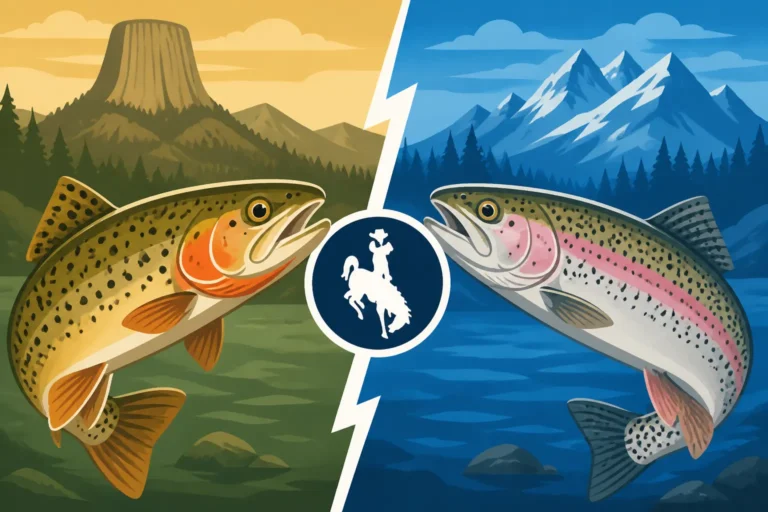
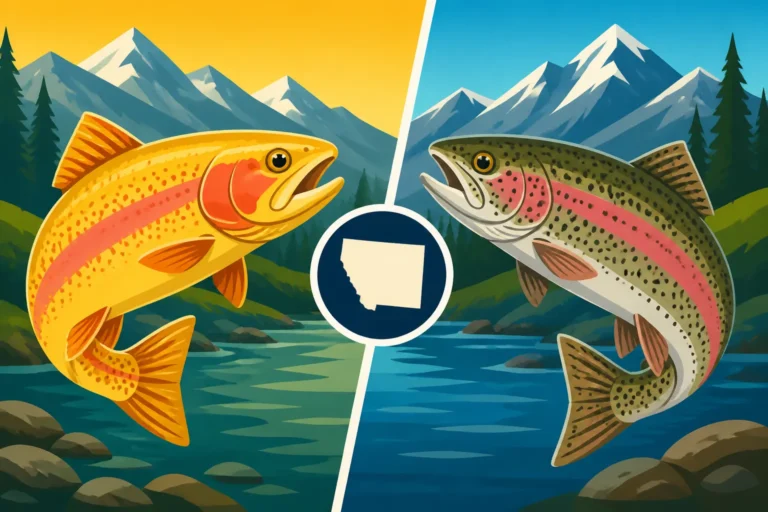
Trout (Genus Salmo): Generally, true trout tend to have dark spots on a lighter body. Think of a classic Rainbow Trout Fishing in Wyoming or Brown Trout Fishing in Wyoming with their often black or reddish spots contrasting against a golden, silvery, or olive background. Even a Cutthroat Trout Fishing in Wyoming, with its distinctive red slash under the jaw, typically exhibits dark spotting. These spots can be large or small, numerous or sparse, but they are almost always darker than the body color.
-
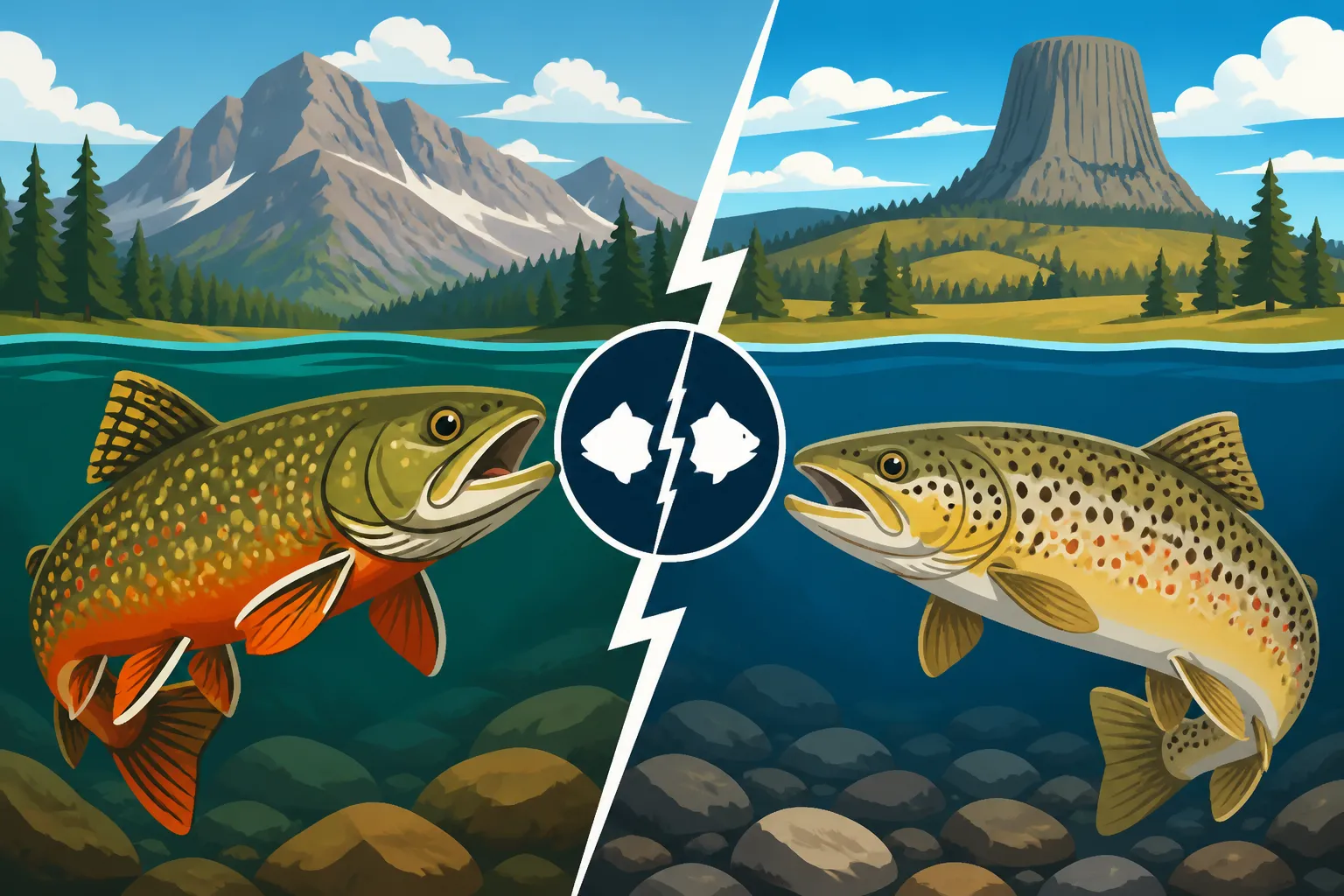
Char (Genus Salvelinus): Char, on the other hand, typically feature light spots (yellow, orange, pink, or red) on a darker body. Imagine a Lake Trout (Mackinaw) Fishing in Wyoming with its pale, irregular spots on a deep grey or olive background, or a Brook Trout Fishing in Wyoming with its vivid vermiculation (worm-like markings) on its back and bright red spots (haloed in blue) along its sides, all against a dark, often purplish or green body. This "light spots on dark body" characteristic is a strong indicator you're looking at a char.
Let's break this down further in a table for clarity:
| Feature | True Trout (Genus Salmo) | Char (Genus Salvelinus) |
|---|---|---|
| Spotting | Dark spots on a lighter body (black, brown, red) | Light spots on a darker body (yellow, orange, red, pink) |
| Pectoral/Pelvic Fins | Often plain or with faint markings | Leading edge often has a prominent white stripe |
| Scales | Relatively larger scales | Smaller, almost imperceptible scales |
| Body Shape | Typically more streamlined | Often more robust, torpedo-shaped in larger specimens |
| Tail Fin | Usually squared or slightly forked | Often distinctly forked (especially in Lake Trout) |
Beyond the spot pattern, pay attention to the leading edges of their pectoral, pelvic, and anal fins. Many char species, like brook trout, will have a distinct white leading edge on these fins, often followed by a thin black line, which is rarely seen on true trout. Their scales also differ; char generally have much smaller, almost imperceptible scales compared to the more noticeable scales on true trout.
Habitat and Environmental Preferences
While there's certainly overlap, char and trout often have slightly different ecological niches, even within the same body of water, especially here in Wyoming.
-
Trout (Genus Salmo): These fish are incredibly adaptable and can be found in a wide variety of habitats. Rainbow Trout Fishing in Wyoming thrive in many rivers and lakes, Brown Trout Fishing in Wyoming love structure and often prefer slightly warmer, slower moving water than some cutthroat species, and Cutthroat Trout Fishing in Wyoming, while preferring cold, clean water, can also be found across diverse stream and lake environments. You'll find them closer to shore, in riffles, runs, and pools, throughout the water column depending on the season and forage. They are comfortable in rivers with moderate flows and lakes of varying depths.
-
Char (Genus Salvelinus): Char, particularly lake trout, are often associated with colder, deeper, and more oxygenated waters. In Wyoming, this means you'll find Lake Trout (Mackinaw) Fishing in Wyoming in the frigid depths of large reservoirs like Flaming Gorge or Jackson Lake. Brook Trout Fishing in Wyoming, while smaller, also prefer very cold, pristine headwater streams and high-elevation alpine lakes. They are incredibly tolerant of cold water and often seek out thermal refuges during warmer months, moving deeper or into spring-fed areas. This preference for cold, clean water often makes them a target for specialized techniques like deep trolling for lake trout or hiking into remote high-alpine lakes for brookies.
The presence of both species in the same water body is common, but it's important to recognize that a big lake trout might be cruising at 60 feet in a cold thermocline, while a rainbow trout could be feeding near the surface in a warmer bay. This habitat preference influences everything from the type of gear you use to the time of day you fish.
Spawning Behavior and Life Cycles
The way these fish reproduce also offers distinct differences, though these are less visible to the casual angler.
-
Trout (Genus Salmo): Many true trout species, like rainbows, are spring spawners, though some populations can be fall or winter spawners. They typically build redds (nests) in gravelly stream bottoms, where the female deposits eggs and the male fertilizes them. Their eggs are usually larger than char eggs and take less time to hatch. Brown Trout Fishing in Wyoming are predominantly fall spawners, making October and November crucial months for their upstream migrations, which is why fall fishing for them can be so productive. Cutthroat Trout Fishing in Wyoming also spawn in spring, often migrating to smaller tributary streams from larger lakes.
-
Char (Genus Salvelinus): Char are almost exclusively fall spawners. Lake trout, for example, will spawn over rocky shoals in deep lakes during late fall. Brook trout will seek out cold, spring-fed gravel areas in streams or lake margins, also in the fall. Their eggs are often smaller and develop more slowly over the winter months, hatching in early spring. This fall spawning period is a critical time, and understanding it can influence when and where you target these fish. For example, some regulations might be in place to protect spawning areas for lake trout during their reproductive cycles.
Common Trout and Char Species You'll Encounter in Wyoming
Now, let's bring it home to Wyoming and talk about the specific species you're likely to encounter. Knowing these differences can help you identify your catch and understand the specific regulations that apply.
Wyoming's Notable Trout Species
When you're out fishing in Wyoming, these are the "true trout" you'll most commonly be targeting:
-
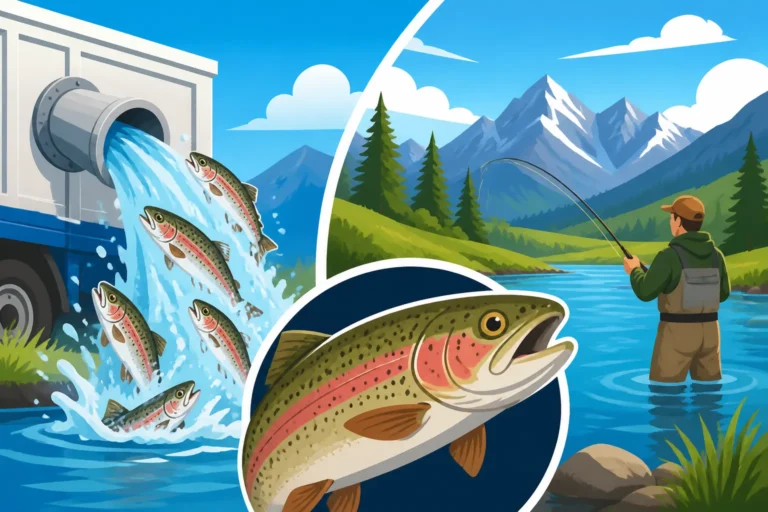
Rainbow Trout (Oncorhynchus mykiss): These beauties are widespread across Wyoming, found in many rivers, streams, and lakes. They are known for their iridescent, rainbow-colored stripe along their sides, hence the name, and typically have numerous small, dark spots over a silvery body. Wyoming's Game and Fish Department stocks millions of rainbows annually, making them a staple for anglers of all skill levels. They're a fantastic fighting fish and great table fare. If you're wondering What Wyoming Hatcheries Raise Rainbow Trout, the state has a robust stocking program.
-
Brown Trout (Salmo trutta): Originally from Europe, brown trout have adapted incredibly well to Wyoming's waters. They are often found in larger rivers and lakes, particularly in tailwaters below dams. Browns are identifiable by their tan, golden, or olive-brown bodies, covered with dark spots, some of which are haloed in a lighter color, and often have reddish-orange spots as well. They are notorious for being elusive and growing to trophy sizes, especially in rivers like the North Platte. Check out Brown Trout in Wyoming's Tailwaters for some prime locations.
-
Cutthroat Trout (Oncorhynchus clarkii): Wyoming's native trout and the state fish, the cutthroat is an iconic species. There are several subspecies in Wyoming, including the Yellowstone, Snake River Fine-spotted, and Bonneville cutthroat. They are named for the distinctive red or orange slash marks on the underside of their jaw. Their body coloration varies from olive to silver, usually covered with small, black spots that are often concentrated toward the tail. Identifying a Yellowstone Cutthroat Trout is a crucial skill for many anglers.
Wyoming's Notable Char Species
You'll also find a couple of prominent char species thriving in Wyoming's colder waters:
-
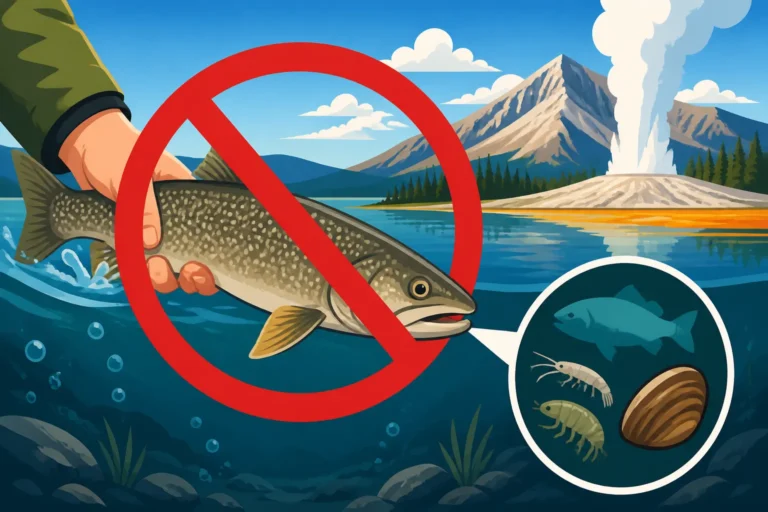
Lake Trout (Mackinaw) (Salvelinus namaycush): These are the giants of Wyoming's deep lakes. Found in places like Flaming Gorge, Jackson Lake, and Yellowstone Lake, lake trout are recognized by their dark grey, olive, or brownish bodies covered with irregular, light-colored spots. They have a distinctly forked tail, which helps them maneuver in deep water. Lake trout are aggressive predators and can grow to immense sizes, making them a prized trophy. Special techniques like Trolling Techniques for Wyoming Reservoirs are often employed to target these deep-water dwelling fish.
-
Brook Trout (Salvelinus fontinalis): Don't let their name fool you – brook trout are char! These beautiful fish are often found in Wyoming's high-elevation streams and alpine lakes, preferring the coldest, clearest water. They have dark, worm-like markings (vermiculation) on their backs and dorsal fins, along with vibrant red or orange spots (often with blue halos) along their sides, all against a dark background that can range from olive to black. Their pectoral, pelvic, and anal fins usually have a noticeable white leading edge, often followed by a black stripe. They rarely grow large but are incredibly feisty for their size and stunningly beautiful.
Why Does This Distinction Matter to Anglers?
Beyond just being able to impress your friends with your scientific knowledge, understanding the difference between trout and char has practical implications for your fishing adventures in Wyoming.
Understanding Regulations and Limits
Wyoming Game and Fish Department regulations are often species-specific, and sometimes even water-specific. What's legal for a rainbow trout might be completely different for a lake trout. For example, some waters might have different Wyoming Trout Stream Daily Limit or Wyoming Trout Lake Daily Limit for native cutthroat trout versus introduced brook trout or brown trout. You might find specific slot limits or harvest requirements for lake trout in certain areas, particularly where they are considered non-native and impact native species, such as in Yellowstone Lake where their removal is often encouraged. Knowing precisely what you've caught ensures you're complying with the law and doing your part to conserve Wyoming's fisheries. Always consult Reading the Wyoming Fishing Regulations Booklet before heading out.
Tailoring Your Techniques and Tackle
The habitat and feeding preferences of trout versus char often dictate the most effective fishing methods.
-
For Trout: If you're targeting true trout in streams, you'll likely be thinking about matching the hatch with dry flies, nymphing techniques, or casting small spinners and spoons in the current. Fly Fishing Techniques for Wyoming Trout Streams often focus on presenting flies naturally in shallower, moving water. For lake-dwelling rainbows or cutthroats, casting from shore with bait or smaller lures, or trolling spoons and crankbaits in the upper water column, might be more effective. Finding the right bait can be key, such as using Best Bait for Brown Trout in Fall when they're aggressive.
-
For Char: When pursuing char, especially large lake trout, your game plan shifts significantly. You'll often be focusing on deeper water, employing heavy jigging spoons, downriggers for trolling large crankbaits or tube jigs, and using electronics to find deep structure. For brook trout in high-alpine lakes, you might be casting small inline spinners, tiny spoons, or simple dry-dropper fly rigs into crystal-clear, cold water. The gear you'd use for a brook trout in a mountain creek is vastly different from what you'd use for a big lake trout, and knowing you're targeting a char helps you make those decisions, whether you're shopping for specialized gear on Amazon or at your local tackle shop.
Knowing the difference between these incredible fish not only makes you a more informed angler but a more successful one, helping you choose the right spots, the right gear, and the right approach to make the most of your time on Wyoming's waters.
Disclaimer
This article is for general informational purposes only and does not constitute professional advice. Laws, prices and regulations vary by location and change over time. Consult a qualified professional for guidance on your specific situation.