Is a Lake Trout Actually a Char?
It's one of those questions that comes up often when you're out on the water, especially when you're admiring a magnificent Lake Trout you just pulled from the depths of Flaming Gorge or Jackson Lake: "Is this majestic creature really a trout, or is it something else entirely?" It's a common point of confusion, and frankly, the naming conventions don't always help us anglers understand the true biological distinctions. This guide is going to dive deep into the fascinating world of fish classification to clear up this age-old mystery, helping you understand not just what a Lake Trout is, but why that distinction matters for your Wyoming fishing adventures.
The Scientific Lineage: Understanding "Trout" and "Char"
Let's get straight to it: the common names we use for fish can be incredibly misleading. Just because something has "trout" in its name doesn't make it a true trout. Think of it like a "prairie dog" not being a dog at all, but a rodent! The same kind of confusion happens with our finned friends. To truly understand the Lake Trout, we need to look at its family tree, scientifically speaking.
What Defines a "True Trout" (Genera Salmo and Oncorhynchus)
When biologists talk about "true trout," they're generally referring to fish within two main genera: Salmo and Oncorhynchus. These are the guys we often think of when we picture a classic trout stream.
- Genus Salmo: This genus includes the Atlantic salmon (though not found in Wyoming's freshwater naturally) and, importantly for us, the Brown Trout (Salmo trutta). Brown trout are widely distributed in Wyoming and are known for their beautiful spotted patterns and often elusive nature. They are fantastic game fish, beloved by fly anglers for their challenging fights.
- Genus Oncorhynchus: This is where we find species like the Rainbow Trout (Oncorhynchus mykiss), Cutthroat Trout (Oncorhynchus clarkii), and Pacific salmon species. Wyoming is famously home to several subspecies of Cutthroat Trout, including the Yellowstone Cutthroat and the Snake River Fine-Spotted Cutthroat. These are often considered the backbone of Wyoming's native fisheries. Rainbows, while not native to Wyoming, have been extensively stocked and hybridized to create robust fisheries across the state. They share distinct biological characteristics that group them together as true trout.
True trout typically have a less deeply forked tail, and their spots tend to be darker on a lighter body, often extending below the lateral line. They generally prefer warmer waters than chars, though there's certainly overlap.
What Defines a "Char" (Genus Salvelinus)
This is where our Lake Trout comes into play! All char species belong to the genus Salvelinus. This includes some incredibly well-known fish like the Brook Trout, Arctic Char, Dolly Varden, and, yes, the Lake Trout.
Chars are distinguished by several key features:
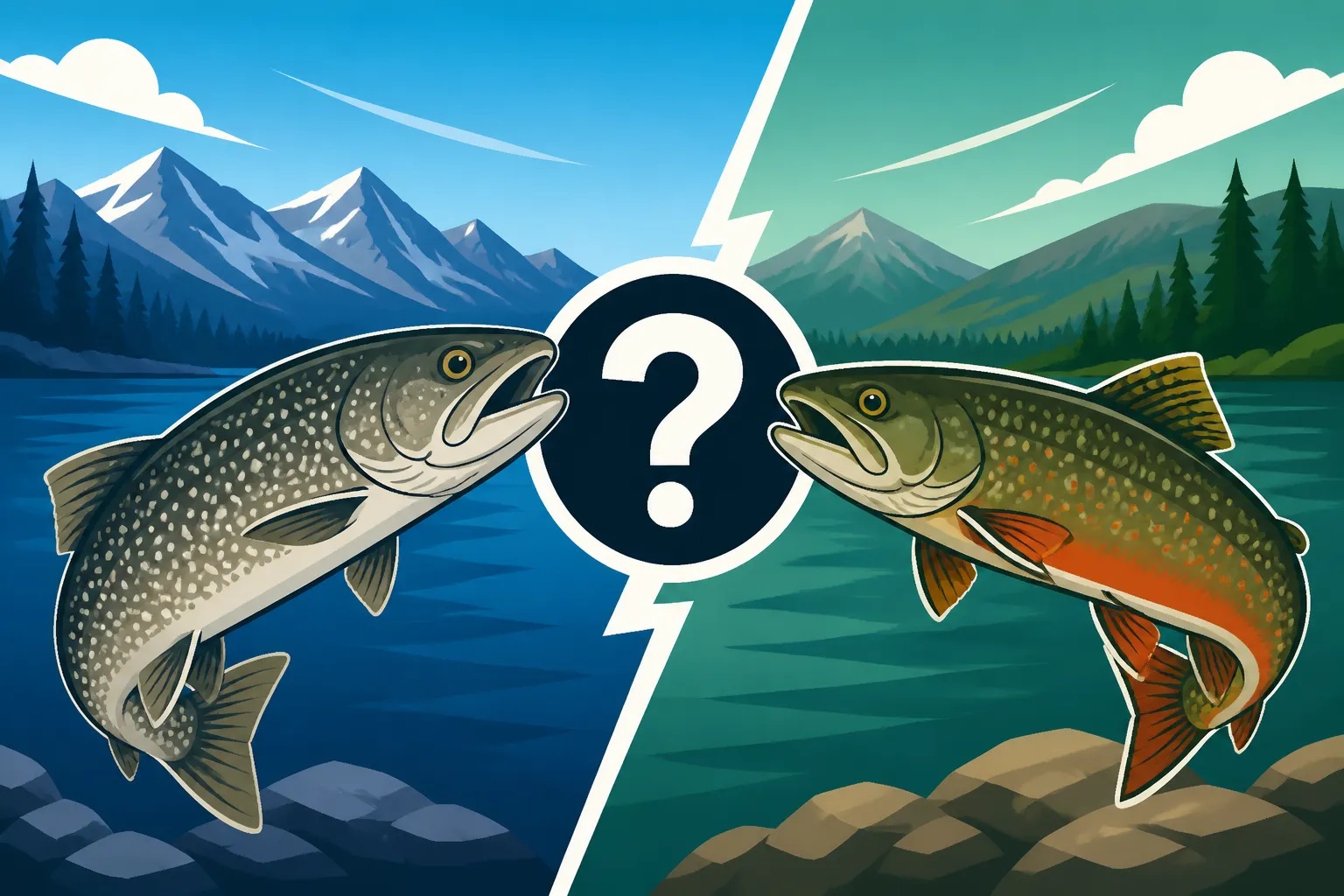
- Light Spots on a Darker Body: This is often the easiest visual cue. Unlike true trout, chars typically have lighter, often cream, yellow, pink, or red spots set against a darker overall body color.
- Small Scales: Their scales are generally much smaller than those of true trout, giving them a very smooth, almost velvety feel.
- Absence of Teeth on the Shaft of the Vomer: This is a more technical anatomical feature, but it's a critical one for scientific classification.
- Deeply Forked Tail: Many char species, especially the larger ones like the Lake Trout and Arctic Char, possess a very distinct, deeply forked tail, which helps them with powerful propulsion in deep, cold waters.
- Preference for Cold, Oxygen-Rich Waters: Chars are generally more cold-adapted than true trout, often found in the deepest, coldest parts of lakes and rivers, or in high-altitude environments.
This preference for cold water is a big reason why you find thriving populations of Lake Trout in the deep reservoirs of Wyoming, like Wyoming's Flaming Gorge Reservoir Fishing Guide or Wyoming's Jackson Lake Fishing Guide.
The Family Tree: Salmonidae
Both "true trout" and "chars" belong to the same overarching family: Salmonidae. This family is incredibly diverse and includes salmon, trout, char, and grayling. So, while they are related at the family level, the genus-level distinction is crucial for understanding the differences between a true trout and a char. It's like how lions and domestic cats are both felines (family Felidae), but they belong to different genera and are quite distinct species.
Lake Trout: A Char in Disguise (or Misnomer)
So, to answer the burning question: Is a Lake Trout actually a char? Yes, unequivocally, a Lake Trout is a char. Its scientific name is Salvelinus namaycush. The Salvelinus genus immediately tells us it's a char, not a true trout from the Salmo or Oncorhynchus genera.
Why They're Called "Trout"
The common name "Lake Trout" is really a historical misnomer. Early European settlers and anglers, upon encountering these fish, likely grouped them with other trout-like species they were familiar with due to their general appearance and habitat. They resemble large trout in shape and can be found in similar coldwater environments. Plus, let's be honest, "Lake Char" just doesn't roll off the tongue quite as easily as "Lake Trout." The name stuck, despite the scientific evidence.
This kind of naming issue isn't unique to Lake Trout. Many fish have common names that don't reflect their precise biological classification, leading to understandable confusion among anglers who are just trying to identify their catch.
Key Characteristics That Prove They're Chars
Beyond the scientific name, several physical traits strongly identify Lake Trout as chars:
- Light Spots on a Darker Body: This is perhaps the most obvious visual indicator. Lake Trout typically have light, almost cream-colored spots scattered across a darker, often olive-green to gray body. These spots extend onto the dorsal fin and often the tail. This contrasts sharply with the dark spots on a lighter body that characterize true trout like rainbows and browns.
- Deeply Forked Tail: If you've ever caught a substantial Lake Trout, you've probably noticed its powerful, deeply forked tail. This is a classic char trait, perfectly adapted for bursts of speed to pursue prey in vast, open water. While some true trout might have slightly forked tails, none are as pronounced as a healthy Lake Trout's.
- Small Scales: Lake Trout have very small, almost embedded scales, giving their skin a smooth texture. This can be less noticeable on smaller fish, but on larger specimens, it's quite distinct from the larger, more visible scales of many true trout species.
- Habitat Preference: Lake Trout are masters of the deep, cold, oxygen-rich waters of large lakes and reservoirs. They often spend their lives at depths where other trout species struggle to thrive, hunting schools of baitfish. This coldwater adaptation is a hallmark of char species.
When you're out fishing in places like Flaming Gorge, known for its trophy Lake Trout (Mackinaw) Fishing in Wyoming, observing these characteristics can help solidify your understanding of their true identity.
Wyoming's Famous Lake Trout Fisheries
Wyoming is blessed with some incredible Lake Trout fisheries, largely due to the presence of deep, cold reservoirs that mimic their preferred natural habitats.
- Flaming Gorge Reservoir: This massive reservoir, straddling the Wyoming-Utah border, is world-renowned for its colossal Lake Trout. Anglers come from all over to target these giants, often using specialized deep-trolling techniques. The sheer size and predatory nature of these fish here make for an unforgettable fishing experience. Understanding their char characteristics, like their deepwater habits, is key to success. You might be interested in learning How Deep Lake Trout Live in Flaming Gorge.
- Jackson Lake: Located within Grand Teton National Park, Jackson Lake is another prime Lake Trout destination. While not reaching the same monster sizes as Flaming Gorge, it offers fantastic angling opportunities amidst breathtaking scenery.
- Yellowstone Lake: This is a complex situation. While Yellowstone Lake historically held native Lake Trout populations, an introduced, non-native population has become a significant management challenge due to its impact on the native Yellowstone Cutthroat Trout. Here, the distinction between Lake Trout (char) and Cutthroat Trout (true trout) is not just academic; it's a critical ecological and conservation issue. You can learn more in our Wyoming's Yellowstone Lake Fishing Guide. Anglers there are often encouraged to harvest all Lake Trout they catch to help protect the native cutthroat population.
Other Chars and True Trout in Wyoming's Waters
Wyoming is a paradise for coldwater anglers, boasting a rich diversity of both char and true trout species. Understanding the differences among them enhances your appreciation for these magnificent fish and helps you adhere to specific regulations.
Brook Trout: Another Wyoming Char
Beyond the Lake Trout, Wyoming is home to another beautiful char: the Brook Trout (Salvelinus fontinalis). Often found in smaller, high-mountain streams and alpine lakes, Brook Trout are easily identifiable as chars by their distinctive light, worm-like markings (vermiculations) on a darker, often mottled olive-green back, and vibrant red or orange spots (haloed with blue) along their sides. They also have white leading edges on their lower fins, separated by a thin black line, a feature often called "parade colors."
Despite their "trout" name, Brook Trout are every bit a char, sharing the same genus Salvelinus as their larger Lake Trout cousins. They thrive in pristine, cold mountain waters and are a delight to catch, particularly on light tackle or small fly rods. You can learn more about them in Brook Trout Fishing in Wyoming.
Wyoming's True Trout: Cutthroat, Rainbow, Brown
These are the quintessential "trout" species that grace many of Wyoming's rivers and lakes.
- Cutthroat Trout (Oncorhynchus clarkii): Wyoming's state fish and a true gem. These native trout are easily recognized by the distinctive red or orange slash marks under their lower jaw, which gives them their name. They generally have darker spots on a lighter body. Different subspecies, like the Yellowstone Cutthroat and Snake River Fine-Spotted Cutthroat, have unique patterns and distribution. For more on identification, check out Identifying a Yellowstone Cutthroat Trout.
- Rainbow Trout (Oncorhynchus mykiss): Known for the iridescent, pinkish-red stripe running along their sides, rainbows are highly prized for their fighting spirit. They typically have numerous small, dark spots over their back and fins. While not native, they are a staple in many Wyoming fisheries due to stocking programs.
- Brown Trout (Salmo trutta): An introduced species from Europe, brown trout are famous for their cunning and potential for large size. They often have dark spots with light halos, and some red or orange spots on their sides. Their tails are typically square or only slightly forked, and their bodies are generally more elongated than some other trout. They can be incredibly challenging and rewarding to catch.
Why the Distinction Matters for Anglers
While the scientific classification might seem like splitting hairs, it has real implications for anglers:
- Habitat and Behavior: Chars, particularly Lake Trout, tend to inhabit deeper, colder waters, often preferring open water and preying on other fish. True trout, while also coldwater species, are often found in shallower lake environments, streams, and rivers, feeding more on insects and smaller aquatic organisms, although larger browns and rainbows will also prey on smaller fish. Understanding these preferences helps you choose the right fishing spots and techniques.
- Regulations and Conservation: As seen with Yellowstone Lake, the distinction can be critical for conservation efforts. Native trout are often protected, while introduced species (even if they are native elsewhere, like Lake Trout in other parts of North America) might be targeted for removal if they threaten native populations. Always check Wyoming Fishing Regulations Every Angler Should Know for water-specific rules.
- Identification: Being able to correctly identify your catch ensures you're complying with specific bag and possession limits, which can vary by species and water. Mistakes can lead to fines! A good waterproof fish identification guide (perhaps one you picked up on Amazon) can be a real lifesaver on the water.
Practical Implications for Anglers
For those of us who just want to catch fish and enjoy the great outdoors, these scientific distinctions might feel a bit academic. But trust me, understanding that a Lake Trout is a char, and knowing the characteristics that differentiate chars from true trout, can significantly improve your fishing success and ensure you're a responsible angler in Wyoming's diverse waters.
Identifying Your Catch: Spotting the Difference in the Field
Being able to quickly and accurately identify your catch on the water is crucial for compliance with regulations and for simply knowing what you've caught! Here’s a quick field guide to help you distinguish between a Lake Trout (char) and a true trout like a Rainbow or Brown:
| Feature | Lake Trout (Char) | Rainbow Trout (True Trout) | Brown Trout (True Trout) |
|---|---|---|---|
| Scientific Genus | Salvelinus | Oncorhynchus | Salmo |
| Spotting | Light spots on a darker body | Numerous small dark spots on lighter body, often with a distinct pink/red lateral stripe | Dark spots (some with halos), often red/orange spots, on lighter body |
| Tail Shape | Deeply forked | Slightly forked to square | Square to slightly forked |
| Scales | Very small, almost embedded, smooth feel | Moderately sized, visible | Moderately sized, visible |
| Preferred Temp | Colder, deeper water | Cooler to moderate water | Cooler to moderate water |
| Mouth Color | White or pale inside the mouth | Often white or pale inside the mouth | Often yellowish or pale inside the mouth |
| Vomerine Teeth | Absent on the shaft | Present on the shaft | Present on the shaft |
| Pectoral/Pelvic Fins | Often white leading edge, no distinct black line (unlike Brook Trout) | Typically consistent with body color, no strong white leading edge | Typically consistent with body color, no strong white leading edge |
When you're out there, take a moment to really look at the fish you've caught. The tail shape and the color of the spots are usually your quickest indicators.
Regulations and Conservation Efforts
Understanding the species you're targeting is critical because Wyoming Game and Fish Department regulations often vary by species, and sometimes even by specific waters. For example:
- Bag and Possession Limits: Limits for Lake Trout might be different from those for Rainbow or Cutthroat Trout on the same water body. In some waters, like Yellowstone Lake, there are no limits on Lake Trout due to eradication efforts, while native Cutthroat Trout might have strict catch-and-release rules or very low harvest limits. Knowing How Bag and Possession Limits Work in Wyoming is paramount.
- Special Restrictions: Certain waters might have restrictions on bait, gear, or even fishing seasons that are species-specific. For instance, Barbless Hook Requirements on the North Platte River might apply more broadly, but other rules might target a specific char or trout species.
- Conservation: As mentioned, the Lake Trout in Yellowstone Lake is an example where species identification directly impacts conservation. Anglers who can correctly identify and differentiate Lake Trout from native Cutthroat Trout play a vital role in the management and protection of Wyoming's native fisheries.
Always keep your copy of the current Reading the Wyoming Fishing Regulations Booklet handy, whether it's a physical copy or downloaded to your phone. It’s your best friend out there.
Fishing Strategies: Do Chars Act Differently?
Absolutely! While there are many overlaps, the biological differences between chars and true trout often translate into different behaviors and, consequently, different fishing strategies.
- Depth and Location: Because Lake Trout (chars) prefer deeper, colder water, you'll often target them using heavy jigging spoons, downriggers, or lead core line to get your lures down to where they live. They can often be found suspended over deep structure or cruising deep breaks. In contrast, while true trout also seek cold water, they are often found shallower, in river currents, near shorelines, or around submerged cover in lakes where they can ambush insects and baitfish.
- Diet: Lake Trout are primarily piscivorous (fish-eating), especially as they grow larger. This means your best bets for trophy Lake Trout will often be large spoons, stickbaits, or even live baitfish (where legal). True trout, especially in rivers and streams, have a more varied diet, including insects (aquatic and terrestrial), crustaceans, and smaller fish, which influences fly selection or lure choices. You can explore What Lake Trout Eat in Wyoming Reservoirs for more insights.
- Time of Year: While all fishing is seasonal, the nuances can differ. Lake Trout, being deepwater dwellers, are often accessible year-round, including excellent Ice Fishing in Wyoming: A Complete Guide opportunities. True trout in rivers, on the other hand, are highly influenced by hatches, water levels, and runoff.
Ultimately, whether you're chasing trophy Lake Trout in Flaming Gorge, casting dry flies for Cutthroats on the Snake River, or enjoying some high-mountain Brook Trout action, understanding the "char vs. trout" distinction isn't just a fun fact; it's a key piece of knowledge that makes you a more informed, responsible, and successful angler in the incredible waters of Wyoming.
Disclaimer
This article is for general informational purposes only and does not constitute professional advice. Laws, prices and regulations vary by location and change over time. Consult a qualified professional for guidance on your specific situation.