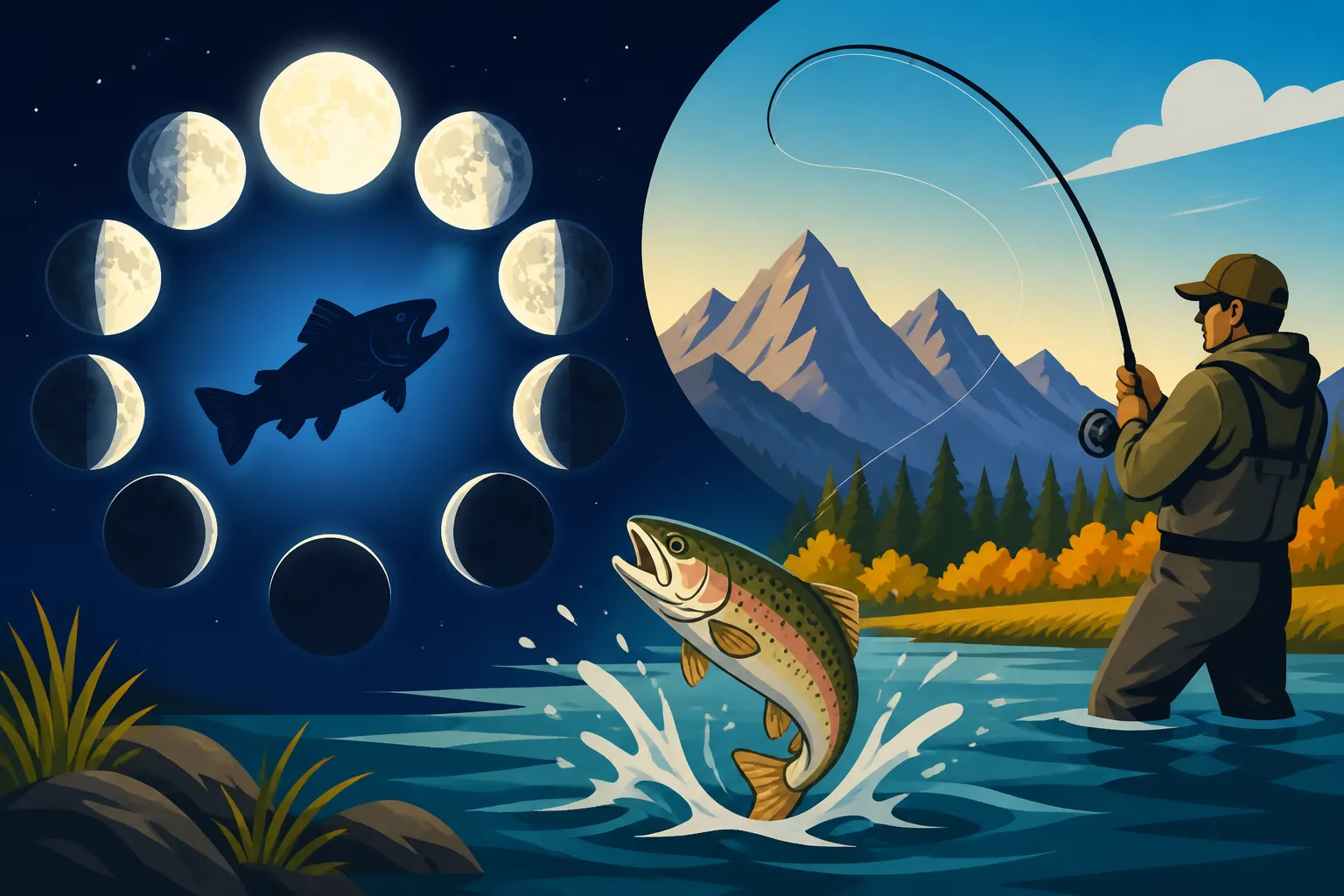
Does Moon Phase Affect Fishing in Wyoming?
As anglers, we've all been there: staring at the sky, checking the barometer, maybe even glancing at a moon phase app, wondering if this is the day the fish will bite. It’s a common frustration, isn't it? We pour so much time, effort, and sometimes a good chunk of change into our gear and trips, only to be left scratching our heads when the fish simply aren't cooperating. This guide is all about tackling one of those age-old questions: Does the moon really hold sway over our fishing success in Wyoming's beautiful, wild waters? We'll dive deep into the folklore, the science, and what it all means for your next outing.
The Age-Old Question: Do Moon Phases Truly Affect Fishing?
For generations, anglers have sworn by the moon, claiming that certain phases mean hot bites while others are best spent doing yard work. This isn't just a casual observation for many; it's a deeply ingrained belief passed down through families and fishing camps. You've heard the whispers: "Full moon, the fish are everywhere!" or "New moon, they're practically jumping into the boat!" But is there any real meat on those bones, especially when we're talking about the unique conditions of Wyoming's rivers and reservoirs?
The truth is, it's a bit more nuanced than a simple yes or no. While the moon's gravitational pull certainly affects the tides in our oceans, and to a lesser extent, large inland bodies of water like the Great Lakes, its direct influence on fish behavior in typical Wyoming rivers and lakes is often debated. However, that doesn't mean the moon is entirely irrelevant. Its phases impact light levels, and light, as any seasoned angler knows, plays a huge role in how fish perceive their environment and hunt for food.
The Science (and Speculation) Behind Lunar Influence
When we talk about the moon's "science" in relation to fishing, we're really looking at a few key factors. The primary one is gravity. The moon's gravitational pull causes tides, and these moving waters often stir up food sources, creating feeding frenzies. But in landlocked Wyoming, significant tidal shifts are simply not a factor. Our rivers flow due to snowmelt and rainfall, and our lakes rise and fall with these same environmental conditions, not tidal pull.
However, the moon's light is a different story. Think about a bright full moon night. It can illuminate the water quite significantly, almost like twilight. This increased ambient light might make certain fish species more active, especially nocturnal feeders. Conversely, a new moon, which offers minimal light, could make fish more cautious or, depending on the species, encourage them to hunt under the cloak of darkness without being exposed to predators. Some theories suggest that fish, like many animals, have internal biological clocks that are influenced by lunar cycles, affecting their metabolism, spawning, and feeding patterns. While these aren't as dramatic as tidal shifts, they could contribute to subtle changes in behavior that savvy anglers might notice.
Solunar Tables: A Fisherman's Calendar
You might have seen solunar tables in fishing magazines or online apps, often available on platforms like Amazon if you're looking for a dedicated fishing logbook. These tables attempt to predict peak fishing times based on the moon's position and phase relative to the sun. The theory is that fish are most active during major and minor "feeding periods" that align with moonrises, moonsets, and overhead/underfoot moon positions.
Do they work? Many anglers swear by them. They'll tell you that fishing during these predicted windows, even for just an hour, can yield far better results than spending a whole day on the water during a "poor" period. Others find them to be interesting guides but nothing definitive. It's often a combination of factors, where the solunar period might coincide with a perfect water temperature or a sudden hatch, leading to a fantastic day. So, while not a silver bullet, checking a solunar table before your trip to one of Wyoming’s excellent fishing spots, like the Flaming Gorge Reservoir or the North Platte River, might add an interesting layer to your planning.
How Different Moon Phases Might (Theoretically) Affect Wyoming Fish
Let's break down the general theories about how different moon phases could influence fishing, keeping in mind that these are often more anecdotal or based on broader observations than hard scientific fact for inland waters. Every lake and river in Wyoming has its own personality, and the fish living there adapt to their specific conditions.
Full Moon Fishing: Bright Nights and Active Fish?
A full moon is perhaps the most talked-about phase among anglers. The prevailing wisdom is that full moons can lead to increased fish activity, especially during the low-light hours of dawn and dusk, or even throughout the night. With the water brightly illuminated, fish might extend their feeding periods, feeling more comfortable venturing out of cover to hunt. This could mean a more aggressive bite during these times.
However, a bright night can also mean that fish have fed more actively under the moonlight, leading to a slower bite during the daytime hours immediately following a full moon night. They might be full, or simply less inclined to feed aggressively when the sun is high. So, if you're planning to fish Wyoming's high-alpine lakes under a full moon, consider adjusting your schedule to target the twilight hours or even venture out for a session of Is Night Fishing Legal in Wyoming?. For species like walleye, which are often nocturnal feeders, a full moon could be a fantastic time to target them, as the extra light might give them an advantage in locating prey.
New Moon Fishing: Darkness and Daytime Action?
The new moon brings the darkest nights of the lunar cycle. Without the moon's light, nocturnal predators might find hunting more challenging, or conversely, be more aggressive under the cloak of complete darkness. During the daytime, the theory suggests that fish might be more active. If they haven't fed extensively during the dark nights, they could be hungrier and more willing to chase lures or baits during daylight hours.
For anglers fishing clear Wyoming streams where trout can be easily spooked by shadows or bright light, the new moon phase might offer a more relaxed environment for the fish. This could potentially lead to more consistent daytime bites, as fish feel safer feeding. Consider trying out different techniques during this phase, perhaps focusing on active presentations that mimic fleeing prey, which you can learn more about in our guide on Fly Fishing Techniques for Wyoming Trout Streams.
Quarter Moons: Transitional Periods
The first and last quarter moons are often seen as transitional periods, offering a mix of light and dark. Some anglers believe these periods offer moderate fishing, without the extremes of a full or new moon. Fish behavior might be more "typical" during these times, following their regular feeding patterns influenced by other environmental factors like water temperature, insect hatches, or barometric pressure.
It's during these intermediary phases that paying close attention to other conditions becomes even more critical. Knowing How Water Temperature Affects Trout Feeding or understanding How Wind Affects Fishing on Wyoming Reservoirs might give you a far more accurate prediction of success than the moon phase alone. For example, if you're trolling for lake trout in a deep reservoir, the moon phase might be less important than the depth you're targeting or the structure you're fishing over, as discussed in our Trolling Techniques for Wyoming Reservoirs guide.
Moon Phases and Spawning Cycles
While not directly tied to daily feeding, moon phases are sometimes linked to the spawning cycles of certain fish species. Some fish, particularly saltwater species, are known to synchronize their spawning with specific moon phases due to tidal influences. For freshwater fish in Wyoming, this direct connection is less clear, but the moon's influence on night light could play a subtle role in cues for migration or staging for reproduction. However, temperature and day length are generally considered far more dominant factors in triggering spawning runs for species like brown trout or kokanee salmon.
Other Factors That Often Outweigh the Moon in Wyoming
While the moon phase is an interesting component to consider, seasoned Wyoming anglers will tell you that a host of other environmental factors usually play a much more significant role in determining your success on the water. Focusing on these elements can often yield more tangible results than fixating solely on lunar cycles.
Barometric Pressure: The Silent Controller
Many anglers consider barometric pressure to be one of the most critical factors influencing fish behavior. A steady, high-pressure system often means stable weather and good fishing, as fish feel comfortable and active. However, a rapidly dropping barometer, usually associated with approaching storms, can send fish into a feeding frenzy right before the weather changes, or make them completely shut down if the drop is too sudden. Conversely, a rising barometer after a storm can get fish active again.
Think about planning a trip to the Miracle Mile or Gray Reef sections of the North Platte. If the barometer is stable, trout are likely to be in their normal feeding patterns. But if a front is moving in, that might be your cue to hit the water immediately for a short, intense window of action.
Water Temperature: The Master Key
For coldwater species like trout, water temperature is arguably the most crucial factor. Fish are ectothermic, meaning their body temperature, metabolism, and activity levels are directly tied to the water temperature. Each species has an optimal temperature range for feeding and comfort.
In Wyoming, this is incredibly important. Early spring might find trout in warmer, shallower waters, while mid-summer heat sends them to deeper, cooler refuges. Understanding How Water Temperature Changes Wyoming Trout Behavior can make or break a trip. Whether you're targeting cutthroat in the Snake River or lake trout in Jackson Lake, knowing the water temperature will often tell you more about where the fish are and what they're willing to eat than any moon phase.
Weather Patterns: Wind, Rain, and Sun
Wyoming's weather is famously unpredictable and can change in a heartbeat. Wind, rain, clouds, and bright sunshine all have a direct impact on fishing conditions.
- Wind: Can be a blessing or a curse. A gentle ripple on the surface can break up the light, making fish feel more secure and less wary. It can also concentrate baitfish and insects, creating feeding opportunities. Too much wind, however, can make casting difficult, muddy the water, and push fish out of comfortable areas.
- Clouds: Overcast days are often favored by anglers because they diffuse sunlight, reducing shadows and making fish feel less exposed. This can lead to more consistent feeding throughout the day.
- Rain: A light, warm rain can often turn fishing on, washing insects and nutrients into the water, and creating a perfect feeding environment. Heavy, cold rain, however, can muddy the water, drop temperatures, and generally make conditions unpleasant for both fish and angler.
These daily weather fluctuations, often more than the moon phase, dictate how and where fish feed. Understanding Wyoming Fishing Seasons Month by Month and how weather patterns shift throughout the year is key.
Time of Day: Dawn and Dusk Often Reign Supreme
Regardless of the moon phase, the low-light periods of dawn and dusk are often prime fishing times. These are transitional periods when many fish species are most active, moving from deeper holding areas to shallower feeding grounds. The reduced light also offers a protective cover for both predator and prey.
Knowing Best Time of Day to Fish for Trout at Dawn vs Dusk is fundamental. Even if the moon phase is theoretically "bad," a strategic approach during these golden hours can still lead to fantastic results. It's often about being there when the fish are most vulnerable or most comfortable, which is frequently at the bookends of the day.
Bait, Lure, and Presentation: The Angler's Control
Ultimately, even with perfect moon phases and weather, if you're not offering the right bait, lure, or presentation, you won't catch fish. This is where your skill and knowledge truly come into play. Matching the hatch on a fly-fishing stream, selecting the correct crankbait for walleye in Boysen Reservoir, or using the right depth for lake trout at Flaming Gorge are all choices that far outweigh the moon's influence.
Understanding Choosing the Right Technique for Wyoming Lakes vs Rivers is critical. Having a variety of options in your tackle box, whether you picked them up from a local tackle shop or browsed the extensive selection on Amazon, allows you to adapt to whatever the fish are telling you on any given day.
Practical Advice for Wyoming Anglers
So, with all this information, what's a Wyoming angler to do? Should you ditch your moon phase calendar, or keep it as another tool in your arsenal? My advice is to approach the moon phase with a healthy dose of curiosity, but not as the sole determinant of your fishing plans.
Here’s a table summarizing how various factors compare in their influence on fishing:
| Factor | Perceived Impact on Fishing | Practical Significance in Wyoming | Notes for Anglers |
|---|---|---|---|
| Moon Phase | Moderate to High (traditional belief) | Low to Moderate (indirect influence through light) | More anecdotal for inland waters. Influences night light. |
| Barometric Pressure | High | High | Fish respond strongly to changes. Monitor weather apps. |
| Water Temperature | High | High | Crucial for coldwater fish. Determines fish location and activity. |
| Time of Day | High (especially dawn/dusk) | High | Consistent productive periods regardless of other factors. |
| Weather (Wind, Rain, Clouds) | High | High | Can create or hinder feeding opportunities. Affects comfort. |
| Bait/Lure & Presentation | Very High | Very High | The angler's direct influence on success. Match conditions. |
| Habitat & Structure | Very High | Very High | Fish always relate to cover, depth, and food sources. |
Observe and Adapt
The best thing you can do as an angler is to be a keen observer. Pay attention to how the fish are biting, not just on a specific day, but across different moon phases and weather conditions. Keep a fishing journal, perhaps noting the moon phase, weather, water temperature, and your success. Over time, you might start to see patterns unique to your favorite Wyoming waters.
Don't let a "bad" moon phase deter you from hitting the water if other conditions are favorable. Maybe the water temperature is perfect, or a hatch is coming off. Conversely, don't expect miracles if the moon is "perfect" but a harsh cold front has just blown through. Flexibility and adaptability are the hallmarks of a successful angler in Wyoming.
Use the Moon as a Supplemental Tool
Think of the moon phase as one piece of a much larger puzzle. It's a fun and interesting factor to consider, and for some, it might even provide a psychological edge or a comforting rhythm to their fishing life. There's no harm in checking a moon phase calendar before your trip. If it aligns with a "major feeding period," great! If not, don't sweat it. Focus instead on the factors you know have a direct, measurable impact.
Ensure you're always up-to-date on Wyoming Fishing Regulations Every Angler Should Know and be mindful of bag limits, like those covered in Wyoming's Combined Possession Limit Explained. These regulations are far more critical to your fishing success and legality than the moon overhead.
In the end, while the moon certainly has its mystic allure and may subtly influence fish behavior through light levels or deeper biological rhythms, it’s rarely the dominant force for our landlocked fish. Focus on mastering the variables you can observe and react to: temperature, pressure, weather, and your own technique. That’s where the true magic happens on a Wyoming fishing trip.
Disclaimer
This article is for general informational purposes only and does not constitute professional advice. Laws, prices and regulations vary by location and change over time. Consult a qualified professional for guidance on your specific situation.