Are There Fish Consumption Advisories in Wyoming?
There's nothing quite like the feeling of reeling in a beautiful fish from one of Wyoming's pristine waters, and for many of us, the next thought is often: "How's this going to taste for dinner?" But sometimes, a little seed of doubt creeps in, wondering if the fish from certain spots are truly safe to eat, especially with all the news we hear about environmental concerns these days. It's a valid concern, and navigating official jargon can feel like a labyrinth. This guide is here to untangle the complexities of fish consumption advisories in Wyoming, helping you understand what they are, why they exist, and where to find the most current information so you can enjoy your catch with confidence.
What Are Fish Consumption Advisories and Why Do They Exist in Wyoming?
When we talk about fish consumption advisories, we're not talking about outright bans on fishing or even necessarily saying "don't eat this fish." Instead, these advisories are guidelines issued by state health and environmental agencies – in Wyoming, that's primarily the Department of Health and the Department of Environmental Quality, often working hand-in-hand with Wyoming Game and Fish. They’re designed to protect public health by recommending limits on how much fish you should eat from certain bodies of water, or even specific species of fish within those waters, due to elevated levels of contaminants.
Think of it like dietary advice, but specifically for your wild-caught supper. These advisories exist for a very good reason: while Wyoming is renowned for its clean air and pristine landscapes, even remote areas aren't completely immune to environmental impacts. Contaminants can enter water bodies through various means, sometimes naturally, sometimes through historical industrial activities, or even through widespread airborne deposition. Fish absorb these contaminants from their environment and the food they eat, and over time, these substances can accumulate in their tissues. For us anglers who love to eat our catch, this means we need to be informed to make healthy choices. It’s all about risk management – enjoying the bounty of Wyoming's waters while minimizing potential exposure to things that could be harmful if consumed too frequently.
The Role of Environmental Monitoring
Before an advisory is even considered, there's a whole lot of science happening behind the scenes. Environmental agencies regularly monitor water quality across the state, taking samples from rivers, lakes, and reservoirs. Part of this monitoring involves testing fish tissue for specific contaminants. They look at things like mercury, PCBs (polychlorinated biphenyls), and sometimes even certain pesticides or industrial chemicals. This isn't a one-and-done deal; it's an ongoing process, often spanning years, to establish baseline levels and track any changes.
When these tests show that contaminant levels in fish from a particular body of water exceed safe thresholds for human consumption, especially for sensitive populations like pregnant women, nursing mothers, or young children, that's when an advisory might be issued. It's a proactive step, not a reactive panic. They're trying to give you the best possible information so you can enjoy your outdoor pursuits responsibly. This is part of the broader effort to maintain the health of our fisheries, which ties into understanding How Wyoming's Fishing Regulations Differ From Montana's or even how we manage Wyoming's Native Fish vs Introduced Species.
Who Do Advisories Protect Most?
While anyone who eats a lot of fish from affected waters should pay attention, consumption advisories are particularly important for certain groups. Children, especially infants and toddlers, are more vulnerable because their developing bodies are more susceptible to the effects of contaminants. Pregnant women and women who are breastfeeding also need to be very careful, as certain contaminants, like mercury, can cross the placenta or be passed through breast milk, potentially impacting fetal and infant development.
For the average angler who might enjoy a fish dinner once a week or a few times a month from various different waters, the risk is generally lower. However, if you're someone who fishes and eats fish from the same specific lake every day for months on end, or if you're targeting older, larger predatory fish (which tend to accumulate more contaminants), then these advisories become absolutely critical for your long-term health. It’s about being mindful and making informed choices rather than simply abstaining entirely.
Where to Find Current Wyoming Fish Consumption Advisories
Finding accurate, up-to-date information on fish consumption advisories is crucial for any angler who plans to enjoy their catch. Thankfully, the Wyoming Department of Health (WDH) is the primary source for these advisories, and they make an effort to keep the public informed. You won't find them buried in a dusty tome; these are typically available online and sometimes referenced in other official publications.
The easiest and most reliable place to check is directly on the Wyoming Department of Health's website. They usually have a dedicated section for environmental health or food safety where these advisories are posted. It's not always the flashiest part of a government website, but it's where the critical information lives. You might have to do a little searching, but it’s worth the effort. Think of it like checking Where to Find Current Wyoming Fishing Regulations – it's a necessary step before heading out.
Navigating the Wyoming Department of Health Website
When you get to the WDH website, look for terms like "Fish Consumption Advisories," "Environmental Health," or "Recreational Health." The information is often presented in a clear, concise manner, often with maps or tables indicating specific water bodies and the species affected. They typically specify:
- The water body: For example, "Flaming Gorge Reservoir" or "North Platte River near Casper."
- The species of fish: Often large predatory fish like Lake Trout or Walleye are more frequently advised against due to bioaccumulation.
- The size of the fish: Larger, older fish tend to have higher concentrations of contaminants.
- Consumption limits: This might be "no more than one meal per week" or "no more than one meal per month" for specific groups.
- Advisory for sensitive populations: Clear guidelines for pregnant women, nursing mothers, and young children.
It's a good idea to bookmark this page on your phone or computer, so it's easy to check before a fishing trip to a new area or if you plan on targeting a species you don't usually pursue. While Wyoming Game and Fish focuses on Wyoming Fishing Regulations Every Angler Should Know and Wyoming's Annual, Daily and Five-Day License Options, the health department handles the consumption aspect.
Other Sources and Staying Informed
While the WDH is your primary stop, there are other ways to stay in the loop:
- Wyoming Game and Fish Department: Although they don't issue the advisories directly, their website and publications (like the annual fishing regulation booklet, which you can learn about in Reading the Wyoming Fishing Regulations Booklet) often contain links or references to the WDH advisories, or they might publish news releases about new advisories. They are excellent resources for general water quality information and the health of the fishery.
- Local Health Departments: If you're fishing a specific county, the local health department might have information relevant to their area, though it will generally mirror the state advisories.
- Posted Signs: In some cases, particularly at popular fishing access points on waters with advisories, you might find signs posted by the WDH or Game and Fish. Always keep an eye out for these.
- News Releases: When new advisories are issued or updated, the WDH will often put out a press release, which is picked up by local news outlets. It's a good reason to stay generally aware of Wyoming environmental news.
Remember, advisories can change as new data becomes available, so checking periodically, especially if you haven't fished a particular water in a while, is always a smart move.
Common Contaminants and How They Affect Fish
Understanding what contaminants are typically found in fish and how they accumulate can help you make more informed decisions when planning your fishing and eating habits. It's not just about knowing if an advisory exists, but why it exists.
Mercury: The Most Common Concern
By far, the most frequently encountered contaminant leading to fish consumption advisories in Wyoming, and indeed across much of the globe, is mercury. Mercury is a naturally occurring element, but human activities like coal-fired power generation and other industrial processes release it into the atmosphere. This atmospheric mercury then settles into water bodies, where bacteria convert it into a highly toxic form called methylmercury.
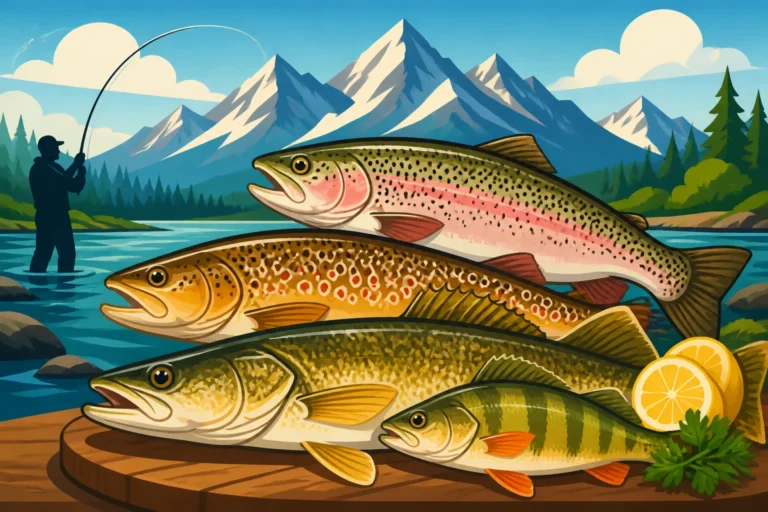
Methylmercury is readily absorbed by small organisms, which are then eaten by small fish. Those small fish are eaten by larger fish, and so on up the food chain. This process, known as bioaccumulation and biomagnification, means that predatory fish at the top of the food chain—like large lake trout, walleye, or even big brown trout—will often have the highest levels of mercury in their tissues. Smaller, non-predatory fish like perch or panfish generally have much lower levels.
When consumed by humans, methylmercury can affect the nervous system, kidneys, and brain development, particularly in fetuses and young children. This is why advisories often recommend that sensitive populations avoid or severely limit consumption of certain larger, older fish. For a deeper dive into specific species, you might want to learn about Lake Trout (Mackinaw) Fishing in Wyoming or Walleye Fishing in Wyoming, as these are often the species most affected.
PCBs and Other Chemical Contaminants
While less common than mercury, polychlorinated biphenyls (PCBs) and other persistent organic pollutants (POPs) can also be a concern in certain water bodies. PCBs are a group of man-made organic chemicals that were widely used in industrial applications, such as electrical equipment, before being banned in the late 1970s due to their toxicity. However, because they are very stable and don't break down easily, they persist in the environment, accumulating in sediments and then in the food chain.
Like mercury, PCBs accumulate in the fatty tissues of fish. They can pose various health risks, including effects on the immune system, reproductive function, and potential carcinogenicity. Advisories related to PCBs might recommend trimming fat from fish before cooking, as this is where much of the contaminant is stored. This is a practical tip for any angler concerned about their health, similar to learning proper Catch-and-Release Rules on Wyoming Waters for fish preservation.
Understanding the Bioaccumulation Process
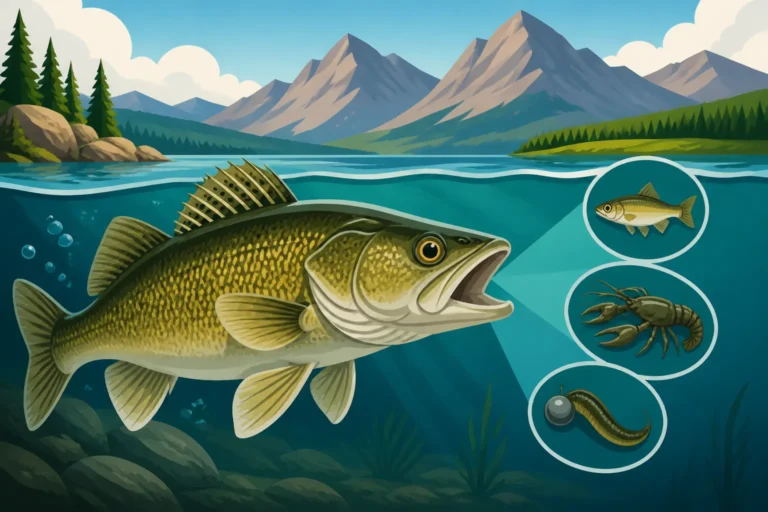
It's helpful to visualize how contaminants like mercury and PCBs move through the aquatic environment. Imagine a microscopic organism in a lake that absorbs a tiny amount of methylmercury. A small minnow eats thousands of these organisms, accumulating all that mercury in its body. Then, a larger trout eats many minnows, concentrating the mercury even further. Finally, a trophy lake trout eats many of those larger trout over its long lifespan, becoming a "sink" for these contaminants.
This is why advisories often focus on:
- Predatory fish: These are higher up the food chain.
- Larger, older fish: They've had more time to accumulate contaminants.
- Fish from certain environments: Waters with historical industrial inputs or specific geological features might naturally have higher levels of certain substances.
Knowing this helps you understand why a particular advisory might suggest you eat fewer large lake trout from Flaming Gorge, for instance, but might not have any restrictions on catching and eating brook trout from a high mountain stream.
Understanding and Applying the Advisories to Your Catch
Once you've identified that an advisory exists for a body of water or species you're interested in, the next step is to actually understand what it means for your fishing and dining plans. It’s not just about reading the words; it's about applying them to your personal situation.
Interpreting Advisory Levels
Advisories usually come with specific guidelines for different population groups and often use terms like "meals per week" or "meals per month." A "meal" is generally considered a standard serving size, typically 6-8 ounces for an adult.
Let's look at a hypothetical example:
| Advisory Level | General Population (Adults) | Sensitive Populations (Pregnant/Nursing Women, Children) |
|---|---|---|
| Level 1 | Limit to 1 meal per week | Limit to 1 meal per month |
| Level 2 | Limit to 1 meal per month | Avoid consumption |
| Level 3 | Avoid consumption | Avoid consumption |
This table is just an example, and actual advisories will have specific numbers and phrasing. Always refer to the official WDH advisories for exact details.
It's important to remember that these are recommendations, not strict laws (beyond the actual fishing regulations like How Bag and Possession Limits Work in Wyoming). However, following them is vital for your health. If an advisory says to limit consumption, it's not a suggestion to ignore; it's a careful calculation based on scientific data.
Practical Tips for Safer Fish Consumption
Even if an advisory is in place, or just as a general best practice, there are things you can do to minimize your exposure to potential contaminants:
- Check the Advisories: This is number one! Always know the latest information for the specific waters you're fishing.
- Vary Your Diet: Don't eat fish from the same water body or the same species every single time. Diversify your sources, both from wild-caught fish in different areas and from commercially sourced seafood (which also has its own advisories, though managed differently).
- Target Smaller Fish: As discussed, smaller, younger fish generally have lower contaminant levels than older, larger predatory fish of the same species. If the advisory is for large lake trout, consider targeting smaller ones, or a different, less-affected species altogether, like the ones covered in Best Fish Species for Beginners to Target in Wyoming.
- Prepare Fish Wisely: For contaminants like PCBs that accumulate in fat, trimming the fat, skin, and belly flap before cooking can significantly reduce your exposure. Grilling or baking fish on a rack that allows fat to drip away is also a good strategy. Frying, however, tends to seal in the contaminants. This kind of preparation can also improve the taste, as discussed in How to Fillet a Trout for the First Time.
- Gutting Fish Promptly: While not directly related to long-term contaminant accumulation in muscle tissue, proper gutting and cleaning your fish promptly after catching, as outlined in How to Handle a Trout to Keep It Alive After Release, is essential for overall food safety and freshness. A good set of filleting knives and a cooler to keep your catch cold are essential gear, which you can often find readily available on platforms like Amazon.
- Consider Catch-and-Release: If you're fishing a water body with a particularly high-level advisory, or if you simply prefer to minimize any potential risk, practicing catch-and-release is always an option. Many anglers choose to release trophy fish, especially those that might be very old and therefore have higher contaminant levels.
Ultimately, Wyoming's fishing opportunities are vast and incredible, and the goal of these advisories isn't to scare you away. It's to empower you with knowledge so you can continue to enjoy the sport and the delicious bounty it offers, responsibly and safely. Always use common sense, stay informed, and when in doubt, lean on the side of caution. Happy fishing, and even happier, healthier eating! If you're curious about specific species' edibility, we've got you covered with articles like Is Lake Trout Good to Eat? and Is Walleye Good to Eat?.
Disclaimer
This article is for general informational purposes only and does not constitute professional advice. Laws, prices and regulations vary by location and change over time. Consult a qualified professional for guidance on your specific situation.