Wyoming’s Coldwater Fish Species
Venturing into Wyoming's breathtaking landscapes to fish often brings an initial rush of excitement, quickly followed by the daunting question: "What exactly am I looking at?" Many anglers, especially those new to our diverse waters, struggle to distinguish between the many incredible coldwater species that call this state home. This comprehensive guide aims to clear up that confusion, offering an in-depth look at Wyoming's coldwater fish, their habitats, and how to identify them, ensuring your next fishing trip is both productive and fully compliant with regulations.
Understanding Wyoming's Coldwater Habitats
Wyoming is a state defined by its elevation and its water. From roaring mountain rivers to serene high-alpine lakes, the conditions here are often ideal for species that thrive in cooler temperatures and oxygen-rich environments. Understanding these diverse habitats is key to knowing where to find different coldwater fish and why they behave the way they do.
Rivers, Streams, and Tailwaters: Where Trout Thrive
Our rivers and streams are the lifeblood of Wyoming's coldwater fisheries, offering a dynamic and often challenging environment. Think of the North Platte River, for example, especially sections like the Miracle Mile or Gray Reef. These aren't just stretches of water; they are complex ecosystems. The consistent flow keeps water temperatures stable, even during the heat of summer, and maintains high oxygen levels – both crucial for coldwater species. Tailwaters, which are the sections of river immediately below dams, are particularly productive. The water released from the bottom of a reservoir is often consistently cold, providing a year-round haven for trout. This is why you'll find incredible numbers of robust fish in places like the Green River below Flaming Gorge Dam, or sections of the Snake River. The currents bring a steady supply of insects and small fish, giving resident trout a constant buffet. Anglers learn to read these currents, understanding that trout will hold in slower pockets behind rocks, in seams where fast and slow water meet, or under undercut banks, expending minimal energy while waiting for food to drift by.
High-Altitude Lakes and Reservoirs: Unique Coldwater Ecosystems
Beyond the rivers, Wyoming boasts an impressive array of high-altitude lakes and large reservoirs, each with its own distinct coldwater character. Lakes nestled high in the Wind River Mountains or the Bighorns are often pristine, spring-fed, and hold a unique population of trout that can be incredibly vibrant. These lakes are typically ice-free for only a few months of the year, leading to shorter growing seasons but often producing exceptionally hardy and beautiful fish. Then there are our massive reservoirs, like Flaming Gorge, Jackson Lake, or Boysen. These are deep, expansive bodies of water, often with thermal stratification where colder, oxygenated water sits below the surface, providing essential habitat for species like lake trout and kokanee salmon. While the surface might warm significantly in summer, the deeper zones remain consistently cold. Fishing these waters often requires different techniques, like deep trolling or jigging, to reach the fish holding in cooler depths. The sheer size of these reservoirs means they can support immense populations and grow some truly trophy-sized fish. Exploring these high-country gems can be a rewarding adventure, though they often demand a bit more planning and ruggedness to access.
The Critical Role of Water Temperature and Oxygen
For coldwater fish, temperature and dissolved oxygen are non-negotiable. Most trout species, for instance, thrive in water temperatures between 45 and 65 degrees Fahrenheit. Once water temperatures consistently climb above 70 degrees, these fish become severely stressed, their metabolism increases, and their ability to absorb oxygen from the water decreases. That's why you often hear of voluntary fishing closures on some lower-elevation streams during summer heat waves. When water gets too warm, it simply cannot hold as much dissolved oxygen. Cold, turbulent water, typical of many Wyoming rivers and high-mountain streams, is naturally rich in oxygen. Stagnant, warm water, on the other hand, can be deadly. Anglers who understand this often adjust their fishing times, targeting early mornings or late evenings in summer, or focusing on colder tailwater sections. Knowing these basic biological needs helps you predict where fish will be, how active they'll be, and how to practice responsible catch-and-release, especially during warmer periods. You can even find affordable water thermometers on sites like Amazon to keep an eye on conditions.
The Iconic Trout Species of Wyoming
When most people think of Wyoming fishing, they think of trout. And for good reason! Our waters are teeming with several distinct species, each with its own preferred habitat and characteristics that make them unique. From our state fish to deep-dwelling giants, getting to know these incredible fish is a rite of passage for any Wyoming angler.
Yellowstone Cutthroat Trout: Wyoming's State Fish
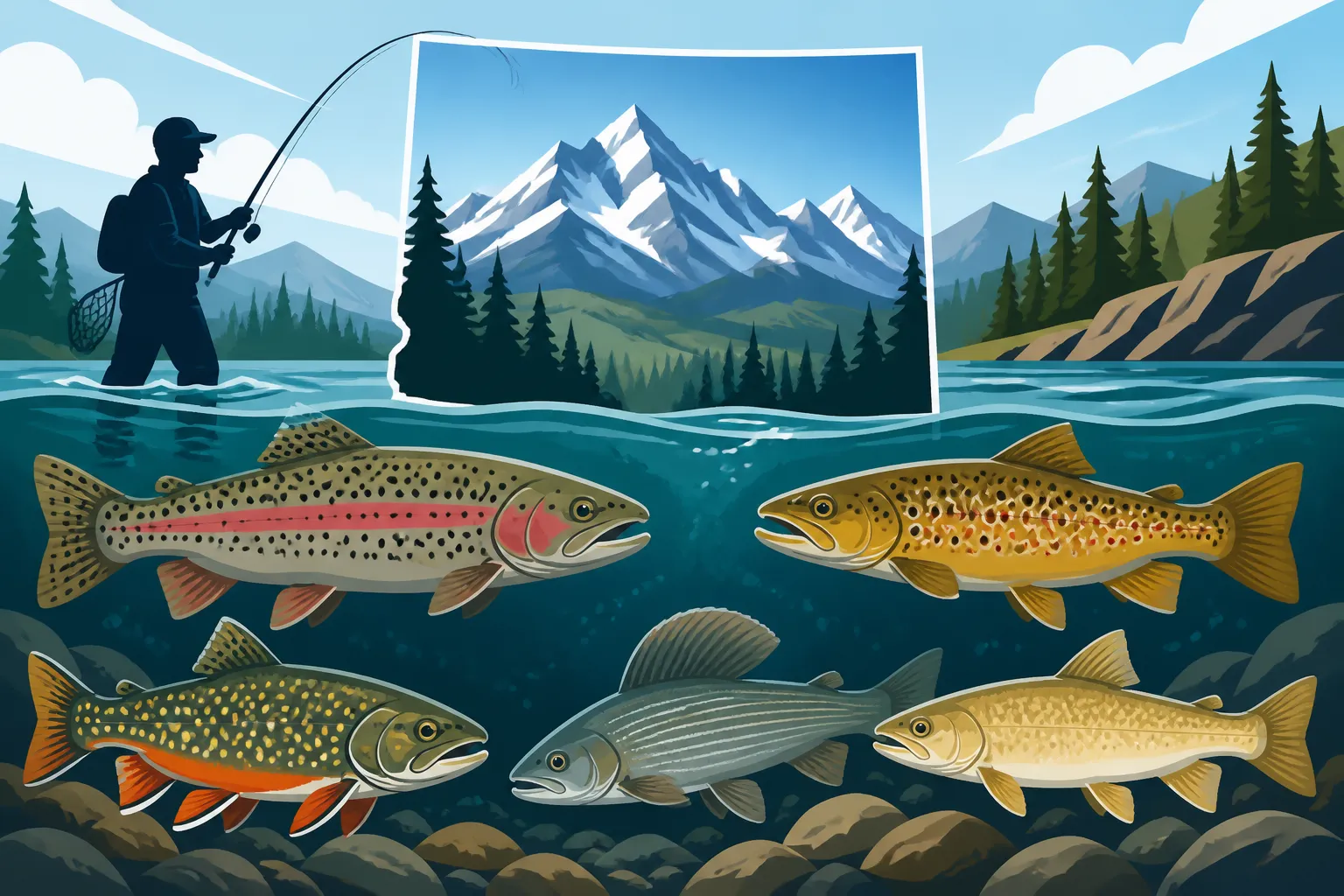
The Wyoming's State Fish: The Yellowstone Cutthroat is a true symbol of our state's wild heritage, native to the Yellowstone River drainage and many other waters across Wyoming. These beautiful fish are easily recognizable by the distinctive orange or red slash marks beneath their lower jaws – hence the "cutthroat" name. Their body coloration can vary from olive green to brassy yellow, often adorned with black spots that are more concentrated towards the tail. They prefer cold, clear, well-oxygenated streams and high-elevation lakes. Historically, they were the dominant trout species in much of western Wyoming. Unfortunately, hybridization with introduced rainbow trout and predation from illegally introduced lake trout in places like Yellowstone Lake have impacted their populations. However, dedicated conservation efforts are underway to protect and restore these iconic fish. Catching a Yellowstone cutthroat in its native range, perhaps while Yellowstone Cutthroat Trout Fishing in Wyoming, is a truly special experience, connecting you to the wild heart of Wyoming.
Rainbow Trout: A Popular Sport Fish
Rainbow trout are perhaps the most widely recognized and sought-after trout species in Wyoming, known for their stunning iridescent band along their sides, which can range from a pale pink to a vibrant crimson. They typically have small, dark spots scattered over their body, dorsal fin, and tail. These fish are incredibly adaptable and can be found in a wide variety of habitats, from large reservoirs to small mountain streams. Many of Wyoming's rainbow populations are sustained through an active stocking program, making them accessible to anglers of all skill levels. Wild rainbows, however, are also found in many river systems, thriving in swift, oxygenated water. They are known for their aggressive strikes and spirited fights, often leaping acrobatically when hooked. Whether you're targeting them with flies, spinners, or bait, Rainbow Trout Fishing in Wyoming offers thrilling action for everyone.
Brown Trout: The Wary, Wily Predator
Brown trout are the masters of camouflage and often the most challenging to catch, known for their wary nature and preference for cover. Their coloration is typically a mix of olive green, brown, and gold, with distinct dark spots that are often ringed with a lighter halo, plus scattered red or orange spots that are usually smaller. They thrive in medium to large rivers and streams, particularly those with plenty of undercut banks, submerged logs, and rock structures to hide in. Brown trout are opportunistic predators, known to feed on insects, crustaceans, and even other fish, especially larger individuals. This predatory nature means they can grow to impressive sizes, making them a favorite target for trophy hunters. Fall is a prime time for Brown Trout Fishing in Wyoming as they become more active, moving into shallower waters for their annual spawning run. Landing a large brown trout often requires patience, skill, and a stealthy approach.
Lake Trout (Mackinaw): Deepwater Giants
Also known as Mackinaw, lake trout are the titans of Wyoming's deep, cold reservoirs. These char species are characterized by their sleek, elongated bodies, often a mottled gray, brown, or olive green, covered with light spots on a darker background. Unlike other trout, their tail is deeply forked. Lake trout are built for life in the depths, preferring water temperatures between 40 and 55 degrees Fahrenheit. In Wyoming, you'll find them in large, deep bodies of water like Flaming Gorge Reservoir, Jackson Lake, and Yellowstone Lake. While they are a prized sport fish, particularly for those targeting trophy catches, they can also pose a threat to native species in certain ecosystems, such as the Are Lake Trout Considered a Problem in Yellowstone Lake? context. Lake Trout (Mackinaw) Fishing in Wyoming typically involves specialized techniques like downrigger trolling or vertical jigging to reach them in their deepwater haunts. They are powerful fighters, and bringing a large one to the boat is a test of strength and endurance.
Brook Trout: Small but Abundant in High Country
Brook trout, another char species, are truly a jewel of Wyoming's high country. While often smaller than their rainbow or brown counterparts, their vibrant coloration makes them unmistakable. Their backs are typically dark olive with distinctive worm-like markings (vermiculations), transitioning to bright red-orange bellies during spawning, and often sporting striking blue halos on their sides. They have white leading edges on their lower fins, bordered by a thin black line. Brook trout thrive in the coldest, clearest headwater streams and high-elevation lakes where other species might struggle. They are often abundant in these remote waters, making them a fantastic target for hikers willing to venture off the beaten path. Despite their size, they are aggressive feeders and provide consistent action on light tackle. For a peaceful day in a stunning setting, Brook Trout Fishing in Wyoming in a secluded alpine lake is hard to beat.
Golden Trout: The Gem of Alpine Waters
The golden trout is arguably the most stunning of Wyoming's coldwater fish, and one of its most elusive. These fish are true high-alpine specialists, typically found in lakes and streams above 9,000 feet. Their name perfectly describes their appearance: a brilliant golden-yellow body with a distinct red-orange lateral band, often adorned with sparse, large, dark spots mainly on the tail. They also exhibit the characteristic cutthroat "slash" under their jaw, though it can be faint. Golden Trout Fishing in Wyoming is often the culmination of a strenuous hike into remote wilderness areas, adding to the allure of these magnificent fish. They are not native to Wyoming but were introduced to many high-country waters due to their beauty and ability to thrive in harsh conditions. Catching a golden trout is a bucket-list item for many anglers, a testament to their perseverance and the breathtaking beauty of Wyoming's alpine environment.
Other Fascinating Coldwater Fish
While trout often steal the spotlight, Wyoming's coldwater ecosystems are home to other unique and equally fascinating fish species. These often-overlooked residents contribute significantly to the health and diversity of our aquatic environments and offer different angling challenges.
Mountain Whitefish: Often Overlooked, Always Present
Mountain whitefish are a common, yet often overlooked, coldwater species found throughout many of Wyoming's trout streams and rivers. They are members of the salmon family but are often mistaken for rough fish due to their smaller, downturned mouths and silvery-white coloration. However, they are a true native coldwater fish and an important part of the ecosystem, primarily feeding on aquatic insects. Their bodies are slender, with a small adipose fin like trout, and they typically range from 10 to 18 inches long. While they don't offer the same acrobatic fight as a rainbow trout, they can be a lot of fun on light tackle, especially when trout aren't biting. Many anglers catch them incidentally while nymphing for trout. They are excellent table fare, with delicate white meat, making them a welcome addition to a streamside meal. Don't dismiss the mountain whitefish; they're a true part of Wyoming's coldwater tapestry.
Arctic Grayling: A Rare and Beautiful Find
The Arctic grayling is a species of char known for its strikingly beautiful and sail-like dorsal fin, which is often spotted with iridescent blues, purples, and reds. Their bodies are typically silvery-gray with scattered dark spots, and they have a distinct, large eye. While native to Alaska and northern Canada, isolated populations have been introduced and thrive in a few select high-elevation lakes and streams in Wyoming, particularly in the Wind River and Absaroka ranges. They require extremely cold, clean, and well-oxygenated water, making them an indicator of pristine aquatic health. Finding and catching an Arctic grayling in Wyoming is a rare and special treat for any angler, often requiring a long hike into remote wilderness. They are eager biters and put up a spirited fight on light gear, making them a cherished catch. Due to their limited populations, catch-and-release is strongly encouraged to protect these magnificent fish.
Ling (Burbot): The Unique Coldwater Cod
The ling, more commonly known as burbot, is one of Wyoming's most unique coldwater inhabitants. It's the only freshwater member of the cod family, with an appearance that's quite different from a typical trout. They have an elongated, snake-like body, mottled brown and yellow coloration, and a single prominent barbel (whisker) under their chin. Ling are primarily nocturnal predators, preferring deep, cold waters in large reservoirs like Flaming Gorge and Boysen. What Is a Ling Fish? reveals a fascinating creature that thrives in conditions most fish find challenging. They are particularly active during the winter months, making them a popular target for ice anglers. They feed on other fish and invertebrates, and despite their unusual appearance, they are highly regarded for their delicious, firm, white meat – often compared to lobster! Catching ling requires patience and often involves fishing deep with cut bait or jigging spoons, but the reward of a fresh ling dinner is well worth the effort.
Identifying Your Catch: Key Characteristics
Accurately identifying the fish you catch isn't just a fun part of the angling experience; it's often crucial for complying with Wyoming's fishing regulations. Bag limits, size restrictions, and even bait restrictions can vary significantly between species and specific waters. Knowing what's on the end of your line protects both you and the fishery.
Visual Cues for Trout and Char Identification
Telling the difference between the various trout and char species can sometimes feel like a challenging task, especially for beginners. However, by focusing on a few key visual cues, you can become much more proficient.
- Spots: This is often the first thing people look at.
- Rainbow Trout: Small, distinct black spots typically evenly distributed over the body, dorsal fin, and tail. The tail is usually spotted.
- Brown Trout: Fewer, larger dark spots, many of which are often haloed with a lighter ring. They also frequently have scattered red or orange spots. Their tails are usually sparsely spotted or unspotted.
- Cutthroat Trout: Generally larger, more irregularly shaped spots, often concentrated towards the tail. The definitive red/orange slash under the jaw is key.
- Lake Trout (Mackinaw): Light spots on a darker body background, with a deeply forked tail.
- Brook Trout: Dark body with light worm-like markings (vermiculations) on the back and dorsal fin, often with red spots with blue halos on their sides. White leading edges on their fins.
- Golden Trout: Brilliant golden-yellow body with a distinct red lateral band, usually sparse black spots on the tail, and often a faint cutthroat slash.
- Mouth and Jaw: The presence and size of the red/orange slash under the lower jaw is the most reliable indicator for cutthroat trout. For a clear example, refer to Identifying a Yellowstone Cutthroat Trout.
- Tail Shape: Lake trout have a distinctly forked tail, whereas other trout species have squarer or slightly emarginate (slightly concave) tails.
- Body Shape and Coloration: While variable by habitat, general body proportions and overall color patterns can also help. Brook trout tend to be more robust for their length, while rainbow and brown trout are more torpedo-shaped.
Using a waterproof fish identification guide (many are available on Amazon or at local tackle shops) is an excellent way to quickly check these features on the water.
Distinguishing Between Native and Introduced Species
Wyoming has a fascinating mix of native and introduced fish species. Understanding which is which is important not only for historical context but also for conservation efforts.
- Native Species: Yellowstone cutthroat trout, Snake River fine-spotted cutthroat trout, Bonneville cutthroat trout (in their respective drainages), and mountain whitefish are examples of fish native to Wyoming's cold waters. They evolved here and are integral to the natural ecosystem.
- Introduced Species: Rainbow trout, brown trout, brook trout, lake trout, golden trout, and Arctic grayling were all introduced to Wyoming at various points. While many of these are now thriving and provide incredible fishing opportunities, their presence can sometimes impact native fish populations through competition, predation, or hybridization.
One of the most common identification challenges is Cutthroat vs Rainbow Trout: Telling Them Apart due to their ability to hybridize, creating "cutbows." In these cases, the presence or absence of the red cutthroat slash, the pattern of spots, and even genetic testing are often needed for definitive identification.
Why Accurate Identification Matters for Regulations
The Wyoming Game and Fish Department meticulously manages our fisheries, and regulations are often tailored to specific species and even specific waters. For instance:
- Bag and Possession Limits: You might be allowed to keep more rainbow trout than brown trout, or specific limits might apply to certain cutthroat trout subspecies in particular streams.
- Size Restrictions: Some lakes might have slot limits, meaning you can only keep fish within a certain size range, or a maximum size limit on trophy fish.
- Release Requirements: In some areas, lake trout in Yellowstone Lake, for example, have special regulations where they must be killed if caught, due to their invasive impact on native cutthroat populations.
- Bait and Tackle Restrictions: Certain stretches of river might require artificial flies and lures only, or even barbless hooks, to protect delicate fish populations.
A simple mistake in identification could lead to a violation, potentially resulting in fines or other penalties. Always carry your current Wyoming fishing regulations booklet, or have a digital version handy on your phone, and consult it frequently. When in doubt, it's always best to practice catch-and-release, especially if you're unsure of the species or its legal harvest requirements.
| Species Name | Primary Spotting Pattern | Mouth/Jaw Features | Tail Shape | Common Colors | Typical Habitat in WY |
|---|---|---|---|---|---|
| Yellowstone Cutthroat | Large, irregular spots, concentrated on tail | Red/orange slash below jaw | Square/Slightly emarginate | Olive green to brassy yellow | Native streams, high-elevation lakes |
| Rainbow Trout | Small, distinct black spots, even spread | No slash | Square/Slightly emarginate | Iridescent band, silvery sides | Rivers, streams, stocked lakes, reservoirs |
| Brown Trout | Large, dark spots (often with halos), few red/orange spots | No slash | Square/Slightly emarginate | Olive green, brown, gold | Rivers, streams with cover, reservoirs |
| Lake Trout (Mackinaw) | Light spots on dark background | Large mouth, no slash | Deeply forked | Mottled gray, brown, olive | Deep, cold reservoirs |
| Brook Trout | Dark body, light worm-like markings, red spots w/ blue halos | No slash | Square | Dark green, orange/red belly | Cold, clear headwater streams, high-elevation lakes |
| Golden Trout | Brilliant golden, red lateral band, sparse tail spots | Faint red/orange slash | Square | Golden-yellow, red/orange band | High-alpine lakes and streams (>9,000 ft) |
| Mountain Whitefish | Small, silvery body, no distinct spots | Small, downturned mouth | Square | Silvery-white, sometimes olive | Trout streams, rivers, some lakes |
| Arctic Grayling | Silvery-gray, scattered dark spots | Small mouth, no slash | Square | Striking, sail-like dorsal fin | Pristine, cold high-elevation lakes/streams |
| Ling (Burbot) | Mottled brown/yellow, scale-less | Single chin barbel | Round | Yellowish-brown, dark blotches | Deep, cold reservoirs, sometimes large rivers |
Conservation and Responsible Angling
Wyoming's coldwater fisheries are a precious resource, and as anglers, we have a vital role to play in their preservation. The health of these ecosystems is constantly under threat from various factors, and our actions on the water can make a significant difference. Being a responsible angler means more than just following the rules; it means actively contributing to the long-term sustainability of these incredible fish and their habitats.
Protecting Wyoming's Native Coldwater Fisheries
Wyoming's native coldwater fish, particularly our cutthroat trout subspecies, are incredibly special and often vulnerable. They have evolved over millennia to thrive in specific environments, and when non-native species are introduced, it can disrupt this delicate balance. Hybridization with rainbow trout is a major concern for cutthroat populations, as it dilutes their unique genetic makeup. Predation from introduced lake trout in specific waters, such as Yellowstone Lake, has also severely impacted native cutthroat numbers. The Wyoming Game and Fish Department, along with various conservation groups, invests heavily in projects to restore and protect these native fish through habitat improvements, fish barriers, and careful management of non-native species. As anglers, we can support these efforts by:
- Knowing Your Fish: Accurately identifying cutthroat trout is paramount. If you're unsure, practice catch-and-release.
- Cleaning Your Gear: Prevent the spread of aquatic invasive species, which can outcompete natives for resources.
- Reporting Violations: If you see suspicious activity, like illegal fish introductions, report it to Game and Fish.
- Supporting Conservation: Consider donating or volunteering with organizations dedicated to native fish restoration.
Every native fish we protect contributes to the ecological integrity and biodiversity of Wyoming's waters for future generations.
Invasive Species and Their Threat to Coldwater Environments
Aquatic invasive species (AIS) represent one of the gravest threats to Wyoming's coldwater ecosystems. These are non-native plants, animals, or pathogens that can rapidly reproduce and outcompete native species for food and habitat, disrupt food webs, and even alter water quality. For coldwater fisheries, invaders like zebra and quagga mussels, New Zealand mudsnails, and whirling disease can be devastating.
- Zebra and Quagga Mussels: These filter feeders can clog pipes, damage boat engines, and drastically change water chemistry, impacting the entire food web that coldwater fish rely on. They haven't established widespread populations in Wyoming yet, but the threat is constant, which is why boat inspections are mandatory.
- New Zealand Mudsnails: These tiny snails can reproduce clonally and reach astronomical densities, consuming resources that would otherwise go to native insects and ultimately trout.
- Whirling Disease: A parasitic disease that affects trout, causing skeletal deformities and neurological damage, often leading to mortality in young fish. It has significantly impacted some wild trout populations.
It's critical for anglers to practice "Clean, Drain, Dry" protocol for all boats, waders, and fishing gear after every outing. Thoroughly clean any mud or debris from your gear, drain all water from boats and livewells, and allow everything to completely dry before visiting another body of water. Failure to do so could mean you're inadvertently transporting these harmful invaders. Remember, What Happens If You Catch an Invasive Species in Wyoming often involves reporting it, not releasing it.
Catch-and-Release Practices for Fragile Coldwater Fish
While keeping a few fish for dinner is a cherished part of the fishing experience, practicing responsible catch-and-release is essential, especially for sensitive coldwater species or in waters with special regulations. The goal is to minimize stress and injury to the fish, ensuring its survival after it swims away.
Here are some best practices:
- Use Barbless Hooks: Barbless hooks (or crimping down the barbs on your hooks with pliers) make removal much easier and cause less damage to the fish's mouth. Some waters, like certain sections of the North Platte River, Are Barbless Hooks Required on the North Platte River?, making it mandatory.
- Minimize Handling: Keep the fish in the water as much as possible. If you must lift it for a photo, do so quickly and support its body horizontally, especially heavier fish. Avoid squeezing the fish or touching its gills.
- Wet Your Hands: Always wet your hands before touching a fish. Dry hands can remove the protective slime layer, leaving the fish susceptible to disease.
- Use Appropriate Tackle: Don't "fight" a fish to exhaustion on ultra-light tackle, especially in warm water conditions. Land the fish quickly to reduce stress.
- De-hook Quickly: Use forceps or a hemostat to quickly remove the hook. If the hook is deeply swallowed, cut the line as close to the hook as possible rather than trying to rip it out.
- Revive Carefully: If the fish seems lethargic, hold it gently upright in the water, facing into the current, until it regains its strength and can swim away on its own. Don't simply toss it back; ensure it's ready.
Being mindful of these practices ensures that the fish you release has the best possible chance of survival, contributing to healthy and vibrant coldwater fisheries for everyone to enjoy. You can find essential catch-and-release tools, like forceps and hook removers, on Amazon or at any tackle store.
Disclaimer
This article is for general informational purposes only and does not constitute professional advice. Laws, prices and regulations vary by location and change over time. Consult a qualified professional for guidance on your specific situation.