New Snake River Trout Limits Near Jackson Lake Dam
Many anglers planning a trip to Wyoming's iconic Snake River near Jackson Lake Dam have been scratching their heads about the recent changes to trout limits. It can feel overwhelming trying to keep up with evolving regulations, especially when you're dreaming of big fish in a legendary fishery. This comprehensive guide is here to clarify the new Snake River trout limits, explaining exactly what they mean for your next adventure in this stunning corner of the Cowboy State.
Understanding the Pivotal Change
The waters below Jackson Lake Dam, specifically those stretches of the Snake River, are renowned for their incredible trout fishing. For years, anglers have enjoyed consistent opportunities, but the ecosystem is dynamic, and sometimes, regulations need to shift to protect the very resources we cherish. The new limits are a direct response to careful observation and scientific data gathered by the Wyoming Game and Fish Department, aiming to ensure the long-term health and vitality of this particular fishery. It's not just about rules for the sake of rules; it's about safeguarding the future of the Snake River's trout population for generations to come.
Why the Limits Changed
The primary driver behind the adjustment of trout limits on the Snake River below Jackson Lake Dam is often rooted in population dynamics of specific species, primarily the Snake River Fine-Spotted Cutthroat Trout. This native subspecies is a cornerstone of the fishery, and its health is paramount. When angler harvest or environmental factors begin to put undue pressure on these populations, wildlife management agencies like the Wyoming Game and Fish Department step in. In this particular case, recent studies and angler creel surveys likely indicated a need to reduce harvest to allow for greater escapement, improved spawning success, and overall population resilience for the cutthroat. It's a proactive measure, rather than a reactive one after a crisis has developed.
Another contributing factor can be the presence and impact of non-native species. For instance, while less prevalent directly below the dam, the broader Jackson Lake system does contain lake trout (mackinaw), which can predate on native cutthroat. While the new limits near the dam are primarily focused on cutthroat, understanding the broader ecological picture helps explain why such nuanced regulations are put in place. It's a balancing act: allowing anglers to enjoy their sport while ensuring the delicate ecological balance of a pristine environment like the Snake River remains intact. This thoughtful approach protects the very fish that draw so many of us here year after year, and it’s a critical part of the Wyoming's 2026 Fishing Regulation Changes Explained.
Specifics of the New Regulation
Prior to the 2026 regulation changes, anglers fishing the Snake River immediately below Jackson Lake Dam might have encountered different, perhaps more liberal, limits for certain trout species. The most significant shift you'll notice now revolves around the Snake River Fine-Spotted Cutthroat Trout. To truly understand these changes, it's helpful to remember that Wyoming's regulations can be incredibly specific, often changing not just by river, but by specific stretch of a river. This particular change targets a very precise area, reflecting a localized management need.
As of the new regulations, specifically beginning in 2026, the daily creel limit for Snake River Fine-Spotted Cutthroat Trout in the segment of the Snake River from the Jackson Lake Dam downstream to the Highway 26/89 bridge near Moose, Wyoming, is now one (1) cutthroat trout per day, and it must be under 12 inches. This is a significant reduction from previous limits, which often allowed for higher numbers or different size restrictions. The possession limit mirrors the daily limit in this specific section. Additionally, the new rules often come with requirements for mandatory immediate release of any cutthroat trout over 12 inches in length. This strict slot limit and reduced creel are designed to protect larger, reproductively valuable fish, allowing them to contribute more to future generations of cutthroat. This ensures that the bigger, healthier spawners stay in the water, fulfilling their vital role in the ecosystem. You can find comprehensive details about these regulations in the official Wyoming Fishing Regulations Every Angler Should Know booklet, which you can often pick up at local tackle shops or download from the Wyoming Game and Fish website.
To put it into perspective, here's a quick comparison:
| Water Segment | Species | Old Daily Limit (Generalized Example) | New Daily Limit (2026) |
|---|---|---|---|
| Snake River Below Jackson Lake Dam | Snake River Cutthroat | 3 fish, 1 over 16 inches | 1 fish, must be under 12 inches |
| Snake River Below Jackson Lake Dam | Brown/Rainbow/Brook | 3 fish | No change (typically 3 or 6 total) |
(Note: "Old Daily Limit" is a generalized example for illustrative purposes. Always consult current regulations directly from the Wyoming Game and Fish Department.)
This table highlights the targeted nature of the new rule specifically for cutthroat trout, leaving other species in this stretch largely unaffected by this particular change. For broader understanding of how these limits function, it's worth reviewing How Bag and Possession Limits Work in Wyoming.
Navigating the Waters with New Expectations
Whenever regulations shift, it's natural for anglers to feel a mix of confusion and even frustration. We get used to a certain way of doing things, a certain expectation for our day on the water, and then suddenly, the goalposts move. But embracing these changes isn't just about compliance; it's about understanding the deeper commitment to conservation that underpins them. For the Snake River, a true gem of Wyoming fishing, adapting to these new limits means refining our approach and perhaps even discovering new joys in the angling experience, focusing less on the creel and more on the catch-and-release success.
What This Means for Your Fishing Trip
For many, a fishing trip is about the experience – the stunning scenery, the thrill of the bite, and the peace of being outdoors. While keeping a fish for the pan is a cherished part of that experience for some, these new regulations near Jackson Lake Dam steer anglers towards a stronger catch-and-release ethic for cutthroat. This means if you're targeting cutthroat, expect to release the vast majority, especially those prized larger fish. You'll need to be extra mindful of your handling techniques to ensure the fish's survival after release. Bringing a good pair of forceps and a knotless net, readily available on platforms like Amazon, becomes even more crucial.
It's also an opportunity to shift focus. Perhaps you'll spend more time perfecting your cast, trying new fly patterns, or simply enjoying the challenge of hooking a fish without the pressure of needing to keep it. The experience of fishing this iconic river is still unparalleled, even with a single-fish-under-12-inches cutthroat limit. Remember, these rules apply specifically to the stretch below the dam, so if you're keen on keeping more fish, you might explore other waters or different sections of the Snake River that have more liberal regulations for species like brown trout or rainbow trout, which often have different daily limits. Always make sure you've got your Wyoming Fishing License Guide for Nonresidents or resident license clearly visible or easily accessible, as wardens frequently patrol this popular area. Understanding Wyoming's Daily Bag Limits by Species is a key part of this adjustment.
Adjusting Your Strategy
With stricter limits on cutthroat, especially the larger ones, your fishing strategy might need a tweak. Instead of focusing solely on methods that maximize harvest, you might lean into techniques that are more catch-and-release friendly. For fly anglers, this means fine-tuning your nymphing techniques for Wyoming tailwaters or perfecting your dry fly presentation to entice surface feeders. Spin anglers might consider smaller, single-hook lures that are less likely to deeply hook fish, allowing for easier release. Carrying Your Wyoming Fishing License in the Field, either digitally or physically, is not just a legal requirement but a reminder of your commitment to these waters.
Consider also diversifying your target species within this stretch. While cutthroat are a primary draw, rainbow trout and brown trout are also present. These species might still fall under more general regulations, allowing for a slightly different approach if keeping a fish is important to you. This could mean switching from typical cutthroat patterns to streamers or spinners known to attract browns. The key is to be adaptable and informed. Before you head out, I always recommend checking the most current regulations online or picking up a physical copy of the Reading the Wyoming Fishing Regulations Booklet. Knowledge is your best tool for a successful and compliant day on the water.
The Specific Waters Under Scrutiny
Understanding exactly where these new Snake River trout limits apply is critical to avoid any inadvertent violations. Wyoming's fisheries management is precise, and a regulation that applies to one section of a river might be entirely different just a few miles upstream or downstream. The area near Jackson Lake Dam is a major focal point for anglers, making it imperative to know the boundaries of these specific rules. This targeted approach is designed to protect distinct segments of the fishery, often where native populations are most vulnerable or where spawning activity is concentrated.
Defining "Near Jackson Lake Dam"
When the regulations mention "the Snake River from Jackson Lake Dam downstream to the Highway 26/89 bridge near Moose, Wyoming," they are referring to a very specific and well-known stretch of river. This is the initial run of the Snake River as it exits the controlled release of Jackson Lake. This tailwater section is celebrated for its cold, oxygenated water, which provides prime habitat for trout year-round. The Highway 26/89 bridge, often referred to as the Moose-Wilson Road bridge, serves as the clear downstream boundary. Any fishing upstream of the dam, within Jackson Lake itself (where you might find What Fish Live in Jackson Lake), or downstream of that bridge, would fall under different regulations.
This specific segment is characterized by its relatively consistent flow, numerous riffles, runs, and deep pools, making it highly productive. It's also an area of significant public access, which naturally means higher angler pressure. The precision of the regulation ensures that the conservation efforts are concentrated where they are most needed and effective. Familiarizing yourself with local landmarks, access points, and bridge crossings is incredibly helpful when trying to interpret these detailed regulations. Maps found on the Wyoming Game and Fish website or through popular fishing apps can accurately delineate these boundaries. Knowing exactly where "near Jackson Lake Dam" starts and ends is the first step to a compliant and enjoyable fishing experience, especially for Fishing Wyoming's Snake River Below Jackson Lake Dam.
Key Access Points and Considerations
The stretch of the Snake River below Jackson Lake Dam offers several popular and easily accessible points for anglers, making it a favorite for both wade fishing and float trips. One of the most common access points is directly below the dam at the Snake River Overlook area, part of Grand Teton National Park. From here, you can often find trails leading down to the river for wade access. Further downstream, areas like Pacific Creek Landing and Deadman's Bar are popular launch points for drift boats and rafts, allowing anglers to float through the regulated section. The take-out at the Highway 26/89 bridge near Moose marks the end of this particular regulated zone.
When planning your trip to these spots, remember that you are often within the boundaries of Grand Teton National Park. This comes with its own set of rules and considerations, such as park entrance fees, bear safety precautions, and specific regulations for boat usage. For example, some sections might have motor restrictions or require specific permits for non-motorized vessels. Always double-check park regulations in addition to state fishing regulations. It's a good idea to pack essentials like bear spray and to secure food properly. Being aware of both the fishing limits and the broader park rules will ensure a safe, legal, and truly memorable outing in this magnificent Wyoming landscape. If you're looking for gear, like a good dry bag for your essentials or a sturdy pair of wading boots, Amazon has a huge selection that can be delivered right to your door.
Identifying Your Catch
One of the most crucial aspects of complying with the new Snake River trout limits is being able to accurately identify the fish you catch. With a specific limit for Snake River Fine-Spotted Cutthroat Trout and different rules potentially applying to other species, misidentification can lead to unintentional violations. This area is home to several trout species, and while some are quite distinct, others can be tricky to differentiate, especially for less experienced anglers or in variable light conditions. Knowing what you're looking for, and what distinguishing features to focus on, is key to staying within the bounds of the law and contributing to conservation.
Focus on Cutthroat Trout
The Snake River Fine-Spotted Cutthroat Trout is a truly iconic fish, and identifying it correctly is paramount for adhering to the new regulations. These native cutthroats are generally distinguishable by the tell-tale "cut" or "slash" of red or orange color under their jawline, which gives them their name. While other trout species can sometimes have a faint reddish hue, the cutthroat's mark is usually quite pronounced. Another key feature is the pattern of their spots: cutthroat typically have numerous small, dark spots concentrated more towards their tail, with fewer spots on their body towards the head. Their overall coloration can vary depending on water conditions and diet, but often ranges from olive green to yellowish-brown on the back, fading to lighter sides and a white belly.
It's important to differentiate them from Rainbow Trout, which are also present in these waters. Rainbows generally have a more uniform scattering of smaller spots all over their body, and crucially, they lack the distinctive red or orange jaw slash. Sometimes, a hybrid known as a "cutbow" can occur where cutthroat and rainbow trout interbreed. These can be particularly challenging to identify, as they may exhibit characteristics of both species. When in doubt, especially if you're close to the size limit, the safest bet is to practice immediate catch-and-release, or consult your Wyoming Game and Fish regulations booklet which often includes identification guides. For more detailed information, consider researching Snake River Fine-Spotted Cutthroat Trout specifically.
Other Species in the Zone
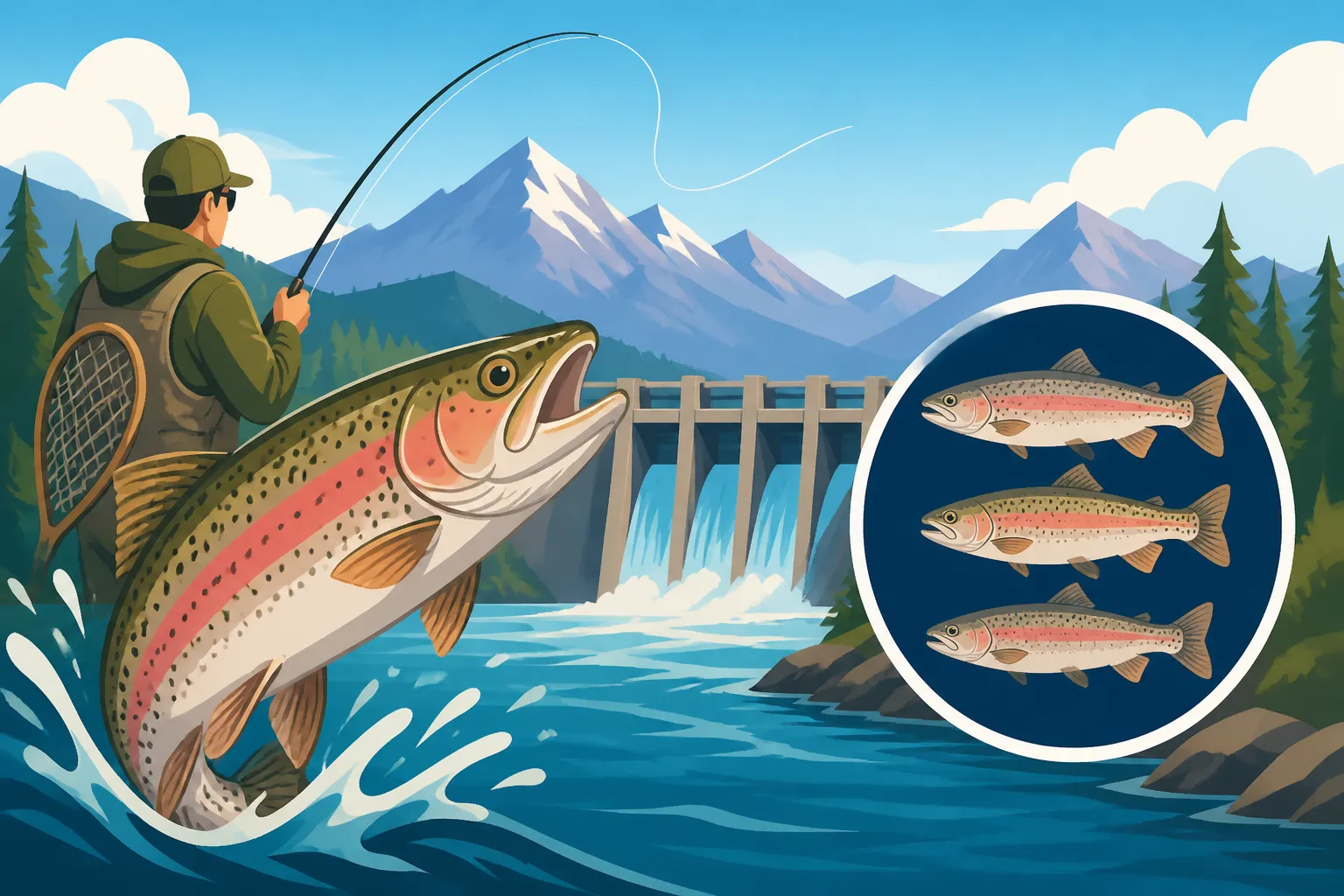
While the cutthroat limits are the most recent and stringent, the Snake River below Jackson Lake Dam is also home to other popular game fish. Brown trout and rainbow trout are regularly caught in this stretch, and understanding their identification and respective limits is also important. Brown trout, identifiable by their larger, irregular dark spots (some with a halo of lighter color) and often reddish-orange spots, particularly along their sides, are prized for their fighting ability. They typically lack the jaw slash of a cutthroat and often have a more golden or olive-brown hue. Rainbow trout, as mentioned, are characterized by a prominent pink or red lateral stripe running along their sides, a more evenly distributed spotting pattern, and no jaw slash.
These other species usually fall under the general trout limits, which might be more lenient than the specific cutthroat regulation for this stretch. For instance, the general trout limit might be three fish, with certain size restrictions. It's vital not to confuse a brown or rainbow with a cutthroat, especially if you intend to keep a fish. Always refer to your Wyoming Fishing Regulations Every Angler Should Know for the most up-to-date and water-specific general limits for species other than cutthroat in this area. Being able to confidently identify your catch ensures you're not only complying with the law but also contributing to the targeted conservation efforts for the native cutthroat population. This distinction is crucial to properly manage Possession Limits vs Daily Limits in Wyoming.
Ensuring a Responsible and Sustainable Future
Adhering to fishing regulations isn't just about avoiding fines; it's a critical component of responsible angling that ensures the health and abundance of our fisheries for years to come. The new Snake River trout limits near Jackson Lake Dam are a testament to ongoing conservation efforts, and every angler plays a vital role in their success. Beyond just knowing the numbers, it's about adopting an ethic of stewardship that prioritizes the well-being of the fish and their habitat. This means being prepared, acting thoughtfully on the water, and understanding that our individual actions collectively make a difference.
Carrying Your License and Regulations
It might sound like a simple thing, but having your fishing license and a copy of the current regulations with you at all times while fishing is absolutely non-negotiable. Whether it's a physical copy of the Reading the Wyoming Fishing Regulations Booklet, a printout from the Wyoming Game and Fish website, or the digital version on your phone (just make sure your phone is charged and readable!), wardens will expect you to produce it if asked. This is especially true in popular areas like the Snake River below Jackson Lake Dam, where enforcement is frequent. Having the regulations handy isn't just for the wardens; it's for you. If you're ever unsure about a specific rule, a quick glance can clear up any confusion on the spot, preventing an accidental violation.
Beyond just the license and regulation booklet, consider carrying a small measurement tape or a net with an integrated ruler. This is particularly important with the new 12-inch size limit for cutthroat in this specific section. Guessing a fish's length can easily lead to keeping an oversized fish or releasing one you could have legally kept. Many tackle boxes or fishing vests, including those you can find on Amazon, come with designated pockets for licenses and small rule books, making it easy to keep these critical items accessible. Don't forget your The Wyoming Conservation Stamp and What It Covers too, as most annual licenses require it. Being prepared is the first step towards a worry-free and compliant fishing trip.
Responsible Angling Beyond the Limits
While adhering to bag and possession limits is foundational, responsible angling goes much further, especially in sensitive fisheries like the Snake River near Jackson Lake Dam. With the strict one-fish-under-12-inches rule for cutthroat, most of your encounters with this species will likely be catch-and-release. This makes practicing proper catch-and-release techniques incredibly important. Always try to land the fish quickly, minimize handling, and keep the fish in the water as much as possible. Wet your hands before touching the fish to protect its slime coat, and avoid squeezing it. If you're using artificial lures or flies, consider using barbless hooks, which significantly reduce the stress and injury to fish, making for a much cleaner release. Many anglers voluntarily use them even where not strictly required, like on certain stretches of the North Platte River where Barbless Hook Requirements on the North Platte River are now in place.
Furthermore, be mindful of the habitat. Avoid wading through active spawning beds (redds), which are often visible as cleared-out depressions in the riverbed. Pack out everything you pack in, including all trash, broken line, and discarded bait containers. Leaving no trace ensures that these pristine environments remain beautiful and healthy for future generations of fish and anglers. Being a responsible angler means being an ambassador for the sport, respecting both the fish and the natural world they inhabit. It's about preserving the magic of the Snake River, not just for ourselves, but for everyone who seeks its beauty and bounty. Understanding Catch-and-Release Rules on Wyoming Waters can further enhance your contribution to conservation. Sometimes, the Game and Fish Department will even implement How Wyoming Sets In-Season Emergency Closures to protect these valuable resources.
Disclaimer
The information provided in this guide is intended for general informational purposes only and is subject to change. Fishing regulations in Wyoming are dynamic and can be updated by the Wyoming Game and Fish Department at any time. Always consult the most current official Wyoming Fishing Regulations booklet or the Wyoming Game and Fish Department website before planning your fishing trip to ensure full compliance with all applicable laws and regulations.